Château d'Usson
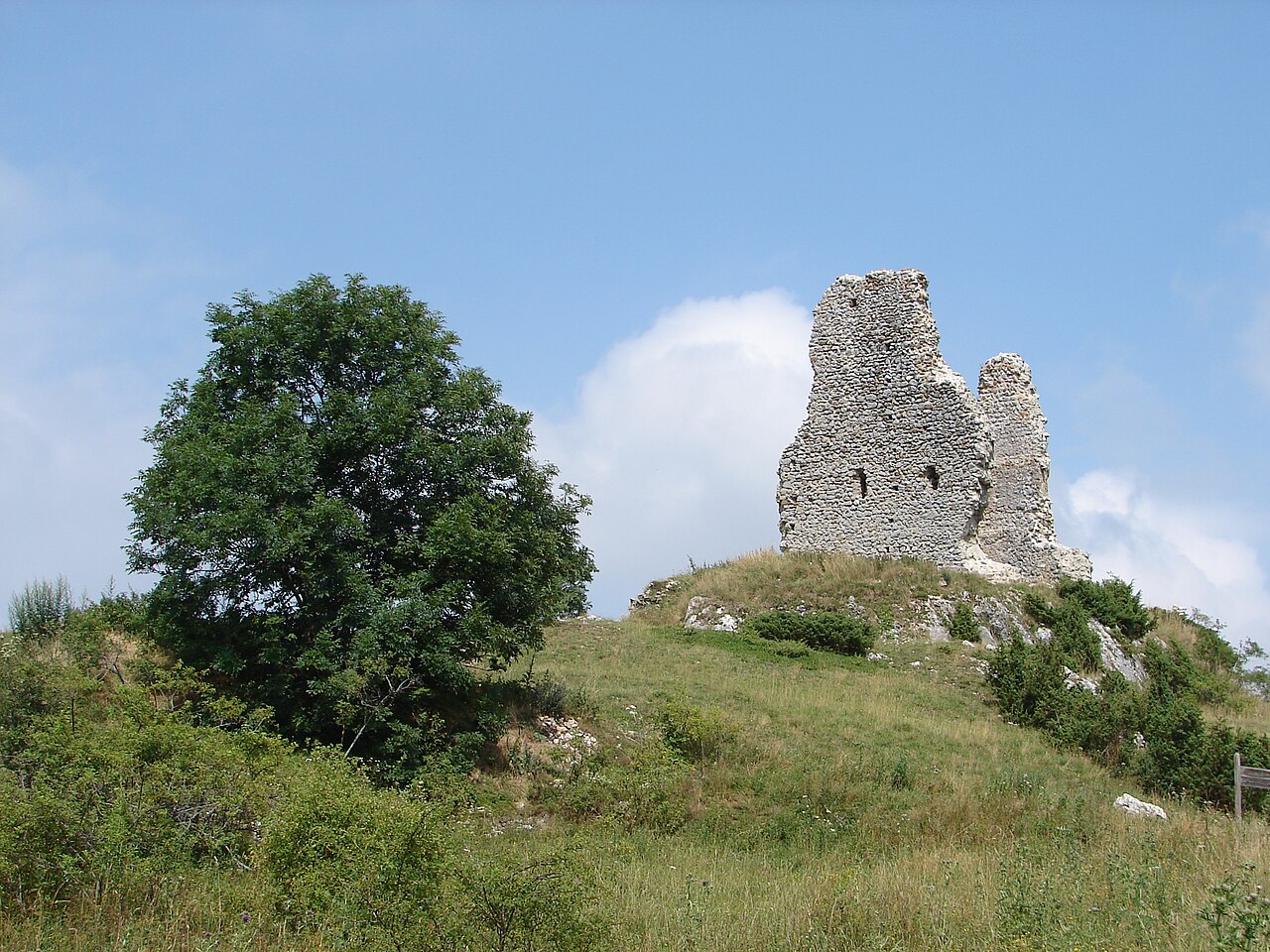
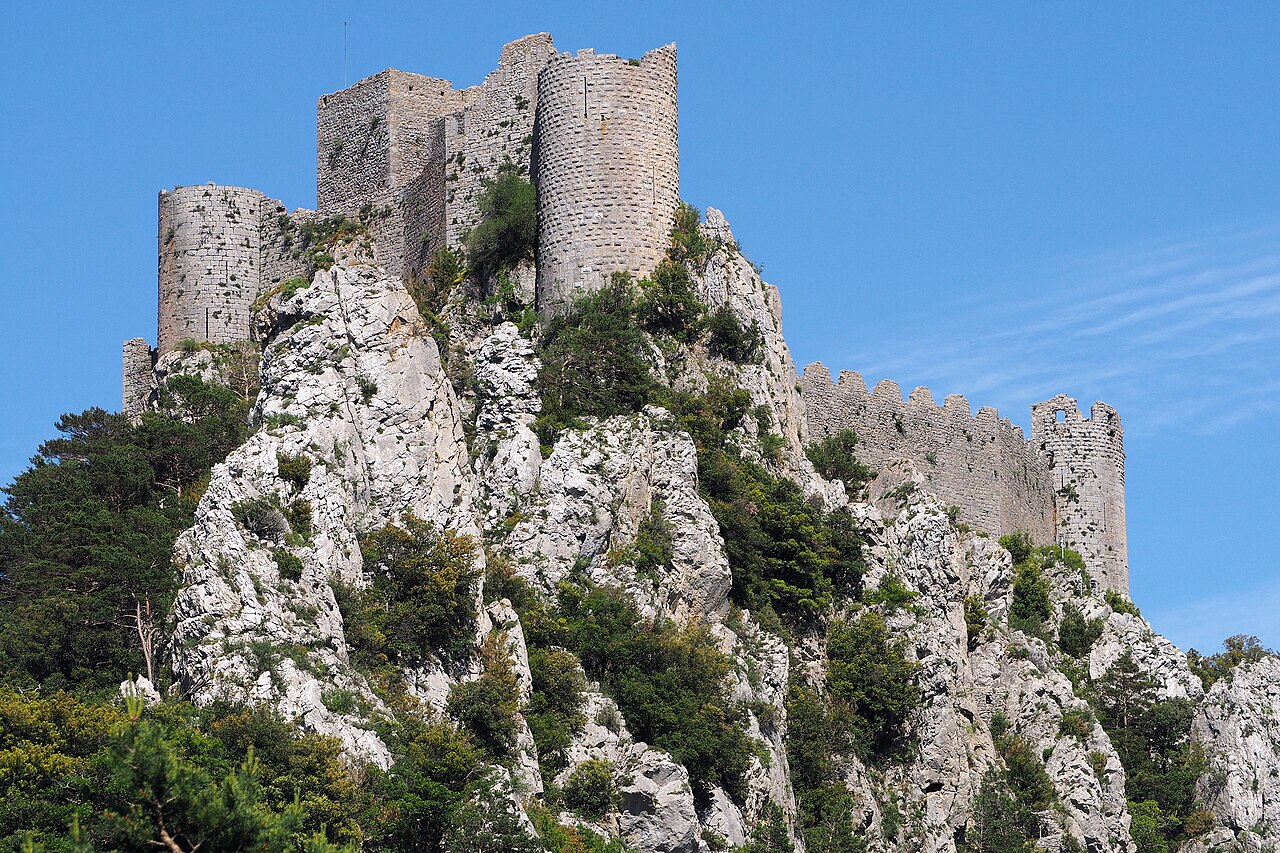
Château d'Usson is a remarkable example of a High Medieval hill castle located in the commune of Rouze, France. Perched atop a rocky outcrop near the Aude River gorge in the foothills of the Pyrenees, the castle's strategic position at approximately 920 meters above sea level provided commanding views and natural defenses. Its origins trace back to the 11th century, with some indications of even earlier foundations, making it a significant stronghold in the region's medieval history.
Originally constructed as a feudal fortress within the territories of the Counts of Foix, Château d'Usson played a pivotal role during the turbulent Cathar period. It marked the eastern boundary of the Count's domain and served as the capital of the Donézan region in the 12th century. The castle's remote and inaccessible location made it a refuge for the persecuted Cathars, including notable figures such as Guilhabert de Castres, the Cathar bishop of Toulouse. It was one of the last sanctuaries supporting the besieged stronghold of Montségur during the Albigensian Crusade.
Historical significance during the cathar wars
Château d'Usson's history is deeply intertwined with the Albigensian Crusade, a brutal 13th-century campaign aimed at eradicating the Cathar heresy in southern France. The castle was owned by the d'Alion family, with Bernard d'Alion and his brother Arnaud d'Usson playing key roles in supporting the Cathar cause. Despite outwardly submitting to the crusading forces led by Simon de Montfort, Bernard covertly aided the Cathars by sending arms and supplies to Montségur during its siege in 1244.
On 15 March 1244, one day before the fall of Montségur and the execution of 225 Cathar parfaits, four parfaits escaped to Château d'Usson, where the Cathar treasure had been relocated months earlier. This event has fueled numerous legends and theories, including connections to the mysterious treasure allegedly found at Rennes-le-Château in the 19th century. Bernard d'Alion's allegiance to the Cathars ultimately led to his condemnation and execution by burning in Perpignan in 1258.
Architectural evolution and later history
Following the Cathar wars, Château d'Usson was repurposed as a French border fortress, reflecting the shifting political landscape between France and Spain. The castle's military importance continued until the Treaty of the Pyrenees in 1659, which redefined the border and reduced its strategic value. In 1638, under orders from Cardinal Richelieu, the fortress was partially dismantled to prevent its use by enemy forces.
In the early 18th century, the castle underwent significant transformation from a military stronghold to a noble residence. In 1711, Louis XIV granted the property to the new Marquis d'Usson. The Marquis commissioned the architect Victor Canas between 1712 and 1713 to remodel the castle, adding three new towers and adapting the interior spaces for residential purposes. This renovation marked a shift in the castle's function and architectural style, incorporating elements suitable for noble habitation while retaining its medieval character.
The French Revolution brought an end to noble ownership, and Château d'Usson was sold as communal property. Subsequently, the castle was used as a stone quarry, leading to the loss of some original fabric. However, in the late 20th century, the ruins were legally protected as a historic monument, with conservation and restoration efforts initiated to preserve the site. Today, the castle features a museum housed in the restored 18th-century stables, exhibiting artifacts uncovered during archaeological excavations and highlighting the site's rich heritage.
Architectural features and remains
The castle's layout is irregular, conforming to the natural contours of the rocky spur on which it stands. Among the most notable surviving structures is the pentagonal donjon, a distinctive five-sided keep that served as the central defensive tower. This unusual shape reflects adaptations to the terrain rather than conventional medieval designs.
Adjacent to the donjon is a residential tower, indicative of the castle's evolution from a purely military fortress to a noble residence. Remnants of the castle palace remain, showcasing typical medieval masonry techniques designed for durability and defense.
The early 18th-century renovations introduced three additional towers, altering the castle's silhouette and internal organization. These towers were constructed to accommodate the needs of domestic life rather than warfare, illustrating the site's architectural transition.
Nearby, the restored 18th-century stables now serve as a museum venue, preserving and displaying artifacts that narrate the castle's extensive history. Conservation efforts have focused on stabilizing the masonry, particularly the tower on the spur, to prevent further deterioration and facilitate public access for educational purposes.
Cultural legacy and modern significance
Château d'Usson stands as a testament to the region's complex history, embodying centuries of conflict, adaptation, and survival. Its association with the Cathar movement and the Albigensian Crusade lends it significant cultural and historical importance. The castle's ruins offer valuable insights into medieval military architecture and the sociopolitical dynamics of southern France during the Middle Ages.
In addition to its medieval heritage, the castle holds a poignant place in 20th-century history. On display within the site are parts of the wreckage from a Second World War British Dakota transport aircraft that crashed nearby on 5 December 1944, resulting in the loss of seventeen lives. This somber relic connects the castle to more recent historical events and broadens its narrative beyond medieval times.
Today, Château d'Usson is a protected historic monument that attracts visitors interested in medieval history, Cathar heritage, and mountain fortifications. Its museum and well-preserved ruins provide an engaging experience that educates about the castle's multifaceted past and architectural evolution.
Frequently asked questions (FAQ)
- What is the historical significance of Château d'Usson?
- Château d'Usson is a remarkable example of medieval architecture located in the heart of the Aude region. It played a significant role during the Albigensian Crusade as a stronghold for the Cathars and later served as a royal residence. The castle's rich history reflects the tumultuous past of the region and offers insights into the architectural styles of the time.
- When was Château d'Usson built?
- Château d'Usson was constructed in the 12th century, with subsequent renovations and additions made in the following centuries. Its strategic location and robust structure were designed to protect against invasions and serve as a residence for local nobility. The castle has stood the test of time, showcasing various architectural influences over the centuries.
- Can I visit Château d'Usson?
- Yes, visitors are welcome to explore the ruins of Château d'Usson. The site offers guided tours during the peak tourist season, providing insights into its historical context and architectural features. Be sure to check the official website for any special events or restrictions before planning your visit.
- What are the opening hours for Château d'Usson?
- Château d'Usson typically opens from April to October, with hours varying by month. During the peak season, it is usually open from 10 AM to 6 PM. Off-season hours may be limited, so it is advisable to verify the current schedule before your visit.
- Is it possible to access Château d'Usson by public transport?
- While there is limited public transport directly to Château d'Usson, visitors can reach the nearby town of Rouze by bus or train. From there, a short taxi ride or a scenic walk will lead you to the castle. It is recommended to plan your journey in advance to ensure a smooth visit.
- What is the best time to visit Château d'Usson?
- The best time to visit Château d'Usson is during the spring and early autumn months when the weather is pleasant, and the surrounding landscapes are at their most beautiful. These seasons also tend to be less crowded, allowing for a more enjoyable experience. Summer can be quite busy, but it offers extended opening hours and special events.
- Are there any nearby attractions to visit?
- Yes, there are several attractions near Château d'Usson, including the picturesque village of Rouze and the scenic hiking trails in the surrounding countryside. The region is also known for its vineyards and Cathar castles, which provide a rich historical context. Visitors can easily spend a day exploring the area.
- What are the ticket prices for Château d'Usson?
- Ticket prices for Château d'Usson are generally affordable, with discounts available for students and seniors. Children under a certain age may enter for free. It's best to check the official website for the most up-to-date pricing and any special offers that may be available during your visit.
Information
Website
Visit websiteSources & official resources
Verify the information above using these authoritative references.
Loading map...
Visitor reviews
No reviews yet. Been here? Write the first review and help other travelers!
Write the first reviewVisited this castle? Share your experience
Your review helps other travelers and adds first-hand knowledge to our encyclopedia.