Château de Mauléon
Château de Mauléon, located in Mauléon-Licharre in southwestern France, is a significant example of a high medieval hill castle with a rich history spanning several centuries. Originally constructed in the 11th century as a motte-and-bailey fortress, the castle was strategically positioned to control the road to Spain and the surrounding region of the viscounty of Soule.
The initial wooden structure, typical of early medieval fortifications, was replaced in the 13th century by a more robust stone castle. This transformation marked the castle's evolution into one of the strongest fortresses in the area, reflecting the heightened military and political tensions of the time. The castle's location atop a hill enabled commanding views over the valley and the nearby Matalon hill, which rises to 439 meters, providing a natural defensive advantage.
Historical development and military significance
The castle's history is closely tied to the complex political landscape of medieval France and the English crown's ambitions. During the 13th and 14th centuries, the castle was under English control, as the English kings held the title of Viscount of Soule. King Edward I of England ordered significant repairs and fortifications between 1272 and 1287, followed by additional enhancements in 1319 and 1374. These upgrades included strengthening the walls and adapting the defenses to the evolving use of artillery and firearms.
Château de Mauléon played a notable role during the Hundred Years' War and the ongoing conflicts between France and England. It changed hands multiple times, reflecting the turbulent military struggles of the period. In 1449, Gaston IV, Count of Foix, successfully captured the castle as part of the French reconquest of the Guyenne region. After his death in 1472, the castle and the viscounty of Soule were permanently incorporated into the French kingdom.
The castle also endured military actions during the 16th century, including sieges in 1523 by the Prince of Orange and the Lord of Luxe, and suffered damage during the religious wars that affected France. Despite these challenges, it remained a key defensive site until the mid-17th century.
Demolition, partial reconstruction, and later uses
In 1642, by order of King Louis XIII, the castle was deliberately demolished to prevent its further military use. However, partial reconstruction took place in 1648, though the fortress never regained its former strategic importance. Over time, the castle was gradually abandoned as a military stronghold.
During the French Revolution, the castle was repurposed as a prison, reflecting its continued use as a secure facility despite its declining military role. The fortress maintained a military garrison until 1870, even though restoration efforts were rejected by the Minister of War in 1831. Ownership transferred to the town of Mauléon-Licharre that same year.
In 1925, the castle was officially recognized as a historic monument and archaeological site, ensuring its preservation and protection as a cultural heritage landmark.
Architectural features and remains
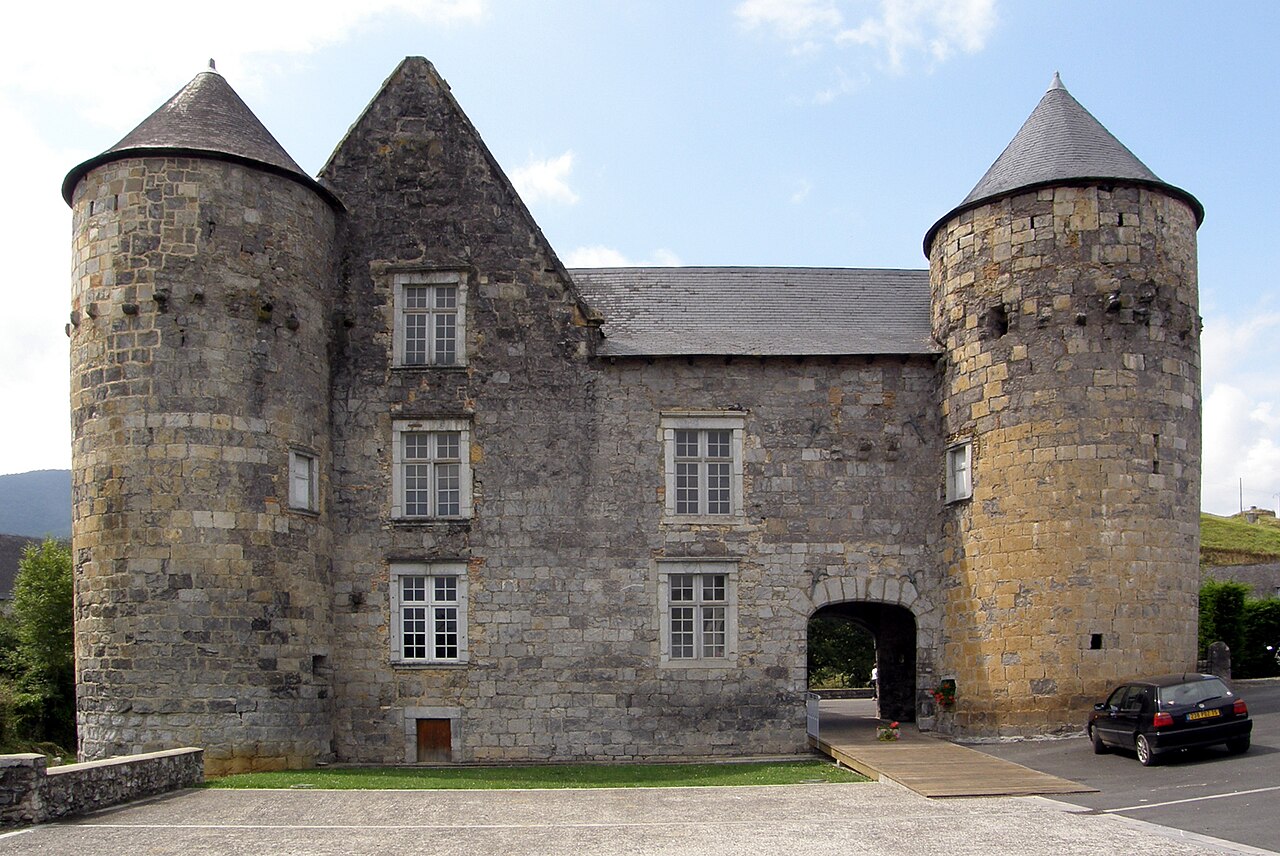
The castle exhibits a pentagonal layout oriented from northeast to southwest, strategically positioned opposite the Matalon hill. The fortifications are built on the original motte, replacing the early wooden structures with durable stone walls.
Unlike many medieval castles, the walls of Château de Mauléon lack crenellations but are reinforced by three corner towers. These walls are pierced with narrow artillery loopholes, designed for the use of firearms, particularly defending the side facing the town. The castle's entrance is accessed via a stone bridge with three arches, which originally included a drawbridge now removed and replaced with wooden planks.
The internal buildings are clustered near the northeast side, comprising small rooms suitable for a modest garrison rather than a large noble household. A deep well within the courtyard, reaching 29 meters to the water table, was essential for sustaining occupants during sieges. The presence of a dungeon entrance at the base of the buildings indicates the castle's function as a secure holding place.
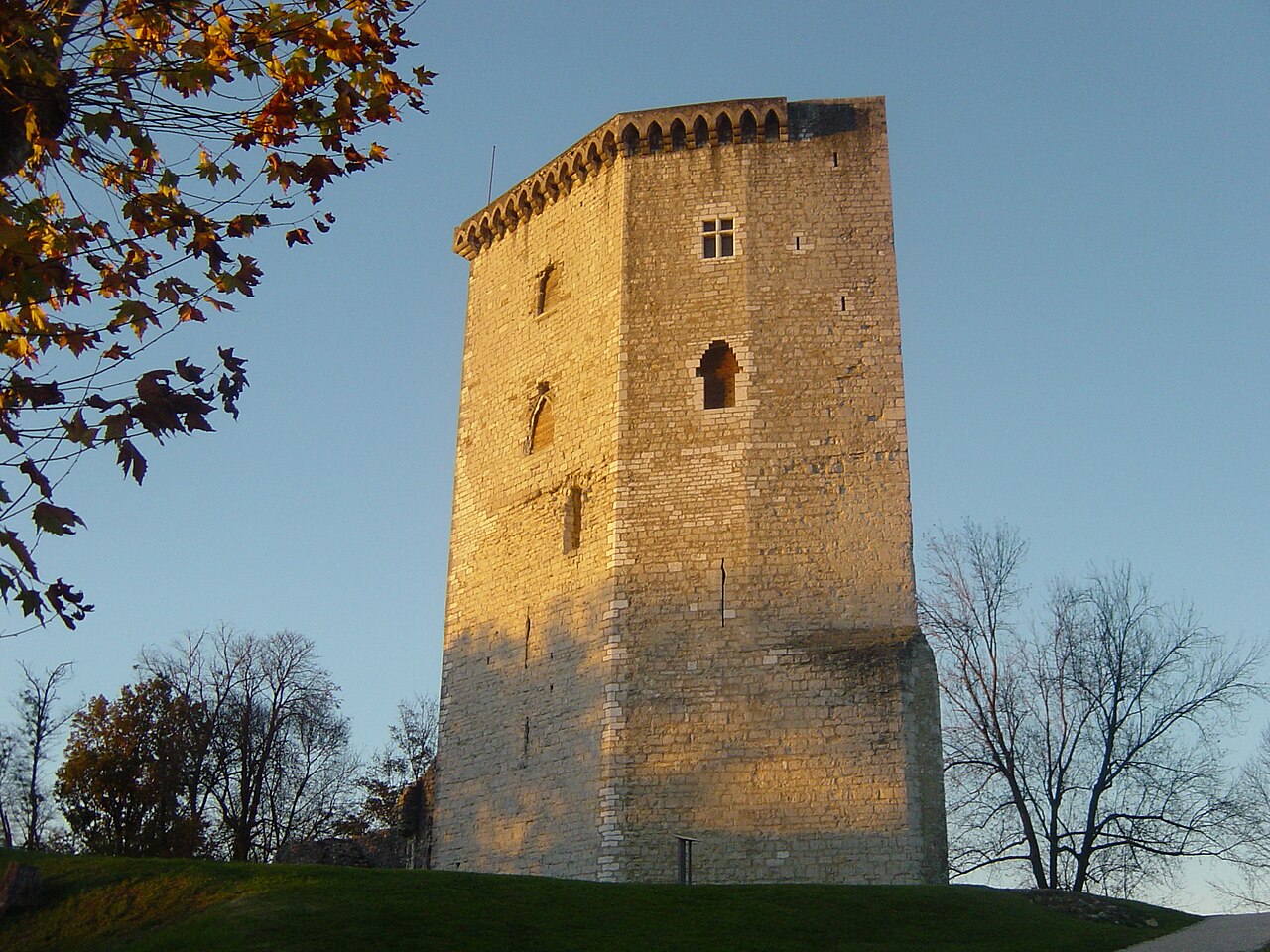
The southwestern area contains the ruins of the medieval keep, which was almost completely destroyed in the 18th century, leaving only foundations and ground traces. Surrounding the castle are two flat zones believed to have been medieval habitations, with one now overgrown and visible primarily through archaeological evidence.
Defensive adaptations
The inclusion of artillery loopholes in the walls reflects adaptations to the changing nature of warfare, particularly the introduction of gunpowder weapons in the late medieval period. These narrow openings allowed defenders to fire upon attackers while remaining protected behind thick stone walls.
Site and landscape context
Perched on a hilltop, Château de Mauléon commands extensive views over the surrounding countryside, controlling key routes and providing early warning of approaching forces. Its position opposite the Matalon hill enhances its defensive posture, utilizing the natural topography to strengthen its military effectiveness.
Cultural heritage and tourism
Today, Château de Mauléon stands as a significant archaeological site and monument reflecting the medieval military architecture of the region. Visitors can explore the remains of the castle's walls, towers, and internal structures, gaining insight into the defensive strategies employed during the high medieval and later periods.
The castle's history as a fortress, prison, and military garrison enriches its cultural narrative, making it a point of interest for historians, architects, and tourists alike. Preservation efforts continue to maintain the site, ensuring its legacy endures for future generations.
Frequently asked questions (FAQ)
- When was Château de Mauléon originally built?
- Château de Mauléon was originally constructed in the 11th century as a wooden motte-and-bailey fortress before being rebuilt in stone in the 13th century.
- What is the architectural style of Château de Mauléon?
- The castle features medieval military architecture typical of the high medieval period, with stone walls, corner towers, and artillery loopholes adapted for firearms.
- Can visitors access the interior of Château de Mauléon?
- Yes, visitors can explore the ruins of Château de Mauléon, including its walls, towers, and courtyard, though some areas may be restricted for safety reasons.
- What historical events is Château de Mauléon known for?
- The castle played a role in the Hundred Years' War, changing hands between French and English forces, and was demolished by order of Louis XIII in 1642.
- Is Château de Mauléon open to the public?
- Château de Mauléon is open to the public as an archaeological site, but specific visiting hours may vary, so checking locally before visiting is recommended.
Information
Sources & official resources
Verify the information above using these authoritative references.
Loading map...
Visitor reviews
No reviews yet. Been here? Write the first review and help other travelers!
Write the first reviewVisited this castle? Share your experience
Your review helps other travelers and adds first-hand knowledge to our encyclopedia.