Château de Lagarde
The Château de Lagarde stands as a striking example of medieval military architecture in the Ariège department of southern France. Located near the village of Lagarde, approximately 8 km southeast of Mirepoix, this castle's origins date back to the 11th century. Though now in ruins, it retains significant architectural elements that chronicle the evolution of castle construction from the High Middle Ages through the Renaissance and into the early modern period.
Early construction and medieval fortifications
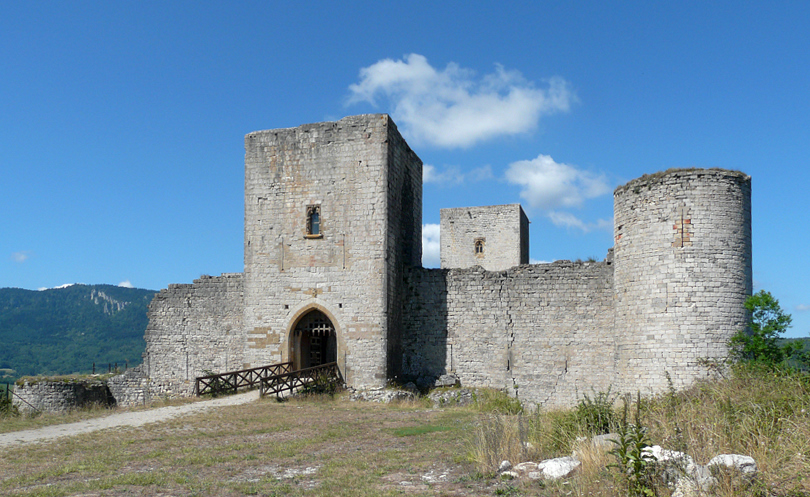
The earliest documented structure at the site was a square tower built in the 11th century, featuring a distinctive circular covering tower at one corner. This initial keep formed the nucleus of the castle's defensive system. In the 12th century, the castle was expanded with the addition of four square towers and a rectangular gatehouse. These were connected by curtain walls equipped with arrowslits and topped with crenellations, typical of medieval fortifications designed to provide defense and vantage points for archers.
Transfer of ownership and architectural enhancements
Following the Albigensian Crusade in the early 13th century, the castle was transferred to the Lévis-Mirepoix family, a prominent noble house in the region. Under their stewardship, the castle underwent significant modifications to enhance both its defensive capabilities and residential comfort.
14th to 17th century modifications
14th century alterations
The 14th century brought important architectural changes. New buildings were constructed behind each façade, and the roofs were raised to improve interior space and protection. A drawbridge was installed, replacing earlier entry methods, and the entry gate along with the building openings were modified to suit the evolving needs of defense and habitation.
16th century expansions and Renaissance influences
In 1526, a notable hanging spiral staircase was added, featuring a flamboyant Gothic vault, which is an intricate architectural style characterized by elaborate stonework and ornamental design. This period also saw the castle's footprint nearly doubled with the addition of new walls and vaults. A new moat was excavated, accompanied by four circular bastions at the corners, reflecting advancements in military architecture to counter artillery threats. The entrance drawbridge was also fortified with bastions, enhancing the castle's defensive perimeter.
17th century enhancements
The 17th century introduced more decorative and monumental elements. Statues were added to the bastions and the staircase tower, lending an air of grandeur. An esplanade surrounded by fortifications was created on the southeast side, and the original drawbridge was replaced with a stone bridge featuring a monumental gateway. Access was improved with the construction of a ramp leading from the village, facilitating better movement of people and goods.
Decline and present condition
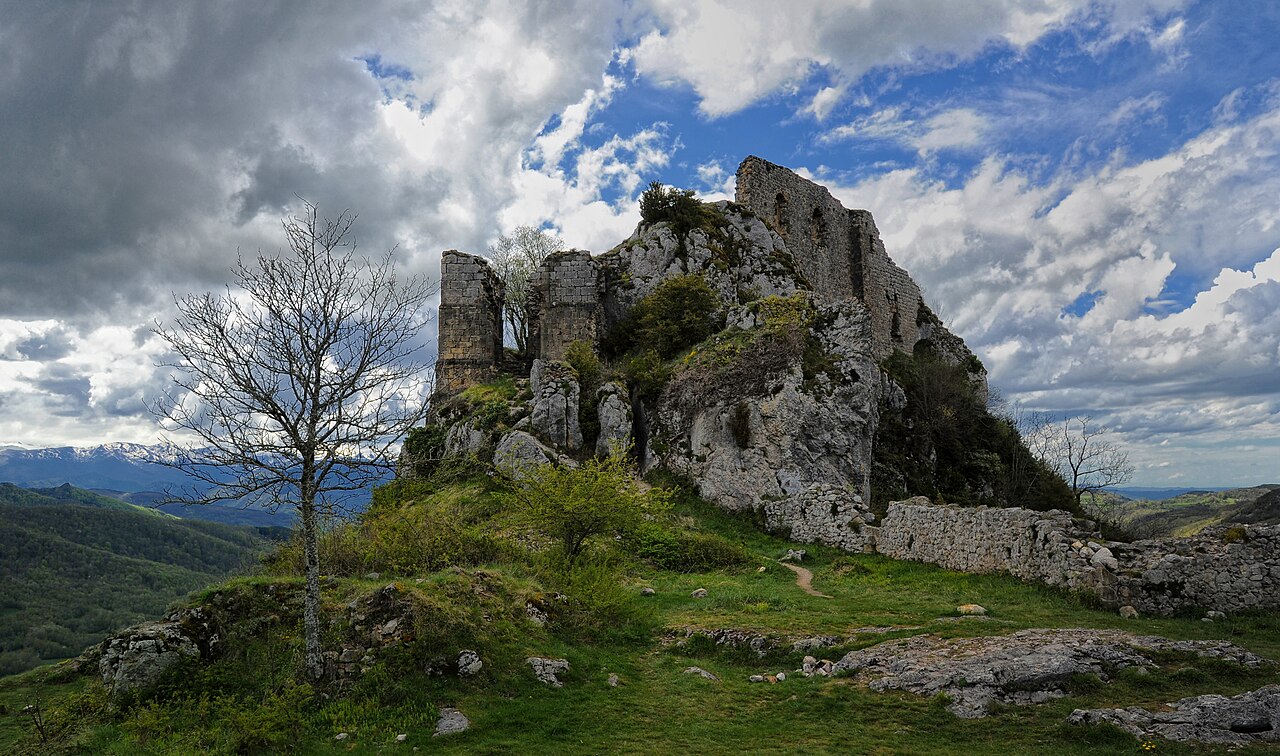
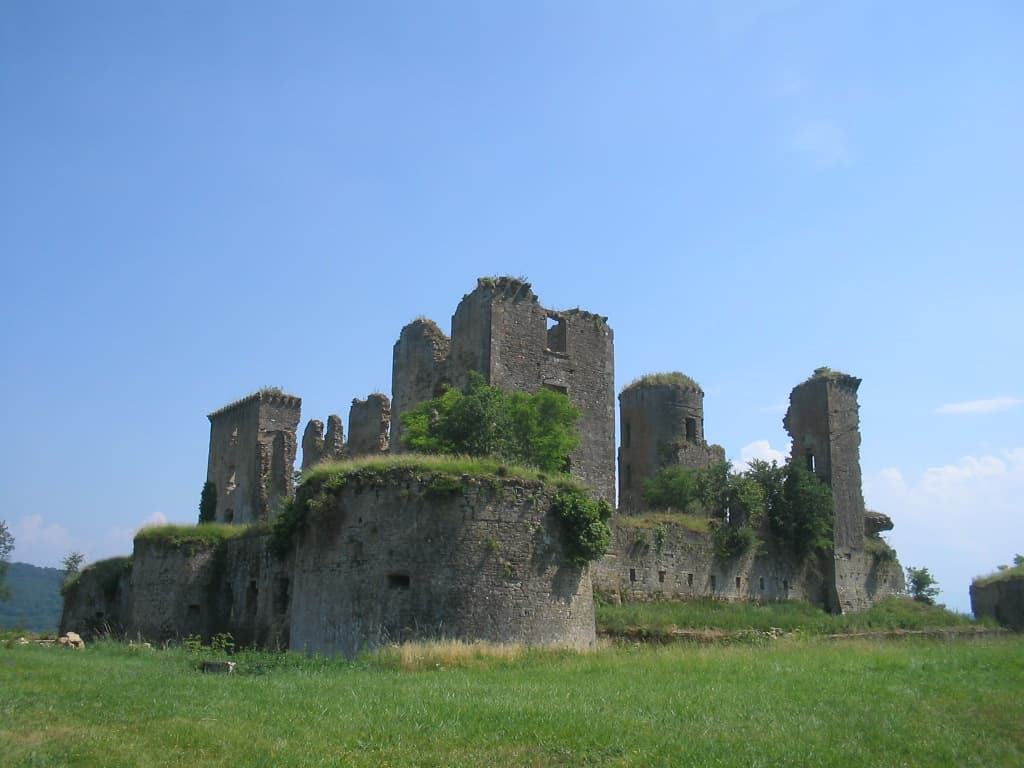
During the French Revolution, the castle suffered partial destruction, a fate common to many aristocratic estates during this turbulent period. Despite the damage, the ruins of Château de Lagarde remain a prominent feature overlooking the valley, with several towers and curtain walls still standing. These ruins provide valuable insight into the castle's layered history and architectural evolution.
Cultural significance and heritage status
Recognized for its historical and architectural importance, Château de Lagarde has been listed as a monument historique by the French Ministry of Culture since 1914. This designation helps protect the site and ensures its preservation as a cultural landmark in the region.
Architectural features and layout
The castle's layout reflects the typical medieval fortification style, with a central keep surrounded by defensive walls and towers. The square and circular towers provided overlapping fields of fire, while the curtain walls with arrowslits allowed defenders to repel attackers effectively. The addition of bastions in the 16th century marks the adaptation to gunpowder weaponry, showcasing the castle's continuous military relevance over centuries.
The hanging spiral staircase
One of the castle's most remarkable architectural elements is the hanging spiral staircase constructed in 1526. This staircase is notable for its flamboyant Gothic vaulting, an artistic expression of the late Gothic style that combines structural ingenuity with decorative complexity. The staircase not only served a practical purpose but also symbolized the wealth and status of the castle's owners.
Defensive moats and bastions
The moat and bastions added during the Renaissance period illustrate the shift in military architecture responding to the development of artillery. The four circular bastions at the corners of the moat allowed defenders to cover all approaches with cannon fire, a significant upgrade from earlier medieval defenses focused on archery and melee combat.
Visiting château de lagarde
Today, visitors to Château de Lagarde can explore the evocative ruins that stand as a testament to centuries of architectural and historical development. The site offers panoramic views of the surrounding valley and countryside, making it a popular destination for history enthusiasts and tourists interested in medieval and Renaissance architecture.
Frequently asked questions (FAQ)
- How do I get to Château de Lagarde?
- Château de Lagarde is located near the village of Lagarde in the Ariège department, accessible by local roads from Mirepoix. Visitors typically reach the site by car, with parking available nearby.
- What are the opening hours for visiting Château de Lagarde?
- The castle ruins are generally open to the public year-round, but there are no formal visitor facilities or guided tours. It is advisable to check local tourism information for any seasonal access restrictions or events.
- Is Château de Lagarde wheelchair accessible?
- Due to the castle's ruined condition and uneven terrain, Château de Lagarde is not fully wheelchair accessible. Visitors should be prepared for walking on rough paths and uneven surfaces.
- What is the historical significance of Château de Lagarde?
- Château de Lagarde reflects the evolution of medieval fortifications from the 11th century through the Renaissance. It was a strategic site during the Albigensian Crusade and later became the seat of the Lévis-Mirepoix family.
- Can I visit the interior of the castle?
- As the castle is in ruins, much of the interior is exposed and not fully intact. Visitors can explore the remains of towers, walls, and the notable hanging spiral staircase, but access inside some structures may be restricted for safety reasons.
Photo gallery

Photo by No machine-readable author provided. ArnoLagrange assumed (based on copyright claims).•CC BY-SA 3.0
Information
Current owner
French Ministry of Culture
Loading map...
Visitor reviews
No reviews yet. Been here? Write the first review and help other travelers!
Write the first reviewVisited this castle? Share your experience
Your review helps other travelers and adds first-hand knowledge to our encyclopedia.