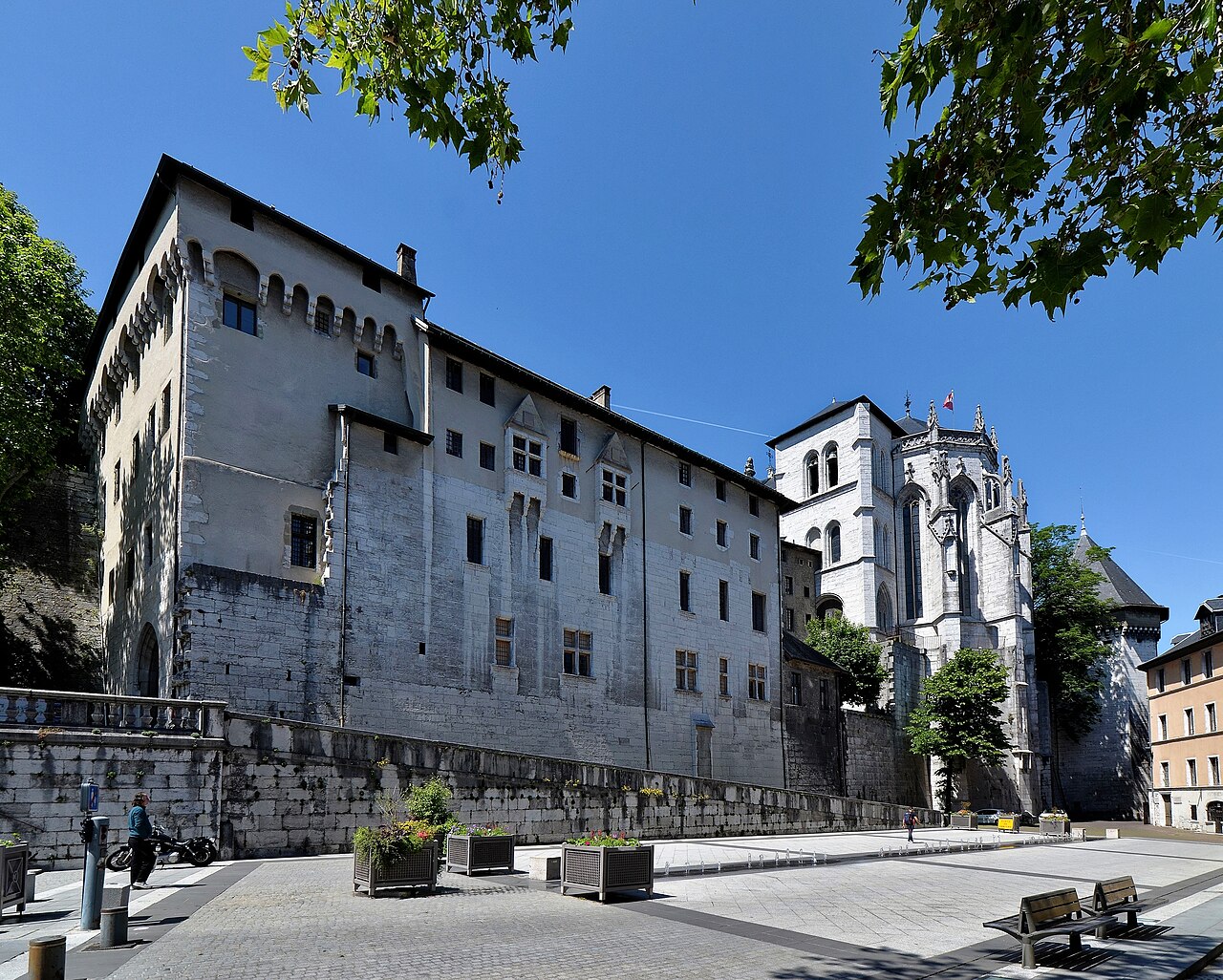
Château de la Roche du Roi
The Château de la Roche du Roi is a remarkable example of late 19th-century French castle architecture located on a hillside overlooking the southern part of Aix-les-Bains and the nearby village of Tresserve. Constructed between 1897 and 1900, this hill castle reflects a unique fusion of architectural styles, combining elements reminiscent of Oriental palaces, Renaissance castles, and the Art Nouveau movement. Its location on a terrace supported by vaulted semicircular substructures, built from soft Lens limestone, emphasizes its commanding presence in the Hauts-de-France region.
Historical background and significance
The château was designed by the renowned architect Jules Pin (senior) and constructed by the Léon Grosse construction company at a considerable cost of nearly half a million francs. Its creation at the turn of the 20th century coincided with a period of eclectic architectural experimentation in France, where historic revival styles were blended with contemporary artistic movements.
In the early 1980s, the château gained notoriety when a foreign buyer attempted to purchase it with the intent to dismantle the building stone by stone for relocation outside France. This plan, confirmed by the then-owner Gilbert Duranton, sparked local concern and led to protective measures. The château was registered in the supplementary inventory of Historic Monuments in 1983 and later officially classified as a Monument historique on April 23, 1986. These designations ensured legal protection and oversight for any future restoration or modifications.
Despite its protected status, the château faced significant challenges in the late 20th and early 21st centuries. Ownership passed to a German buyer, Eberhardt Zerrweck, in 1998, who neglected maintenance. This neglect, compounded by a severe storm in 2003 that destroyed the roof, led to substantial deterioration. The château was further compromised by unauthorized occupation by squatters and was officially declared a municipal peril. The discovery of a World War II-era MK2 grenade in the basement in 2005 highlighted the complex and sometimes turbulent history of the site.
Following unsuccessful attempts to compel renovation, legal expropriation proceedings began in 2007. The city of Aix-les-Bains acquired the château in 2015 for 485,000 euros. Shortly thereafter, it was sold to Pedro Victor Asensio-Pagan, a private individual, for 530,000 euros including legal fees. This sale stirred local debate due to the lack of a public bidding process and concerns about valuation. Restoration efforts commenced in 2016 under the new ownership, aiming to revive the château as a private cultural venue.
Architectural features and style
The château’s architecture is a distinctive blend of baroque and Art Nouveau styles, with influences drawn from Oriental palace designs and Renaissance castle motifs. This eclectic approach results in a richly ornamented structure that stands out in the regional architectural landscape.
Constructed primarily from soft Lens limestone, the château rests on a solid terrace supported by vaulted semicircular substructures, elevating it prominently above the surrounding terrain. The building’s silhouette is dominated by a central donjon crowned with a polygonal spire, a striking feature that punctuates the skyline and asserts the château’s presence.
One of the most notable architectural elements is the richly decorated portal facing the boulevard, which displays intricate ornamental details characteristic of what has been locally termed the "Aix-les-Bains style." This portal serves as a grand entrance and a visual focal point, embodying the château’s unique aesthetic.
Interior elements of historic importance
Several interior features have been individually classified as Monument historique due to their exceptional craftsmanship and historical value. These include the expansive terrace, the impressive staircase enclosed in an iron cage with elaborately wrought iron railings, the formal dining room and an adjacent ground-floor chamber, as well as two bedrooms on the first floor. These spaces exemplify the high level of design detail and artisanal skill characteristic of the château’s construction period.
Preservation challenges and restoration efforts
The château’s history in the 21st century has been marked by significant preservation challenges. The damage caused by neglect and natural events, particularly the 2003 storm that destroyed the roof, severely compromised the building’s structural integrity. Unauthorized occupation by squatters further endangered the site.
Following its acquisition by the city and subsequent sale to a private owner, restoration efforts began in 2016 aimed at stabilizing and rehabilitating the château. These efforts focus on preserving the original architectural features while adapting the building for modern use as a private cultural venue. The restoration process underscores the complexities involved in conserving historic structures that have suffered prolonged neglect.
Location and setting
Situated on a hillside in Aix-les-Bains, the château commands expansive views over the southern part of the town and the neighboring village of Tresserve. Its elevated position not only provides strategic visual dominance but also enhances its aesthetic appeal as a landmark within the Hauts-de-France region.
The château occupies approximately 500 square meters, with its terrace and vaulted substructures integrating harmoniously into the hillside terrain. This setting contributes to the building’s distinctive character and historical significance.
Cultural heritage and community impact
The Château de la Roche du Roi is a significant cultural asset for the region, representing a unique architectural synthesis from the turn of the 20th century. Its classification as a Monument historique reflects its importance in France’s heritage preservation efforts.
The controversies surrounding its ownership and preservation have highlighted the challenges of maintaining historic properties in modern times. The château’s revival as a private cultural venue promises to enhance its role in the community, fostering appreciation for the region’s architectural and historical legacy.
Information
Loading map...
Visitor reviews
No reviews yet. Been here? Write the first review and help other travelers!
Write the first reviewVisited this castle? Share your experience
Your review helps other travelers and adds first-hand knowledge to our encyclopedia.