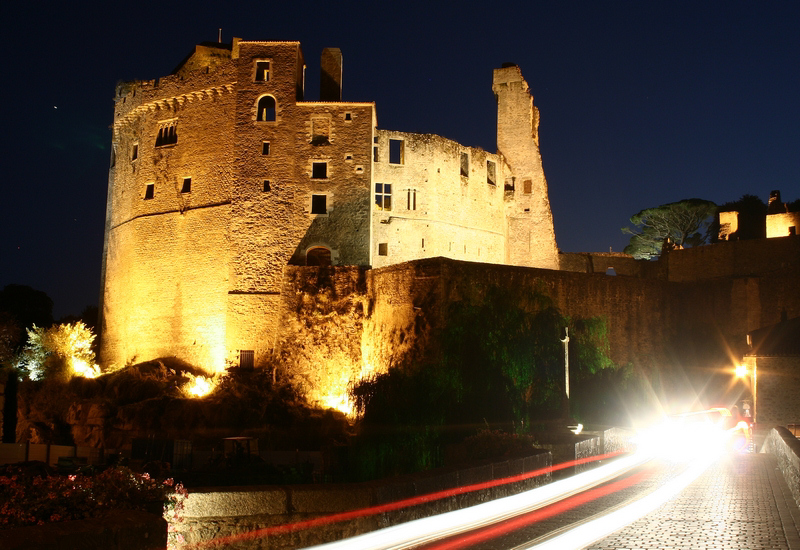
Château de la Preuille
Château de la Preuille is a significant medieval fortress located in Montaigu-Vendée, France. Its origins trace back to the 11th century, with major architectural developments occurring during the 13th and 15th centuries. The castle's imposing wide moat along the northern walls and towers reflects its initial role as a fortified stronghold designed for defense. This moat, along with the robust curtain walls and fortified towers, exemplifies typical High Medieval military architecture intended to repel sieges and attacks.
Architectural evolution and defensive features
The castle's layout and structure evolved notably between the 13th and 15th centuries, adapting to changing military needs and architectural styles. The original stone keep and curtain walls were reinforced and expanded during this period. The presence of a moat on the northern side was a strategic defensive feature, providing a barrier against invaders and enhancing the castle's defensibility.
The towers positioned along the walls served as lookout points and platforms for archers, while the gatehouse controlled access to the interior. The castle's design reflects the transition from purely military fortifications to a residence that also needed to provide comfort and status for its noble owners.
Historical ownership and significance
From about 1350, Château de la Preuille passed through the hands of several prominent families. Initially owned by the Boux family, it was later held by the Bastard family in 1460, followed by the Gastiniere family in 1541. In 1728, the castle came into the possession of the Pâris family, including the notable Claude-René Pâris de Soulanges, comte de Soulanges. By the late 18th century, ownership transferred to the D’Nacquart or De Nacquard family.
The castle's history is intertwined with regional and national events. A notable episode occurred in 1832 when Marie-Caroline of Bourbon, Duchess of Berry, used the château as a base to launch a coup against King Louis-Philippe. Her aim was to crown her son, Henri, comte de Chambord, as the last legitimate Bourbon king. The coup ultimately failed, and Marie-Caroline was arrested, marking a significant moment in the castle's political history.
Decline and restoration efforts
During the 20th century, Château de la Preuille experienced abandonment and fell into a state of disrepair. Its historical and architectural value, however, prompted restoration initiatives. The Fradin family undertook significant restoration work in the 1970s and 1980s, stabilizing and preserving the castle's key features.
Further renovation was carried out by the Ribow family from 2003 to 2019, focusing on maintaining the castle's structural integrity and historical character. These efforts have helped to preserve Château de la Preuille as an important example of medieval fortification and noble residence in the Vendée region.
Architectural features and layout
The castle's architecture combines defensive and residential elements typical of a High Medieval fortress. The moat and curtain walls provided formidable protection, while the interior spaces were adapted over centuries to suit the needs of its noble inhabitants.
The castle includes multiple towers of varying sizes, which served both defensive and residential purposes. The gatehouse remains a prominent feature, controlling access and symbolizing the castle's authority. Inside, the castle originally contained halls, chambers, and service areas typical of medieval noble residences, though much of the interior layout has changed due to restorations and modifications over time.
Moat and defensive walls
The wide moat on the northern side was a critical defensive feature, likely filled with water and designed to prevent direct assaults on the walls. The curtain walls were thick and reinforced with towers at strategic points, allowing defenders to cover all approaches.
Towers and gatehouse
The towers provided vantage points for surveillance and defense, equipped for archers and artillery as military technology evolved. The gatehouse was fortified with defensive mechanisms such as portcullises and murder holes, typical of medieval castles designed to withstand sieges.
Château de la Preuille in the context of French medieval castles
Château de la Preuille exemplifies the evolution of French medieval castles from purely military fortifications to more complex structures that combined defense with noble residence. Its history of ownership by notable families and involvement in political events reflects the castle's regional importance.
The castle's preservation and restoration highlight the value placed on medieval heritage in France, contributing to the understanding of feudal society, architecture, and regional power dynamics in the Vendée region.
Information
Loading map...
Visitor reviews
No reviews yet. Been here? Write the first review and help other travelers!
Write the first reviewVisited this castle? Share your experience
Your review helps other travelers and adds first-hand knowledge to our encyclopedia.