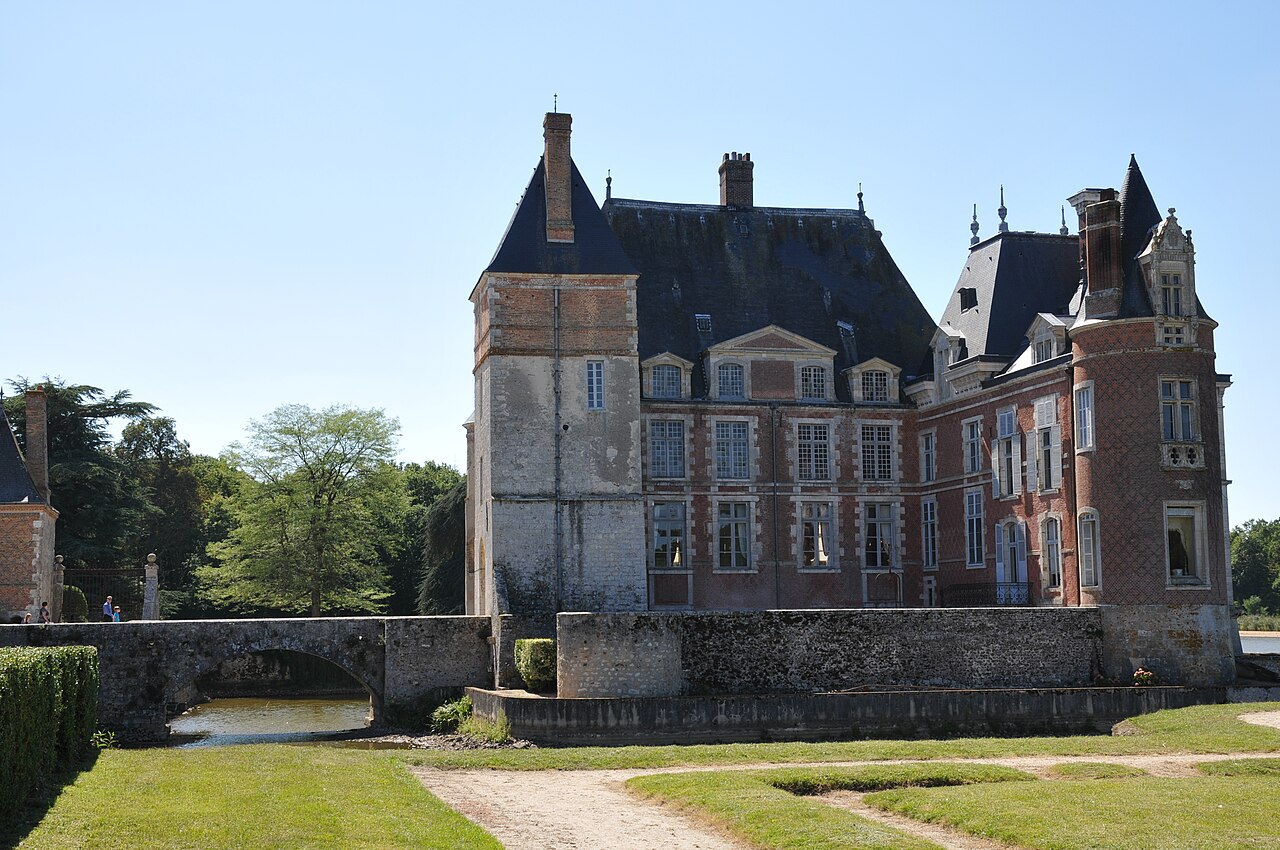
The Châtillon-Coligny Keep, also known locally as the Donjon de Château de Châtillon-Coligny, is a prominent medieval structure located in the town of Châtillon-Coligny in the Loiret department of France. This keep stands as the sole surviving element of a once extensive castle complex that played a significant role in the region's feudal and military history.
Early fortifications and medieval origins
The site of the keep occupies a strategic hill overlooking the Loing valley, chosen for its defensive advantages. The earliest known fortification here dates back to 1059, when a wooden fort was established to control the surrounding territory. This wooden structure was destroyed in 1143 under the orders of King Louis VII of France, as part of the monarch's efforts to consolidate royal authority and suppress rebellious local lords.
Following this destruction, a more durable stone castle was constructed around 1190 by Stephen I, Count of Sancerre. This new castle featured a formidable stone keep with a distinctive round plan, a design that was both innovative and effective for defense during the High Medieval period. The castle became the nucleus around which the town of Châtillon-Coligny developed.
Destruction and rebuilding during the Hundred Years’ War
During the turbulent years of the Hundred Years’ War, the castle and the town suffered significant damage. In 1359, both were destroyed amid the ongoing conflict between France and England. The townspeople chose to rebuild their settlement in the valley below, a location easier to defend and more accessible for trade and daily life. They surrounded the new town with defensive walls, reflecting the continued need for protection in a period marked by warfare and instability.
The castle itself was also rebuilt but was relocated outside the new town boundaries. Its walls were physically connected to the town's ramparts, maintaining a strategic link between the fortress and the urban defenses. This relocation marked a shift in the castle's role from a central stronghold within the town to a more peripheral but still important military and residential site.
Transformation into a Renaissance residence
In 1437, the castle passed into the hands of the House of Coligny, a noble family that played a notable role in French history. Over the 15th and 16th centuries, the medieval fortress was transformed into a grand residence reflecting Renaissance tastes and architectural styles.
The Coligny family added new wings, pavilions, and an orangery, enhancing the castle's comfort and aesthetic appeal. Additionally, they laid out an extensive Renaissance garden, which was a symbol of status and refinement during this period. These additions marked a transition from purely military architecture to a blend of defensive and residential functions, typical of many French castles adapting to changing times.
Decline and partial demolition after the French Revolution
The French Revolution brought significant changes to the castle's fortunes. In 1798, much of the castle was demolished as part of revolutionary efforts to dismantle feudal symbols and properties. Only the stripped keep, the orangery, and an ornate well survived this period of destruction.
Later, in 1854, a modest new château was constructed atop the former stables by the last descendant of the Montmorency-Luxembourg family. This family had gradually repurchased the estate after 1816, restoring some measure of aristocratic presence to the site.
Architectural features of the keep
The keep itself is notable for its round plan, a design that was relatively rare compared to the more common square or rectangular keeps of the period. It stands approximately 27 meters high, dominating the landscape and serving as a visible reminder of the site's medieval past.
Originally part of a larger castle complex, the keep now functions primarily as a garden ornament within the grounds of the 19th-century château. Despite its reduced role, it remains an imposing structure and an important architectural relic.
Current status and access
The Châtillon-Coligny Keep is situated on private property and is not generally open to public visits. However, it can be viewed from a side gate on Rue Mac Mahon, allowing visitors to appreciate its silhouette and setting from outside the estate.
Occasionally, the château and its grounds open to the public during special events, providing rare opportunities to explore the historic site more closely. The keep's preservation as part of a private estate has helped maintain its condition, although much of the original castle has been lost.
Frequently asked questions (FAQ)
- How do I get to Châtillon-Coligny Keep?
- Châtillon-Coligny Keep is located in Le Château, France, and is easily accessible by car or public transportation. If traveling by train, the nearest station is a short bus ride away. Local signs will guide you to the castle from the nearby roads.
- What is the historical significance of Châtillon-Coligny Keep?
- Châtillon-Coligny Keep is a remarkable example of medieval military architecture and played a crucial role during the Wars of Religion in France. It was originally constructed in the 15th century and has been a witness to many significant historical events. The castle's preservation allows visitors to experience a tangible piece of France's rich history.
- When was Châtillon-Coligny Keep built?
- The construction of Châtillon-Coligny Keep began in the 15th century, specifically during the year 1440. It was built as a defensive fortress and later transformed into a residence. Over the centuries, it has undergone various renovations that reflect architectural styles from different eras.
- Can I take guided tours of Châtillon-Coligny Keep?
- Yes, guided tours are available at Châtillon-Coligny Keep, providing visitors with in-depth knowledge of its history and architecture. Tours typically run throughout the day and are led by knowledgeable guides. Be sure to check the schedule upon arrival to secure a spot.
- Why is Châtillon-Coligny Keep a popular tourist destination?
- Châtillon-Coligny Keep attracts visitors due to its stunning architecture and significant historical background. The castle offers breathtaking views of the surrounding landscape and serves as a cultural landmark in the region. Additionally, various events and exhibitions held at the castle enhance its appeal.
- Is it possible to visit Châtillon-Coligny Keep with children?
- Absolutely, Châtillon-Coligny Keep is family-friendly and provides a great opportunity for children to learn about history in an engaging environment. The castle often hosts activities tailored for younger visitors, making it a fun experience for the whole family. Just ensure to supervise children in certain areas for their safety.
- What are the opening hours for Châtillon-Coligny Keep?
- Châtillon-Coligny Keep is open to visitors from 10 AM to 6 PM, with extended hours during peak tourist season. It is advisable to check the official website or contact the castle for any changes in hours, especially during holidays or special events. Arriving early can help you avoid crowds and enjoy a more leisurely visit.
- What are the ticket prices to enter Châtillon-Coligny Keep?
- Ticket prices for Châtillon-Coligny Keep vary based on age and any special exhibitions. Generally, adult tickets are priced around €10, while discounts are available for students and senior citizens. Children under a certain age can enter for free, making it an affordable outing for families.
- What is the best time to visit Châtillon-Coligny Keep?
- The best time to visit Châtillon-Coligny Keep is during the spring and early autumn when the weather is pleasant, and the landscape is vibrant. These seasons also tend to have fewer crowds compared to the summer months. Additionally, visiting during local festivals can enhance your experience with unique events and activities.
- Are there any nearby attractions to explore after visiting Châtillon-Coligny Keep?
- Yes, there are several attractions near Châtillon-Coligny Keep, including picturesque villages and beautiful natural parks. The region is known for its scenic hiking trails and historical sites, such as ancient churches and monuments. Exploring the nearby countryside can provide a delightful complement to your castle visit.
Loading map...
Visitor reviews
No reviews yet. Been here? Write the first review and help other travelers!
Write the first reviewVisited this castle? Share your experience
Your review helps other travelers and adds first-hand knowledge to our encyclopedia.