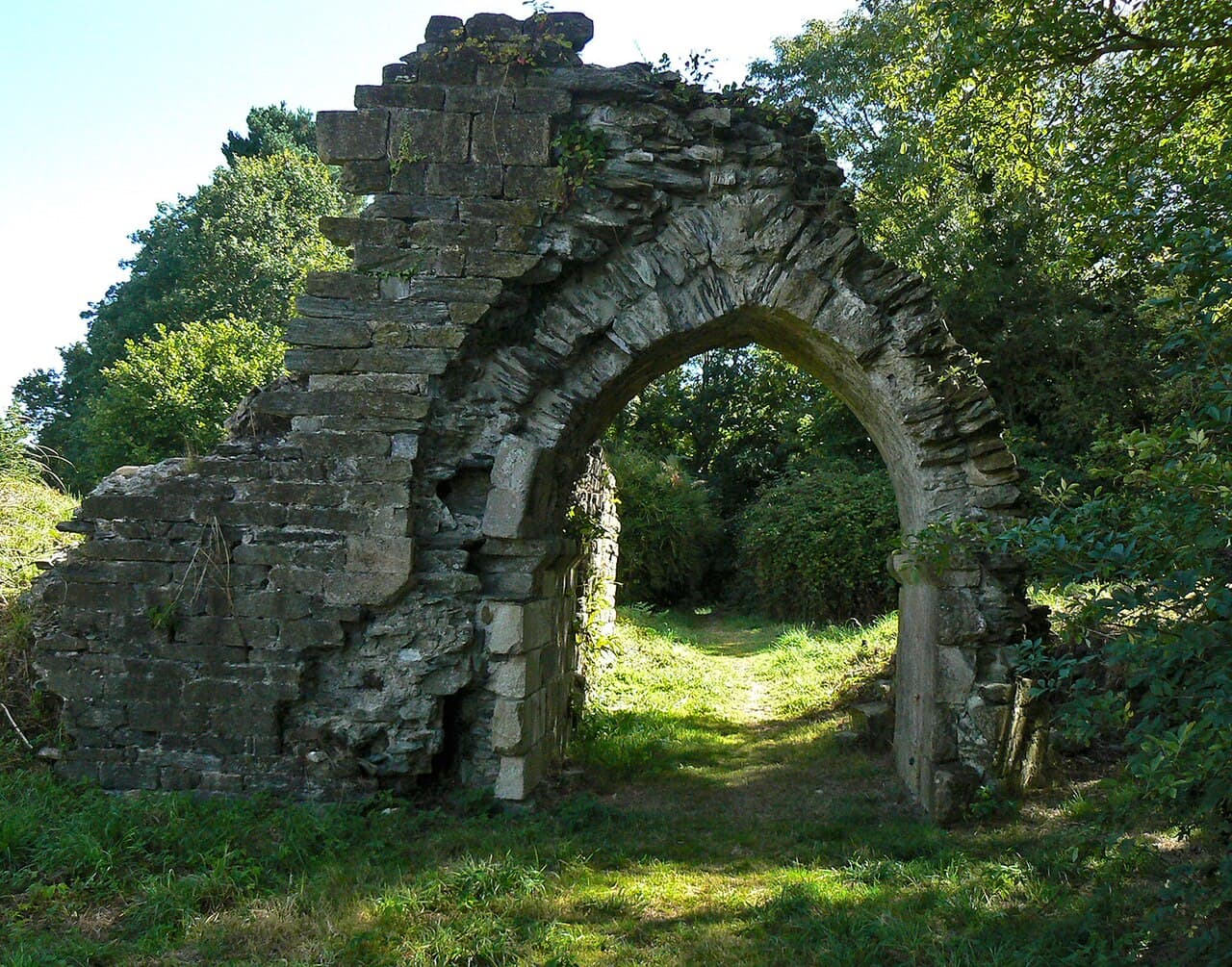
Château de Joyeuse Garde
Château de Joyeuse Garde is a historically significant castle site located in La Forest-Landerneau, Brittany, France. This castle is famously associated with the Arthurian legend as the reputed location of Joyeuse Garde, the legendary fortress of Sir Lancelot. The current ruins primarily date from the 12th century, reflecting the high medieval period of castle construction, although archaeological evidence suggests the site was first fortified in the 6th century AD.
The castle's remains stand as a testament to the region's medieval heritage and its deep connections to medieval romance literature. The name Joyeuse Garde itself evokes the chivalric ideals and mythical narratives that shaped much of European cultural history during the Middle Ages. The site was officially recognized for its cultural value and protected as a monument historique by the French government on 6 October 1975.
Historical background and legendary associations
The earliest fortifications at the site of Château de Joyeuse Garde are believed to have been established in the early medieval period, around the 6th century AD. This early date aligns with the era of the post-Roman kingdoms in Brittany, a time when local rulers built defensive structures to protect their territories. However, the visible ruins today mainly reflect the 12th-century castle that was constructed during the high medieval period.
The castle is most famously linked to the Arthurian legend, specifically the fortress known as Joyous Gard, which was the home of the knight Sir Lancelot. This association has made the site a subject of literary and cultural interest beyond its architectural and historical importance. The connection between the real castle ruins and the legendary Joyous Gard is a matter of tradition and folklore rather than documented historical fact, but it has inspired numerous works of art and poetry.
Architectural features and castle layout
As an archaeological ruin, Château de Joyeuse Garde offers insight into medieval defensive architecture, although much of the original structure has been lost to time. The castle was likely a hill castle or a fortified stronghold typical of the 12th century, with defensive walls, towers, and possibly a keep or donjon at its core. The layout would have included a courtyard, battlements, and other fortifications designed to withstand siege warfare common in the medieval era.
Excavations at the site have revealed foundations and remnants of walls constructed from local stone, characteristic of the region's medieval building practices. The castle's strategic location would have provided commanding views over the surrounding landscape, important for early warning and defense.
Literary and cultural significance
The Château de Joyeuse Garde has been immortalized in literature, most notably in the 1859 poem "Joyeuse Garde" by Algernon Charles Swinburne. This work draws on the romantic and chivalric themes associated with the Arthurian legends and helped to popularize the castle's mythical status in Victorian England and beyond.
The castle's legendary status continues to attract visitors interested in medieval history, Arthurian myths, and French cultural heritage. Its ruins serve as a tangible link to the stories that have shaped European literature and imagination for centuries.
Preservation and current condition
Today, Château de Joyeuse Garde remains in a state of ruins, with only fragments of its medieval structures surviving. Despite this, the site is protected as an important cultural monument and is accessible to the public for educational and tourism purposes. Preservation efforts focus on stabilizing the remaining stonework and preventing further deterioration.
Visitors to the site can explore the ruins and appreciate the castle's historical context within the Brittany region. The castle's location in La Forest-Landerneau places it within a rich landscape of medieval sites and natural beauty, making it a meaningful destination for those interested in history and legend.
Visiting information and nearby attractions
The castle ruins are open to visitors, although facilities may be limited due to the site's archaeological nature. The best time to visit is during the warmer months when the weather allows for comfortable exploration of the outdoor ruins. Nearby towns and cultural centers in Brittany offer additional attractions related to medieval history and Breton heritage.
Exploring Château de Joyeuse Garde provides a unique opportunity to connect with both the tangible remains of medieval fortifications and the enduring allure of Arthurian legend in a scenic French setting.
Frequently asked questions (FAQ)
- What is the historical significance of Château de Joyeuse Garde?
- Château de Joyeuse Garde is a remarkable example of medieval architecture and has played a significant role in the history of the Brittany region. It was originally built in the 12th century and served as a fortress and residence, showcasing the strategic importance of this location during various historical conflicts.
- When is the best time to visit Château de Joyeuse Garde?
- The best time to visit Château de Joyeuse Garde is during the late spring and early autumn months when the weather is mild and pleasant. These periods also offer fewer crowds, allowing for a more enjoyable exploration of the castle and its surroundings.
- Can I access the interior of the castle?
- Yes, visitors can access the interior of Château de Joyeuse Garde during opening hours. Guided tours are often available, providing insights into the castle's history, architecture, and the lives of those who once lived there.
- What are the opening hours for Château de Joyeuse Garde?
- Château de Joyeuse Garde is typically open to visitors from 10 AM to 6 PM, Tuesday through Sunday. It is closed on Mondays and certain public holidays, so it's advisable to check the official website for the latest updates before planning your visit.
- Is it possible to purchase tickets online?
- Yes, tickets for Château de Joyeuse Garde can be purchased online through the official castle website. This option allows you to skip the lines and ensures your entrance at your preferred time, especially during peak tourist seasons.
- What nearby attractions can I visit while in La Forest-Landerneau?
- While visiting Château de Joyeuse Garde, you can also explore the picturesque town of La Forest-Landerneau, known for its charming streets and local shops. Additionally, the scenic Landerneau Bridge and the nearby Abbey of Daoulas are must-see attractions that enrich your experience in the area.
- How do I get to Château de Joyeuse Garde?
- Château de Joyeuse Garde is easily accessible by car, with ample parking available nearby. If you prefer public transportation, local buses regularly connect La Forest-Landerneau to larger cities, making it convenient for visitors traveling without a vehicle.
- What is the architecture style of Château de Joyeuse Garde?
- Château de Joyeuse Garde showcases a blend of Romanesque and Gothic architectural styles, which is characteristic of medieval castles. The impressive stone walls, intricate windows, and fortified towers reflect the castle's historical significance and its defensive purpose.
Photo gallery

Information
Loading map...
Visitor reviews
No reviews yet. Been here? Write the first review and help other travelers!
Write the first reviewVisited this castle? Share your experience
Your review helps other travelers and adds first-hand knowledge to our encyclopedia.



