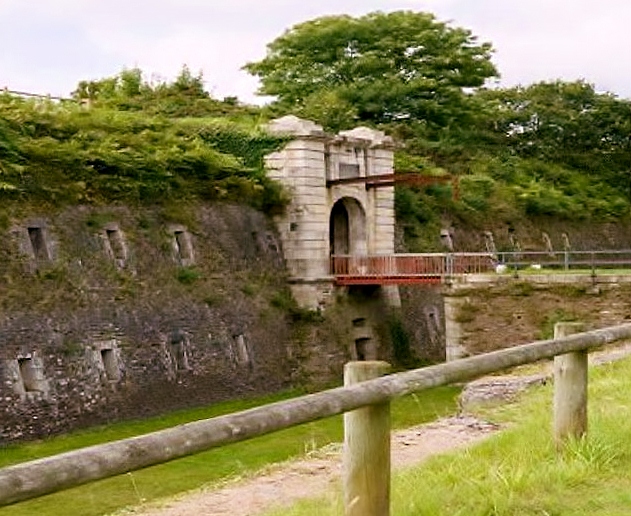
Château de Brest
The Château de Brest is one of the oldest and most historically significant fortresses in the world, located in the city of Brest in the Brittany region of northwestern France. Its origins date back to the late 3rd century AD when the Romans established a castellum on a rocky promontory overlooking the mouth of the Penfeld River. This strategic location guarded the natural harbor known as the roadstead of Brest, a sheltered maritime area vital for naval defense and commerce. The site has been continuously used as a military fortress for over 1700 years, making it arguably the oldest castle still in active use worldwide.
The castle's architecture is a remarkable palimpsest of historical periods, reflecting the evolution of military engineering from Roman times through the medieval era and into the early modern period. The fortress was originally part of the litus saxonicum, a coastal defense system designed to protect the Roman province of Armorica from Saxon raids and pirate incursions. The Roman garrison stationed here numbered approximately 1,000 men and included a fleet tasked with intercepting enemy ships. The surviving Roman curtain wall, about 4 meters thick and extending 120 to 140 meters, forms the foundation of the present-day ramparts and features ten cylindrical towers integrated into later fortifications.
Medieval transformations and ducal ownership
Following the decline of Roman authority in the early 5th century, the castellum remained a strategic stronghold throughout the early Middle Ages. It came under the control of the counts of Léon before passing to the dukes of Brittany in 1240. Under ducal rule, the castle became a key defensive bastion protecting the duchy’s western frontier and the vital port of Brest.
Between the 11th and 15th centuries, the castle underwent significant expansions and reinforcements. Around 1064-1065, a moat was excavated, and a chapel dedicated to Notre Dame de Pitié was constructed within the enclosure. The keep or donjon was likely built during this period, possibly in the northern corner of the fortifications.
The 13th century saw the addition of prominent towers such as the Tour César, probably built on the ruins of a Gallo-Roman tower, and the Tour Azenor, named after a local Breton legend. These towers, along with the curtain walls, created a fortified enclosure that effectively controlled access to the rocky outcrop.
Breton war of succession and fortification upgrades
During the Breton War of Succession (1341-1397), the castle was fiercely contested. In 1342, John of Montfort captured the fortress from Charles de Blois after a prolonged siege. This event marked the last time the castle was taken by force. Following his victory, John of Montfort repaired siege damage and enhanced the defenses, establishing a permanent garrison under the command of Tanguy du Chastel.
The 15th century was a period of major modernization to adapt to the advent of artillery and new siege technologies. The dukes Jean V and François II added towers such as the Tour Duchesse Anne, Tour Nord, and Tour Madeleine, as well as residential quarters, kitchens, and a chapel. These structures were linked by curtain walls, forming a compact fortified town within the castle walls.
Early modern enhancements and vauban's citadel
In the 16th and 17th centuries, the castle's military importance grew with the development of Brest as a major naval port. The arsenal was expanded beginning in 1669 under the direction of Pierre Chertemps de Seuil. Between 1683 and 1695, the celebrated military engineer Vauban transformed the castle into a bastioned citadel. He reinforced the walls, added glacis (sloping earthworks), half-moons (triangular outworks), and a fausse-braie (outer low wall), adapting the fortress to withstand artillery bombardments and land assaults.
Vauban's modifications included the demolition of medieval roofs and the construction of new bastioned fortifications with covered walkways. The bastion de Sourdéac, begun in 1560 and completed over several decades, featured artillery platforms, underground casemates, counter-mine galleries, and watch turrets called échauguettes. The castle's defenses were designed to protect both the harbor entrance and the town itself from enemy fleets and land forces.
Wars of religion and later developments
During the Wars of Religion in the late 16th century, the castle endured a five-month siege in 1592 by 6,000 League troops supported by Spanish forces. The garrison successfully repelled the attackers, underscoring the fortress's formidable defenses.
In the 18th century, King Louis XVI initiated a major construction project at the castle, including plans for a monumental statue at the site of the Tour César. Although the statue was never built, this project reflected the continued strategic and symbolic importance of the castle.
World war ii and modern use
During World War II, the castle fell to German forces on 19 June 1940. It was used as a prison and military stronghold during the occupation. In 1944, the fortress became a focal point of the siege of Brest, one of the final battles in the liberation of France. Despite heavy bombardment, the castle's robust construction allowed it to withstand extensive damage.
After the war, restoration efforts began to repair and modernize the complex. A new central building was constructed under architects Niermans and Gutb, completed in 1953. Since 1955, the castle has housed the Musée national de la Marine, showcasing Brest's rich naval heritage through ship models, paintings, and maritime artifacts.
Architectural features and layout
The Château de Brest covers approximately five hectares on a rocky promontory. Its construction primarily uses durable local materials such as gneiss and granite. The fortress is a complex amalgamation of Roman, medieval, and early modern military architecture.
The Roman curtain wall forms the base of the current ramparts, featuring ten cylindrical towers. The medieval castle includes the Tour César, Tour Azenor, Tour Duchesse Anne, Tour Nord, and Tour Madeleine, all interconnected by curtain walls creating a fortified enclosure.
The donjon or keep is a polygonal structure with three main towers and a crenellated gate with a drawbridge. It includes a sunken courtyard, underground chambers, a well, and oubliettes used historically as dungeons.
The bastion de Sourdéac features artillery platforms and underground casemates with firing openings. Counter-mine galleries lie 15 meters underground, and corner watch turrets provide surveillance. Vauban's bastioned fortifications include glacis, half-moons, and a fausse-braie, enhancing the castle's defensive capabilities.
The castle also contains a chapel dedicated to the Trinity, noble lodgings, a large kitchen, and an oratory with Gothic windows and sculpted vaults. Defensive elements such as machicolations, embrasures for artillery and small arms, drawbridges, and portcullises remain integral to the complex.
Tunnels and modern facilities
Four tunnels run beneath the fortress, historically used for storage and technical purposes. Since 2000, these tunnels have housed the Force océanique stratégique, France's strategic oceanic nuclear force command center, underscoring the site's ongoing military relevance.
Museum and cultural significance
The Musée national de la Marine within the castle preserves and presents Brest's maritime history. Exhibits include detailed ship models, sculptures, paintings, and naval artifacts that highlight the city's role as a premier naval port. The castle itself stands as a monument to centuries of military architecture and the evolution of coastal defense.
In summary, the Château de Brest is a unique historic fortress that encapsulates over seventeen centuries of military history and architectural development. Its continuous use, from a Roman castellum to a modern naval command center, illustrates its enduring strategic importance. The castle's layered architecture and rich history make it a key heritage site in Brittany and a fascinating destination for those interested in military history and coastal fortifications.
Frequently asked questions (FAQ)
- When was Château de Brest originally built?
- The origins of Château de Brest date back to the late 3rd century AD when the Romans constructed a castellum on the site.
- What architectural styles are present in Château de Brest?
- Château de Brest features a mix of Roman, medieval, and early modern military architectural styles, reflecting its long history and adaptations.
- Can visitors tour the Musée national de la Marine at Château de Brest?
- Yes, the castle houses the Musée national de la Marine, which is open to visitors daily from 10:00 to 18:00, showcasing naval history and artifacts.
- Is Château de Brest still used for military purposes?
- Yes, parts of the fortress are still used by the French Navy, including tunnels housing the Force océanique stratégique, France's strategic oceanic nuclear force.
- What are the main defensive features of Château de Brest?
- The castle includes Roman curtain walls, medieval towers such as Tour César and Tour Duchesse Anne, bastioned fortifications by Vauban, and underground casemates.
Information
Opening hours
10:00-18:00, daily
Ticket prices
€8 adult, €5 child
Current owner
French Navy
Loading map...
Visitor reviews
No reviews yet. Been here? Write the first review and help other travelers!
Write the first reviewVisited this castle? Share your experience
Your review helps other travelers and adds first-hand knowledge to our encyclopedia.