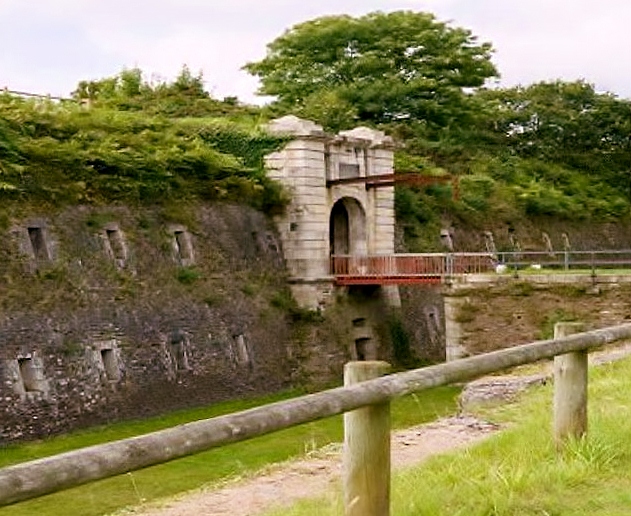
Castle Brest
Castle Brest, located in the city of Brest, France, stands as a monumental testament to over 1700 years of continuous military history. Positioned strategically at the mouth of the Penfeld River within one of the world's largest natural harbors—the roadstead of Brest—this fortress has played a pivotal role in regional defense from antiquity to modern times. Recognized as the oldest castle still in active use worldwide, it remains a vital military site while also serving as a cultural and historical landmark.
The origins of Castle Brest trace back to a Roman castellum established in the late Roman Empire, marking the beginning of its long-standing defensive function. Over the centuries, the site evolved through numerous phases of construction and fortification, reflecting the changing demands of military architecture and technology. The core of the present structure dates to the 11th century, positioning it firmly within the High Medieval period. This era was characterized by the establishment of robust stone fortresses designed to withstand siege warfare and assert feudal control.
Historical evolution and architectural development
Roman origins and early fortifications
The initial Roman fortress served as a strategic outpost to control naval access and protect the local population. Its placement at the river mouth allowed for surveillance of maritime traffic and defense against seaborne threats. While much of the Roman structure has not survived intact, archaeological evidence confirms its foundational role in the site's military significance.
Medieval expansion and fortification
During the 11th century, the castle underwent significant expansion, incorporating typical medieval defensive features such as thick curtain walls, towers for archers, and a fortified gatehouse. These enhancements transformed the site into a formidable hill castle adapted to the rugged coastal terrain. The castle's design reflects the architectural principles of the High Medieval period, emphasizing both defense and control over the surrounding region.
Vauban's citadel and modern adaptations
In the late 17th century, the renowned military engineer Sébastien Le Prestre de Vauban redesigned the fortress to meet the era's evolving military needs. Vauban's work introduced bastioned fortifications and star-shaped defensive layouts to improve resistance against artillery. This transformation marked Castle Brest's transition into a bastioned fortress, integrating modern military architecture while preserving its historical core.
Architectural features and defensive elements
Castle Brest showcases a complex layering of architectural styles and defensive systems. The original medieval curtain walls are complemented by Vauban's angular bastions and ramparts, creating a multi-tiered defense network. The castle includes moats, drawbridges, and reinforced gates designed to repel invaders. Within its walls lie armories, barracks, and command posts that illustrate its continuous military function.
The fortress's location on a rocky promontory enhances its natural defenses, with steep slopes limiting access and providing commanding views of the harbor. The integration of natural topography with constructed fortifications exemplifies strategic military planning across centuries.
Cultural significance and preservation status
Declared a monument historique on 21 March 1923, Castle Brest is not only a military installation but also a protected cultural heritage site. It embodies the historical narrative of Brest and Brittany, reflecting the region's geopolitical importance. The castle is partially accessible to the public, offering insights into its architectural evolution and military history through guided tours and exhibitions.
Despite its active military use, conservation efforts have maintained the fortress's structural integrity and historical authenticity. These efforts ensure that Castle Brest remains a living monument, bridging past and present.
Visiting castle brest
Visitors to Castle Brest can explore its extensive fortifications and enjoy panoramic views of the roadstead of Brest. The castle's location within the city makes it accessible, and it often hosts cultural events that highlight its historical significance. While some areas remain restricted due to military operations, public access areas provide a rich educational experience.
Optimal visiting times are during spring and summer when guided tours and exhibitions are most active. Visitors are encouraged to check local schedules for opening hours and ticket information.
Frequently asked questions (FAQ)
- How do I get to Castle Brest?
- Castle Brest is located in the heart of Brest, France, easily accessible by public transportation. Visitors can take the tram or bus directly to the castle, and there are several parking options available nearby for those arriving by car.
- What is the historical significance of Castle Brest?
- Castle Brest, dating back to the 14th century, has played a crucial role in the maritime history of France. It served as a military stronghold and a naval base, reflecting the strategic importance of Brest in historical conflicts.
- When was Castle Brest built?
- Construction of Castle Brest began in 1680, under the orders of King Louis XIV. The castle was completed in 1693 and has since been a significant landmark in the region.
- Can I take guided tours of Castle Brest?
- Yes, guided tours of Castle Brest are available to enhance your visit. These tours provide insights into the castle’s rich history, architecture, and its role in maritime defense.
- Why is Castle Brest considered an architectural marvel?
- Castle Brest showcases a blend of military architecture and artistic design, featuring impressive ramparts and bastions. Its strategic design not only served defensive purposes but also reflects the engineering advances of its time.
- Is it possible to visit Castle Brest with children?
- Absolutely! Castle Brest is family-friendly and offers engaging activities for children. Families can explore the castle grounds and participate in educational programs designed for younger visitors.
- What are the opening hours for Castle Brest?
- Castle Brest is typically open to visitors from 9 AM to 6 PM, with extended hours during the summer months. It is advisable to check the official website for any changes to the schedule or special events.
- What are the ticket prices for visiting Castle Brest?
- Ticket prices for Castle Brest are quite reasonable, with discounts available for students, seniors, and children. Family passes are also offered, making it an affordable option for a day of exploration.
- When is the best time to visit Castle Brest?
- The best time to visit Castle Brest is during the spring and early autumn when the weather is mild and pleasant. These seasons also tend to have fewer crowds, allowing for a more enjoyable experience.
- What nearby attractions can I visit while at Castle Brest?
- While visiting Castle Brest, you can explore the nearby Océanopolis, an impressive ocean discovery park, and the Brest Maritime Museum. Both attractions offer additional insights into the maritime heritage of the region.
Information
Website
Visit websiteSources & official resources
Verify the information above using these authoritative references.
Loading map...
Visitor reviews
No reviews yet. Been here? Write the first review and help other travelers!
Write the first reviewVisited this castle? Share your experience
Your review helps other travelers and adds first-hand knowledge to our encyclopedia.