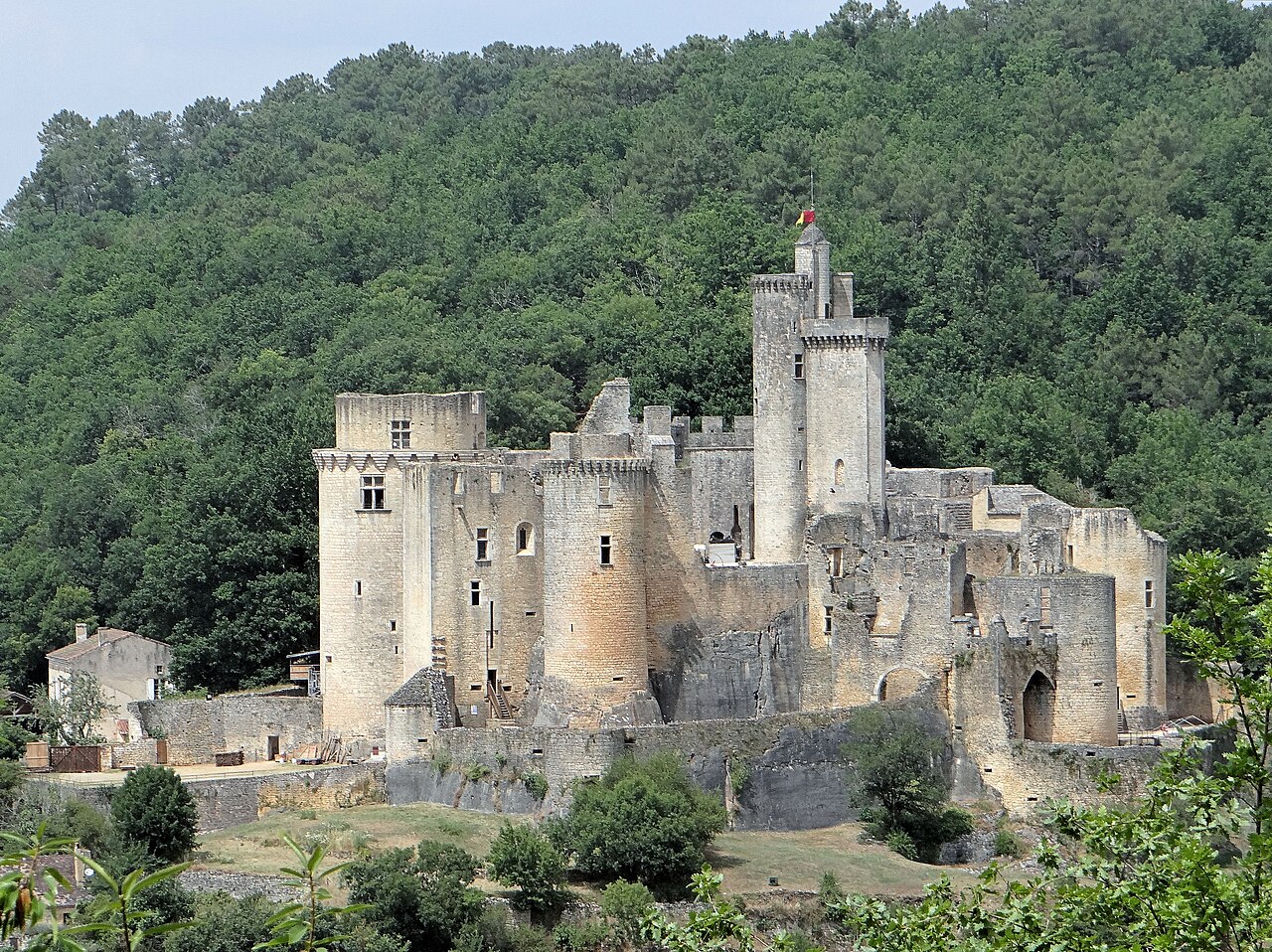
Château de Fumel
The Château de Fumel is a remarkable example of a hill castle in France, showcasing a rich history that spans from the 11th century through successive architectural transformations into the modern era. Located in the town of Fumel, the castle occupies a strategic terrace overlooking the Lot River valley, a position that historically allowed control over vital river crossings and the convergence of regional borders between Agenais, Quercy, and Périgord. This commanding location underpinned the castle's military and feudal significance from its inception.
Early origins and medieval fortifications
The origins of Château de Fumel date back to the 11th century, when the Fumel family, linked to the Counts of Toulouse and the Moissac Abbey as abbots-knights, established an initial fortification likely centered on a keep (donjon). This early structure was designed to assert control over the strategic Lot River crossing and the surrounding regional junctions, reflecting the military and political dynamics of the High Medieval period. By the 12th century, the original tower was replaced or supplemented by a larger donjon, marking a significant development in the castle's defensive capabilities.
During the 13th century, specifically in 1259, the fief and castle were held jointly by several noble families who pledged allegiance to Alphonse de Poitiers, brother of Saint Louis, while also recognizing the authority of the Bishop of Agen. This dual allegiance illustrates the castle's role as both a military stronghold and a seat of feudal governance.
The hundred years’ war and fortification enhancements
The castle and the fortified town of Fumel endured considerable turmoil during the Hundred Years’ War (1337–1453). The castle’s distinctive square layout with six towers—four round and two square—was a formidable defensive arrangement. Throughout the conflict, Fumel changed hands at least five times, underscoring its strategic importance. After the war, King Louis XI granted Bernard de Fumel permission to strengthen the town and castle defenses, leading to the construction of additional fortifications and a residential building east of the donjon.
Renaissance transformation and baronial residence
The 16th century brought a significant shift as the medieval fortress was transformed into a more comfortable residence. François I de Fumel, baron from 1551 until his death in 1561, initiated the construction of a new castle featuring an H-shaped plan with two terraced courtyards and rectangular pavilions. This design reflected Renaissance architectural trends emphasizing symmetry and residential comfort alongside defense.
François I’s connection by marriage to Catherine de Médicis and the royal court of Charles IX placed the Château de Fumel within the broader context of French noble politics and religious conflict. His violent death during a Protestant attack halted the completion of the original plan, resulting in only four of the intended pavilions being built. Successors such as François II and Charles de Fumel continued to develop the estate, with Charles elevating the barony to a viscounty under King Henri IV.
Later architectural modifications and restorations
Further modifications in the late 17th century under François-Joseph de Fumel included alterations to facades and the addition of a portico with vaulted arcades on the garden side of the central wing, enhancing both the aesthetic and functional qualities of the château. The 18th century saw the involvement of architect Jean-Baptiste Chaussard, who remodeled parts of the structure and redesigned the surrounding gardens, integrating the château into its natural landscape with carefully planned terraces and vistas across the Lot valley.
In the 19th century, ownership transferred to the Langsdorff family, who commissioned architect Léopold Payen to undertake restorations. These included the addition of a crowning balustrade in 1882 and the restoration of the main portal around 1900, contributing to the château's elegant silhouette and historic preservation.
Damage, preservation, and current use
The château suffered damage during the French Revolution, with its towers reduced to the height of the main building, a significant alteration that changed the castle's imposing medieval profile. Despite this, foundational traces of the original towers remain visible, preserving the memory of its fortified past.
In 1951, ownership was transferred to the municipality of Fumel, and from the 1960s onward, the château has served as the town hall. It was officially listed as a historic monument in the same year, ensuring its protection and maintenance as a cultural heritage site.
Architectural features and layout
The Château de Fumel integrates elements from various periods, creating a complex architectural tapestry. The original medieval castle featured a square plan fortified by six towers—four round and two square—surrounded by moats and accessed through two main gates and a smaller postern gate. Though the towers were lowered during the Revolution, their bases remain a defining feature of the castle's silhouette.
The central wing incorporates parts of the 12th-century donjon and the 15th-century residence, preserving layers of the castle's evolution. The Renaissance H-shaped plan includes two terraced courtyards and rectangular pavilions, four of which survive. Notably, the southeast wing ends in a southern pavilion whose upper floor was removed to create a terrace.
Decorative features include vermiculated bossage on the façades, a stone carving technique that adds texture and shadow, linking Château de Fumel stylistically to contemporaneous castles such as Lanquais and Vallery. The 17th-century portico on the garden side features vaulted ceilings and arcades, enhancing the elegance and usability of the château's central wing.
Gardens and landscape
The château is surrounded by gardens and terraces laid out or remodeled in the 18th century, designed to maximize views over the Lot valley. These gardens have been restored in modern times to maintain their historic character, providing a harmonious setting that complements the château's architectural grandeur. The late 19th-century addition of the balustrade crowning the façade further enhances the château's stately appearance.
Today, the Château de Fumel stands as a layered historical monument reflecting its medieval origins, Renaissance ambitions, and subsequent renovations. It embodies the evolution of French castle architecture from fortified stronghold to noble residence and public building, preserving a rich cultural heritage in the heart of the Lot valley.
Frequently asked questions (FAQ)
- How do I get to Château de Fumel?
- Château de Fumel is easily accessible by car and is located in the town of Fumel, France. There are also local bus services that connect it with nearby towns, making it convenient for visitors who prefer public transport.
- What is the historical significance of Château de Fumel?
- Château de Fumel dates back to the 13th century and has played a crucial role in the region's history, particularly during the Hundred Years' War. It showcases the feudal architecture of its time and reflects the strategic importance of the area.
- When was Château de Fumel built?
- The construction of Château de Fumel began in the early 13th century, with significant renovations made over the centuries. Its enduring structure and design highlight the architectural trends of medieval France.
- Can I take guided tours of Château de Fumel?
- Yes, guided tours are available at Château de Fumel, providing visitors with in-depth insights into its history and architecture. It's advisable to check the schedule in advance, as tours may vary throughout the year.
- Why is Château de Fumel considered an important architectural site?
- Château de Fumel is considered an important architectural site due to its well-preserved medieval structure and unique design elements that reflect the defensive needs of the time. The castle's towers and fortifications are prime examples of feudal architecture, attracting architecture enthusiasts and historians alike.
- Is it possible to host events at Château de Fumel?
- Yes, Château de Fumel offers facilities for hosting events, including weddings and corporate functions. Its picturesque setting and historical ambiance make it a popular choice for memorable occasions.
- What are the opening hours for Château de Fumel?
- Château de Fumel is typically open to visitors from 10 AM to 6 PM during the tourist season. However, it's recommended to check the official website or local listings for updated hours, especially during off-peak seasons.
- What is the best time to visit Château de Fumel?
- The best time to visit Château de Fumel is during the spring and early autumn when the weather is pleasant, and the surrounding scenery is beautiful. These seasons also tend to attract fewer crowds, allowing for a more enjoyable experience.
- What are the ticket prices for Château de Fumel?
- Ticket prices for Château de Fumel vary based on age and group size, with discounts often available for students and seniors. It's advisable to check the official website for current rates and any special offers before your visit.
- Are there any nearby attractions to Château de Fumel?
- Yes, nearby attractions include the charming town of Fumel itself, which features local markets and parks, as well as other historical sites like the Vallée du Lot. Visitors can enjoy a day of exploration by combining their visit to the castle with nearby cultural and natural sites.
Information
Loading map...
Visitor reviews
No reviews yet. Been here? Write the first review and help other travelers!
Write the first reviewVisited this castle? Share your experience
Your review helps other travelers and adds first-hand knowledge to our encyclopedia.