Château de Cuzorn
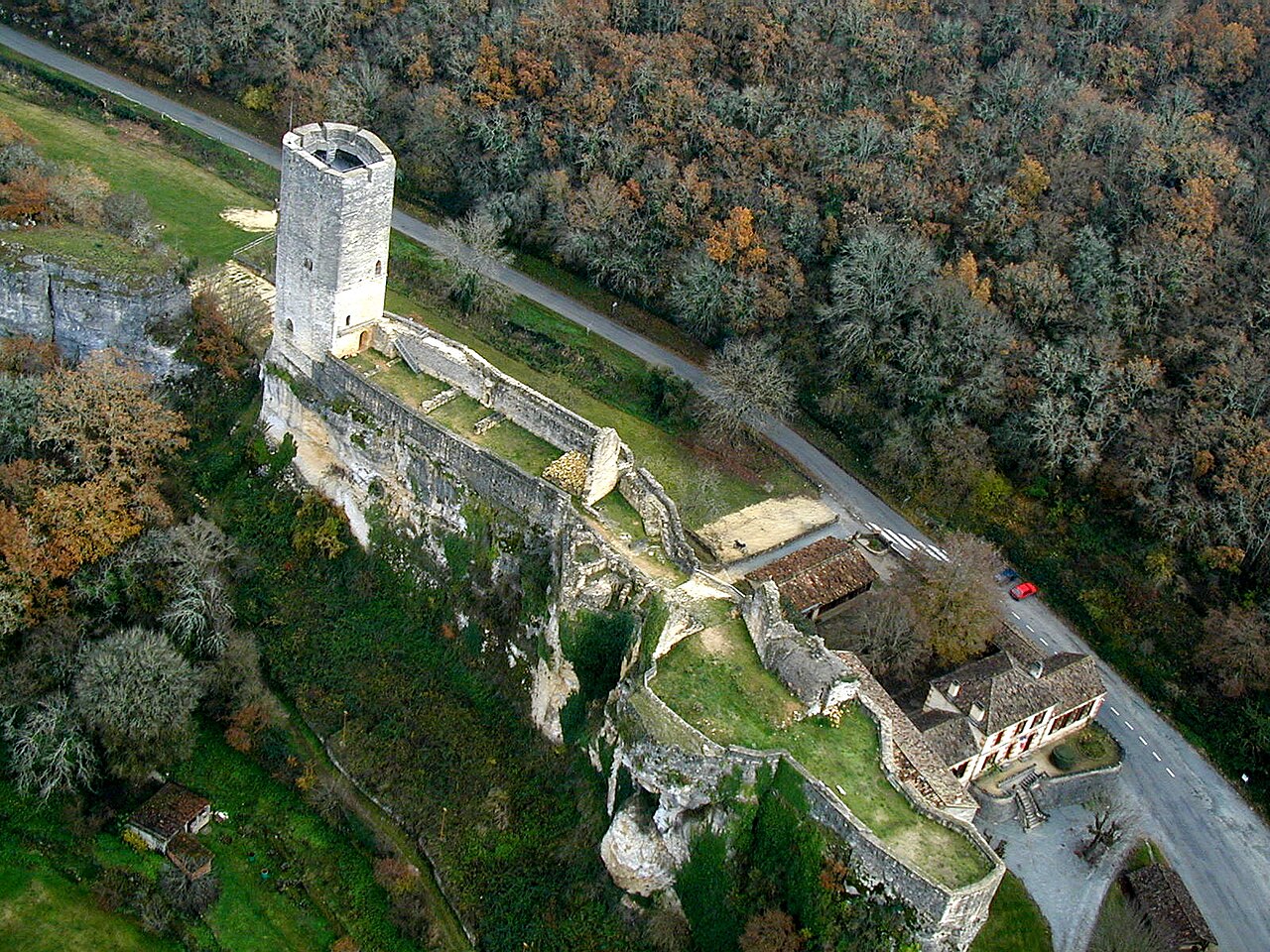
Château de Cuzorn stands in the strategic bottleneck of the Lémance valley in southwestern France, a location historically significant for controlling access to the region. The castle's origins are somewhat obscure, but its first documented mention dates back to 1242, appearing in an inscription found in the ruins of the Belleperche abbey, referencing a figure named B. de Cuzorn. This early record hints at the presence of local nobility tied to the area, though no castle is explicitly mentioned at this time.
The emergence of the castle in the 13th century
By 1259, the local nobility, including the brothers Gaubert, Pons, Guillaume, and Gaillard de Fumel, paid homage to the Count of Toulouse. Despite this, there is no direct mention of a castle or lordship at Cuzorn in these documents. However, a significant shift occurs in records from around 1270, which explicitly mention the lords of the castle of Cuzorn and a conflict involving Amalvinus de Cuzorn and the Bishop of Agen. This suggests the construction of the castle likely took place between 1260 and 1270, aligning with the period's typical fortification efforts during the High Medieval era.
Architectural features and strategic importance
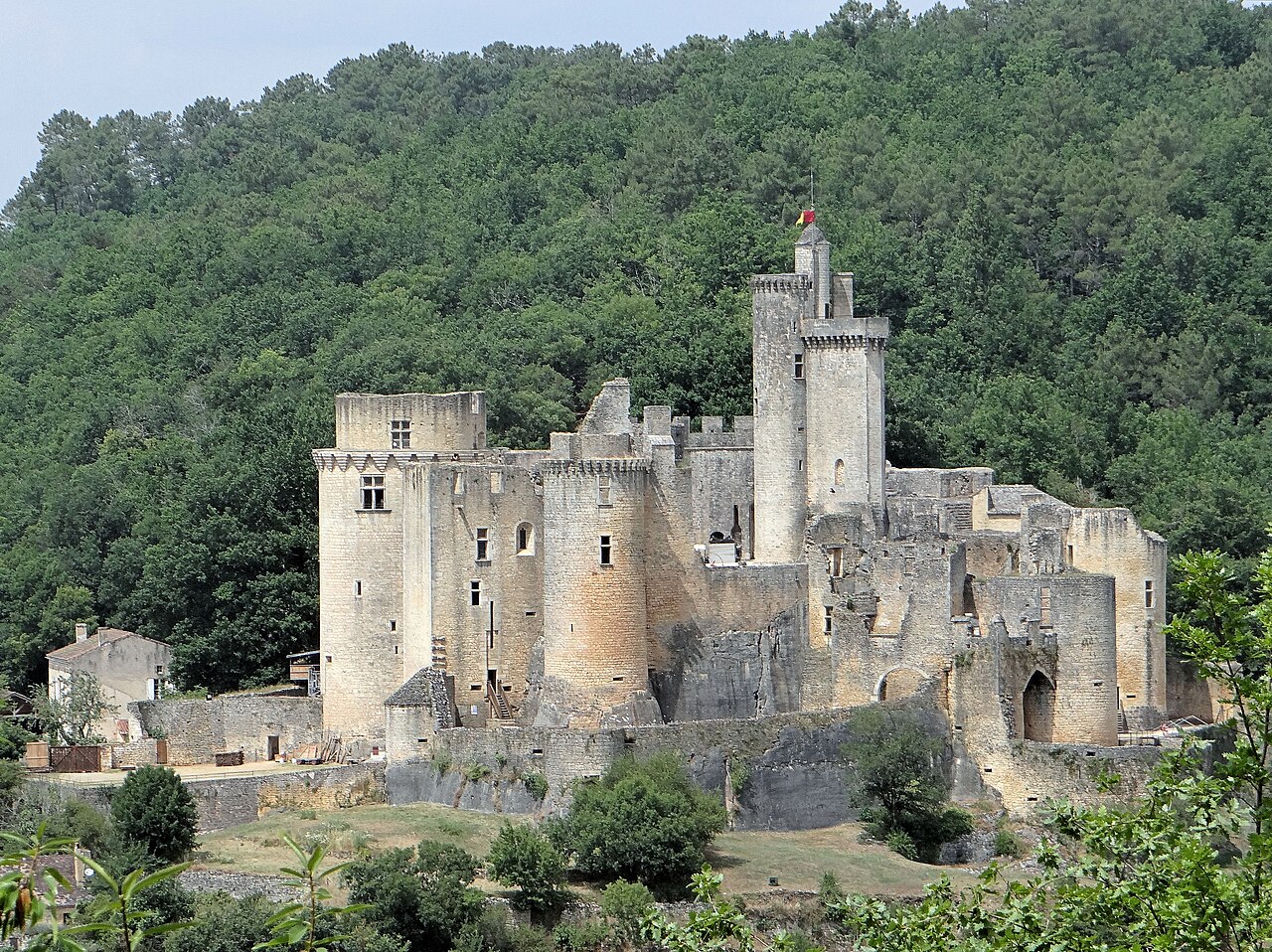
The castle was designed as a fortified stronghold to oversee and control the narrow passage of the Lémance valley. Its position on a natural bottleneck provided a defensive advantage, enabling surveillance and control of movement through the valley. While detailed architectural descriptions are limited, the castle would have included typical High Medieval defensive features such as thick stone walls, towers, and possibly a keep or donjon. The presence of a moat or other water defenses is not documented, but the natural terrain likely supplemented its defenses.
Historical ownership and conflicts
Throughout its history, the lordship of Cuzorn passed through several noble families. The de Lézergues family held the castle at one point, followed by the Gontaut de Saint-Geniès family. In 1442, the castle was subjected to a siege, a common fate for fortifications during the turbulent periods of the late Middle Ages. Following this siege, the castle's defenses were reportedly dismantled, reducing its military significance. Over the subsequent centuries, the lordship changed hands multiple times until the 19th century, reflecting the shifting political and social landscape of the region.
Modern history and preservation efforts
In the 20th century, the castle experienced renewed interest. In 1950, it was officially listed as a historical monument, recognizing its cultural and architectural importance. A few years later, in 1953, Georges Rastel acquired the property and undertook significant renovation work to preserve and restore parts of the castle. Later, in 1995, Thierry Delrieu became the owner, while the ruins were transferred to the municipality in 1996, ensuring public stewardship and conservation efforts.
Current condition and cultural significance
Today, Château de Cuzorn exists as a partially restored medieval fortress, with its ruins managed by the local municipality. The castle remains an important historical landmark in the Lot-et-Garonne department, attracting visitors interested in medieval architecture and regional history. Its position in the Lémance valley continues to highlight its original strategic purpose, offering insights into medieval military architecture and the feudal history of southwestern France.
Information
Loading map...
Visitor reviews
No reviews yet. Been here? Write the first review and help other travelers!
Write the first reviewVisited this castle? Share your experience
Your review helps other travelers and adds first-hand knowledge to our encyclopedia.