Château de Gavaudun
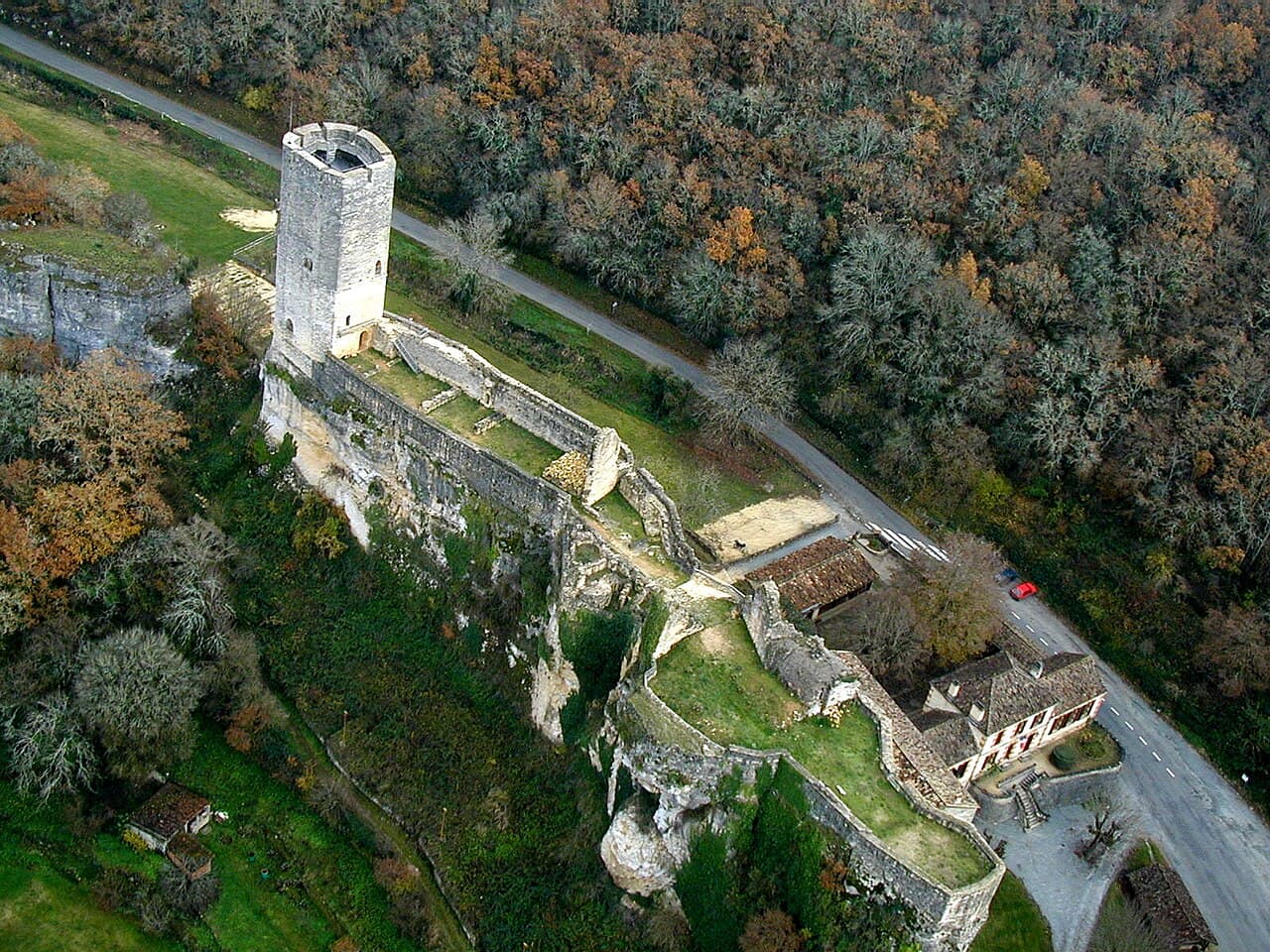
The Château de Gavaudun stands as a striking example of medieval military architecture perched on a limestone spur overlooking the river Lède in southwestern France. Built during the 12th and 13th centuries, this hill castle was strategically positioned to control a vital route between the historic regions of Périgord and Agenais. Its location atop a natural rocky ridge rising some 40 meters above the valley floor provided formidable natural defenses that were expertly integrated into the castle's design.
The castle's most prominent feature is its lofty 13th-century donjon or keep, which soars approximately 25 meters above the rock base. This keep was further heightened in the 14th century, ultimately comprising five stories that served both defensive and residential purposes. The stonework of the keep harmonizes with the surrounding limestone geology, creating a fortress that appears to rise organically from the landscape. The castle's overall layout prioritizes military utility over comfort, reflecting its primary role as a stronghold rather than a noble residence.
Historical significance and medieval conflicts
The Château de Gavaudun has a rich history intertwined with the turbulent medieval politics of southwestern France. Its origins date back to the high medieval period, when feudal lords fortified key points to secure control over important trade and military routes. The castle was first besieged and destroyed in 1165 by Jean d’Assida, bishop of Périgueux, who aimed to eliminate threats such as banditry or heresy in the region. This early destruction underscores the castle's strategic and symbolic importance.
Rebuilt soon after, the castle entered the records of royal archives by 1271 during the confiscation of the Count of Toulouse’s lands by the French crown, marking its integration into the broader political shifts of the time. The noble family of Gavaudun, likely the castle's original lords, is documented around this era, cementing its status as a seat of local power.
During the Hundred Years’ War (1337–1453), the castle's commanding position made it a key military asset in the ongoing conflict between England and France. Its fortified keep and natural defenses helped control the surrounding territory and protect the local populace. Ownership of the castle passed through several noble families, including the Durforts, Lustracs, d’Auray de Brie, and Belsunce, reflecting the complex feudal and dynastic changes of the period.
Religious conflicts and refuge
In the late 16th century, during the French Wars of Religion, the village beneath the castle became predominantly Protestant. The fortress then served as a refuge under the protection of Marguerite de Lustrac, who was allied with Henry of Navarre (later King Henry IV of France). This period highlights the castle's dual role as both a military bastion and a sanctuary amid religious turmoil.
Architectural features and defensive design
The castle's builders skillfully exploited the natural topography to maximize defense. The fortress is situated on a narrow terrace approximately 75 meters long and between 6 and 15 meters wide, carved from a rocky ridge. The sheer cliffs on nearly all sides create a natural moat, making direct assault extremely difficult.
Access to the castle was deliberately restricted to a single point: a vertical well carved into the rock face, where a ladder provided the only means of entry. This ingenious design ensured that the stronghold could be defended by a small garrison against larger forces.
The central keep dominates the site, its five stories rising above the rock to provide extensive views for surveillance and defense. The keep's robust stone walls, narrow windows, and battlements reflect typical high medieval military architecture. Behind the keep, the remains of various outbuildings once supported the castle's daily functions, though these structures have largely disappeared over time.
Material and construction
The castle was constructed primarily from local limestone, which was quarried nearby and shaped to blend with the natural rock formation. This use of native stone not only enhanced the fortress's camouflage but also contributed to its durability. The masonry techniques employed are characteristic of the high medieval period, featuring thick walls and limited openings to resist siege weaponry.
Decline, preservation, and modern status
Following centuries of military use, the castle fell into decline during the French Revolution, when revolutionary forces targeted symbols of feudal power. In 1796, the castle suffered extensive destruction, and its ownership was transferred to the commune of Gavaudun. This marked the end of its role as a noble residence or fortress.
Despite this damage, the castle's central keep was recognized for its historical and architectural significance. It was among the first medieval structures in France to be classified as a protected historic monument in 1862. This protection was extended in 1987 to include the remaining ruins, ensuring the site's preservation for future generations.
Today, the Château de Gavaudun remains a poignant symbol of medieval fortification and regional history. The towering keep still dominates the landscape, offering visitors a glimpse into the strategic military thinking of the high medieval period. The castle's ruins attract historians, architects, and tourists interested in the evolution of castle construction and the complex history of southwestern France.
Visitor experience and cultural importance
Visitors to the site can explore the remains of the donjon and enjoy panoramic views of the surrounding Lède valley. The castle's dramatic setting on a rocky outcrop provides a tangible connection to the medieval past. Interpretive signage and local guides help illuminate the castle's role in regional history, including its military, religious, and social significance.
The castle also serves as a cultural landmark for the commune of Gavaudun, symbolizing centuries of heritage and resilience. Preservation efforts continue to maintain the ruins, ensuring that this remarkable example of high medieval military architecture remains accessible and informative for visitors and scholars alike.
Frequently asked questions (FAQ)
- How do I get to Château de Gavaudun?
- Château de Gavaudun is located in the village of Gavaudun in the Nouvelle-Aquitaine region of France. It is accessible by local roads, and visitors can reach it by car or regional bus services from nearby towns.
- What is the best time to visit Château de Gavaudun?
- The best time to visit Château de Gavaudun is during the spring and summer months when the weather is mild and the surrounding landscape is lush. This period also offers longer daylight hours for exploring the ruins and enjoying panoramic views.
- Is Château de Gavaudun accessible to visitors with mobility issues?
- Due to the castle's rugged terrain and steep access points, including a vertical rock well and ladders, the site is not fully accessible to visitors with limited mobility. Visitors should be prepared for uneven ground and climbing.
- Are there guided tours available at Château de Gavaudun?
- Guided tours are occasionally available through the local tourist office or during special cultural events. These tours provide detailed historical context and architectural insights into the castle's significance.
- What are the opening hours and ticket prices for Château de Gavaudun?
- The castle ruins are generally open to the public year-round, free of charge. However, specific visiting hours may vary, and it is advisable to check with the local tourism office for current information.
Photo gallery

Photo by Bernardg•Public domain
Information
Sources & official resources
Verify the information above using these authoritative references.
Loading map...
Visitor reviews
No reviews yet. Been here? Write the first review and help other travelers!
Write the first reviewVisited this castle? Share your experience
Your review helps other travelers and adds first-hand knowledge to our encyclopedia.