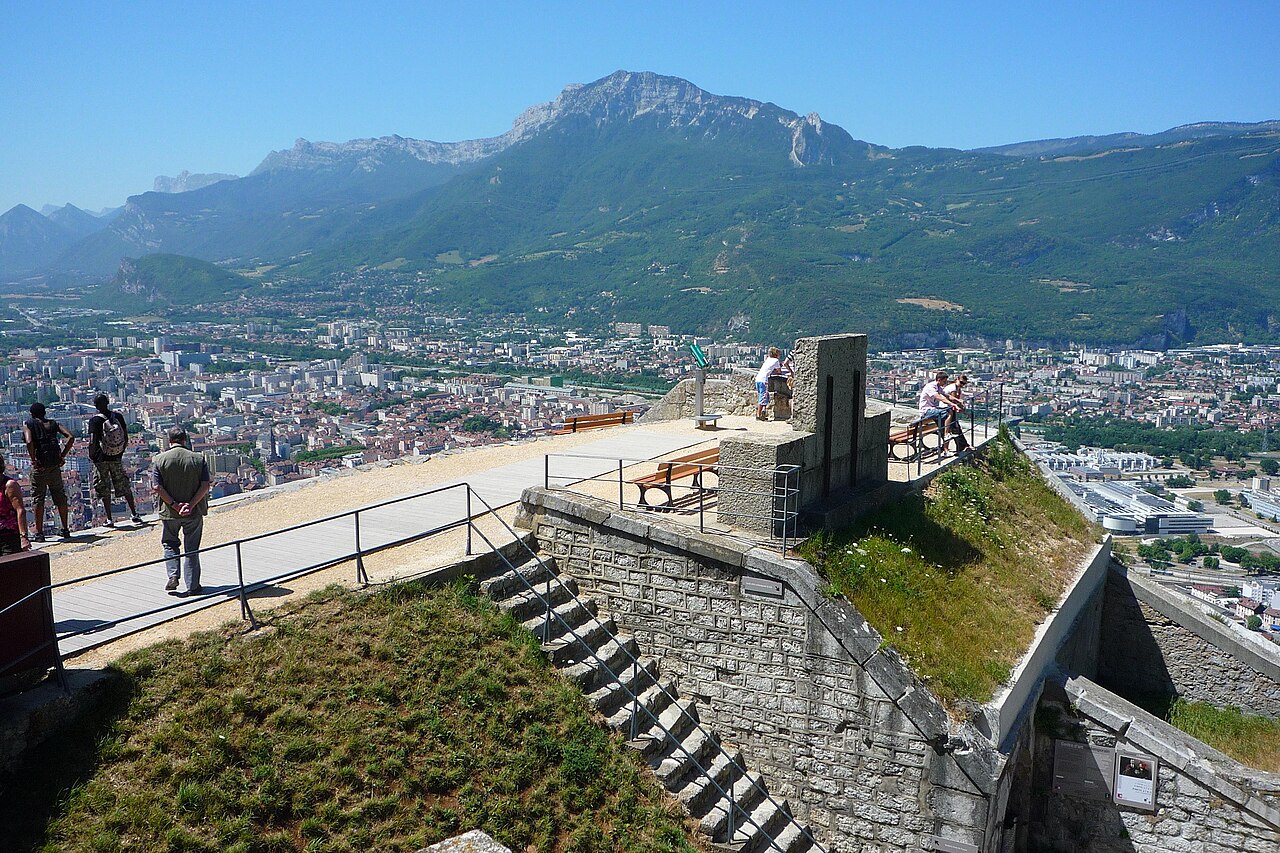
Château de Chaulnes
The Château de Chaulnes is a distinguished example of a 17th-century noble residence located in the Hauts-de-France region of France. Positioned near the hamlet of Les Glairons, the château occupies a strategic elevated site at the base of the Vercors cliff, overlooking the Isère valley with views extending towards the Chartreuse mountain range. This location on sandy terrain, historically part of the Isère riverbed, has shaped both the estate's defensive and aesthetic qualities.
The château's origins trace back to the early modern period, specifically the 17th century, when it was established by the Chaulnes family, who migrated from regions such as Picardy or Burgundy. The estate was initially part of the holdings of local nobility, including the barons of Sassenage, before being acquired by Antoine de Chaulnes in 1613. The family's prominence grew, culminating in the elevation of the domain to a marquisate in 1684 under Joseph de Chaulnes. This period marked the château's rise as an important aristocratic seat in the region.
Historical significance and ownership lineage
Throughout its history, the château has seen a succession of notable owners reflecting shifts in political and social structures. In the 18th century, ownership passed to ecclesiastical authorities, namely the bishops of Grenoble, Jean de Caulet and his nephew Tristan de Caulet. Their stewardship indicates the estate's connection to religious power and influence during that era.
The 19th century brought significant architectural enhancements under the ownership of the Thomas family. Joseph-Marie Thomas notably added two imposing square turrets at the corners of the main building, a stylistic choice that enhanced the château's grandeur and visual impact. These additions reflect the era's taste for historicism and the desire to emphasize noble status through architectural embellishments.
In the aftermath of the First World War, the château's role evolved, with its dependences repurposed as an orphanage supported by American Methodist organizations. This humanitarian use marked a significant departure from its aristocratic origins.
Later in the 20th century, the estate was acquired by the Deverre family, known for their military and banking ties, who maintained ownership until the 1970s. The transition to a restaurateur in the 1980s initiated a new phase focused on commercial use for events, balancing private ownership with public accessibility.
Architectural features and estate layout
Main building and structural elements
The château's main structure is a two-story building featuring a vaulted cellar beneath, indicative of construction techniques from the early modern period. The 19th-century turrets are prominent architectural elements that contribute to the château's distinctive silhouette, blending functional defense motifs with ornamental purposes.
Inside, the château preserves original parquet flooring alongside mosaic tile floors, which enhance the historic ambiance and reflect the craftsmanship of various periods. The central staircase, carefully restored, serves as a focal point for the interior, designed to accommodate large gatherings and events, demonstrating adaptive reuse of the space.
Grounds and ancillary structures
The estate encompasses a modest domain including a garden and a pond, creating a landscaped setting that complements the château's architecture. The presence of a small ruined chapel on the grounds points to the estate's former religious functions, likely serving the spiritual needs of its inhabitants and staff.
A notable feature is the large east-facing terrace that overlooks the valley, offering panoramic views that enhance the château's appeal both historically and for contemporary visitors. This terrace exemplifies the integration of natural scenery into the estate's design, a common aspect of noble residences aiming to showcase their dominion over the surrounding landscape.
Cultural heritage and preservation
The Château de Chaulnes remains a well-preserved example of a noble residence that has adapted through centuries of changing ownership and functions. Its architectural layering—from the early modern 17th-century core to the 19th-century enhancements—offers valuable insights into evolving styles and social aspirations.
Restoration efforts have maintained the château's historical atmosphere while accommodating modern uses, such as cultural events and private functions. This balance ensures the estate's continued relevance and accessibility, allowing visitors to appreciate its architectural and historical significance within the Hauts-de-France region.
Overall, the Château de Chaulnes stands as a testament to the rich heritage of French noble estates, reflecting the intertwined narratives of aristocracy, religion, and social change over several centuries.
Frequently asked questions (FAQ)
- When was Château de Chaulnes originally built?
- Château de Chaulnes was originally established in the 17th century during the early modern period.
- What architectural features distinguish Château de Chaulnes?
- The château features a two-story main building with a vaulted cellar, original parquet and mosaic tile floors, and 19th-century square corner turrets.
- Can visitors enjoy scenic views from Château de Chaulnes?
- Yes, the château has a large east-facing terrace overlooking the Isère valley and the Chartreuse mountain range, providing panoramic views.
- Has Château de Chaulnes been used for purposes other than a noble residence?
- Yes, after World War I, the château's dependences served as an orphanage supported by American Methodist organizations.
- Is Château de Chaulnes open for public events?
- Since the 1980s, under private ownership, the château has been used for commercial events while preserving its historic character.
Information
Website
Visit websiteSources & official resources
Verify the information above using these authoritative references.
Loading map...
Visitor reviews
No reviews yet. Been here? Write the first review and help other travelers!
Write the first reviewVisited this castle? Share your experience
Your review helps other travelers and adds first-hand knowledge to our encyclopedia.