Château de Serviantin
The Château de Serviantin stands as a remarkable example of medieval fortification architecture in the Hauts-de-France region of France. Constructed in the 13th century, this hill castle was originally designed to serve as a fortified residence during a period marked by frequent regional conflicts and territorial disputes. Its strategic location in the Grésivaudan valley, also known as the "Vallée des cent châteaux," underscores its importance in controlling the surrounding landscape and protecting local interests.
Throughout its history, the château has undergone significant transformations reflecting the evolving needs and tastes of its owners. The castle's initial defensive purpose gradually shifted towards residential comfort, particularly from the 15th century onwards. This evolution is clearly visible in the architectural layout and surviving structural elements, which blend military functionality with Renaissance and later stylistic influences.
Medieval origins and strategic location
Built during the high medieval period, the château's location on a hill provided commanding views over the valley and the surrounding mountain ranges, including the Belledonne and Chartreuse massifs. This vantage point was crucial for surveillance and defense, typical of hill castles constructed in this era. The castle's proximity to important routes, now marked by the modern A41 motorway and RD1090 road, highlights its historical role in controlling access and movement through the region.
Architectural features and layout
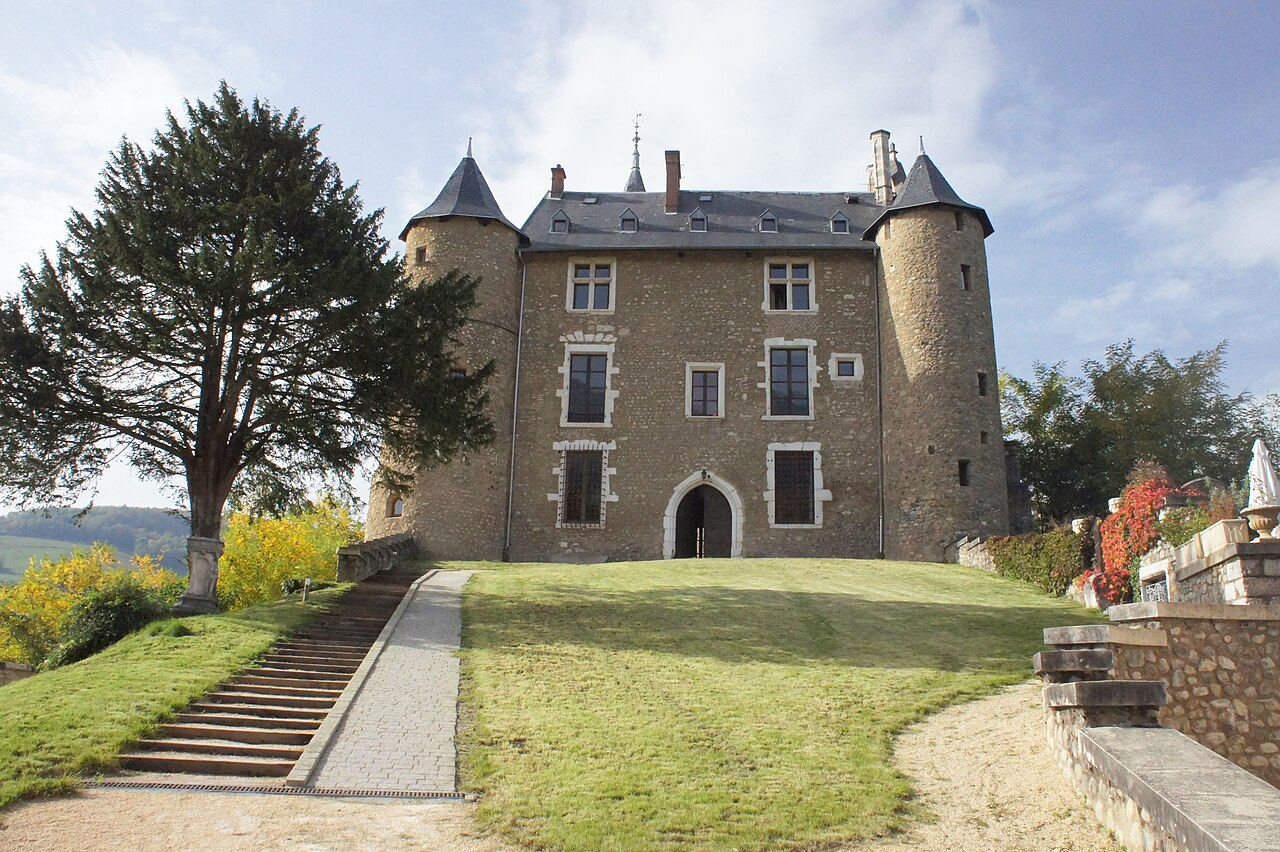
The château is composed of two wings arranged at a right angle, dating from the 15th and 16th centuries. This configuration reflects the castle's transition from a purely defensive fortress to a residence emphasizing both practicality and aesthetic appeal. The right-angled wings create a distinctive footprint that balances fortified elements with domestic spaces.
Dominating the structure are three towers that punctuate its silhouette, reinforcing its medieval character. Two of these are round towers located on the southeast façade, strategically positioned to oversee the Belledonne mountain range. The third is a large square tower on the northern side, facing the Chartreuse massif. These towers served multiple purposes, including defense, observation, and as symbols of the lord's power.
A particularly notable feature is the engraved coat of arms on the entrance door, belonging to the Morard d’Arces family, who owned the château in the 15th century. This heraldic emblem provides a tangible connection to the castle's aristocratic past and adds a layer of historical significance to the entrance.
Historical ownership and significance
The château's ownership history reflects its importance in regional and national affairs. In the 15th century, it was held by the Morard d’Arces family, whose influence is still visible in the castle's heraldry. Later, from around 1500 until the mid-17th century, the estate belonged to the Servien de Biviers family. Among them, Abel Servien stands out as a prominent figure; he was a distinguished French statesman and diplomat who served as superintendent of finances under Cardinal Mazarin in 1653.
Abel Servien’s connection to the château ties the site to significant political developments in France during the 17th century. Under his tenure and that of his family, the château underwent adaptations to suit more comfortable residential living, incorporating Renaissance architectural elements and later modifications extending into the 19th century.
Preservation and cultural heritage status
Recognizing its architectural and historical importance, the Château de Serviantin has been partially protected as a historic monument since November 1960. The designation specifically covers the building’s façades and roofs, ensuring the preservation of its external appearance and key structural features. This protection helps maintain the château’s legacy within the rich tapestry of the "Vallée des cent châteaux," a region celebrated for its concentration of historic castles.
Though detailed information about the château’s interior condition is limited, the preservation of its exterior elements allows visitors and scholars to appreciate its medieval origins and subsequent architectural evolution. Its setting at the foot of the Chartreuse massif near Mont Saint-Eynard further enhances its scenic and strategic value.
Architectural evolution and adaptations
The transition from a fortified medieval castle to a more comfortable residence is evident in the château’s architectural modifications. The two wings, built in the 15th and 16th centuries, reflect changing priorities from defense to domesticity. The addition of Renaissance stylistic details and improvements in living spaces indicate the owners’ desire to align with contemporary tastes and social status.
The castle’s three towers, while retaining their defensive roles, also served as prestigious architectural statements. The round towers on the southeast façade offered panoramic views, likely used for both surveillance and leisure, while the imposing square tower on the north side symbolized strength and authority.
Materials and construction techniques
While specific details about construction materials are scarce, typical medieval hill castles in this region utilized locally sourced stone, which provided durability and defensive strength. The preservation of façades and roofs suggests the use of robust masonry techniques and traditional roofing materials consistent with the castle’s historical periods.
The château in its landscape and modern context
Situated in a valley renowned for its dense concentration of castles, the Château de Serviantin contributes to the cultural and historical landscape of the Hauts-de-France region. Its proximity to modern infrastructure like the A41 motorway and RD1090 road highlights the continuity of its strategic location from medieval times to the present day.
The château’s position near the Chartreuse massif and Mont Saint-Eynard offers visitors spectacular natural surroundings, combining historical exploration with scenic beauty. This integration of cultural heritage and landscape underscores the château’s enduring significance.
Visiting the château and its heritage
While the château is protected as a historic monument, detailed public access information is limited. Visitors interested in the region’s medieval heritage can appreciate the château’s external features and its setting within the "Vallée des cent châteaux." The preservation of its façades and towers allows for an evocative glimpse into the architectural and historical narrative of the area.
Exploring the château’s surroundings provides insight into the broader historical context of castle-building in the Hauts-de-France region, reflecting the complex interplay of defense, residence, and status that shaped medieval and Renaissance aristocratic life.
Frequently asked questions (FAQ)
- What is the historical significance of Château de Serviantin?
- Château de Serviantin is a remarkable example of French Renaissance architecture, showcasing the grandeur and artistic achievements of the period. Built in the 16th century, it reflects the cultural and political history of the region, serving as a residence for notable figures throughout its history.
- When is the best time to visit Château de Serviantin?
- The best time to visit Château de Serviantin is during the spring and early autumn months when the weather is mild and the gardens are in full bloom. These seasons also feature fewer crowds, allowing for a more enjoyable and immersive experience.
- Can I take guided tours of the château?
- Yes, guided tours are available at Château de Serviantin, providing visitors with in-depth insights into the history and architecture of the castle. These tours are typically conducted by knowledgeable guides who can answer questions and share fascinating stories about the site.
- Is it possible to access Château de Serviantin with mobility aids?
- Château de Serviantin has made efforts to improve accessibility for visitors with mobility challenges. While some areas may be difficult to navigate, staff are available to assist, and there are designated pathways to enhance the visitor experience.
- What are the opening hours of Château de Serviantin?
- Château de Serviantin is open to the public from 10 AM to 6 PM, with extended hours during the summer months. It is advisable to check the official website for any seasonal changes or special events that may affect opening times.
- How much are the ticket prices for Château de Serviantin?
- Ticket prices for Château de Serviantin vary depending on age and group status, with discounts available for children and seniors. General admission tickets are reasonably priced to ensure accessibility for all visitors.
- Are there any nearby attractions to visit while at Château de Serviantin?
- Yes, visitors to Château de Serviantin can explore several nearby attractions, including picturesque gardens, local wineries, and charming villages. These sites offer additional cultural and recreational opportunities to enhance your visit.
Information
Website
Visit websiteSources & official resources
Verify the information above using these authoritative references.
Loading map...
Visitor reviews
No reviews yet. Been here? Write the first review and help other travelers!
Write the first reviewVisited this castle? Share your experience
Your review helps other travelers and adds first-hand knowledge to our encyclopedia.