Château de Bon Repos
The Château de Bon Repos stands as a remarkable example of a hill castle with a rich history that bridges the medieval and early Renaissance periods in France. Located in the municipality of Jarrie within the Hauts-de-France region, this château embodies centuries of architectural evolution and noble heritage. Its origins trace back to a fortified site established in the 12th and 13th centuries, evidenced by the surviving enclosure walls, which highlight its strategic importance during the medieval era.
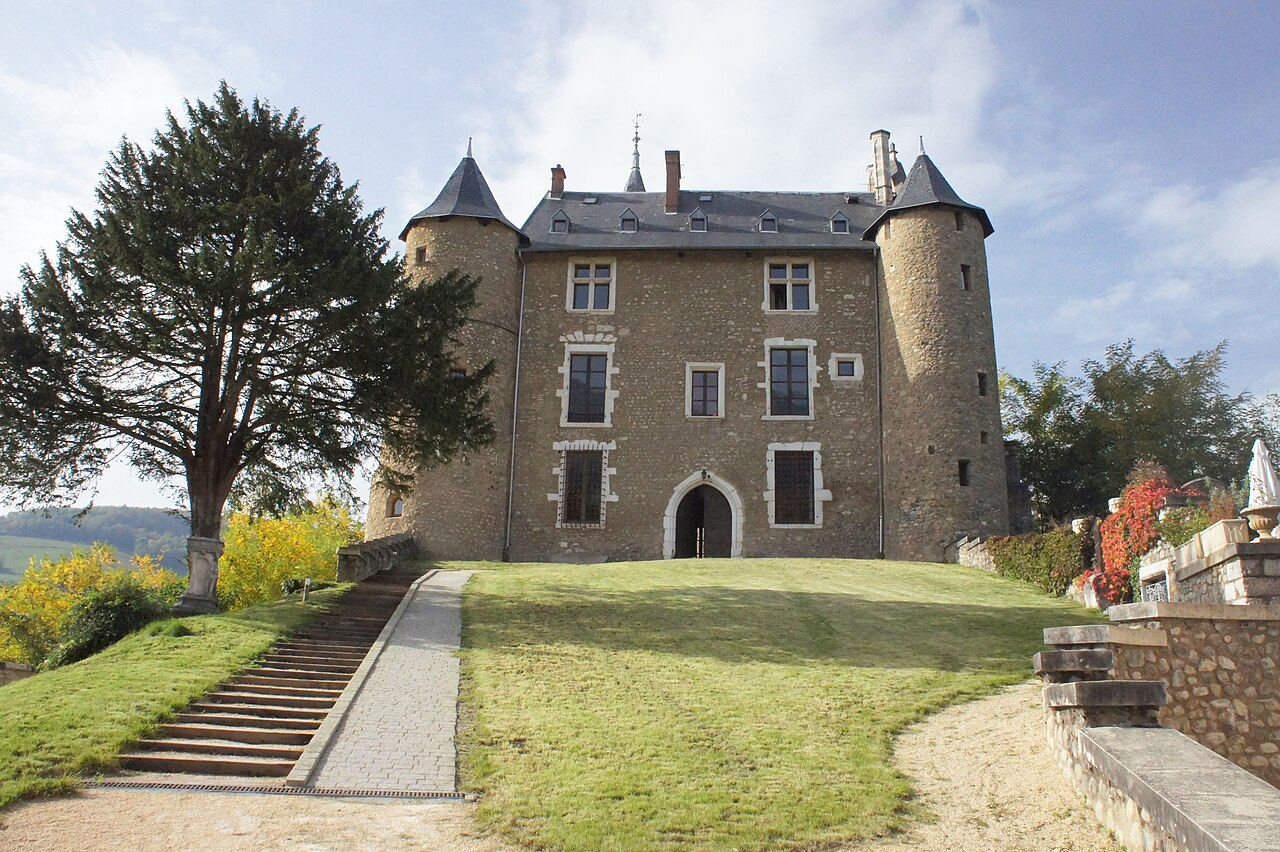
Constructed primarily during the early Renaissance around 1470, the château was commissioned by the French noble Guillaume Armuet. The main residence, or logis, is a substantial rectangular building that originally featured a roof and four corner turrets, characteristic of early Renaissance residential and defensive architecture. Although the roof collapsed in 1917, the turrets and much of the masonry remain intact, providing valuable insight into the château's original design and function.
Historical context and ownership
The history of Château de Bon Repos reflects the broader social and political changes in France from the late medieval period through the modern era. Initially owned by the Armuet family, the château symbolized noble status and the transition from purely defensive fortifications to more comfortable, representative residences during the Renaissance. The estate passed to the d’Auberjon de Murinais family in 1673, who held it until 1811, after which it was acquired by the Costa de Beauregard family. This lineage of ownership illustrates the château’s continued importance as a noble residence over several centuries.
In the 19th century, the château changed hands multiple times before coming into the possession of Jules Jouvin in 1874. The Jouvin family retained ownership into the late 20th century, during which time the château experienced significant challenges, including the collapse of its roof during World War I, which marked the beginning of its physical decline.
Architectural features and significance
The main residence and turrets
The logis of Château de Bon Repos is the centerpiece of the estate, featuring a rectangular plan typical of early Renaissance châteaux. The four corner turrets are notable for their defensive function as well as their contribution to the château’s aesthetic. These turrets, along with the thick masonry walls, reflect a blend of medieval fortification techniques and Renaissance residential comfort.
The gothic chapel
Within the château grounds lies a Gothic-style chapel dating from the 15th century. This chapel is a significant element that contrasts with the Renaissance style of the main residence, illustrating the coexistence of medieval religious architecture alongside early modern secular buildings. The chapel’s architectural details provide insight into the spiritual life of the château’s inhabitants and the importance of religious functions within noble estates of the period.
Medieval enclosure walls
Surrounding the château are enclosure walls originating from the 12th and 13th centuries. These fortifications predate the Renaissance construction and signify the site's earlier role as a fortified stronghold. The masonry remains of these walls contribute to the château’s historical depth, representing the evolution of military architecture from the medieval to the Renaissance era.
Restoration and preservation efforts
Following the damage sustained during World War I, particularly the collapse of the roof in 1917, Château de Bon Repos entered a period of decline. However, the local government of Jarrie took ownership in 1976, initiating a renewed focus on preservation. An association formed in 1978 has overseen ongoing restoration efforts aimed at stabilizing the structure and promoting cultural activities at the site.
The château and its surrounding enclosure were officially designated as historic monuments on October 8, 1986, recognizing their cultural and architectural significance. Restoration continued into the 21st century, notably supported by funding from the Loto du Patrimoine in 2018, which facilitated repairs to the roof and windows of the main building.
Ecological and cultural importance
Beyond its architectural and historical value, Château de Bon Repos is also recognized for its ecological significance. The estate has been designated as a bird sanctuary by the Ligue pour la protection des oiseaux (LPO) under an agreement from 2011 to 2014. This designation underscores the château’s integration into the natural heritage of the region, highlighting the coexistence of cultural preservation and environmental stewardship.
Today, Château de Bon Repos stands as a testament to the layered history of French noble residences, combining medieval fortifications with early Renaissance architectural innovation. Its ongoing restoration and protection efforts ensure that this historic site remains a valuable cultural landmark within the Hauts-de-France region.
Frequently asked questions (FAQ)
- When was Château de Bon Repos built and by whom?
- Château de Bon Repos was built around 1470 during the early Renaissance by the French noble Guillaume Armuet.
- What architectural styles are represented at Château de Bon Repos?
- The château combines early Renaissance elements in the main residence with a 15th-century Gothic-style chapel, reflecting a blend of medieval and Renaissance influences.
- What caused the decline of Château de Bon Repos in the 20th century?
- The château suffered significant damage during World War I, particularly in 1917 when its roof collapsed, leading to its decline.
- Is Château de Bon Repos open to the public?
- The château is managed by the municipality of Jarrie and restoration efforts are ongoing. Visitors should check local sources for current visiting hours and access details.
- What restoration efforts have been made at Château de Bon Repos?
- Restoration began after the municipality acquired the château in 1976, with major repairs funded by the Loto du Patrimoine in 2018 focusing on the roof and windows.
- Why is Château de Bon Repos ecologically significant?
- The château grounds were designated a bird sanctuary by the Ligue pour la protection des oiseaux (LPO) from 2011 to 2014, highlighting its role in natural heritage conservation.
Information
Sources & official resources
Verify the information above using these authoritative references.
Loading map...
Visitor reviews
No reviews yet. Been here? Write the first review and help other travelers!
Write the first reviewVisited this castle? Share your experience
Your review helps other travelers and adds first-hand knowledge to our encyclopedia.