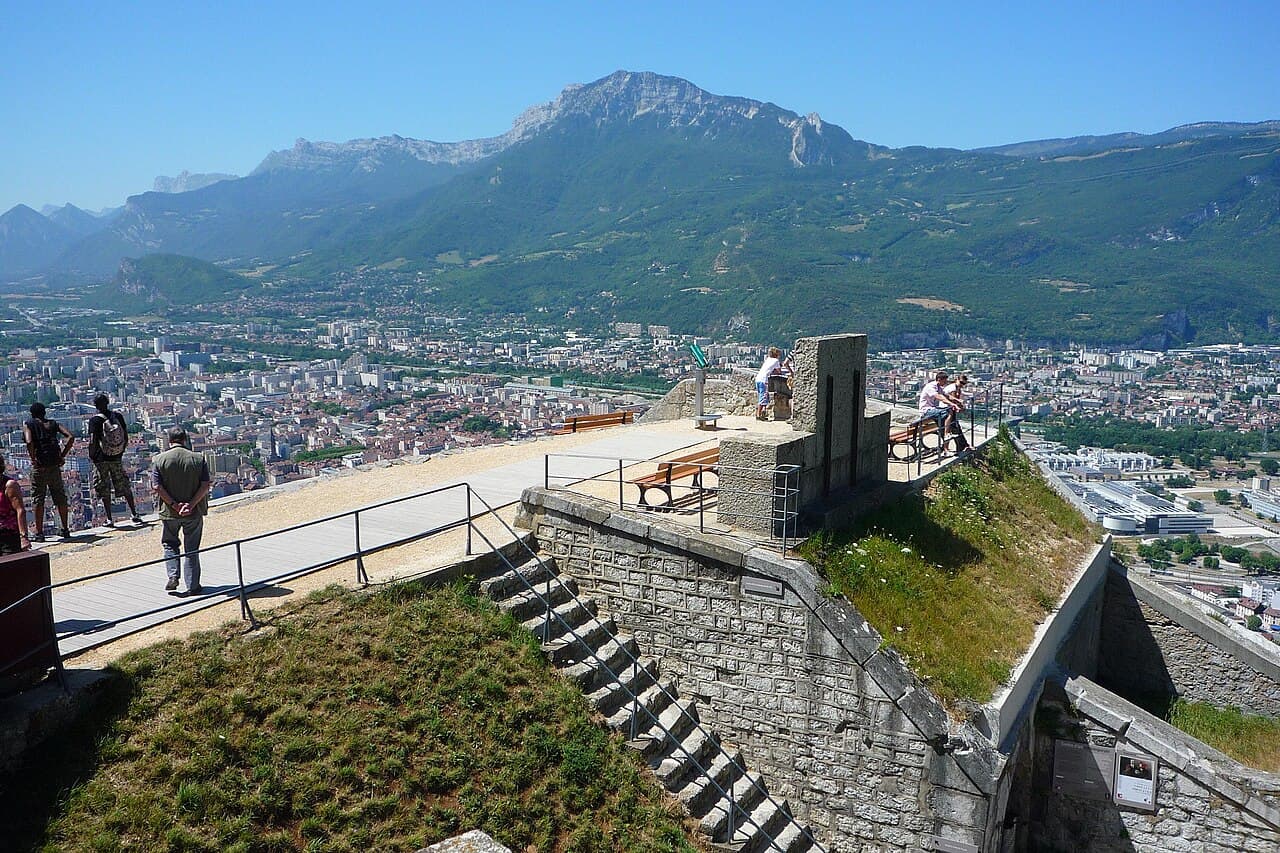
The Bastille fortress stands prominently at 476 meters (1,561 feet) above sea level, perched on a strategic hill at the southern end of the Chartreuse mountain range. Overlooking the city of Grenoble, France, this historic fortification dominates the landscape and serves as a significant cultural and tourist landmark. With an annual footfall of approximately 600,000 visitors, the Bastille remains one of the most visited sites in the Grenoble area, offering a unique blend of military history, panoramic views, and architectural interest.
Historical context and strategic importance
The Bastille was constructed during the 19th century as a bastioned fortress, a type of fortification designed to withstand artillery attacks characteristic of the modern period. Its location atop a steep hill provided a commanding vantage point over Grenoble and the surrounding valleys, making it a critical defensive position for controlling access to the city and protecting it from potential invaders.
The fortress was part of a broader network of military defenses developed in response to evolving warfare technologies and geopolitical tensions in France during the 1800s. Its design reflects the military engineering principles of the time, emphasizing strong defensive walls, bastions for artillery placement, and strategic positioning to maximize defensive coverage.
Architectural features and design
The Bastille exemplifies the characteristics of bastioned fortresses with its angular bastions projecting outward from the main walls, allowing defenders to cover adjacent walls with crossfire and eliminate blind spots. The fortress walls are robust and thick, constructed to absorb and deflect cannon fire.
The layout includes multiple defensive layers, such as moats and ramparts, designed to slow and expose attacking forces. Access to the fortress is controlled through fortified gates and narrow pathways that exploit the natural topography of the hill. The combination of natural elevation and man-made defenses made the Bastille a formidable stronghold.
Inside, the fortress contains various military structures, including barracks, armories, and lookout posts. These facilities supported the garrison stationed there and facilitated the fortress's role in regional defense.
Modern use and tourism
Today, the Bastille serves as a major tourist attraction and cultural site in Grenoble. Visitors can reach the fortress via a scenic cable car ride known as the "Téléphérique de la Bastille," which offers spectacular views of the city and surrounding mountains. The fortress grounds feature walking trails, panoramic viewpoints, and historical exhibits detailing its military past.
The site also hosts cultural events and exhibitions, integrating its historical significance with contemporary community life. Its preservation and adaptive reuse highlight the importance of maintaining military heritage sites for educational and recreational purposes.
Natural surroundings and panoramic views
The Bastille's position within the Chartreuse mountain range provides visitors with stunning vistas of the French Alps and the city of Grenoble below. The natural environment surrounding the fortress includes rugged cliffs, forested slopes, and diverse flora and fauna, contributing to the site's appeal as a destination for both history enthusiasts and nature lovers.
Hiking trails connect the Bastille to other parts of the mountain range, offering opportunities for outdoor activities and exploration beyond the fortress itself.
Frequently asked questions (FAQ)
- What is the historical significance of the Bastille in Grenoble?
- The Bastille of Grenoble is a fortress that dates back to the 19th century and is an iconic symbol of the city. Originally built for military defense, it played a key role in protecting Grenoble from invasions and has become a popular tourist attraction due to its panoramic views and historical relevance.
- How do I get to the Bastille in Grenoble?
- You can reach the Bastille by taking the cable car from the city center, which offers a scenic ride and stunning views of the surrounding landscape. Alternatively, there are hiking trails available for those who prefer to walk, making it accessible for different types of visitors.
- What are the opening hours of the Bastille?
- The Bastille is open year-round, with varying hours depending on the season. Generally, it opens at 10 AM and closes at 6 PM, but it's advisable to check the official website for any seasonal changes or special closures.
- Is there an entrance fee to visit the Bastille?
- Yes, there is a ticket fee to access certain areas of the Bastille, including guided tours and exhibitions. Prices may vary based on the season and age group, so it's best to check the official site for current ticket prices and any available discounts.
- Can I take my children to the Bastille?
- Absolutely! The Bastille is a family-friendly destination with plenty of open spaces for children to explore. There are also educational exhibits that can engage younger visitors, making it a great outing for families.
- When is the best time to visit the Bastille?
- The best time to visit the Bastille is during the spring and fall when the weather is mild, making it ideal for outdoor activities. However, summer can also be a great time to visit, as it offers a vibrant atmosphere with various events and activities.
- What nearby attractions should I visit while at the Bastille?
- While visiting the Bastille, you can also explore the beautiful Parc Paul Mistral and the city’s charming old town. Additionally, the Museum of Grenoble and the picturesque Isère River are within a short distance, offering a rich cultural experience.
- Is it possible to access the Bastille for individuals with limited mobility?
- Yes, the Bastille has made efforts to be accessible for individuals with limited mobility. The cable car provides a convenient option, and there are pathways designed for easier navigation around the site, though some areas may still present challenges.
Photo gallery

Photo by Milky•Public domain
Information
Loading map...
Visitor reviews
No reviews yet. Been here? Write the first review and help other travelers!
Write the first reviewVisited this castle? Share your experience
Your review helps other travelers and adds first-hand knowledge to our encyclopedia.


