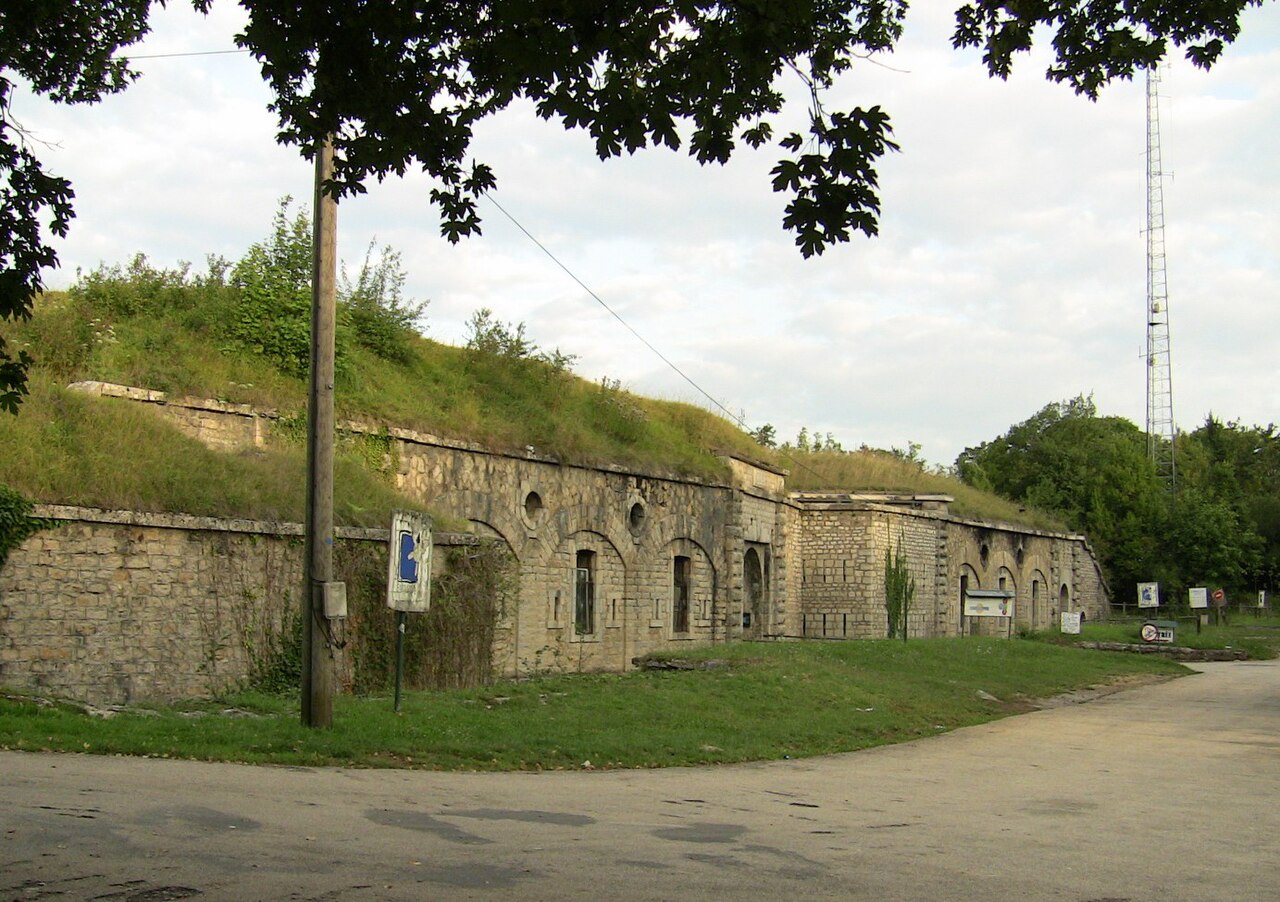
Château de Charencey
The Château de Charencey stands as a remarkable example of medieval military architecture in the region of Hauts-de-France. This hill castle is perched on a rocky spur overlooking the Loue River valley, utilizing the natural limestone cliffs to create formidable defenses on three sides. Its strategic location, approximately 120 meters above the valley floor, offered commanding views and protection, making it a key stronghold in the region during the Middle Ages.
The castle's origins trace back to the 12th century, when it was constructed by local feudal lords to assert control over the surrounding lands. The nearby village, historically known as Charencey, lent its name to the fortress. Over time, the castle evolved not only as a military bastion but also as a residence reflecting the complex feudal arrangements of the area. Notably, the fortress was divided into two main sections: the châtel-devant, controlled by the Andelot family, and the châtel-derrière, held by the Arguel family. This division illustrates the localized power dynamics and the dual administration of the castle's defensive and domestic functions.
Medieval architecture and fortifications
The castle's design showcases a sophisticated adaptation to the evolving demands of medieval warfare. Its location on a rocky outcrop provided natural protection on the north, east, and south sides, with steep cliffs acting as natural barriers. The western side, more exposed, was heavily fortified with a strong curtain wall that served as the primary defensive line. This wall was reinforced by a central bastion, a projecting defensive platform that allowed defenders to deliver flanking fire against attackers. Flanking the bastion were two towers: a large square tower to the south and a smaller round tower to the north, both equipped with machicolations—overhanging parapets with openings for dropping projectiles on enemies below.
Entry to the castle was carefully controlled through a vaulted passage leading to the place d’armes (central courtyard). This gateway was defended by narrow arrow slits and an iron portcullis, a heavy grille that could be rapidly lowered to block intruders. Beyond the outer defenses, a second rampart enclosed the castle's residential and administrative quarters, including the lord’s apartments, the keep (donjon), the chapel, and the cour d’honneur (main courtyard). This layered defense system reflects the castle's dual role as a military fortress and noble residence.
Defensive adaptations to firearms
In the early 15th century, under the direction of Jean III de Chalon-Arlay, the castle underwent significant upgrades to counter the increasing use of firearms and artillery in warfare. These enhancements included the addition of artillery embrasures—specialized openings in the walls designed for cannon fire—and reinforced bastions to withstand bombardment. The masonry, primarily composed of locally quarried limestone, was thickened and adapted to absorb the impact of cannonballs. These modifications demonstrate the castle's ongoing military importance and its owners' commitment to maintaining a modernized defense system.
Historical significance and events
Throughout its history, Château de Charencey played a vital role in regional conflicts and feudal power struggles. The castle's division between two noble families exemplifies the fragmented nature of medieval territorial control. In 1636, during the Ten Years’ War, the fortress hosted a war council in May, highlighting its strategic importance. The following month, it endured a siege by French forces, which ultimately failed to capture the stronghold. This resilience under siege underscores the effectiveness of its fortifications and the determination of its defenders.
By the 20th century, the castle's condition had declined, with many structures reduced to ruins. However, significant elements such as a second keep or donjon remained visible, providing valuable insight into the castle's original layout and defensive capabilities. Recognizing its cultural and historical value, French authorities designated the ruins as a protected historic monument on April 8, 1991, ensuring preservation efforts for future generations.
Architectural remains and layout
The castle site covers over three hectares and is characterized by multiple defensive lines that illustrate its adaptation to changing military technologies. The natural limestone cliffs shield the castle on three sides, while the western approach required extensive fortifications. The surviving curtain walls and towers, some still bearing machicolations and arrow slits, provide a tangible link to the castle's medieval past.
At the eastern end of the fortress stands a distinctive round tower with pointed-arch windows, elevated above the rest of the structure. This tower served both as a lookout point with sweeping views of the Loue valley and as a symbol of feudal authority. The castle's defensive system also included a network of ditches, additional bastions, and layered walls, designed to slow or repel attackers through multiple lines of defense.
Within the ruins, visitors can explore vaulted underground chambers that likely served various practical functions, including storage and shelter. A cistern for collecting and storing water remains intact, emphasizing the castle's self-sufficiency during sieges. The masonry construction, with its thick walls and cannon openings, reflects the evolution of military architecture from the medieval period into the early modern era.
Cultural heritage and preservation
Today, Château de Charencey stands as a significant cultural landmark in the Hauts-de-France region. Its ruins offer valuable insights into medieval feudal society, military architecture, and the adaptation of fortifications to evolving warfare technologies. The castle's protected status helps safeguard its remains against further deterioration, allowing historians, architects, and visitors to appreciate its historical importance.
Efforts to maintain and study the site continue, highlighting the castle's role not only as a military stronghold but also as a residence that reflected the complex social and political structures of its time. Visitors to the site can explore its extensive ruins, gaining an understanding of the layered defenses and architectural innovations that made Château de Charencey a formidable fortress in its era.
Frequently asked questions (FAQ)
- How do I get to Château de Charencey?
- Château de Charencey is located in the picturesque region of France, easily accessible by car or public transport. The nearest major city is Dijon, from where you can take a train or drive for approximately an hour to reach the castle.
- What is the historical significance of Château de Charencey?
- Château de Charencey dates back to the 16th century and holds a rich history tied to the French nobility. It has witnessed various historical events and has been beautifully preserved, making it a significant site for understanding France's architectural evolution and heritage.
- When was Château de Charencey built?
- Construction of Château de Charencey began in the early 16th century, with the main structure completed by the end of that century. Its design reflects the Renaissance architectural style, showcasing intricate details that were popular during that era.
- Can I visit Château de Charencey year-round?
- Yes, Château de Charencey is open to visitors throughout the year, though specific opening hours may vary by season. It is advisable to check the official website for the most current visiting hours and any seasonal events.
- Why is Château de Charencey popular among tourists?
- Château de Charencey is popular for its stunning architecture, beautiful gardens, and serene surroundings. Visitors are drawn to its historical significance and the picturesque landscape, making it an ideal spot for photography and leisurely walks.
- Is it possible to tour the interior of Château de Charencey?
- Yes, guided tours of the interior are available, allowing visitors to explore the castle's rich history and architectural features. These tours often provide fascinating insights into the lives of the nobility who once resided there.
- What are the ticket prices for Château de Charencey?
- Ticket prices for Château de Charencey vary depending on age and group size, with discounts available for children and seniors. It's recommended to purchase tickets in advance through the official website for a smoother experience.
- What are the opening hours for Château de Charencey?
- Château de Charencey generally opens at 10 AM and closes at 6 PM, but these hours may change during the off-peak season or for special events. Always check the official website for the latest information regarding opening times before your visit.
- Are there any nearby attractions to visit while at Château de Charencey?
- Yes, the area around Château de Charencey is rich in attractions, including beautiful vineyards, charming villages, and other historic sites. Visitors often enjoy exploring the surrounding countryside and indulging in local wine tastings.
Information
Loading map...
Visitor reviews
No reviews yet. Been here? Write the first review and help other travelers!
Write the first reviewVisited this castle? Share your experience
Your review helps other travelers and adds first-hand knowledge to our encyclopedia.