Château de Busset
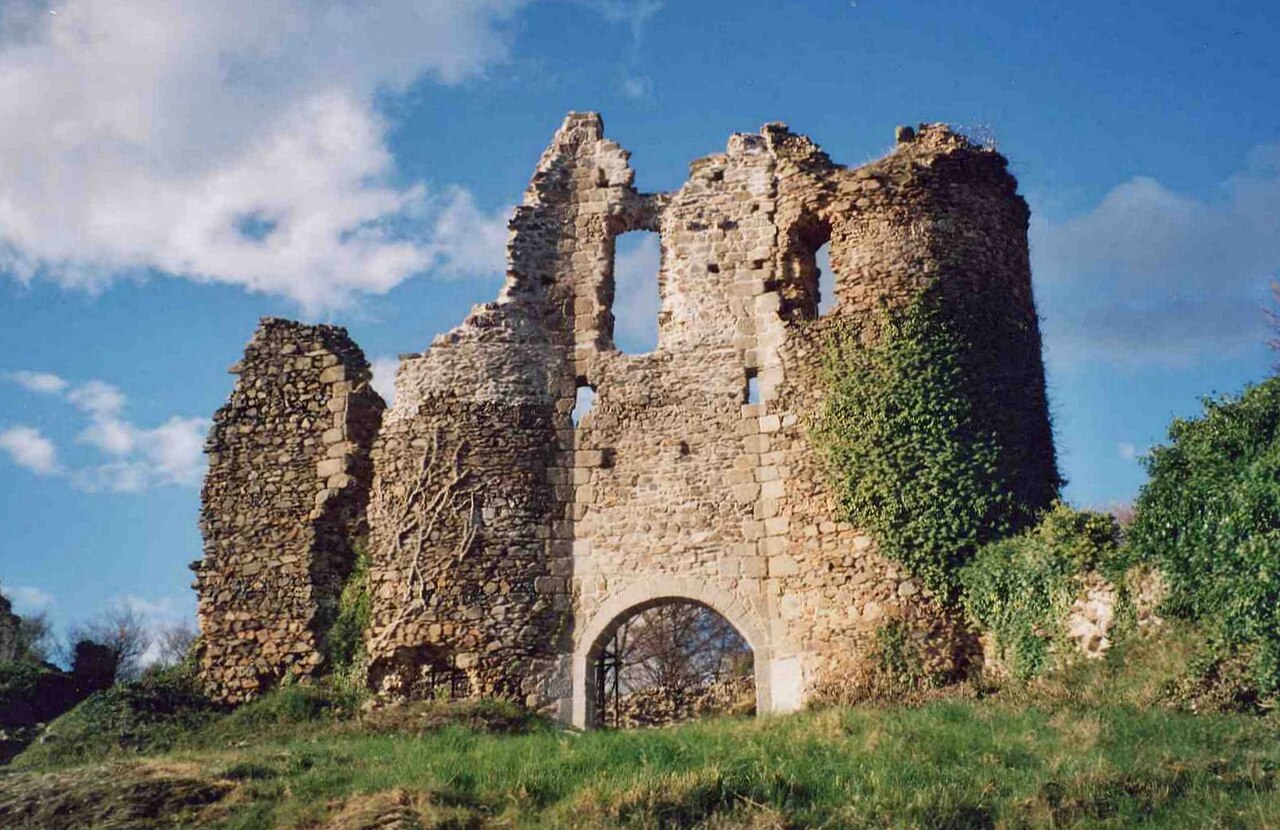
The Château de Busset is a remarkable medieval hill castle located in the commune of Busset within the Allier department of the Auvergne-Rhône-Alpes region in central France. Constructed near the end of the 13th century by the lords of Vichy, it stands as a testament to the feudal power structures and architectural ingenuity of medieval France. The castle has been the ancestral home of the Bourbon-Busset family for over fourteen generations, linking it intimately with French royal lineage and noble heritage.
The castle's origins as a fortified residence reflect the defensive needs of the period, featuring robust structures such as moats, a châtelet gatehouse, and a drawbridge. Its medieval core includes the imposing 14th-century donjon known as the Tour Henri IV, named after the notable visit of King Henry IV in 1599. This visit underscored the château's importance within the Bourbon family network and French nobility.
Medieval origins and bourbon-busset lineage
The Château de Busset was originally built by the lords of Vichy, a noble family prominent in the late 13th century. The castle served as a strategic and residential stronghold during a time when feudal lords exercised considerable regional power. The site's selection on a hill provided natural defensive advantages, typical of hill castles designed to oversee and control surrounding lands.
From the late 15th century, the château became the ancestral seat of the Bourbon-Busset family. This lineage was formally established in 1498 through the marriage contract of Marguerite de Tourzel d’Allègre and Pierre de Bourbon, a chamberlain to King Louis XII and descendant of Robert de Clermont, son of King Saint Louis (Louis IX). This connection embedded the castle within the broader Bourbon dynasty, emphasizing its noble and royal associations.
Architectural evolution and 16th-century transformations
Throughout the 16th century, the Château de Busset underwent significant architectural modifications reflecting Renaissance influences and changing residential needs. The castle's layout was adapted to enhance both defense and domestic comfort, resulting in the distinctive "maison à chemises" design. This unique feature consists of three exterior walls each doubled by a second wall of equal thickness, separated by narrow corridors. These corridors provide access to chambers on each floor, combining defensive robustness with practical circulation.
The castle retains original mullioned windows, characterized by vertical stone bars dividing the glass, a hallmark of medieval and Renaissance architecture. The interior gallery walls are adorned with 16th-century frescoes illustrating moralistic tales from Henri Baude’s "Dictz moraulx", adding cultural and artistic significance to the site.
Defensive features and towers
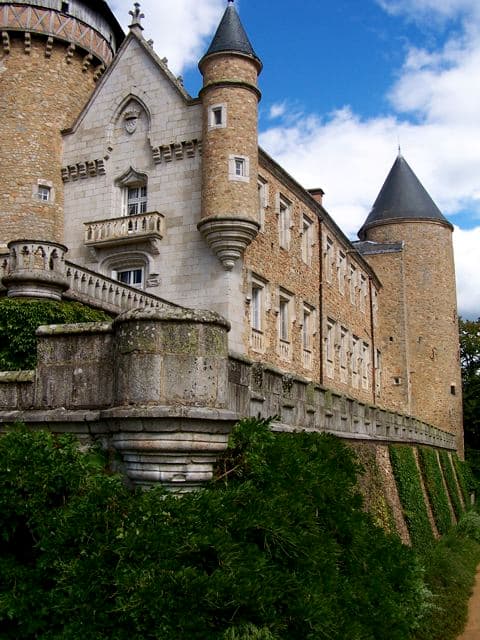
The castle's defensive perimeter includes moats and a fortified entrance châtelet with a drawbridge, underscoring its military origins. The medieval core is dominated by the Tour Henri IV, a 14th-century donjon named after the royal visit. Flanking the main residence are cylindrical towers that complement the medieval fortifications, while a corner staircase tower facilitates vertical movement within the complex.
The 15th-century Tour de Riom is notable for its well-preserved wooden hoarding—a defensive wooden structure projecting from the walls—and a roof covered with chestnut shingles. Another significant tower, the Tour de la Prison, contains a vaulted stone oratory decorated with mural paintings at its highest level, serving as a private chapel likely used by the family.
19th-century neo-gothic restoration and additions
In the 19th century, the château experienced extensive restoration under the direction of architect René Hodé (1811–1874). These works introduced neo-Gothic elements that enhanced the castle's medieval character in line with the romantic revival movements of the time. Additions included turrets, machicolations (projecting parapets with openings for defensive purposes), small watchtowers known as échauguettes, and ornate pinnacles.
The 1858 construction of a Gothic-style chapel within the courtyard replaced an earlier parish church that had been demolished in 1840. This chapel served as the family burial site and reinforced the château’s religious functions during the 19th century.
Domestic arrangements and service quarters
The château's service areas include a remarkable kitchen gallery featuring semicircular arcades facing the southeast courtyard. The kitchen itself remains largely unaltered, preserving its original fireplaces and vaulted ceilings, offering valuable insight into the domestic life and architectural design of the period.
Gardens and landscape features
The extensive grounds of the Château de Busset encompass a variety of garden styles recognized for their cultural heritage value. These include a kitchen garden for vegetables and herbs, a formal French garden characterized by symmetrical geometric patterns, and an Italian-style garden reflecting Renaissance landscaping influences.
A remarkable natural feature within the courtyard is a sequoia tree exceeding thirty meters in height, which stands as a striking contrast to the historic stone architecture and adds to the estate’s unique character.
Cultural significance and modern status
The Château de Busset remains privately owned by a Swiss family and is not accessible to the public. Its historical and architectural significance has been officially recognized through progressive legal protections beginning in 1981 and continuing through the 1990s. These protections cover various parts of the castle, including the main residence’s ground floor, the second-floor gallery, the oratory in the prison tower, the entrance châtelet with moats and drawbridge, the 18th-century east wing, the chapel, and the gardens.
Around the year 2000, a public auction dispersed many family furnishings and archival documents, including a notable 16th-century tapestry from Audenarde depicting biblical scenes from the History of Joseph. Such dispersal marks a significant moment in the château’s recent history, reflecting changes in ownership and the challenges of preserving private heritage sites.
Overall, the Château de Busset stands as a well-preserved example of a medieval fortified residence that evolved architecturally through the Renaissance and neo-Gothic periods, maintaining its connection to the Bourbon dynasty and French noble history.
Frequently asked questions (FAQ)
- How do I get to Château de Busset?
- Château de Busset is conveniently located in the Auvergne region of France. Visitors can reach the castle by car, with parking available on-site, or by public transportation, with nearby bus services connecting to major towns.
- What is the historical significance of Château de Busset?
- Château de Busset dates back to the 15th century and has played a vital role in the region's history, serving as a residence for nobility. Its rich heritage is reflected in its architecture and the numerous historical events that have taken place within its walls.
- When was Château de Busset built?
- Construction of Château de Busset began in the 15th century, with various renovations and expansions occurring over the centuries. The castle showcases styles from different periods, reflecting its long and storied past.
- Can I take guided tours of Château de Busset?
- Yes, guided tours of Château de Busset are available, providing visitors with in-depth information about its history and architecture. These tours are typically conducted by knowledgeable guides who can answer questions and enrich your experience.
- Why is the architecture of Château de Busset noteworthy?
- The architecture of Château de Busset is notable for its blend of medieval and Renaissance styles, showcasing impressive stonework and intricate details. The castle's design reflects the wealth and status of its former inhabitants, making it an intriguing site for architecture enthusiasts.
- Is it possible to host events at Château de Busset?
- Yes, Château de Busset offers facilities for hosting various events, including weddings and corporate gatherings. The scenic surroundings and historical ambiance make it a unique venue for memorable occasions.
- What are the opening hours for Château de Busset?
- Château de Busset is typically open to visitors from April to October, with specific hours varying by day. It is advisable to check the official website or contact the castle directly for the most up-to-date information on opening hours.
- What is the best time to visit Château de Busset?
- The best time to visit Château de Busset is during the spring and early autumn months when the weather is mild and the gardens are in full bloom. This period also tends to see fewer crowds, allowing for a more enjoyable experience.
- What are the ticket prices for Château de Busset?
- Ticket prices for Château de Busset vary depending on age and type of tour selected. Discounts may be available for students, children, and groups, so it's best to check the official website for detailed pricing information.
- Are there any nearby attractions to visit while at Château de Busset?
- Yes, the area surrounding Château de Busset is rich with attractions, including picturesque villages and beautiful natural parks. Visitors can explore local wineries, historical sites, and enjoy outdoor activities such as hiking and cycling in the stunning Auvergne countryside.
Photo gallery

Photo by DVernon at English Wikipedia•Public domain
Information
Website
Visit websiteSources & official resources
Verify the information above using these authoritative references.
Loading map...
Visitor reviews
No reviews yet. Been here? Write the first review and help other travelers!
Write the first reviewVisited this castle? Share your experience
Your review helps other travelers and adds first-hand knowledge to our encyclopedia.