Castle Busset
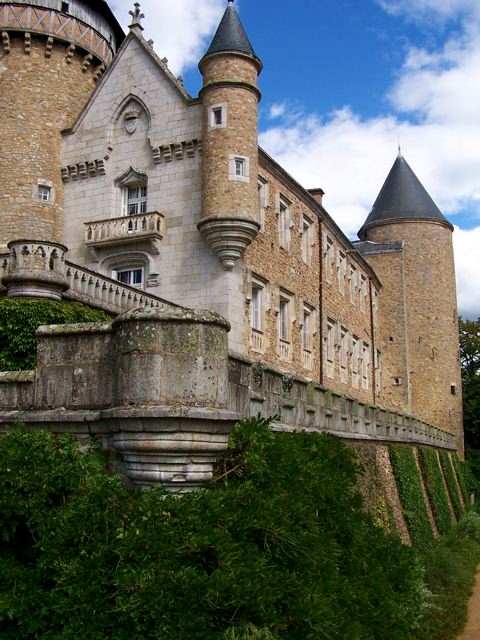
The Castle Busset stands as a remarkable example of a late medieval fortress that gracefully transitioned into a Renaissance residence. Located in the commune of Busset, France, it has been the ancestral home of the Bourbon-Busset family since the end of the 15th century. This lineage traces back to the non-reigning direct descendants of the Capetian dynasty, linking the castle to some of the most influential noble families in French history.
The castle’s origins are believed to date back to the late 13th century, when the Knights Templar began fortifying one of their commanderies at the site. This early phase laid the foundation for what would become a classic medieval stronghold. The fortress was completed in the 15th century, characterized by its moats, ramparts, and a commanding keep topped with battlements. One of the castle’s most striking architectural features is the octagonal tower known as Orion, named after the constellation admired by the Templars from its summit. This tower not only served defensive purposes but also symbolized the mystical and strategic interests of the order.
Historical evolution and renaissance influences
The castle’s history took a significant turn at the end of the 15th century when Marguerite de Busset married Pierre de Bourbon, who was the Chamberlain to King Louis XII. This union founded the Bourbon-Busset family, intertwining the castle’s fate with the broader Bourbon legacy. During the 16th century, the castle embraced the Italian Renaissance spirit, largely influenced by Louise Borgia, daughter of the infamous Cesare Borgia, who married Philippe de Bourbon, Marguerite’s son.
Louise Borgia introduced distinctive Renaissance architectural elements to the castle, including a covered arcade on the ground floor and an elegant gallery on the first floor of the east wing. These additions were adorned with frescos that have been carefully restored in recent years, showcasing the blend of medieval fortification with Renaissance artistic refinement. This period marked a transformation of the castle from purely military use to a more comfortable noble residence, reflecting the changing social and cultural dynamics of the time.
Architectural features and medieval fortifications
The castle is a quintessential example of a feudal fortress with its defensive features intact. The moats and ramparts encircle the structure, providing formidable protection. The keep is the heart of the fortress, designed for defense and surveillance, crowned with battlements that allowed defenders to repel attackers effectively. The Orion tower stands out not only for its unique octagonal shape but also for its symbolic connection to the Templar knights’ celestial interests.
Inside, the castle contains a grand salon featuring a monumental fireplace that dates back to the medieval period. This room was later enhanced during the 19th century restoration with wooden paneling and painted ceilings that complement the original medieval architecture. These interior renovations were carried out under the guidance of the renowned architect Eugène Viollet-le-Duc, who is famous for his work in restoring many French medieval monuments.
19th century restoration and modern use
After suffering neglect and partial ruin following the French Revolution, the castle underwent a significant restoration in the 19th century. This was spearheaded by Viollet-le-Duc, whose vision harmonized the castle’s medieval and Renaissance elements. His work included the installation of decorative wooden paneling and elaborately painted ceilings, which enhanced the castle’s grandeur while preserving its historical integrity.
Today, Castle Busset is not only a historical monument open to the public but also a vibrant cultural venue. Visitors can explore the castle through guided tours that highlight its rich history and architectural marvels. The castle also offers luxury accommodations and a variety of recreational activities such as bike rentals, tennis, and access to a nearby golf course. Throughout the year, the château hosts concerts and cultural events, making it a lively center for heritage tourism in the region.
The castle’s place in french heritage
Castle Busset embodies the evolution of French noble architecture from the medieval to the Renaissance periods. Its continuous occupation by the Bourbon-Busset family adds to its historical significance, linking it to the broader narrative of French aristocracy and the legacy of the Capetian dynasty. The castle’s preservation and adaptive reuse demonstrate the importance of maintaining historical monuments as living parts of cultural identity.
Its strategic location overlooking the valley of the Allier River emphasizes its original defensive role while offering stunning views that have attracted visitors for centuries. The blend of military architecture and Renaissance elegance makes Castle Busset a unique destination for those interested in medieval fortifications, noble residences, and French history.
Frequently asked questions (FAQ)
- When was Castle Busset originally built?
- Castle Busset was originally constructed in the late 13th century by the Knights Templar, with completion in the 15th century.
- What architectural styles are represented in Castle Busset?
- Castle Busset showcases a blend of late medieval fortification architecture and Renaissance design elements, especially from the 16th century additions.
- Is Castle Busset open to the public for visits?
- Yes, Castle Busset is open daily from 10:00 to 18:00, offering guided tours and cultural events.
- What activities are available at Castle Busset besides tours?
- Visitors can enjoy luxury accommodations, bike rentals, tennis, golf, and attend concerts and other events hosted at the castle.
- Who restored Castle Busset in the 19th century?
- The renowned architect Eugène Viollet-le-Duc led the 19th-century restoration, blending medieval and Renaissance features harmoniously.
Information
Opening hours
10:00-18:00, daily
Ticket prices
€8 adult, €5 child
Current owner
Bourbon-Busset family
Website
Visit websiteSources & official resources
Verify the information above using these authoritative references.
Loading map...
Visitor reviews
No reviews yet. Been here? Write the first review and help other travelers!
Write the first reviewVisited this castle? Share your experience
Your review helps other travelers and adds first-hand knowledge to our encyclopedia.