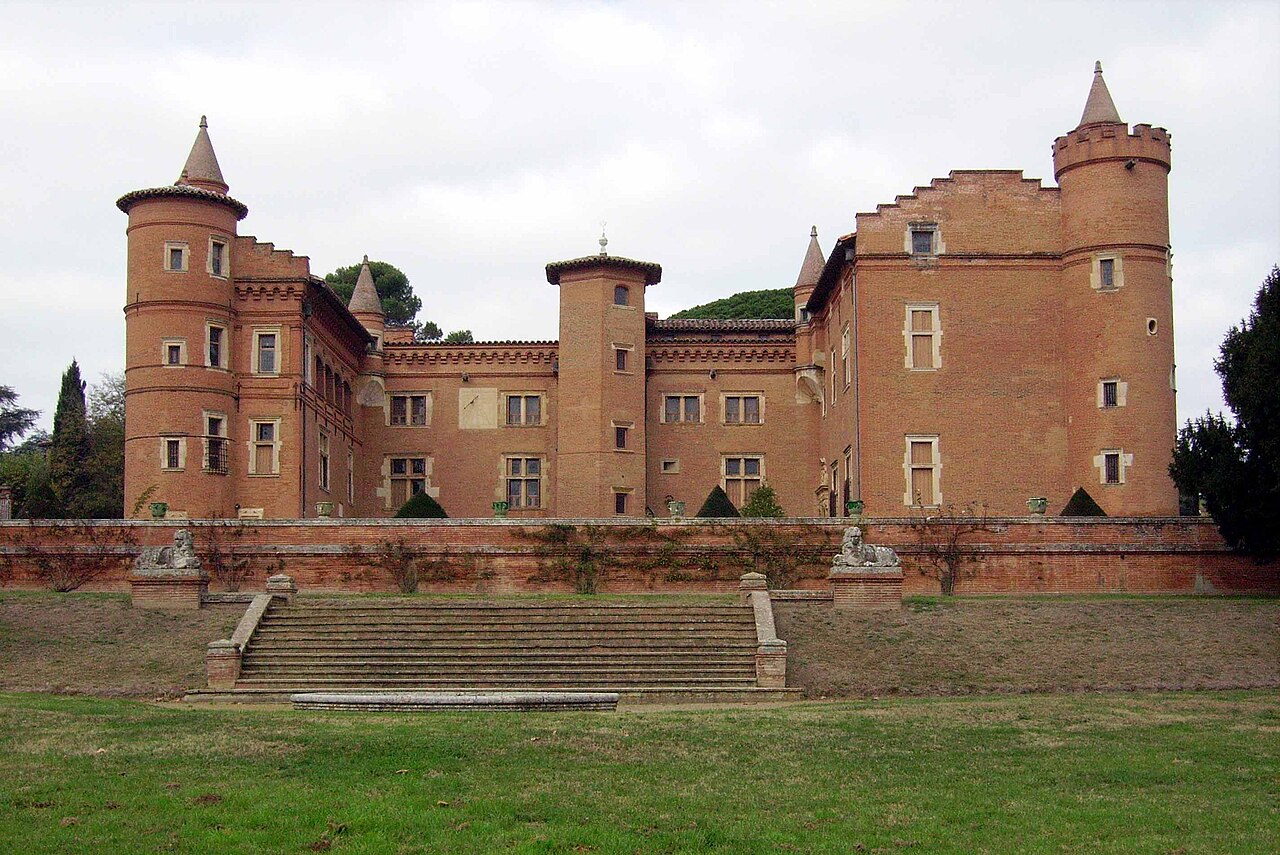
Château de Brax
Château de Brax is a notable example of a medieval fortress originally constructed in the 13th century during the high medieval period. Located in Brax, France, this castle reflects architectural evolution with significant alterations and additions made in the 16th century Renaissance and 18th century. The castle's design exhibits a blend of medieval defensive features alongside later stylistic enhancements.
Architectural layout and defensive features
The castle is enclosed by four circular towers which provide a strong defensive perimeter typical of high medieval fortifications. These towers are integral to the castle's defensive strategy, allowing archers and guards to cover all approaches. The walls are constructed primarily of brick, a common regional material, and are topped with crenellations that served both as protection and firing positions for defenders.
Encircling the entire building is a round walk supported by machicolations, which are openings between the supporting corbels allowing defenders to drop projectiles or boiling substances on attackers below. These machicolations are formed of brick corbels and decorated with blind arcades, combining functional military architecture with aesthetic elements.
Grand staircase and access
The rear façade of the castle prominently features the grand staircase, which is a significant architectural element providing access between different levels within the castle. The main entrance faces a spacious parkland, enhancing the castle's residential and ceremonial aspects. Access to this front area is achieved via a double staircase, which adds a formal and grand approach to the castle.
Historical context and modifications
Originally built as a defensive stronghold in the 13th century, Château de Brax underwent various modifications reflecting changing architectural styles and residential needs. The 16th century brought Renaissance influences, likely introducing more comfort and decorative features while maintaining the castle's defensive capabilities.
Further alterations in the 18th century adapted the castle to the tastes and requirements of the period, possibly including updates to the interiors and the surrounding grounds. These changes illustrate the castle's continuous occupation and adaptation over several centuries.
Materials and construction techniques
The use of brick in the construction of Château de Brax is characteristic of the region and period. Brick allowed for detailed architectural features such as the blind arcades and the machicolations. The combination of brickwork with robust circular towers demonstrates a balance between defensive strength and stylistic expression.
Significance and preservation
Château de Brax stands as a well-preserved example of a high medieval castle that has evolved through the Renaissance and into the 18th century. Its architectural features such as the crenellated walls, machicolated round walk, and circular towers highlight typical medieval defensive strategies, while later additions reflect changing residential and aesthetic preferences.
The castle's setting, with its front opening onto parkland and formal staircases, underscores its dual role as a fortress and a noble residence. Today, Château de Brax offers valuable insight into the architectural and historical developments of French castles from the 13th to 18th centuries.
Frequently asked questions (FAQ)
- What is the best time to visit Château de Brax?
- The best time to visit Château de Brax is during the spring and summer months when the weather is pleasant, and the surrounding parkland is in full bloom, enhancing the castle's scenic appeal.
- Can I explore the interior of Château de Brax?
- Access to the interior of Château de Brax may be limited depending on ownership and preservation status. Visitors should check local tourism resources for current visiting options and guided tours.
- How is Château de Brax architecturally significant?
- Château de Brax is architecturally significant for its combination of 13th-century medieval defensive features, such as circular towers and machicolated walls, with later Renaissance and 18th-century modifications.
- Is Château de Brax accessible to visitors with mobility issues?
- Due to its medieval construction and staircases, accessibility for visitors with mobility issues may be limited. It is advisable to inquire in advance about available accommodations.
- What are the main defensive features of Château de Brax?
- The castle's main defensive features include four circular towers, crenellated brick walls, and a machicolated round walk that allowed defenders to protect the castle effectively from all sides.
Information
Loading map...
Visitor reviews
No reviews yet. Been here? Write the first review and help other travelers!
Write the first reviewVisited this castle? Share your experience
Your review helps other travelers and adds first-hand knowledge to our encyclopedia.