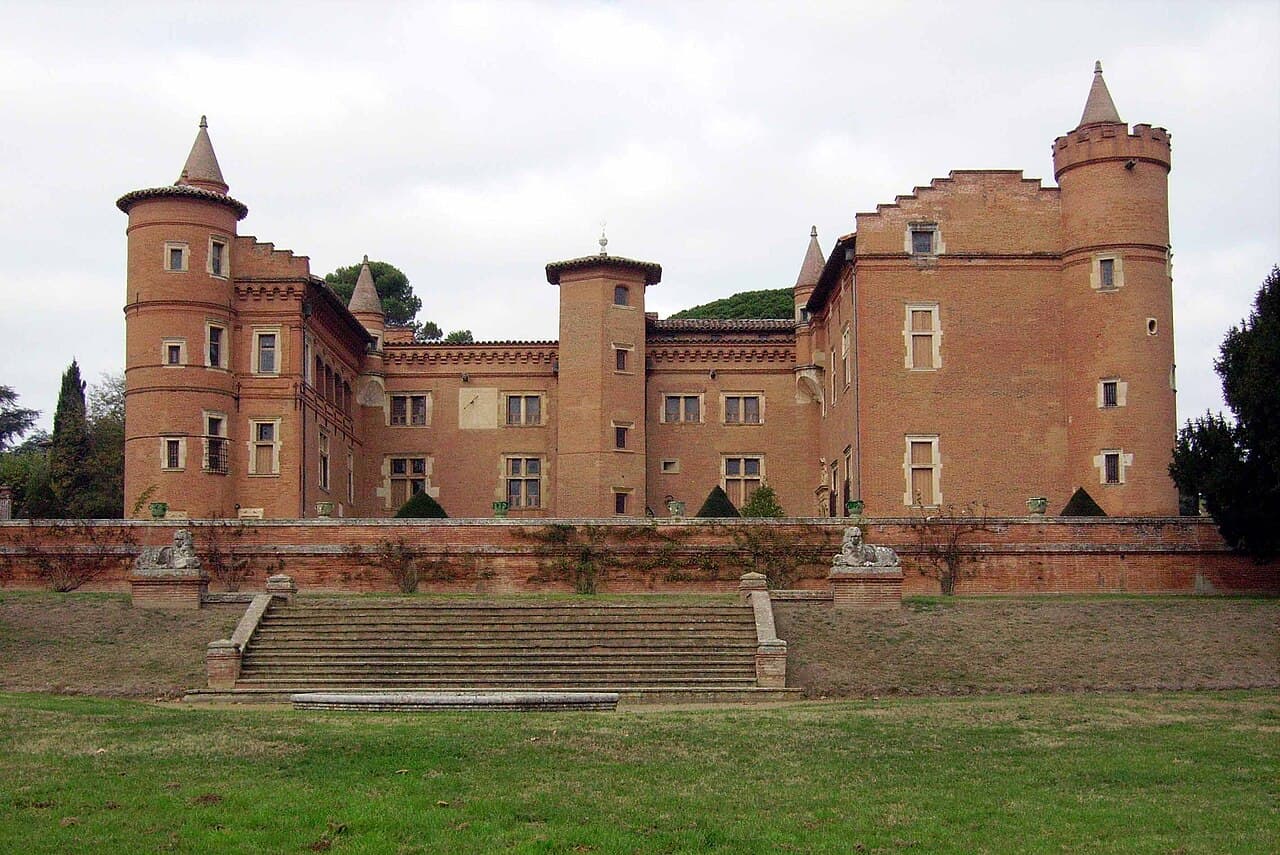
Château de Pibrac
Château de Pibrac stands as a notable example of Renaissance architecture in northern France, distinguished by its red brick construction and rich historical legacy. Originally built in 1540 on the site of an older fortified manor, it reflects the transition from medieval defensive structures to elegant residences designed for comfort and display during the Renaissance period.
The château’s architectural evolution is closely tied to the work of the architect Nicolas Bachelier, who oversaw its significant transformation in the mid-16th century. This reconstruction replaced the original manor with a refined residence featuring a central body flanked by two wings, a design characteristic of Renaissance ideals emphasizing symmetry and proportion, yet adapted here with a deliberate internal layout prioritizing functionality over strict external uniformity.
Historical background and cultural significance
The site of Château de Pibrac has been inhabited since medieval times, originally serving as a fortified manor house. The 1540 reconstruction marked a shift in purpose, reflecting the Renaissance trend of converting military fortifications into stately homes for the aristocracy. This change coincided with the château becoming the birthplace and residence of Guy du Faur de Pibrac, an influential jurist and poet known for his moral quatrains and contributions to French literature and law. His presence adds a profound cultural dimension to the château’s heritage.
In the late 17th century, the estate passed through marriage to the Montfaucon family, illustrating the social alliances that shaped property ownership in early modern France. The château’s fortunes declined during the French Revolution, when revolutionary forces damaged its sculptures and removed the decorative tops of its towers in 1794, acts emblematic of the period’s iconoclasm against symbols of the ancien régime.
Subsequent restoration efforts in 1887 and between 1898 and 1905 sought to preserve and adapt the château, maintaining its Renaissance character while accommodating new uses. Its designation as a monument historique in 1932, with the portal separately classified in 1947, underscores its recognized importance in French cultural heritage.
Architectural features and layout
The château’s structure centers on a main body with two wings added during the Renaissance reconstruction. The north wing is notable for its round tower with a terrace and an attached stair turret, combining aesthetic appeal with practical access to upper floors. The south wing features a second-floor open gallery known as a mirande, which provides natural light and views over the estate.
The central tower’s chamfered edges create angled facets that add visual interest and break the massing of the façades. The inner courtyard is fortified with échauguettes or small watchtowers at its corners, architectural elements that recall the château’s martial origins despite its residential function.
The Henry IV portal is a highlight of the estate, characterized by its triple-arched vaulted entrance framed by two square pavilions connected by a triangular pediment. Above the portal, a small terrace overlooks the approach, while the adjacent walls are topped with four pylons resting on a richly carved cornice, emphasizing the grandeur of the gateway.
Interior decoration and notable rooms
Inside, the château preserves the cabinet des Quatrains, a vaulted room adorned with mythological frescoes and Renaissance woodwork. This room is traditionally associated with Guy du Faur de Pibrac, who composed his famous moral quatrains here. The interior also features original molded and painted exposed beam ceilings, brick fireplaces, and a prominent Renaissance cartouche decorating the fireplace in the lower guardroom, showcasing the craftsmanship of the period.
The château grounds and landscape design
The château is set within a 14-hectare park designed in 1897 by the landscape architect Eugène Bühler. The park exemplifies the English garden style, characterized by naturalistic arrangements of terraces, ponds, and clusters of trees. This landscaping complements the château’s architecture by providing a serene and picturesque setting.
A distinctive feature of the grounds is the Henry IV gate, a red brick triumphal arch that serves as a grand entrance and historic landmark within the estate. The park’s design and features reflect late 19th-century tastes for integrating architecture and nature harmoniously.
Outbuildings and later additions
Additional estate buildings date from around 1740, demonstrating the château’s continued use and adaptation over centuries. These outbuildings maintain stylistic continuity with the main residence and fulfill practical roles typical of a large country estate, such as housing for staff and storage.
Frequently asked questions (FAQ)
- What are the opening hours of Château de Pibrac?
- Château de Pibrac is open to visitors from Tuesday to Sunday, between 10 AM and 6 PM. It is advisable to check the official website for any seasonal changes or special closures before planning your visit.
- How do I get to Château de Pibrac?
- Château de Pibrac is located in Pibrac, France, and can be easily accessed by car or public transport. If traveling by train, the nearest station is in Toulouse, from where you can take a bus or taxi to reach the castle.
- What is the historical significance of Château de Pibrac?
- Château de Pibrac dates back to the 16th century and is recognized for its architectural beauty and historical importance. It was originally built as a residence for the nobility and has witnessed significant events throughout French history.
- Can I take photographs inside the Château de Pibrac?
- Yes, visitors are welcome to take photographs in designated areas of Château de Pibrac. However, it's important to respect the rules regarding flash photography and to follow any guidelines provided by the staff during your visit.
- Is it possible to host events at Château de Pibrac?
- Yes, Château de Pibrac offers facilities for hosting various events, including weddings and corporate gatherings. It is recommended to contact the castle's event management team for details on availability, services, and pricing.
- When is the best time to visit Château de Pibrac?
- The best time to visit Château de Pibrac is during the spring and early fall when the weather is pleasant, and the gardens are in full bloom. Additionally, visiting during weekdays can help you avoid larger crowds.
- What are the ticket prices for visiting Château de Pibrac?
- Ticket prices for Château de Pibrac vary depending on the season and any special exhibitions. Generally, adult tickets are around €10, while discounts are available for students and seniors, so be sure to check the official site for the most up-to-date pricing.
- Are there any nearby attractions to visit when I am at Château de Pibrac?
- Yes, there are several nearby attractions, including the picturesque town of Pibrac and the beautiful parks surrounding the castle. Visitors can also explore local dining options and shops to enhance their experience in the area.
- Is Château de Pibrac accessible for visitors with disabilities?
- Château de Pibrac strives to be accessible to all visitors, including those with disabilities. There are ramps and designated pathways, but it is advisable to contact the castle in advance to ensure specific accommodations are available during your visit.

Information
Loading map...
Visitor reviews
No reviews yet. Been here? Write the first review and help other travelers!
Write the first reviewVisited this castle? Share your experience
Your review helps other travelers and adds first-hand knowledge to our encyclopedia.



