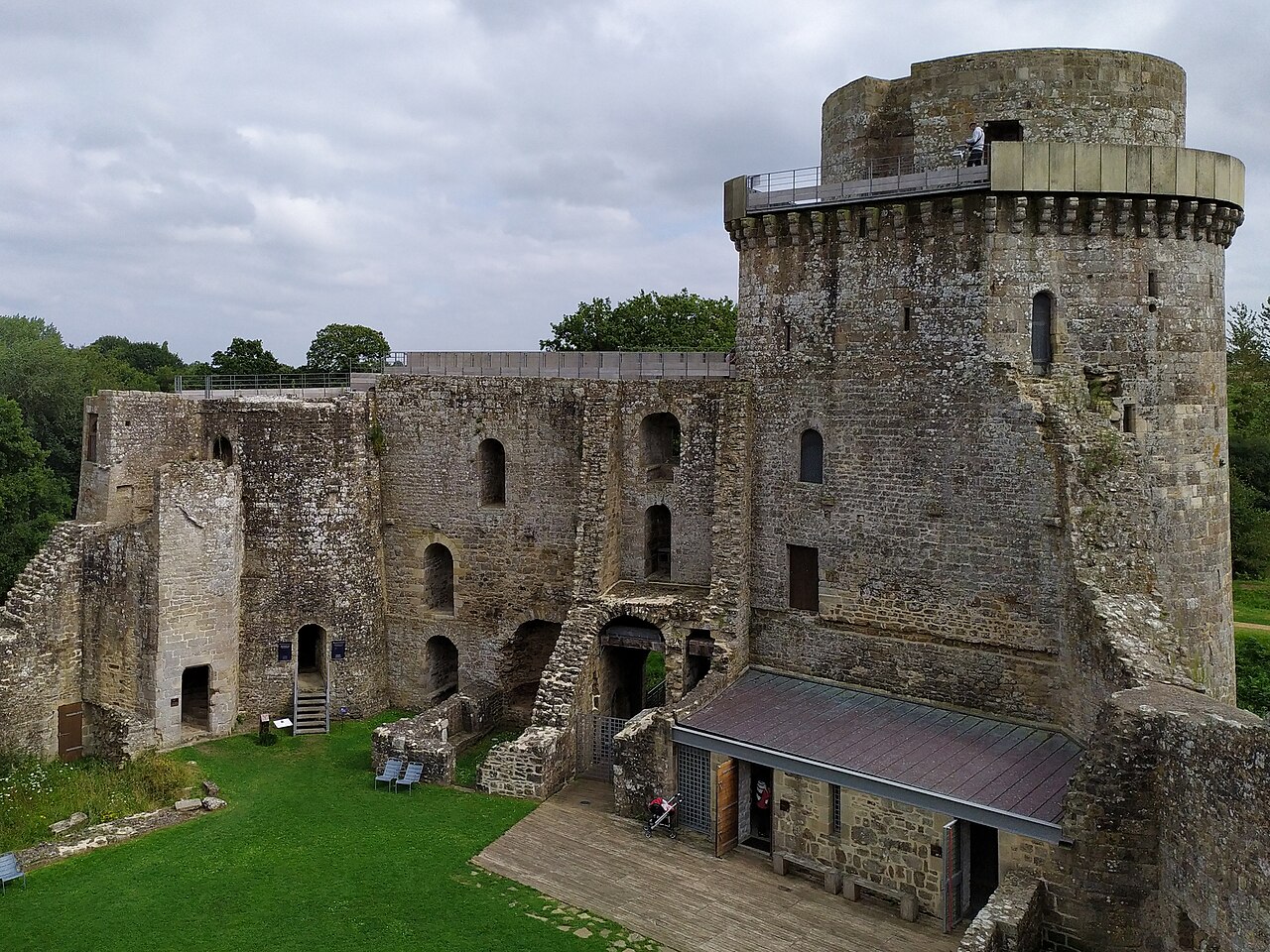
Château de Bienassis
Château de Bienassis stands as a remarkable example of a fortified seigneurial residence in Erquy, France. Its origins trace back to the 12th century when the La Motte family established a manor at the site, surrounded by defensive moats typical of medieval estates. The current castle structure primarily dates from the 15th century, with significant additions and renovations carried out in the 17th century, reflecting the architectural evolution from medieval fortification to Renaissance residence.
The castle's strategic location on a raised platform surrounded by moats underscores its original defensive purpose. Constructed mainly from locally quarried pink sandstone, the castle's distinctive coloration and robust structure have helped it endure through centuries of conflict and change. The residence is characterized by its four corner towers, a hallmark of fortified manor houses, and a central complex accessed by a bridge that replaced an earlier drawbridge.
Medieval origins and early history
The estate was first a wooden manor in the 13th century, as documented, before the construction of the stone castle began around 1434 under Geofroy de Quélennec. The Quélennec family, notable local nobility, played a significant role in the castle's early development. Historical records from 1431 describe a main hall supported by wooden posts, indicating the transitional nature of the building from timber to stone during this period.
By the late 15th century, the estate had gained prominence, with family members like François du Quélennec engaging in maritime ventures, including commanding a vessel named after the manor. The castle's location and fortifications made it a valuable asset during the turbulent late medieval period.
Destruction and renaissance rebuilding
The Wars of Religion in late 16th-century France brought significant turmoil to Château de Bienassis. In 1590, the castle suffered partial destruction when it was occupied by troops loyal to the Duke of Mercœur during the League Wars. This conflict damaged the defensive walls and parts of the residential structures.
Starting in 1620, Gilles Visdelou, lord of La Goublaye, and his wife Françoise de Quelennec initiated extensive rebuilding efforts. These renovations not only restored the castle but also introduced Renaissance architectural elements, including a large ground-floor salon and a monumental two-flight staircase. The enhancements reflected contemporary tastes and the transition from purely defensive architecture to more comfortable noble residences.
Ownership and historical significance
Over the centuries, the castle passed through several noble families by marriage and sale, including the Counts of La Marck and the Dukes of Arenberg. By the 18th century, under François-Louis Visdelou de la Ville-Théart, the estate had expanded significantly to encompass 39 farms, 7 mills, and over 1,000 hectares, marking it as a major landholding in the region.
During the French Revolution, the castle was seized and repurposed as a prison, reflecting the upheaval of the time. In 1796, it was acquired by General Jean Valletaux, a prominent military figure and deputy of Côtes-du-Nord, who oversaw the property during a period of decline in the 19th century.
In 1880, the estate was sold to Admiral Jules de Kerjégu, a distinguished naval officer. The castle has remained in the Monjaret de Kerjégu family since then and is recognized for its cultural and historical importance, with official historic monument protections enacted in 1945 and updated in the early 21st century.
Architectural features and layout
Defensive structures and materials
The castle's layout centers on a courtyard of honor, surrounded by wide moats and ramparts that emphasize its original defensive role. The four corner towers provide both structural support and fortification, with one corner featuring a staircase tower partially projecting outside the walls and another with a fully exterior tower, characteristic of medieval military architecture.
The use of pink sandstone from local quarries in Erquy gives the castle a unique appearance, blending robustness with aesthetic appeal. The defensive walls originally included a crenellated parapet, though only fragments remain today. Renovations in the 17th century added corner towers and turrets atop the walls, enhancing both defense and visual grandeur.
Renaissance and classical additions
The western side of the castle features Renaissance-era extensions, including a spacious ground-floor salon designed for social gatherings and a grand two-flight staircase that serves as a focal point of the interior architecture. These elements illustrate the shift from medieval fortress to comfortable noble residence, integrating elegance with functionality.
Interior features such as fireplaces and staircases from the Renaissance and Classical periods remain preserved, offering insight into the evolving tastes and living standards of the castle's inhabitants over centuries.
Grounds and gardens
The castle grounds encompass formal French gardens, a kitchen garden, and a wooded park, providing a serene natural setting that complements the architectural ensemble. The main avenue leading to the castle is lined with oak trees and other species, some replanted after storm damage in 1987, reflecting ongoing care and preservation efforts.
The gardens and park not only enhance the castle's aesthetic appeal but also reflect the historical importance of landscape design in noble estates, serving both practical and recreational purposes.
Interior spaces and collections
Visitors today can explore several well-preserved rooms, including the furnished ground floor, the grand salon, the guardroom, and the dining room. The dining room displays notable collections of Chinese, Japanese, and Bayeux porcelain, alongside furniture from the Louis XIV era and the Breton Renaissance period, illustrating the castle's rich cultural heritage.
Additional spaces such as the kitchen, chapel, and stables reflect the castle's multifaceted role as a residence, religious site, and working estate.
Cultural heritage and preservation
The castle's entrance postern, grand staircase, and main avenue have been officially designated as historic monuments, underscoring their architectural and cultural significance. The castle's preservation status as a well-preserved site allows it to serve as a valuable window into the layered history of French noble residences spanning from the medieval through the early modern periods.
Château de Bienassis exemplifies the blend of medieval fortification, Renaissance refinement, and classical elegance without overt modern alterations, making it a unique heritage site that continues to attract historians, architects, and visitors interested in France's rich past.
Frequently asked questions (FAQ)
- What are the opening hours of Château de Bienassis?
- Château de Bienassis is open to visitors from April to October, typically from 10 AM to 6 PM. During the off-peak months, the hours may vary, so it’s best to check the official website for the most current information before planning your visit.
- How do I get to Château de Bienassis?
- Château de Bienassis is located in Erquy, France, and is easily accessible by car. Visitors can also reach the castle via public transport, with local buses connecting Erquy to nearby towns. Parking facilities are available on-site for those driving.
- Is it possible to take guided tours of the castle?
- Yes, guided tours are available at Château de Bienassis, offering visitors an in-depth look at the castle's history and architecture. These tours are typically conducted in multiple languages and last about an hour, providing a comprehensive overview of this historic site.
- What is the historical significance of Château de Bienassis?
- Château de Bienassis dates back to the 15th century and is an excellent example of the Renaissance architectural style in Brittany. It has played a significant role in the region's history and is known for its beautiful gardens and well-preserved structures, making it a key landmark in Erquy.
- Can I bring my children to Château de Bienassis?
- Absolutely! Château de Bienassis welcomes families and offers activities that are enjoyable for children. The spacious grounds allow for exploration, and the guided tours can be engaging for younger visitors, providing a fun way to learn about history.
- When is the best time to visit Château de Bienassis?
- The best time to visit Château de Bienassis is during the spring and summer months, from April to September, when the weather is pleasant and the gardens are in full bloom. This period also offers various events and activities that enhance the visitor experience.
- What are the ticket prices for visiting the castle?
- Ticket prices for Château de Bienassis vary depending on the season and visitor age. Generally, adults can expect to pay a small entrance fee, while discounts may be available for children, seniors, and families. It’s advisable to check the official website for the latest pricing details.
- Are there any nearby attractions to visit after Château de Bienassis?
- Yes, there are several nearby attractions worth exploring after visiting Château de Bienassis. The stunning beaches of Erquy and the beautiful Cap Fréhel are just a short drive away, offering visitors opportunities for scenic walks and outdoor activities.
- Is Château de Bienassis accessible for visitors with disabilities?
- Château de Bienassis strives to be accessible to all visitors, including those with disabilities. The grounds are well-maintained, and there are facilities in place to assist visitors with mobility challenges, although some areas may still present difficulties due to the historic nature of the site.
Information
Website
Visit websiteSources & official resources
Verify the information above using these authoritative references.
Loading map...
Visitor reviews
No reviews yet. Been here? Write the first review and help other travelers!
Write the first reviewVisited this castle? Share your experience
Your review helps other travelers and adds first-hand knowledge to our encyclopedia.