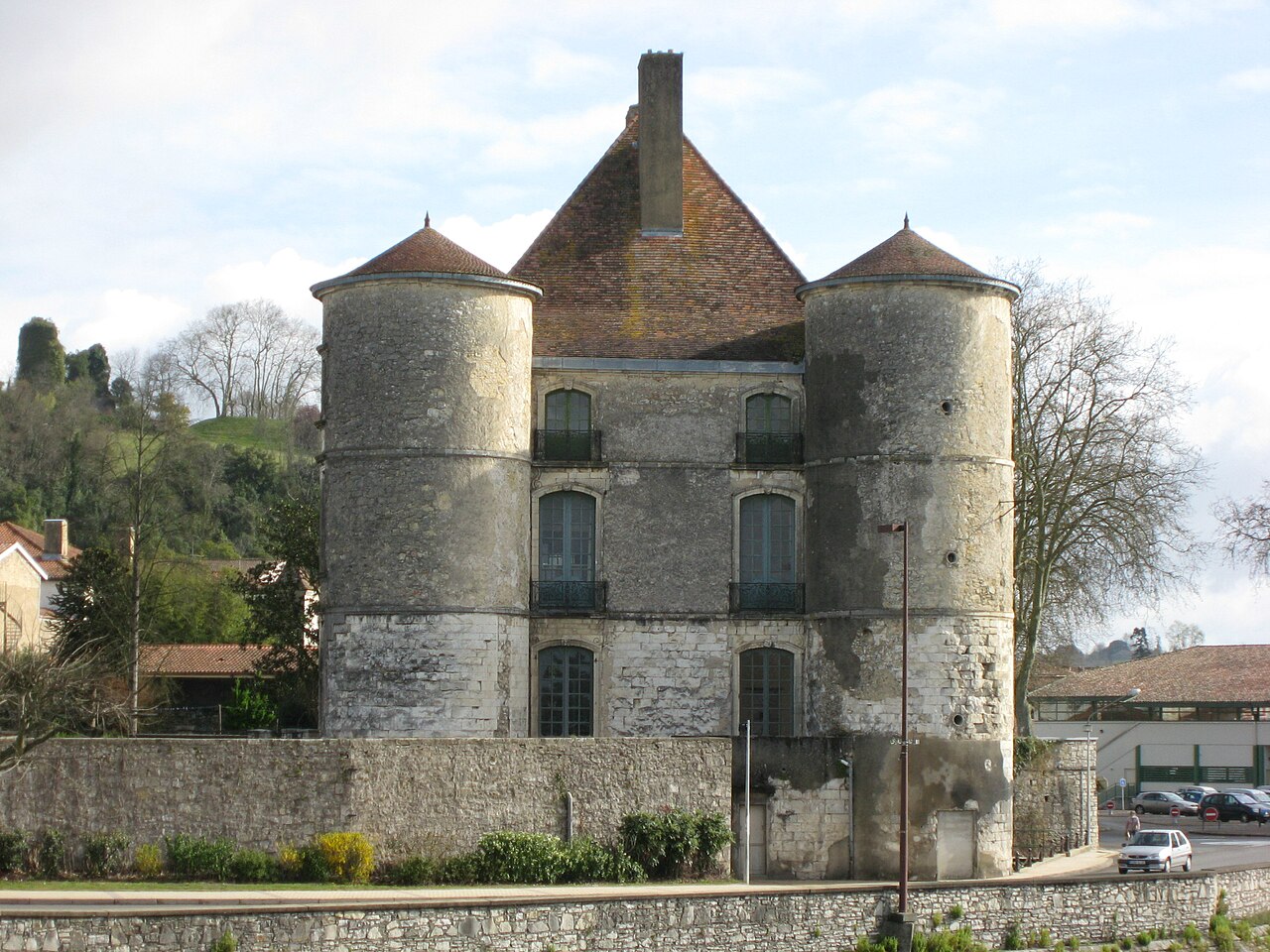
Château de Belzunce
The Château de Belzunce is a ruined medieval castle located in the commune of Ayherre in the Pyrénées-Atlantiques department of southwestern France. Its origins trace back to the 13th century, with significant construction phases extending through the 14th and 16th centuries. The castle's architecture reflects these periods, showcasing a trapezoidal layout flanked by four towers, which illustrate the evolution of defensive and residential design from the High Middle Ages into the Renaissance.
Architectural features and layout
The castle's trapezoidal plan is typical of many fortified structures designed to adapt to the terrain and optimize defense. The four towers at each corner served as vantage points for surveillance and defense, combining both military and residential functions. Two of these towers date from the medieval period, while the others were added or rebuilt during the 16th-century renovations, reflecting Renaissance influences in castle architecture.
The castle's walls, though now largely in ruins, originally formed a strong defensive perimeter. The surviving foundations of neighboring buildings and outer fortifications indicate a once extensive complex that included ancillary structures for domestic and military use. The castle was surrounded by a moat or natural defensive features, typical of hill castles of the region, although exact details are limited due to its ruined state.
Historical context and significance
The Château de Belzunce was historically associated with the Belzunce family, a noble lineage influential in the region. One of its most notable members was François de Belzunce, who served as the Bishop of Marseille in the early 18th century. His legacy extended beyond the castle, as the Marseille district of Belsunce was named in his honor, indicating the family's prominence in French ecclesiastical and social history.
During the French Revolution, the castle was confiscated and sold as national property, a fate common to many aristocratic estates at the time. Subsequently, it fell into disuse and was repurposed as a stone quarry, which contributed to its current ruined condition. The loss of structural elements and the decay of fortifications reflect the broader historical upheavals and changing attitudes towards feudal architecture in post-revolutionary France.
Preservation and current status
The Château de Belzunce remains privately owned and has been officially recognized for its cultural and historical value. Since 1992, it has been registered as a monument historique by the French Ministry of Culture. Despite this status, the castle is not accessible to the public for interior visits due to its fragile and ruined condition.
Visitors can view the castle ruins clearly from nearby roads, offering a glimpse into the architectural heritage of the region. The site serves as a tangible connection to the medieval and Renaissance periods of French history, illustrating the transition in castle construction and the impact of historical events on such estates.
Legacy of the Belzunce family
The Belzunce family played a significant role in the local history of the Basque region and beyond. Their influence extended through ecclesiastical positions and land ownership, with the castle serving as a symbol of their status and power. The family's prominence in the 17th and 18th centuries, especially through François de Belzunce, highlights the intertwined nature of noble lineage and regional governance in pre-modern France.
Although the castle itself is in ruins, the name Belzunce endures in regional toponyms and historical memory, underscoring the lasting cultural imprint of this noble house.
Information
Loading map...
Visitor reviews
No reviews yet. Been here? Write the first review and help other travelers!
Write the first reviewVisited this castle? Share your experience
Your review helps other travelers and adds first-hand knowledge to our encyclopedia.