Château-Neuf

Château-Neuf in Bayonne: historic 15th-century hill castle
Bayonne, Nouvelle-Aquitaine, France
Late Medieval (14th–15th c.)
Restored

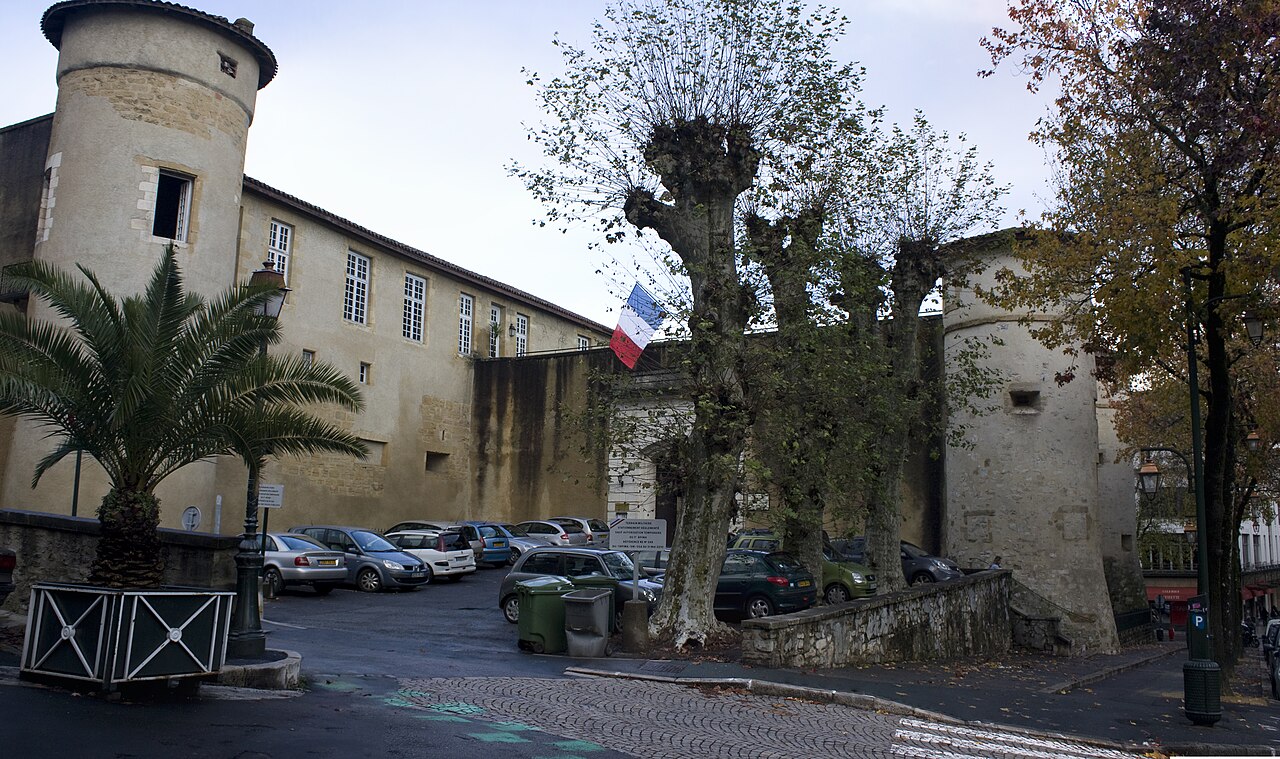
Château-Neuf stands prominently on the highest point of Petit Bayonne, offering a commanding view over the city and the surrounding landscape. This late medieval hill castle was constructed in the 15th century, commissioned by Charles IV, reflecting the strategic and architectural priorities of the period. Its name, meaning "new castle," distinguishes it from older fortifications in the area and highlights its role as a significant military and administrative center during its time.

Historical context and significance

Built during a turbulent period marked by frequent conflicts and shifting political alliances in the region, Château-Neuf played a vital role in the defense of Bayonne, a key city near the border of France and Spain. The castle's construction in the 15th century coincided with the latter stages of the Hundred Years' War and the consolidation of French royal authority in the southwest. Its position on a hilltop was chosen for both defensive advantages and to assert dominance over the surrounding territory.

Throughout its history, the castle has witnessed various military actions and changes in ownership, reflecting the broader geopolitical dynamics of the region. It served not only as a fortress but also as a residence for military governors and administrators, contributing to the governance and security of Bayonne.

Architectural features and layout

Château-Neuf exemplifies the characteristics of late medieval military architecture with robust stone walls, fortified towers, and strategic battlements designed to withstand sieges and artillery attacks. The castle's layout is adapted to the natural contours of the hill, maximizing defensive capabilities.

The structure includes a central keep surrounded by curtain walls, with several towers positioned to cover all approach routes. The walls are punctuated by arrow slits and gunports, indicating adaptations to evolving military technologies. The entrance is fortified with a gatehouse, possibly including a drawbridge and portcullis, typical of the period's defensive design.

Inside, the castle would have contained various functional spaces such as living quarters, storerooms, and administrative offices, although much of the interior layout has been altered or lost due to later modifications and restorations.

Later use and current status

Over the centuries, Château-Neuf underwent several modifications reflecting changing military needs and architectural styles. By the modern era, its defensive role diminished, and it was repurposed for administrative and educational functions.

Today, the castle is owned by a university, which has undertaken restoration efforts to preserve its historical fabric. While the building is restored and structurally sound, it remains closed to the public, limiting direct access to its interior. Nevertheless, its imposing silhouette continues to dominate the skyline of Petit Bayonne, serving as a landmark and a testament to the region's rich medieval heritage.

Access and surrounding environment

Situated within the urban fabric of Bayonne, Château-Neuf is surrounded by a mix of residential and institutional buildings. The hill on which it stands provides panoramic views of the city, the Adour river, and the nearby Pyrenees mountains. Although public entry is restricted, the castle's exterior and its elevated position make it a popular subject for photography and historical interest from external vantage points.

Preservation and cultural importance

The preservation of Château-Neuf reflects the broader efforts in France to maintain and protect medieval heritage sites. Its status as a restored late medieval hill castle contributes to the understanding of regional defensive architecture and the historical evolution of Bayonne as a strategic city.

While not accessible to visitors internally, the castle remains an important cultural symbol and a focus of academic study, particularly given its association with Charles IV and its role in the military history of southwestern France.

Frequently asked questions (FAQ)

How do I get to Château-Neuf?
Château-Neuf is conveniently located in Bayonne, France, and can be reached easily by public transportation or car. If you are taking the train, Bayonne Station is the closest, and from there, you can take a bus or taxi to the castle. Parking is available nearby if you're traveling by car.
What is the historical significance of Château-Neuf?
Château-Neuf, built in the 17th century, served as a royal residence and a strategic fortress during various conflicts in French history. Its architecture reflects the military style of the time and showcases the importance of Bayonne as a fortified city. The castle has witnessed numerous historical events, making it a vital part of the region's heritage.
When was Château-Neuf constructed?
Construction of Château-Neuf began in the early 17th century, specifically in 1640, and it was completed several years later. The castle was commissioned by King Louis XIII as part of efforts to strengthen royal authority in the region. Over the years, it has undergone various renovations, preserving its historical charm.
Can I take guided tours of Château-Neuf?
Yes, guided tours of Château-Neuf are available for visitors who want to learn more about its history and architecture. Tours typically last about an hour and provide insights into the castle's significance and stories from its past. It is advisable to check the official website for tour schedules and availability.
Why is Château-Neuf a popular tourist attraction?
Château-Neuf attracts visitors due to its rich history, stunning architecture, and picturesque views of Bayonne. The castle's unique blend of military and residential design offers a fascinating glimpse into the past. Additionally, its location near other attractions in the region makes it a must-visit for history enthusiasts and tourists alike.
Is it possible to host events at Château-Neuf?
Yes, Château-Neuf can be rented for special events, including weddings, corporate functions, and private gatherings. The castle's beautiful setting and historical ambiance create a memorable backdrop for any occasion. Interested parties should contact the castle administration for details on availability and booking procedures.
What are the opening hours for Château-Neuf?
Château-Neuf is generally open to visitors from 10 AM to 6 PM, but hours may vary seasonally. It is recommended to check the official website or contact the visitor center for the latest information on opening times. Special events may also affect regular visiting hours.
What are the ticket prices for visiting Château-Neuf?
Ticket prices for Château-Neuf are quite reasonable, with discounts available for students and seniors. General admission is typically around €8, while children under a certain age may enter for free. Be sure to check for any special promotions or family packages on the official website before your visit.
What nearby attractions can I visit after Château-Neuf?
After visiting Château-Neuf, you can explore other nearby attractions such as the Bayonne Cathedral, the Basque Museum, and the scenic banks of the Adour River. The vibrant old town of Bayonne, with its charming streets and local shops, is also within walking distance. These sites provide a rich experience of the local culture and history.

Information

Hill Castle

Address

place Paul-Bert

Loading map...

Visitor reviews

No reviews yet. Been here? Write the first review and help other travelers!

Write the first review

Visited this castle? Share your experience

Your review helps other travelers and adds first-hand knowledge to our encyclopedia.
Write a review

(5/5)

0/2000 characters

Your review will be visible after admin approval

Nearby castles

0.7 km
Château-Vieux — France castle

Château-Vieux

Bayonne, France

Château-Vieux, or the Old Castle of Bayonne, stands as a remarkable example of a hill castle with a layered history stretching back to antiquity. Built on the site of a Roman castrum known as Lapurdum, the fortress embodies centuries of military architecture and strategic importance in the Nouvelle-Aquitaine region of southwestern France. This castle is not only a symbol of medieval power but also a testament to the evolving defensive needs from Roman times through the High Medieval period and into the early modern era under the guidance of the famed military engineer Vauban. The castle's origins trace back to the 11th century when the Viscounts of Labourd constructed the initial fortress by incorporating and reinforcing three existing Roman towers. These towers formed the nucleus of the castle, around which walls and additional fortifications were developed to secure the town of Bayonne. Over the centuries, the castle witnessed numerous sieges and changes of control, reflecting the turbulent history of the region, particularly during the conflicts between the French crown and the English monarchy. Roman foundations and early medieval construction The site of Château-Vieux was originally a Roman military camp, or castrum, which served as the administrative and defensive center for the area known as Lapurdum. The Romans established strong fortifications here due to the strategic location near the confluence of the Nive and Adour rivers, vital for controlling trade and military movements. By the late 11th century, the Viscounts of Labourd began transforming the Roman ruins into a medieval fortress. They reinforced the three surviving Roman towers and built defensive walls around the town, creating a formidable stronghold. This early medieval castle served both as a residence for the viscounts and as a military bastion protecting the region. Medieval conflicts and English occupation During the Middle Ages, Château-Vieux became a focal point in the struggle for control over the Duchy of Aquitaine. The castle passed into English hands through inheritance, reflecting the complex feudal allegiances of the period. In 1294, the French crown briefly occupied the castle and town of Bayonne, but an English relief force led by John St John laid siege to the town. On 1 January 1295, the citizens of Bayonne sided with the English, expelling the French garrison into the castle and opening the town gates to St John. After an intense siege lasting eleven days, the French garrison surrendered, returning control of the castle to the English. This episode highlights Château-Vieux's strategic significance and the loyalty of the local population during the Anglo-French conflicts. 15th-century developments and the new castle at Petit-Bayonne In the 15th century, King Charles VII of France constructed a new castle in Petit-Bayonne, a district across the river from the old town. This new fortress was designed to monitor and control the city, which had recently been reclaimed from English control. While Château-Vieux remained important, the construction of this additional castle marked a shift in the defensive strategy for Bayonne. Vauban's fortifications and early modern modifications The most significant transformation of Château-Vieux occurred in the 17th century under the direction of Sébastien Le Prestre de Vauban, France's preeminent military engineer. Vauban's plans aimed to modernize the city's defenses to withstand the evolving artillery technology of the period. Under Vauban's supervision, Château-Vieux was integrated into the northwestern fortifications of Bayonne. The central medieval tower was demolished to make way for a fortified forecourt, enhancing the castle's defensive capabilities. These modifications reflected the shift from medieval castle design to bastioned fortifications better suited to gunpowder warfare. Despite these extensive changes, the castle retained much of its historical character, blending medieval and early modern military architecture. Napoleonic era and preservation In 1808, Emperor Napoléon Bonaparte signed a decree ordering the demolition of Château-Vieux, likely due to changing military needs and urban development plans. However, this order was never carried out, allowing the castle to survive into the modern era. Recognizing its historical and architectural value, Château-Vieux was officially classified as a historic monument on 7 November 1931. Today, the castle is well preserved and serves as the mess for the 1st Marine Infantry Parachute Regiment, maintaining a living connection to its military heritage. Architectural features and layout Château-Vieux's architecture is a fascinating blend of Roman, medieval, and early modern elements. The original Roman towers, reinforced during the 11th century, remain key features of the castle's structure. The castle's walls, once part of the town's fortifications, enclose a complex of buildings adapted over centuries. The 17th-century Vauban modifications introduced bastioned elements and a fortified forecourt, replacing the medieval central tower. These changes improved the castle's ability to resist artillery attacks and integrated it more fully into Bayonne's comprehensive fortification system. Visitors can observe the juxtaposition of rounded Roman towers, medieval curtain walls, and angular bastions characteristic of Vauban's style. The castle's position on a hill provides commanding views over the surrounding landscape, underscoring its strategic importance. Current status and visiting information Today, Château-Vieux remains a well-preserved monument of great historical significance. Although it currently functions as a military mess and is not regularly open to the public, its exterior and surrounding fortifications can be appreciated from various vantage points in Bayonne. The castle's designation as a historic monument ensures ongoing preservation efforts, safeguarding its architectural heritage for future generations. Its layered history from Roman times through medieval and early modern periods makes Château-Vieux a key site for understanding the military and cultural evolution of Bayonne and the greater Nouvelle-Aquitaine region. Nearby attractions Bayonne itself offers a rich cultural experience, with its medieval old town, Gothic cathedral, and Basque heritage. Visitors interested in fortifications can also explore Vauban's other works in the region, many of which are UNESCO World Heritage sites. Accessibility and best time to visit While interior access to Château-Vieux is limited, the castle's hilltop location is accessible via walking routes from Bayonne's city center. The best time to visit is during the spring and summer months when the weather is favorable for outdoor exploration of the city's historic sites.

High Medieval (11th–13th c.)
Details
20.1 km

Fort de Socoa

Ciboure, France

Fort de Socoa is a significant historical coastal fortress located in Ciboure, France. Originally initiated under the reign of Henry IV to protect the Basque coast from Spanish threats, the fort as it stands today was primarily constructed during the early 17th century under Louis XIII. This strategic fortification played a crucial role in the military defense system of the region during the turbulent years of Franco-Spanish conflicts. Historical background and military significance The site of Fort de Socoa was initially developed to secure the mouth of the river and the adjacent coastline, which were vulnerable to Spanish naval attacks. In 1636, during the ongoing hostilities of the Thirty Years' War, the fort was captured by the Spanish army, marking a significant event in its history. However, French sovereignty was soon restored, reflecting the ebb and flow of territorial control in this border region. Architectural development and vauban's enhancements The fort underwent substantial strengthening in 1686 under the direction of the famed military engineer Sébastien Le Prestre de Vauban. Vauban's work included reinforcing the fort's defensive walls and planning the construction of a pier to improve maritime access and logistical support. These enhancements were completed by 1698, solidifying Fort de Socoa's role as a formidable coastal defense installation. Structural components and layout The fort's design features typical elements of a Renaissance coastal fortress, including thick bastioned walls designed to withstand artillery bombardment. Within the complex, there were essential facilities such as a barracks to house soldiers and a chapel serving the spiritual needs of the garrison. The layout was optimized for both defense and the practical requirements of a military post. Geographical and strategic location Fort de Socoa is situated on the Basque coast, near the border with Spain, making it a key point in controlling access to the Bay of Biscay and protecting the nearby town of Saint-Jean-de-Luz. Its location allowed it to monitor and deter Spanish naval movements effectively, contributing to the security of French maritime interests in the region. Legacy and current status Today, Fort de Socoa remains a well-preserved example of 17th-century military architecture. It stands as a testament to the strategic military planning of the period and the engineering prowess of Vauban. The fort is accessible to visitors who wish to explore its historical significance and architectural features, offering insights into the military history of the French Basque coast. Visitor information and cultural importance The fort is a popular cultural landmark in the region, attracting tourists interested in military history and coastal fortifications. Its preservation allows for educational opportunities and promotes the heritage of the Basque coastline. The site often hosts guided tours and historical exhibitions that delve into its role during the Franco-Spanish conflicts and its architectural evolution.

Renaissance (15th–17th c.)
Details
22.3 km

Château d'Urtubie

Urrugne, France

Château d'Urtubie stands as a remarkable testament to the layered history of the Basque Country, blending medieval military architecture with aristocratic refinement. Constructed in 1341 under the auspices of Martin de Tartas, this late medieval hill castle has remained in the hands of successive noble families for nearly seven centuries. Its stones echo the tales of border defense, royal visits, family conflicts, and gradual transformation from fortress to stately home. Located in Urrugne, near the coastal town of Saint-Jean-de-Luz in southwestern France, the castle occupies a strategic position overlooking the borderlands between France and Spain. Its original function as a defensive stronghold is evident in the surviving elements of its fortified donjon, moats, and châtelet gatehouse. Over the centuries, the castle adapted to changing political and social circumstances, evolving into a residence that reflects Renaissance, Baroque, and 18th-century stylistic influences. The foundation and medieval origins The construction of Château d'Urtubie began in 1341, a period marked by the complex political landscape of the Basque region. Martin de Tartas, a local nobleman, secured permission from King Edward III of England, who was then Duke of Aquitaine, to erect a stone fortress. This authorization underscores the geopolitical tensions of the era, as the castle was intended to fortify the border and assert control over the surrounding territory. Following Martin's death in 1343, his brother Auger de Tartas completed the fortress, which featured a robust central donjon with four corner échauguettes—small turrets designed for surveillance and defense. The donjon was encircled by a chemin de ronde, or wall walk, allowing guards to patrol the ramparts efficiently. The entrance was protected by a châtelet gatehouse with twin towers and a drawbridge over the moat, exemplifying typical medieval military architecture. Historical significance and royal connections Throughout its history, Château d'Urtubie has been intertwined with significant historical figures and events. In 1463, King Louis XI stayed at the castle during delicate negotiations between the Spanish crowns of Castile and Aragon, highlighting the castle's diplomatic importance. Later, in 1654, the domain was elevated to a viscounty by Louis XIV, reflecting its growing stature and the prominence of the owning family, the Gamboa d'Alzate lineage. The castle also played a role during the Napoleonic Wars when notable military figures such as Marshal Soult and the Duke of Wellington were associated with the estate. These connections place Château d'Urtubie within broader European military and political narratives. Family conflicts and reconstruction in the 16th century The castle's history is marked by episodes of internal strife, notably the destructive fire set in 1497 by Marie de Sault d'Urtubie amid a family succession dispute. This event led to significant damage and necessitated extensive rebuilding. Reconstruction began in 1505 under Louis de Montréal, who obtained royal authorization from King Louis XII to restore the fortress. Despite opposition from rival claimant Ochoa d'Alzate, the restoration was successful, marking a pivotal moment in the castle's architectural evolution. The rebuilt sections incorporated Renaissance elements while retaining the medieval defensive character. Architectural evolution and noble residence transformation From the 17th century onward, Château d'Urtubie gradually shifted from a military bastion to a refined noble residence. The replacement of traditional roof tiles with slate roofing improved durability and aesthetic appeal. The introduction of mansard windows added light and space to the upper floors, reflecting contemporary architectural trends. A notable addition during this period was the castle's chapel, distinguished by its wooden frame shaped like a ship's hull. This unique feature was crafted by skilled naval carpenters from nearby Ciboure, blending maritime craftsmanship with ecclesiastical architecture. The chapel's interior received decorative enhancements in the 19th and early 20th centuries, including gilded ornamentation in the choir area. The transformation of the castle's surroundings between 1700 and 1743 further exemplifies its evolution. The southern moats were filled in and converted into an English-style park, featuring ornamental plantings such as azaleas, camellias, and rhododendrons, alongside avenues lined with yews, hornbeams, and boxwoods. This landscaped garden reflects the period's aesthetic shift towards leisure and natural beauty. Additional architectural enhancements included the construction of a southern wing and an orangerie, which served as a greenhouse for exotic plants. A grand external staircase in the Louis XV style connects the courtyard to the gardens, showcasing delicate wrought ironwork and stone craftsmanship. Interior features and furnishings The castle's interior preserves a rich collection of historical furnishings and decorative arts spanning several centuries. The 14th-century donjon now serves as the dining room, featuring 18th-century oak and chestnut parquet floors. Among the notable artifacts is a 16th-century Brussels tapestry depicting David playing the cithara for King Saul, illustrating the castle's cultural connections. The grand salon, located in the 16th-century wing, displays tapestries and a 19th-century fireplace inscribed in Basque, symbolizing warmth and hospitality. Adjacent salons contain Aubusson tapestries from the 17th and 18th centuries, portraying historical and exotic themes such as a depiction of Charles V with Francis I and a Native American figure. The hunting room, formerly a guard room, retains some of the oldest furniture and is decorated with mounted trophies, reflecting the leisure pursuits of the castle's noble inhabitants. A 19th-century bathroom, connected to a natural spring via an early canalization system, illustrates the integration of modern amenities into the historic structure. Preservation and cultural heritage Recognized for its historical and architectural significance, Château d'Urtubie was officially listed as a historic monument in 1974. Its well-preserved structures and carefully maintained gardens offer valuable insights into the region's history, from medieval fortification to aristocratic lifestyle. Today, the castle remains a private residence, retaining much of its original charm and authenticity. Its enduring presence enriches the cultural landscape of the Basque Country and serves as a symbol of the region's complex heritage. Architectural highlights and surviving features 14th-century donjon with four corner échauguettes for defense and observation Chemin de ronde on the northern side, allowing patrols along the ramparts Châtelet gatehouse with twin towers and drawbridge remains Slate roofing and mansard windows from 17th-18th-century renovations Chapel with ship-hull-shaped wooden frame and gilded choir decoration English-style park replacing southern moats, with diverse ornamental and native trees Louis XV-style external staircase connecting courtyard and gardens Interior furnishings including tapestries, parquet floors, antique furniture, and decorative arts from the 16th to 19th centuries The château in the context of basque heritage Château d'Urtubie embodies the historical and cultural identity of the Basque Country, reflecting centuries of regional politics, architecture, and noble life. Its strategic location near the Franco-Spanish border made it a key site for defense and diplomacy. The castle's preservation allows visitors and scholars to explore the evolution of Basque fortifications and aristocratic residences, highlighting the interplay between military necessity and aesthetic refinement. The castle's continuous ownership by related noble families underscores the importance of lineage and inheritance in Basque society. Its architectural layers reveal adaptations to shifting social norms and technological advances, from medieval battlements to landscaped gardens and modern conveniences. Visiting château d'urtubie today While Château d'Urtubie remains a private residence, its historical significance and architectural beauty attract interest from historians, architects, and cultural enthusiasts. The castle's exterior and gardens can be appreciated from public viewpoints, and special events or guided tours may occasionally be offered by the owners or local heritage organizations. The castle's setting near Saint-Jean-de-Luz provides visitors with opportunities to explore the broader Basque region, including its unique language, traditions, and scenic landscapes. Château d'Urtubie stands as a captivating destination for those interested in medieval fortifications, Renaissance architecture, and the enduring legacy of Basque nobility.

Late Medieval (14th–15th c.)
Details

