Chastel Blanc
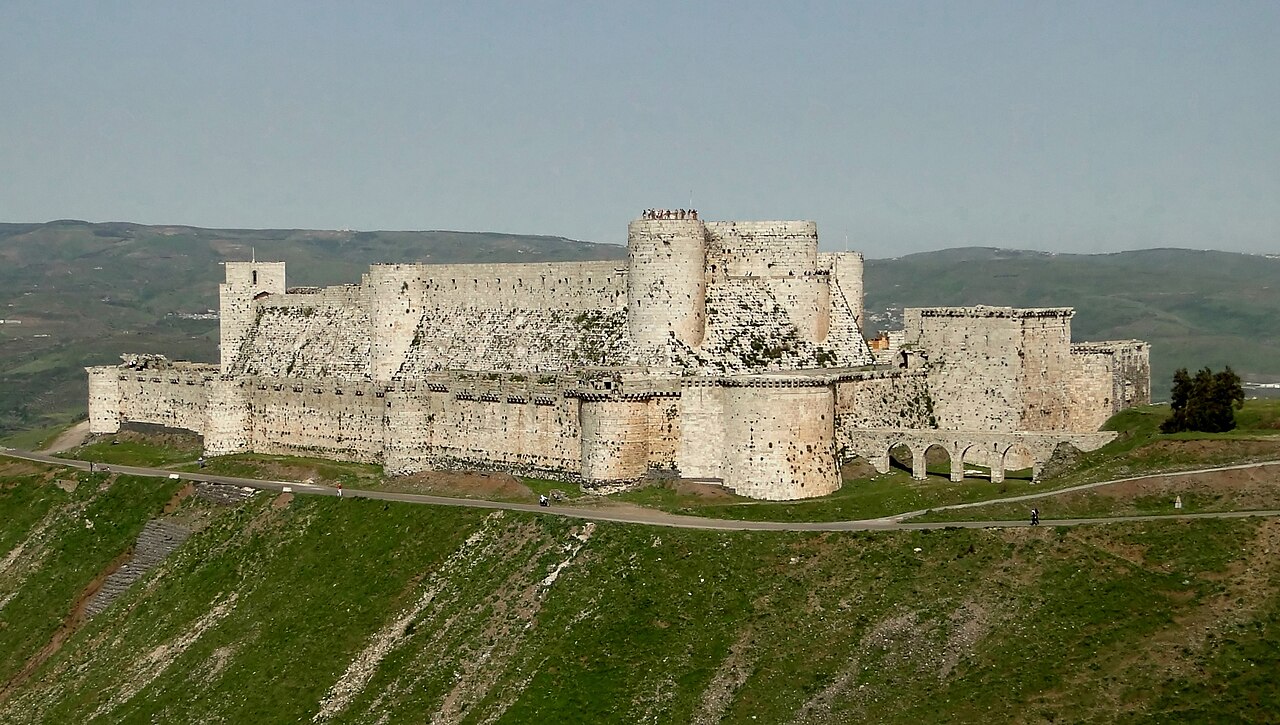
Chastel Blanc, also known as the White Castle, is a remarkable medieval fortress located in the town of Safita in the Dar'a region of modern-day Syria. This imposing hill castle stands atop one of three prominent hills at an altitude of 419 meters, commanding expansive views over the Mediterranean coast and the surrounding landscape. Its strategic position made it a critical stronghold during the Crusades, serving as a vital link in a network of fortifications that included the famous Krak des Chevaliers and other coastal castles such as Tartus, Ruad Island, Chastel Rouge, and Akkar. These castles communicated through fire and smoke signals to coordinate defense and surveillance along the eastern Mediterranean coast.
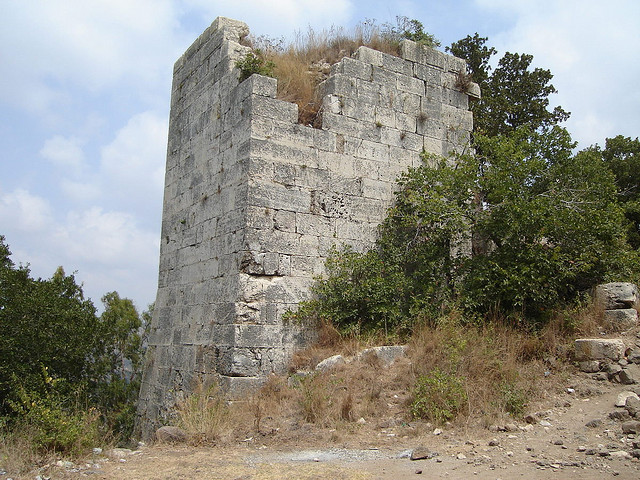
The castle's origins trace back to foundations laid by the Phoenicians, evidenced by the nearly submerged base of the tower, which is visibly exposed on the east and north sides. The current structure was built by the Knights Templar during the early 12th century, shortly after the region fell under Crusader control around 1110. The tower itself first appears in historical records in an Arabic chronicle dated 1112. By 1117, the Templars had established a dungeon within the tower, and by 1152, they had full control of the fortress, which they fortified extensively to withstand the turbulent conflicts of the period.
Architectural features and layout
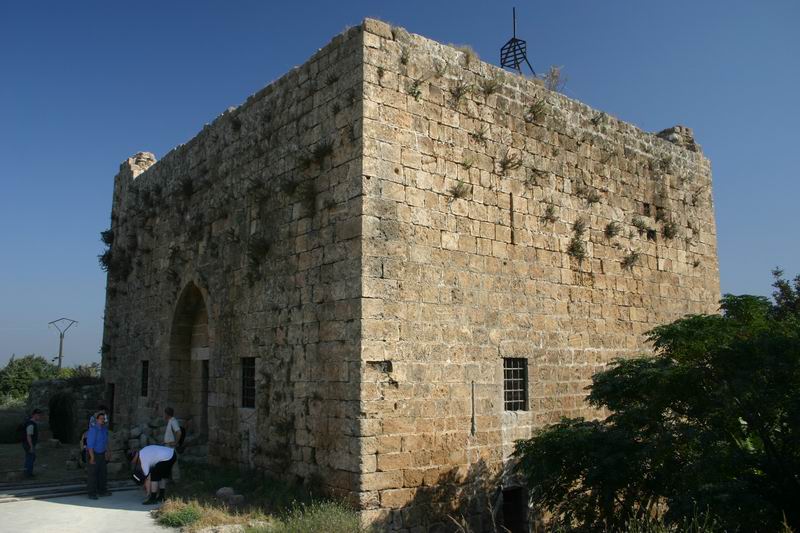
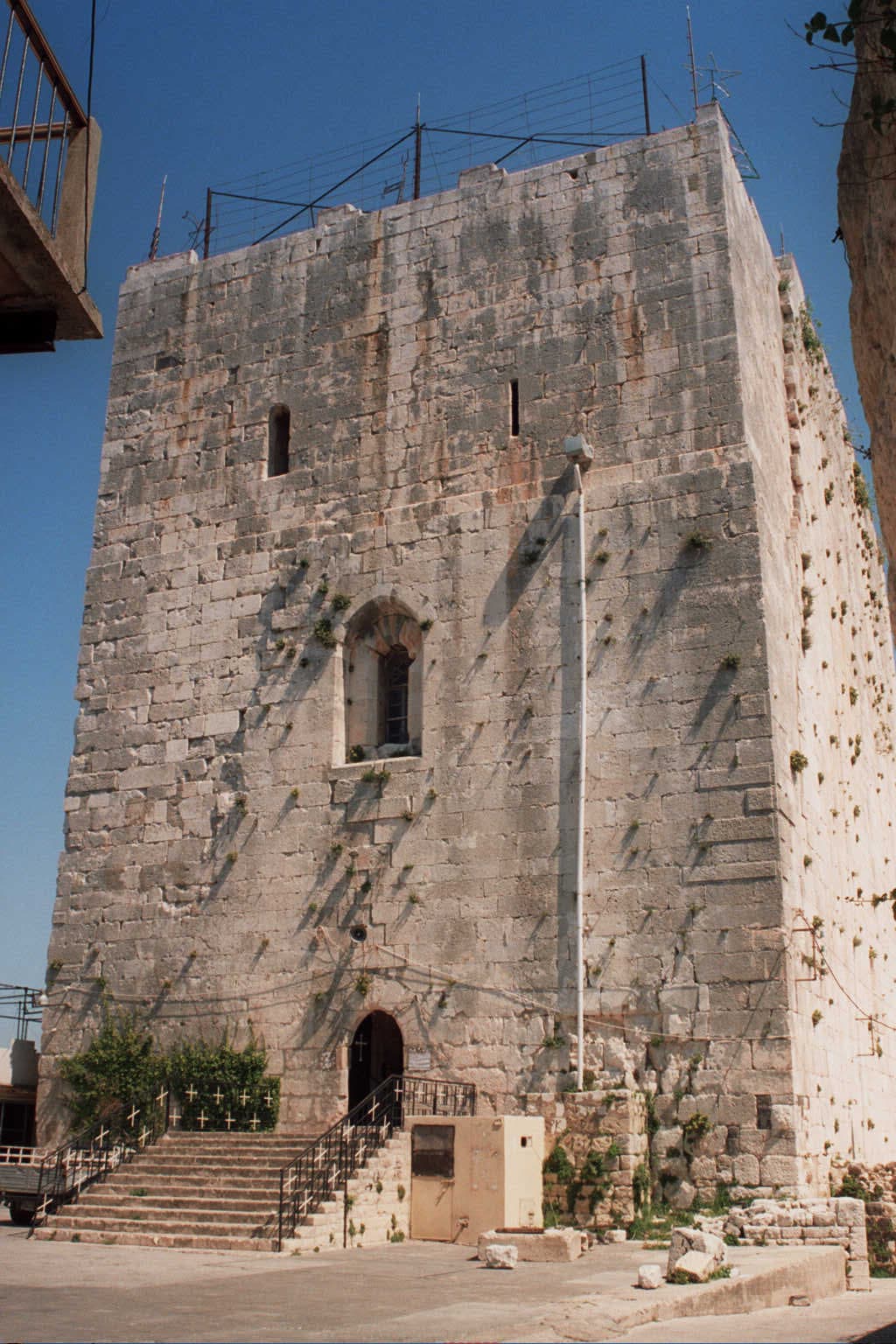
Chastel Blanc is constructed primarily from large, finely hewn blocks of white limestone, lending the fortress its distinctive and enduring nickname. The tower measures approximately 28 meters in height, 18 meters in width, and 31 meters in length. Its walls are robust, about three meters thick, designed to resist siege engines and assaults. The castle's layout is divided into four main sections that reflect its long and complex history.
Foundations and ground floor
The base of the tower rests on ancient Phoenician foundations, which are rock-cut and partially submerged, highlighting the site's long-standing strategic importance. The ground floor includes vaulted cellars and rock-cut cisterns that were essential for water storage, a critical feature for enduring prolonged sieges. These cisterns demonstrate advanced engineering for water management in a fortress environment.
Chapel and great hall
The first floor houses a chapel dedicated to St. Michael, which remains in use today by the local Greek Orthodox community, underscoring the castle’s ongoing cultural and religious significance. Above this, the second floor contains the great hall, an expansive open space fortified with deep arrow slits that allowed defenders to repel attackers effectively. This hall is architecturally notable for its support system, which includes three large columns with intersecting arches, showcasing the sophisticated engineering techniques of the Crusader period.
Roof and defensive features
Access to the roof is via stairs ascending from the great hall. The rooftop features balconies constructed from finely carved stone blocks arranged with openings that provide commanding views of the surrounding terrain, including the sea and distant mountain ranges. The roof served both defensive and observational purposes, allowing lookouts to spot approaching enemies and coordinate with other fortifications in the region.
Military installations and ancillary structures
Below the main tower structure are additional rock-cut cisterns and former storage areas for weapons and supplies, highlighting the fortress’s role as a military bastion. A large bell mounted on the western wall historically served as an alarm, audible up to five kilometers, signaling danger or rallying defenders.
Historical significance and events
The fortress played a pivotal role throughout the Crusader period, enduring numerous sieges and attacks. In 1167, it was targeted by Nur ad-Din, a prominent Muslim leader, and although the tower was temporarily lost, the Knights Templar swiftly recaptured it within the same year. The castle's resilience was tested by natural disasters as well; it suffered significant damage during earthquakes in 1170 and 1202, necessitating extensive rebuilding efforts, particularly on the upper floors and the western corner.
Following the invasion of Saladin in 1188, the fortress was repaired and reinforced to maintain its defensive capabilities. Its final chapter as a Crusader stronghold ended in 1271 when the citadel was seized and destroyed by the Mamluk leader Baibars, marking the decline of Crusader influence in the region.
Modern restoration and cultural legacy
During the 20th century, under the French Mandate, Chastel Blanc underwent restoration attempts that were met with mixed reactions from the local population. In 1946, architect Pierre Coupel led an intensive repair program to stabilize the keep, which was at risk of collapse. These efforts preserved the tower as an important cultural and historical monument.
Today, Chastel Blanc stands as a well-preserved testament to Crusader military architecture and the region’s layered history. Its ongoing use as a chapel by the Greek Orthodox community and its status as a prominent landmark in Safita underscore its enduring significance. The castle’s architectural features, strategic location, and rich history make it a key destination for those interested in medieval fortifications and the Crusades.
The castle in its regional context
Chastel Blanc was part of a sophisticated network of fortresses that secured the coastal approaches and inland routes during the Crusades. Its ability to communicate with other strongholds through visual signals was crucial for coordinating military responses. The castle’s position overlooking the Mediterranean allowed control over maritime traffic and early warning of naval threats.
Its proximity to other important Crusader sites, such as the Krak des Chevaliers, enhanced regional defense and contributed to the prolonged Crusader presence in the Levant. The castle’s architecture reflects a blend of military necessity and religious function, embodying the dual role of many Crusader fortresses as both defensive bastions and centers of Christian worship.
Visitor information and accessibility
While the exact visiting hours and ticket prices are not widely published, Chastel Blanc remains accessible to visitors interested in exploring its historical and architectural heritage. Its location on a hill provides panoramic views that reward those who make the ascent. Visitors can explore the chapel, the great hall, and the rooftop balconies, gaining insight into medieval military engineering and Crusader history.
Frequently asked questions (FAQ)
- When was Chastel Blanc built and by whom?
- Chastel Blanc was built in the 12th century by the Knights Templar during the Crusades, atop older Phoenician foundations.
- What architectural style characterizes Chastel Blanc?
- The castle exhibits Romanesque architectural features, including thick walls, vaulted cellars, and intersecting arches supporting the great hall.
- Is Chastel Blanc accessible to visitors today?
- Yes, Chastel Blanc is accessible to visitors who can explore the chapel, great hall, and rooftop balconies, although specific visiting hours may vary.
- What is the historical significance of Chastel Blanc?
- Chastel Blanc was a strategic Crusader fortress that played a key role in regional defense, enduring sieges and serving as a communication hub with other castles.
- What remains of the original castle surrounding the tower?
- Only the eastern gate remains visible today, located about 45 meters from the tower, with much of the surrounding castle lost over time.
Photo gallery

Information
Loading map...
Visitor reviews
No reviews yet. Been here? Write the first review and help other travelers!
Write the first reviewVisited this castle? Share your experience
Your review helps other travelers and adds first-hand knowledge to our encyclopedia.