Cesky Sternberk Castle
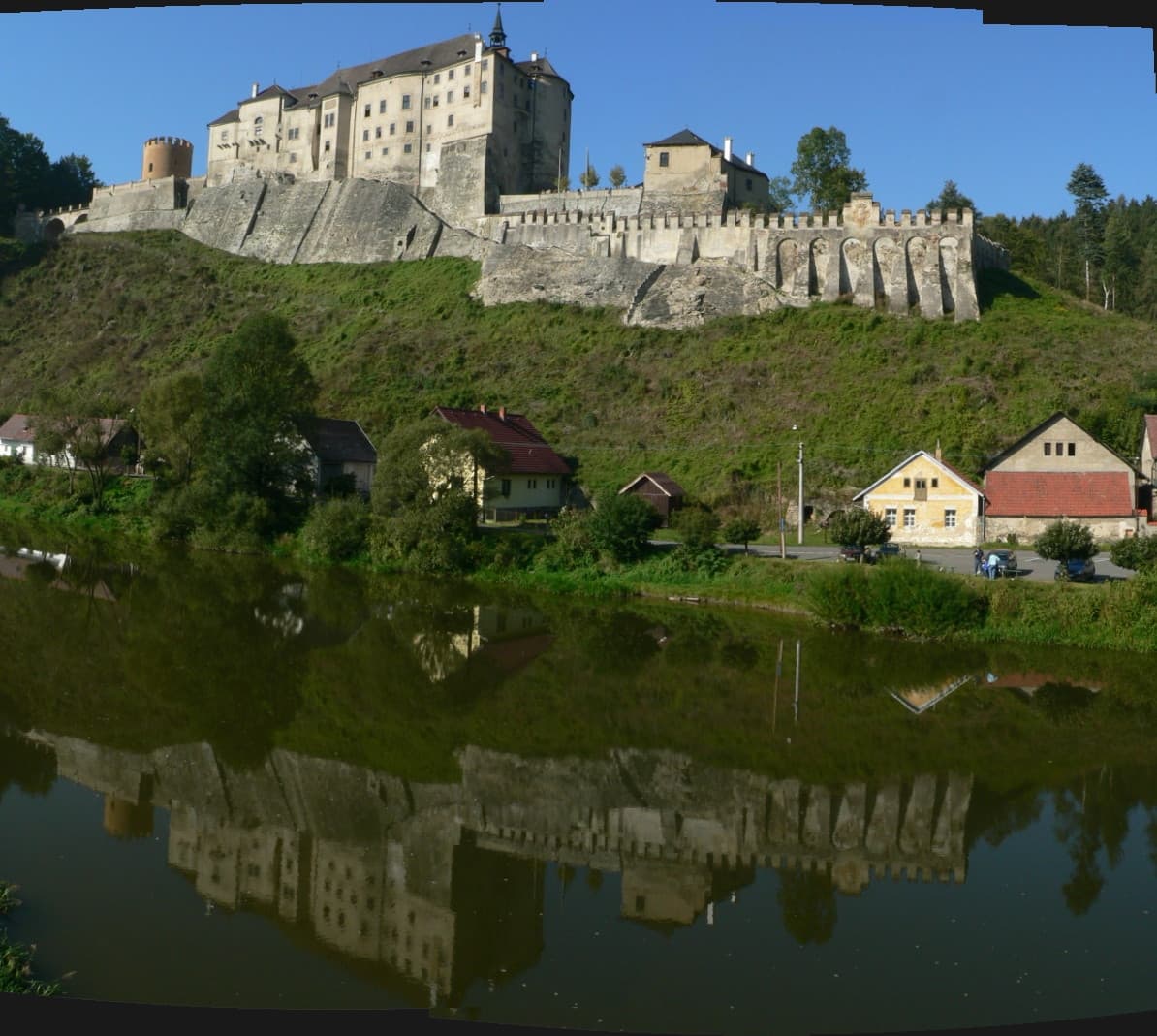
Cesky Sternberk Castle stands as a remarkable example of a high medieval Gothic hill castle in the Czech Republic, with a continuous history dating back to its founding in 1241. Perched on a steep rocky ridge overlooking the Sázava River, the castle's strategic location allowed it to serve both as a formidable fortress and a noble residence. It remains uniquely significant as one of the few castles in Europe still owned by the founding family, the Sternberks, whose lineage originates from the Divišov family.
The castle's construction was initiated by Zdeslav of Divišov, later known as Zdeslav Sternberg, who selected the site for its natural defensive advantages. The original architectural design reflects the early Gothic style characteristic of the mid-13th century, emphasizing strong stone walls, narrow windows, and a compact layout optimized for defense. Over the centuries, the castle evolved through multiple phases of fortification and renovation, adapting to changing military technologies and aesthetic tastes while preserving its core medieval character.
Historical development and ownership
The castle's name derives from the golden eight-pointed star in the coat of arms of the Divišov family, symbolizing the Sternberk lineage. Throughout its history, the castle has been closely tied to the fortunes of the Sternberk family, who played a significant role in Bohemian nobility.
During the 14th century, the advent of firearms necessitated enhancements to the castle's defenses. A three-story northern tower was constructed, connected by a rampart to the main structure, reflecting the need to resist long-range attacks. The castle's fortifications were further strengthened around the turn of the 15th to 16th centuries with the addition of a cylindrical southern tower and a dungeon tower to the north. These improvements were part of a broader reconstruction effort following damage sustained during conflicts, including the capture by royal forces in 1467 during the reign of George of Poděbrady.
The Holický branch of the Sternberk family controlled the castle until 1712, when the death of Jan Václav led to a temporary change in ownership. The castle was reacquired by the Sternberks in 1841, specifically by Zdeněk of Sternberk from the Konopiště branch, restoring the ancestral connection. Despite nationalization during the communist era in 1949, the castle was returned to the Sternberk family after the Velvet Revolution in 1992, currently owned by Count Zdeněk Sternberg.
Architectural features and fortifications
Original gothic structure
The initial construction showcases typical early Gothic defensive architecture with thick stone walls, battlements, and a compact keep designed to withstand sieges. The castle's position on a rocky promontory provided natural defenses, complemented by man-made fortifications.
14th and 15th century enhancements
Responding to the evolving nature of warfare, the northern three-story tower was added in the 14th century, connected to the main castle by a fortified rampart. This tower enhanced surveillance and defense capabilities against the threat posed by early firearms.
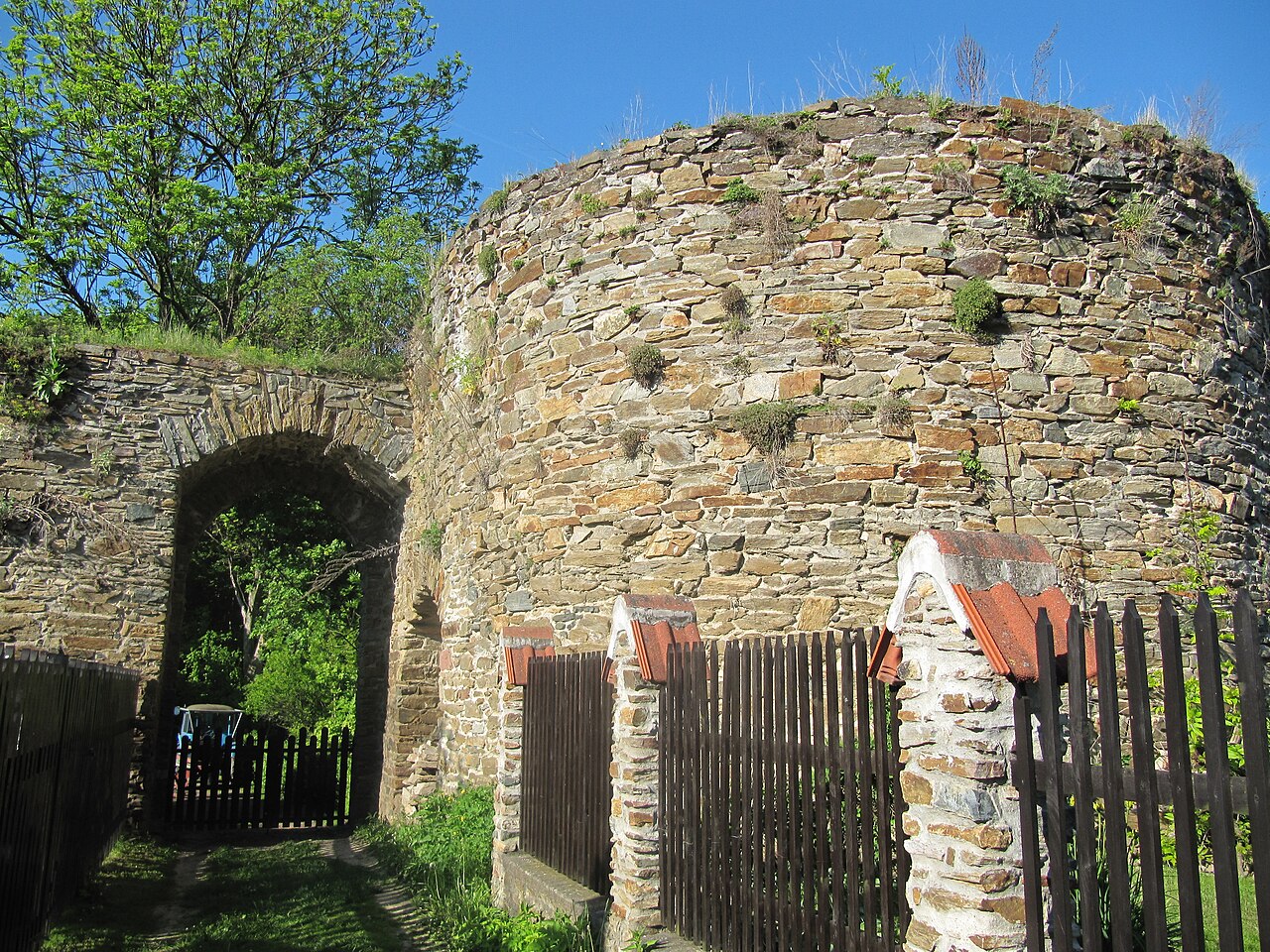
By the late 15th century, the castle's defenses were further bolstered with the construction of the southern cylindrical bastion known as the Hladomorna. This polygonal artillery tower features a sharp southern edge designed to deflect cannon fire and is surrounded by outer fortifications including a neck ditch and earthen ramparts. The tower's basement served as a powder magazine, essential for storing gunpowder safely during sieges.
Interior architectural evolution
While the castle's exterior retains its Gothic essence, the interiors underwent significant transformation during the Baroque and Rococo periods. The halls feature elaborate stucco decorations by the Italian master Carlo Brentano dating from around 1760, blending artistic refinement with the castle's medieval character.
The castle chapel, dedicated to Saint Sebastian, houses a notable 17th-century Dutch painting framed in Rococo style, exemplifying the fusion of religious devotion and artistic expression within the castle walls.
Collections and cultural significance
Cesky Sternberk Castle hosts a remarkable collection of 545 copper engravings depicting scenes from the Thirty Years' War, sourced from the Theatrum Europaeum chronicle. This collection is one of the largest in Europe dedicated to a single historical conflict, offering invaluable insights into the period's military and political history.
Additional exhibits include historical weapons, hunting trophies, and a library containing volumes related to the Sternberk family history. The castle's Knight's Hall is adorned with portraits of military commanders and monarchs, linking the site to broader European historical narratives.
Preservation and public access
Today, Cesky Sternberk Castle is recognized as one of the best-preserved Gothic castles in Bohemia. Its well-preserved condition allows visitors to explore a site that has retained much of its original medieval structure alongside later architectural additions.
The castle remains a private residence but is open to the public for tours, providing a unique opportunity to experience centuries of architectural evolution and noble heritage firsthand. Its status as a national cultural monument underscores its importance to Czech history and heritage.
Visitor experience and facilities
Visitors can tour various parts of the castle, including the Knight's Hall, the chapel, and several period-furnished salons. The castle's location offers scenic views of the Sázava River valley, enhancing the visitor experience with natural beauty alongside historical exploration.
Guided tours often highlight the castle's architectural features, historical events, and the Sternberk family's legacy, making it a rich educational destination for history enthusiasts and tourists alike.
Frequently asked questions (FAQ)
- What is the historical significance of Cesky Sternberk Castle?
- Cesky Sternberk Castle, founded in the 13th century, is one of the oldest castles in the Czech Republic. It played a crucial role in the defense of the region and has been a witness to many historical events, making it a significant cultural landmark.
- When was Cesky Sternberk Castle built?
- Cesky Sternberk Castle was constructed in 1241 by the Sternberk family. This medieval structure has undergone various renovations over the centuries, preserving its historical essence while adapting to modern times.
- Can I visit Cesky Sternberk Castle?
- Yes, visitors are welcome to explore Cesky Sternberk Castle. Guided tours are available, allowing guests to learn about its rich history and architectural features.
- What are the opening hours for Cesky Sternberk Castle?
- Cesky Sternberk Castle typically opens from April to October, with hours varying by season. It is advisable to check the official website for the most current opening times before planning your visit.
- Is it possible to access Cesky Sternberk Castle with limited mobility?
- The castle has some accessibility measures in place, but due to its historical architecture, certain areas may be challenging for individuals with limited mobility. It is recommended to inquire ahead for specific accessibility options.
- What are the ticket prices for visiting Cesky Sternberk Castle?
- Ticket prices vary based on age and the type of tour selected, with discounts often available for children and seniors. It's best to check the official website for current rates and any special offers.
- When is the best time to visit Cesky Sternberk Castle?
- The best time to visit Cesky Sternberk Castle is during the spring and early autumn months when the weather is pleasant and the surrounding scenery is beautiful. Additionally, these times tend to have fewer crowds compared to the summer peak season.
- Are there any nearby attractions to explore after visiting the castle?
- Yes, after visiting Cesky Sternberk Castle, you can explore the charming village of Český Šternberk and the picturesque surrounding countryside. Other nearby attractions include hiking trails and historical sites that offer a deeper insight into the region’s heritage.
Photo gallery

Information
Website
Visit websiteSources & official resources
Verify the information above using these authoritative references.
Loading map...
Visitor reviews
No reviews yet. Been here? Write the first review and help other travelers!
Write the first reviewVisited this castle? Share your experience
Your review helps other travelers and adds first-hand knowledge to our encyclopedia.