Cenizas Battery
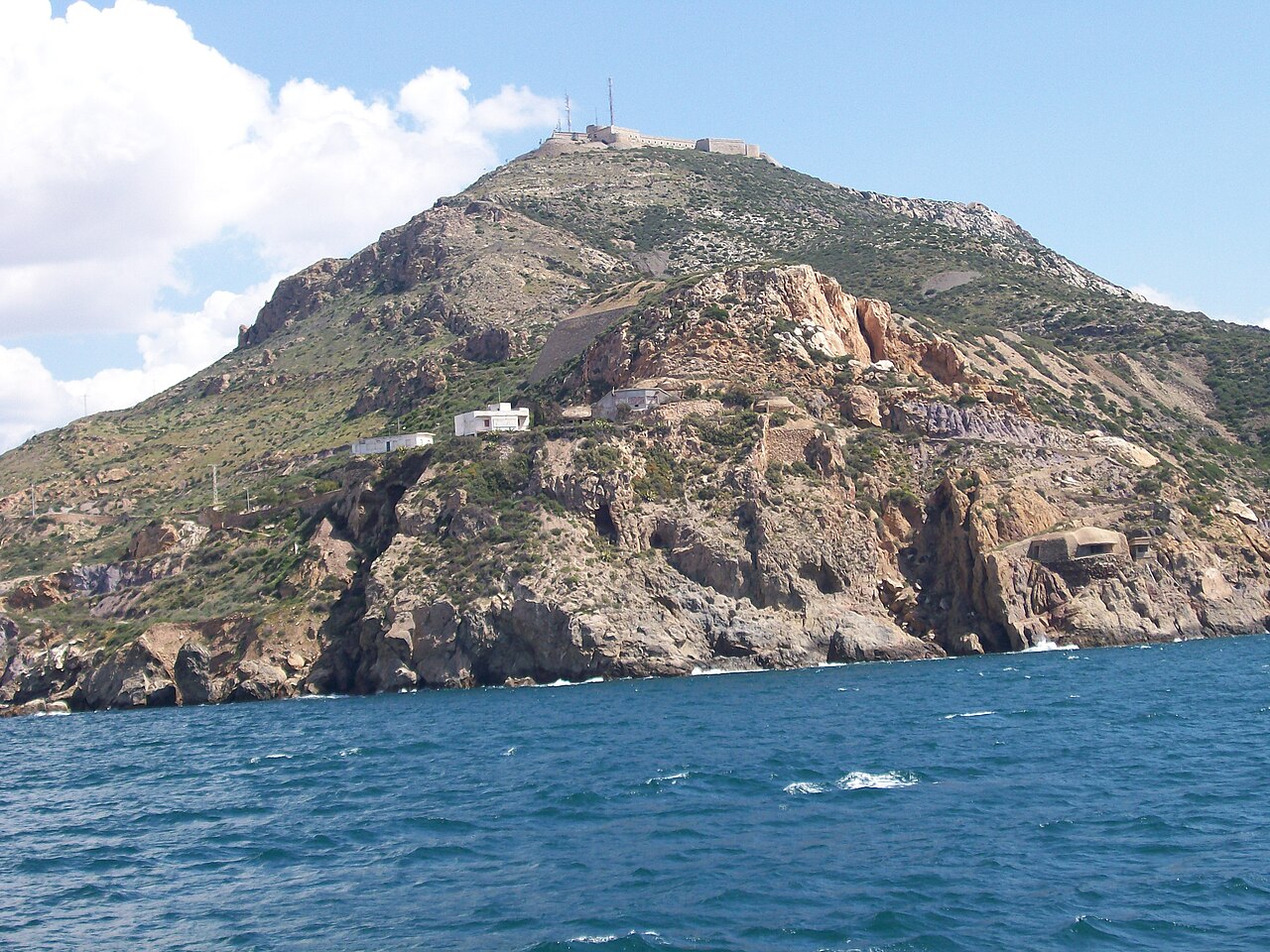
Cenizas Battery, known locally as Batería de (las) Cenizas, is a significant coastal defense fortification located on a mountain overlooking the sea east of Portmán in the Murcia region of Spain. Constructed in the early 20th century, this military installation was part of a broader strategic effort to modernize the defenses of the vital naval base at Cartagena following the technological advances of World War I.
After WWI, the Spanish Navy recognized that the existing fortifications protecting Cartagena were outdated. Consequently, in 1926, a comprehensive Defense Plan was implemented, calling for the construction of numerous new fortifications around Cartagena to safeguard the port against potential sea and air attacks. Cenizas Battery was a central component of this plan, built between 1930 and 1934 on a mountain approximately 300 meters above sea level.
Strategic importance and construction
The battery was designed as an anti-shipping installation armed with two massive Vickers 381 mm 45 caliber guns, capable of firing shells up to about 35 kilometers. These guns were among the largest coastal artillery pieces in Spain and were only matched nearby by the Castillitos Battery to the west of Cartagena. The elevated position of Cenizas Battery provided a commanding view of the Mediterranean Sea, allowing it to protect the naval facilities and shipping lanes effectively.
At the outbreak of the Spanish Civil War in 1936, Cenizas Battery was fully operational. It played a critical role in deterring a Nationalist naval squadron from approaching the port of Cartagena, which was a Republican stronghold during much of the conflict.
Architectural features and artistic elements
One of the most distinctive features of Cenizas Battery is its main gate, constructed from concrete and designed to resemble white feathered serpents inspired by pre-Columbian American art. This unusual artistic choice reflects an intriguing blend of military architecture and cultural symbolism, setting the battery apart from typical fortress designs of the period.
Negrete battery: the first anti-aircraft defense on the coast
Adjacent to Cenizas Battery, only about 100 meters west, lies the Negrete Battery, which was the first anti-aircraft battery constructed on the Cartagenean coast. Construction began in 1930, with guns installed by 1931. Negrete was equipped with four Vickers 105 mm 45 caliber anti-aircraft guns, which had an effective range of approximately 13 kilometers.
The primary mission of Negrete Battery was to provide air defense coverage for Cenizas Battery and the La Chapa Battery located below in Portmán Bay. Firing tests conducted in 1933 confirmed its operational readiness. During the Spanish Civil War, Negrete was actively engaged in defending the coastline, although two of its guns were later redeployed to other batteries in Sierra Gorda and Los Dolores to enhance the protection of Cartagena city itself.
By 1952, the remaining two guns were also removed and relocated to Los Dolores, rendering Negrete Battery inactive. It was subsequently integrated with Cenizas Battery as part of the broader coastal defense system.
Decommissioning and current status
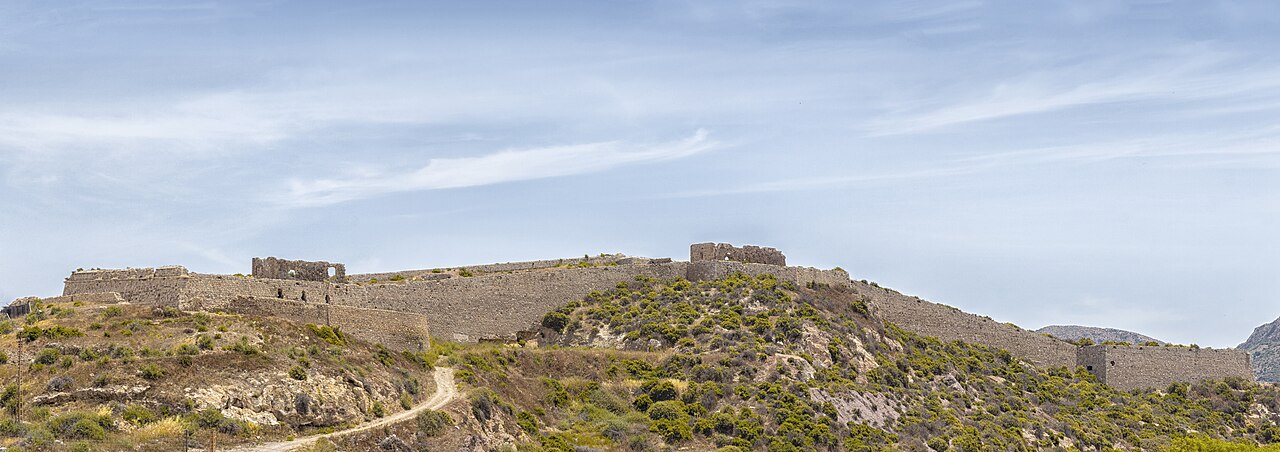
Over time, advances in military technology rendered the large-caliber guns at Cenizas Battery obsolete. The site was officially decommissioned in 1994 and subsequently stripped of much of its equipment, although the two massive Vickers guns remain in place. Since then, the site has fallen into a state of ruin but remains under the ownership of the Spanish Ministry of Defense.
Today, Cenizas and Negrete Batteries are accessible to the public and lie within a designated Natural Park. Visitors must park below near the road between Portmán and Los Belones, as vehicle access to the battery sites is prohibited. The hike along the old military gravel road to the batteries takes about 45 minutes and offers visitors spectacular views of the Mediterranean coastline and a tangible connection to Spain's 20th-century coastal defenses.
Historical context and military significance
The construction of Cenizas Battery reflects the broader military and geopolitical concerns of Spain in the interwar period. The Spanish Navy's focus on Cartagena as a strategic naval base necessitated modern coastal defenses capable of countering threats from both sea and air. The battery's powerful artillery and its role during the Spanish Civil War underscore its importance in regional defense strategy.
The integration of artistic elements such as the pre-Columbian-inspired gate also highlights a unique cultural aspect of military architecture during this era, demonstrating a fusion of functional military design with symbolic and aesthetic considerations.
Visitor experience and natural surroundings
Visitors to Cenizas Battery can explore the remains of the gun emplacements, observation posts, and the distinctive concrete gate. The site offers a rare glimpse into early 20th-century coastal artillery technology and military engineering. The surrounding natural park provides a protected environment rich in Mediterranean flora and fauna, making the visit appealing not only to history enthusiasts but also to nature lovers.
The hike to the site is moderately challenging due to the elevation and gravel paths but rewards visitors with panoramic views of the coastline and the historic military installations. Interpretive signage and guided tours may be available locally to enhance understanding of the site's historical and architectural significance.
Frequently asked questions (FAQ)
- How do I visit Cenizas Battery?
- Visitors can hike to Cenizas Battery from a parking area near the road between Portmán and Los Belones. Vehicle access is restricted, so expect a 45-minute walk along an old military gravel road.
- What is the historical significance of Cenizas Battery?
- Cenizas Battery was a key coastal defense installation built between 1930 and 1934 to protect Cartagena's naval base, playing an important role during the Spanish Civil War.
- Can I see the original artillery at Cenizas Battery?
- Yes, the two massive Vickers 381 mm guns remain on site, although the battery was decommissioned in 1994 and is now in ruins.
- Is there any unique architectural feature at Cenizas Battery?
- The main gate is uniquely designed with concrete sculptures inspired by pre-Columbian American art, representing white feathered serpents.
- What is Negrete Battery?
- Negrete Battery is an adjacent anti-aircraft battery built in 1930 with Vickers 105 mm guns, serving to protect Cenizas and La Chapa Batteries during the Spanish Civil War.
Information
Current owner
Ministry of Defense
Loading map...
Visitor reviews
No reviews yet. Been here? Write the first review and help other travelers!
Write the first reviewVisited this castle? Share your experience
Your review helps other travelers and adds first-hand knowledge to our encyclopedia.