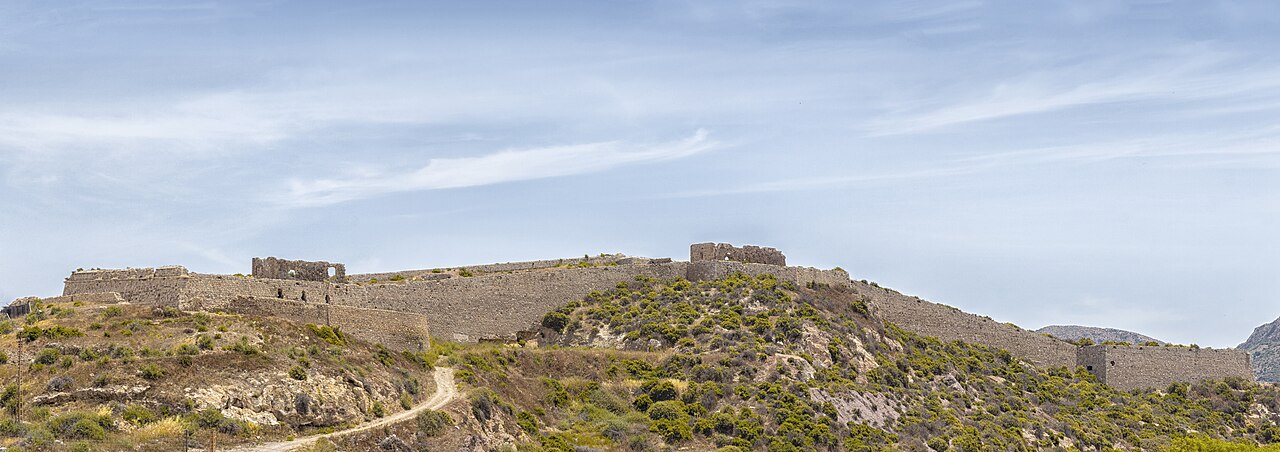
Negro Tower
Negro Tower, locally known as Torre del Negro, is a historic watchtower situated on a farm west of the town of El Carmolí in the Region of Murcia, Spain. This tower played a significant role in the defense system of the coastal area during the Renaissance period, particularly in the late 16th century when the threat of Barbary pirate raids was prevalent along the Mediterranean coast.
Historical context and strategic importance
During the 16th and 17th centuries, the region around Cartagena was frequently targeted by Barbary pirates. To counter these incursions, the Spanish crown commissioned the construction of a network of rural watchtowers that served both as refuges for local farmers and as early warning systems. Negro Tower was one such structure, built in 1585 under the reign of Philip II of Spain. Its original name was Torre de Arráez.
At the time of its construction, the salty lagoon of Mar Menor was located just about 100 meters from the tower, emphasizing its strategic position overseeing vital waterways and agricultural lands. The tower's location next to the modern N-332 road places it within easy view of passing travelers and highlights its historical role as a sentinel post.
Architectural features and design
The Negro Tower features a square plan with walls approximately 1.5 meters thick and stands around 14 meters high. Its design reflects the typical characteristics of Renaissance military architecture adapted for coastal defense. The tower tapers slightly toward the top and originally included a crenelated terrace for lookouts and defense.
The structure consists of a ground floor and two upper floors, which would have been used for observation and as a refuge during attacks. The tower was also protected by a defensive mud wall that enclosed the stables and barns, providing shelter for livestock and supplies during raids.
Later, a country house was constructed adjoining the tower, which remains occupied today, although the tower itself stands empty. This juxtaposition of residential and defensive architecture illustrates the evolution of the site from purely military use to a mixed rural estate.
Possible earlier origins and comparisons
While official records date the construction of Negro Tower to 1585, some architectural historians suggest the tower may have origins dating back to the 13th century. This theory is supported by comparisons with the nearby Rame Tower, which was first documented in the 13th century following the Reconquista of the Kingdom of Murcia by Alfonso X of Castile.
Both towers share similar structural features: tapering shapes, heights between eight and ten meters, thick walls of approximately 1.5 meters, multiple floors, and crenelated terraces. The proximity and resemblance of the towers lend credence to the idea that Negro Tower may have originally been part of a medieval defensive network later adapted and rebuilt during the Renaissance.
Current status and preservation efforts
Negro Tower is currently private property and is not open to public visits. However, it can be easily viewed from the adjacent public road, allowing visitors to appreciate its imposing silhouette and historical significance from a distance.
The family operating the farm on which the tower stands is actively seeking funding to restore the tower. Restoration would help prevent further deterioration of this rare example of Renaissance coastal defense architecture in Murcia. While some appreciate the tower's weathered state as a testament to its long history, conservation efforts are crucial to preserving its structural integrity for future generations.
The nearby Rame Tower offers an additional point of interest for those exploring the defensive heritage of the region.
Frequently asked questions (FAQ)
- How do I get to Negro Tower?
- Negro Tower is conveniently located next to the N-332 road in Spain, making it easily accessible by car. For public transport, check local bus routes that may stop nearby, or consider using a rideshare service for direct access to the site.
- What is the historical significance of Negro Tower?
- Negro Tower, known for its medieval architecture, played a crucial role in the region's defense during its time. It served as a lookout point and a fortification, reflecting the strategic importance of the area throughout history.
- When was Negro Tower built?
- The exact date of construction for Negro Tower is not definitively known, but it is believed to date back to the 14th century. This period was marked by the need for defensive structures, particularly in regions vulnerable to invasions.
- Can I enter Negro Tower?
- Visitors are typically allowed to explore the exterior of Negro Tower, but access to the interior may be limited or require special permission. It's recommended to check in advance for any guided tours or events that may offer inside access.
- Why is Negro Tower a popular tourist attraction?
- Negro Tower attracts visitors due to its rich history, stunning architecture, and scenic views of the surrounding landscape. Its proximity to other attractions along the N-332 road also makes it a convenient stop for travelers exploring the area.
- Is it possible to visit Negro Tower year-round?
- Yes, Negro Tower is open to visitors throughout the year, although specific opening hours may vary by season. It's advisable to verify the current visiting hours before planning your trip to ensure a pleasant experience.
- What are the best times to visit Negro Tower?
- The best times to visit Negro Tower are during the spring and fall when the weather is mild and pleasant for outdoor exploration. Additionally, visiting during these seasons typically means fewer crowds, allowing for a more relaxed experience.
- Are there any nearby attractions to Negro Tower?
- Yes, there are several nearby attractions, including beautiful beaches and charming villages along the coast. Visitors can also explore historical sites and natural parks in the vicinity, making for a full day of sightseeing.
- What are the ticket prices for visiting Negro Tower?
- There is no entry fee to visit Negro Tower; however, guided tours or special events may have associated costs. It's a good idea to check the official website or local tourism information for any updates on pricing for specific activities.
Loading map...
Visitor reviews
No reviews yet. Been here? Write the first review and help other travelers!
Write the first reviewVisited this castle? Share your experience
Your review helps other travelers and adds first-hand knowledge to our encyclopedia.