Builth Castle
Builth Castle, located near Builth Wells in Powys, Wales, is a site rich in medieval history, originally established as a strategic motte-and-bailey fortress by the Anglo-Normans around 1100. The castle's initial purpose was to control a crucial crossing of the River Wye and oversee important roadways in the region, marking it as a key military and administrative point during the turbulent High Medieval period.
The castle's early phase featured a large earthen motte topped by a wooden keep, typical of Norman military architecture aimed at rapid construction and effective defense. Over the 12th and 13th centuries, Builth Castle was a focal point of conflict between Norman lords and Welsh princes, including notable figures such as Rhys ap Gruffydd, Llywelyn ap Iorwerth, and Llywelyn ap Gruffudd. The castle was repeatedly captured, destroyed, and rebuilt, reflecting the shifting power dynamics in medieval Wales. In 1260, Llywelyn ap Gruffudd seized and demolished the fortress during his military campaigns.
Stone castle construction under Edward I
Following the English conquest efforts, King Edward I initiated the construction of a new stone castle at Builth in 1277. This phase marked a significant architectural transformation from timber to stone fortifications, intended to assert English dominance. The design is attributed to James of St. George, the master mason responsible for many of Edward's Welsh castles.
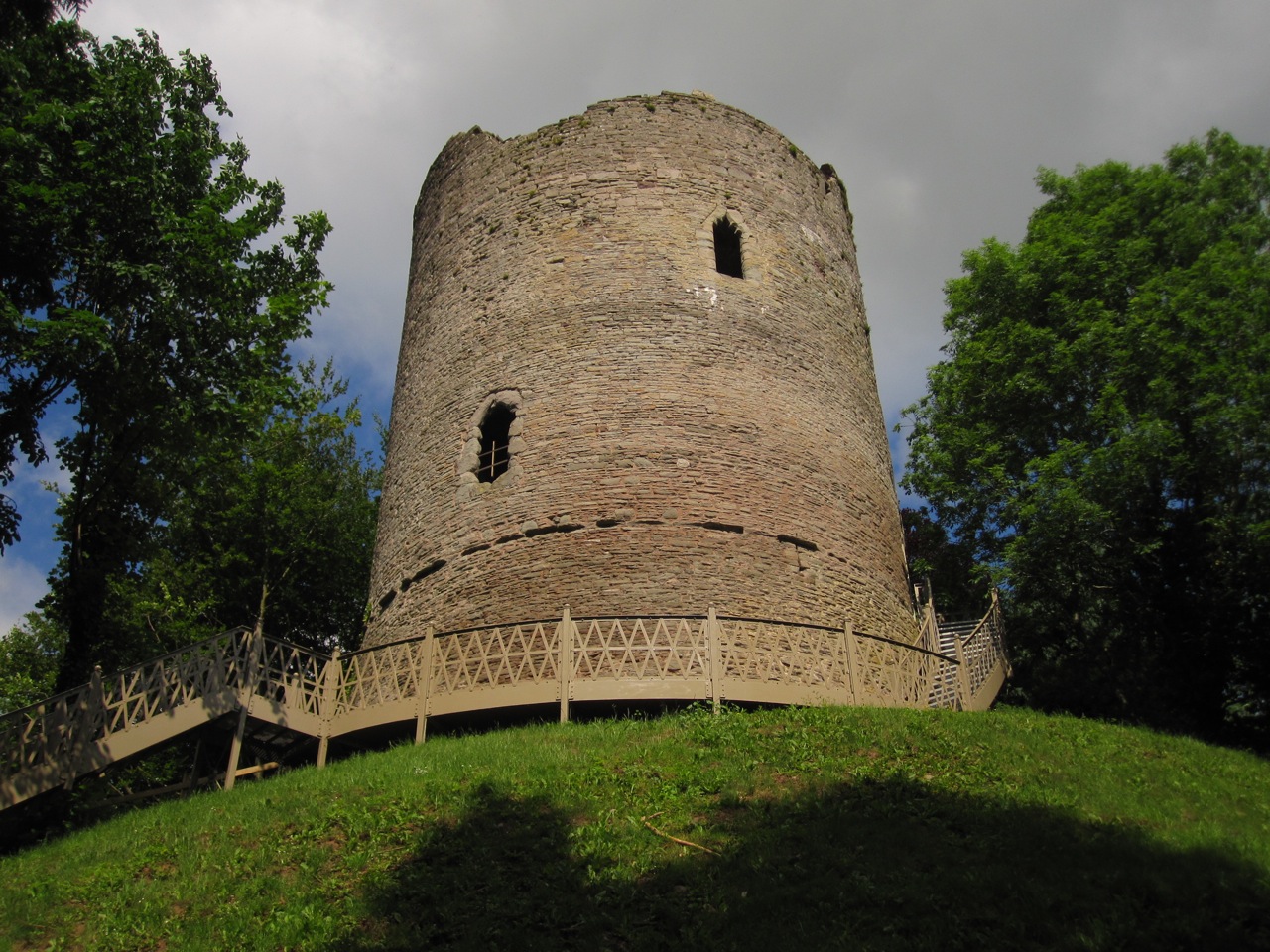
The stone castle featured a circular stone keep approximately 18 meters high atop the motte, serving as the central stronghold. Surrounding the motte was a curtain wall with six defensive towers, creating a fortified inner ward. Beyond this, a second outer curtain wall enclosed a spacious outer bailey, accessible through a gatehouse flanked by two towers. These stone defenses replaced earlier wooden palisades, enhancing the castle's military resilience.
Medieval military and political significance
Though construction was never fully completed after 1282—the year Llywelyn ap Gruffudd died nearby—the castle remained strategically important. It withstood the 1294 uprising led by Madog ap Llywelyn, enduring a siege before royal forces relieved it. Throughout the 14th century, the castle came under the control of powerful families such as the Mortimers and played roles in political events involving Roger Mortimer and Queen Isabella.
In the early 15th century, during the Owain Glyndŵr revolt, Builth Castle continued as a military stronghold. Commanded by John Oldcastle, it resisted siege damage without falling. Repairs in 1409 helped restore parts of the fortress to maintain its defensive capabilities.
Decline and present condition
From the 16th century onwards, Builth Castle gradually fell into disuse and decay. Stones from the castle were quarried for building materials in the growing town of Builth Wells. A major fire around 1690 further damaged the area, after which much of the castle's masonry was recycled into local construction.
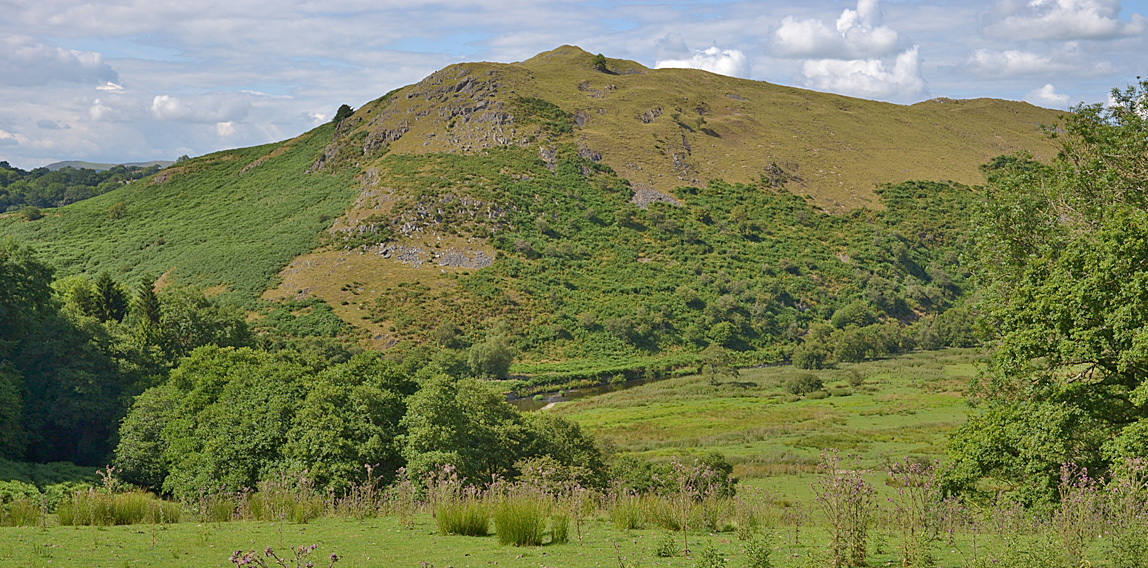
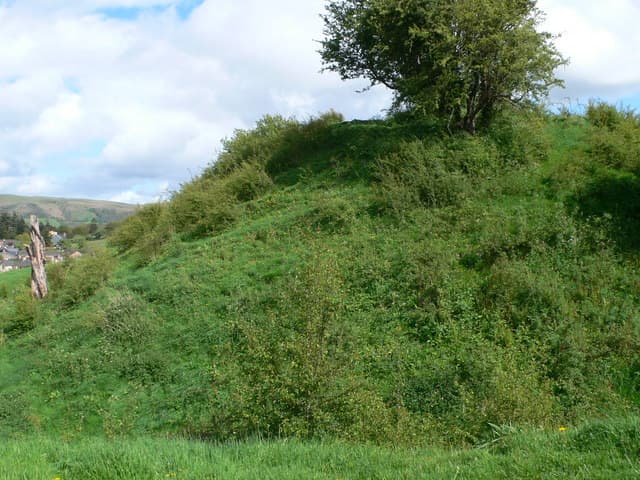
Today, the site retains primarily the earthworks—the motte rising about 18 meters, defensive ditches, and embankments—that outline the castle's original layout. These features remain visible on the hill south of the River Wye, offering insight into the castle's layered history despite the absence of standing stone structures.
Architectural features and layout
The castle's original motte-and-bailey design evolved through its stone phase, incorporating a circular keep atop the motte as the focal point. The inner bailey was protected by a curtain wall with six towers, while the outer bailey featured a gatehouse flanked by two towers, all constructed in stone. Inside the inner ward were essential buildings such as a great hall, domestic quarters, service buildings, and a chapel, reflecting the castle's dual military and residential functions.
Defensive earthworks, including ditches and embankments, surrounded the entire complex. A wooden palisade approximately 270 yards long complemented the stone fortifications during the early stone construction phase. The reuse of earlier earthworks helped contain construction costs, recorded at £1666, a modest sum for the period.
Historical legacy and cultural significance
Builth Castle exemplifies the transition from early Norman wooden fortifications to the imposing stone castles of Edwardian Wales. Its history encapsulates the turbulent relations between Welsh princes and English monarchs during the medieval period. Though now a ruin, the site remains a significant archaeological and heritage landmark, illustrating medieval military architecture and the strategic importance of border castles.
The castle's location near the River Wye and the town of Builth Wells highlights its role in controlling vital transport and communication routes. The surviving earthworks provide valuable evidence for historians and archaeologists studying Norman and Edwardian fortification techniques and the political history of Wales.
Frequently asked questions (FAQ)
- How do I visit Builth Castle and what can I expect to see?
- Builth Castle is accessible to the public as a historic site with visible earthworks including the motte and defensive ditches. Visitors can walk around the hilltop to view the castle's layout, but no standing stone structures remain. The site is open year-round with no admission fee.
- What is the historical significance of Builth Castle?
- Builth Castle played a key role in medieval Welsh-English conflicts, serving as a strategic fortress during the 12th to 15th centuries. It witnessed sieges, political power struggles, and was associated with notable figures like Llywelyn ap Gruffudd and Edward I.
- When was the stone castle at Builth built and who designed it?
- The stone castle was constructed beginning in 1277 under King Edward I, likely designed by master mason James of St. George. It replaced the earlier wooden motte-and-bailey fortifications with more durable stone defenses.
- Is Builth Castle wheelchair accessible?
- Due to the site's uneven terrain and earthwork remains, Builth Castle is not fully wheelchair accessible. Visitors should be prepared for uneven ground and limited facilities.
- Are there guided tours or informational materials available at Builth Castle?
- There are no formal guided tours on site, but informational panels provide historical context. Visitors can also find detailed resources and maps at local visitor centers in Builth Wells.
Photo gallery

Information
Sources & official resources
Verify the information above using these authoritative references.
Loading map...
Visitor reviews
No reviews yet. Been here? Write the first review and help other travelers!
Write the first reviewVisited this castle? Share your experience
Your review helps other travelers and adds first-hand knowledge to our encyclopedia.