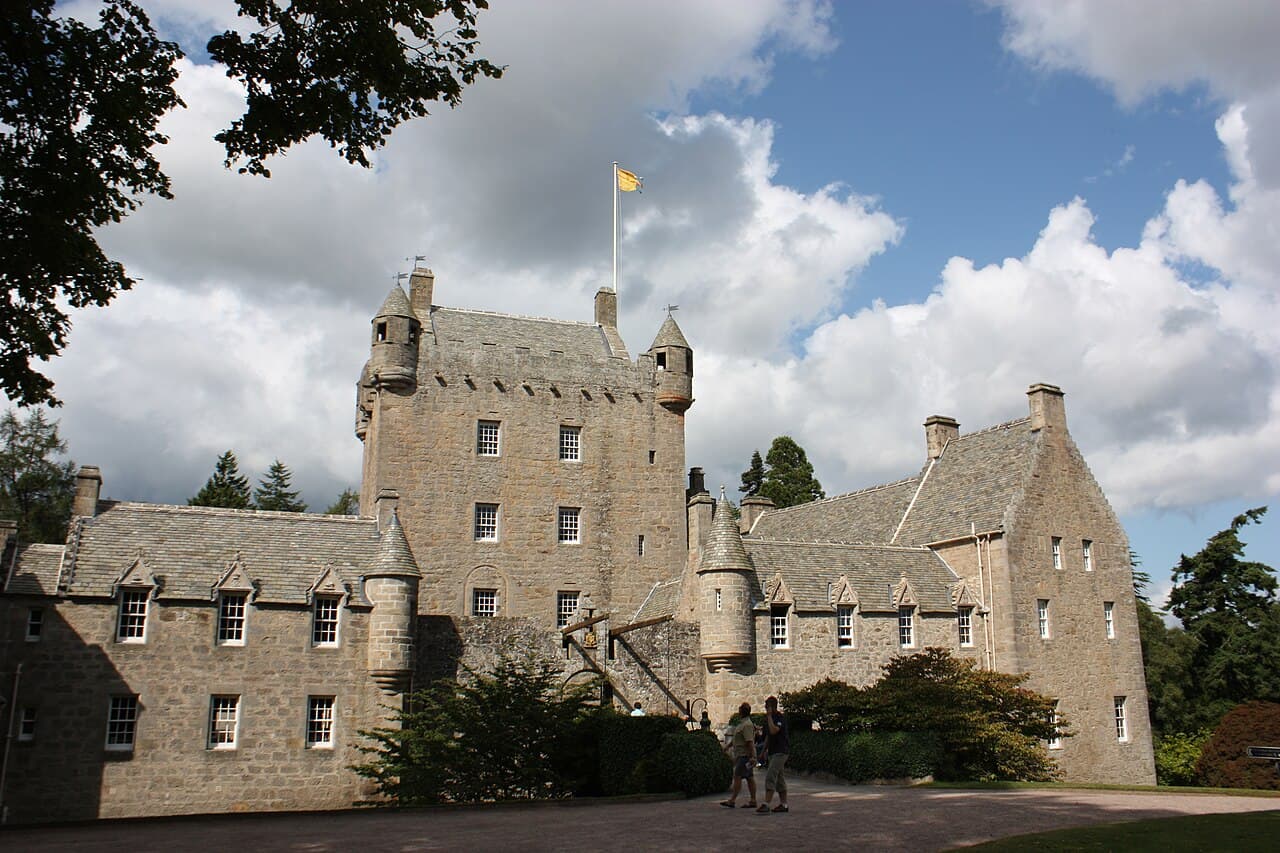
Cawdor Castle
Cawdor Castle stands prominently amid the scenic gardens of the parish of Cawdor in Nairnshire, Scotland. This late medieval hill castle is centred around a 15th-century tower house, which forms the historic core of the estate. Over the centuries, the castle has undergone numerous expansions and renovations, evolving from a fortified stronghold into a grand residence while retaining many original defensive features.
The castle is famously linked to William Shakespeare's tragedy Macbeth, where the title character is bestowed the title "Thane of Cawdor." However, this association is largely fictional, as the castle itself was constructed long after the 11th-century King Macbeth's era and is never directly mentioned in the play. Despite this, the literary connection has contributed to the castle's enduring cultural significance and public interest.
Early history and construction
The earliest masonry of Cawdor Castle possibly dates back to around 1380, with the first documented record appearing in 1454 when William Calder, the 6th Thane of Cawdor, was granted a licence to fortify the structure. This licence reflects the castle's original defensive purpose during a turbulent period in Scottish history. The castle was initially the seat of the Clan Calder, who established their power base in this region.
A unique and symbolic feature of the castle is its construction around a living holly tree, the remains of which can still be seen on the lowest level of the tower house. This integration of natural elements into the medieval structure is rare and highlights the castle's distinctive character.
Shortly after its initial construction, the castle incorporated an iron yett or gate, which was relocated from the nearby Lochindorb Castle following its dismantling by order of King James II around 1455. This gate is a notable defensive element that enhances Cawdor's fortifications.
Transition to the campbell family and architectural evolution
In 1510, the castle passed into the hands of the Campbell family through the marriage of Muriel Calder to Sir John Campbell of Muckairn. This union marked the beginning of the Campbells' long stewardship of the estate, which continues to this day.
During the late 16th and early 17th centuries, significant expansions were undertaken by John Campbell, 3rd of Cawdor, who enhanced the castle’s residential and defensive capabilities. Following the Restoration of the monarchy in 1660, Sir Hugh Campbell commissioned masons James and Robert Nicolson of Nairn to improve the north and west ranges, further modernizing the castle.
Throughout the 17th and 18th centuries, the castle grounds were developed extensively. By 1635, a garden had been established, reflecting the growing importance of landscaped spaces in aristocratic estates. A walled flower garden was added in 1720, and extensive woodlands were planted later in the 18th century, demonstrating a shift towards aesthetic and recreational uses of the estate.
19th and 20th-century developments
In the 19th century, Cawdor Castle served primarily as a summer residence for the Earls of Cawdor. Architects Thomas Mackenzie and Alexander Ross were commissioned to add southern and eastern wings, enclosing a courtyard accessed by a drawbridge. These additions transformed the castle into a more comfortable and stately home while preserving its historic character.
Throughout the 20th century, the castle remained the family seat. John Campbell, 5th Earl Cawdor, made it his permanent residence, continuing the tradition of Campbell ownership. The castle is currently home to Angelika Campbell, Dowager Countess Cawdor.
Architectural features and gardens
The castle's core structure is its 15th-century tower house, which may incorporate stonework from the late 14th century. The tower house retains many medieval defensive features, including thick stone walls and narrow windows designed for protection.
The castle's layout expanded over time with the addition of north, west, south, and east ranges, creating an enclosed courtyard accessed by a historic drawbridge. The presence of an iron yett from Lochindorb Castle adds to the castle's formidable defenses.
The grounds of Cawdor Castle are renowned for their historic and diverse gardens. The walled garden dates back to the 17th century, while the flower garden was established in the 18th century. In the 1960s, a wild garden was added, enhancing the estate's botanical variety. The surrounding woodlands contain a rich collection of tree species and over 100 species of lichen, underscoring the ecological significance of the estate.
Cultural significance and preservation
Cawdor Castle is a category A listed building, denoting its national architectural and historic importance. The castle's grounds are also included in the Inventory of Gardens and Designed Landscapes in Scotland, recognizing their cultural and horticultural value.
The castle remains a private residence but is open to the public, offering visitors a chance to explore its rich history, architecture, and gardens. Its blend of medieval fortification and later residential elegance makes it a significant example of Scottish castle development.
Despite its literary associations, the castle's true historical value lies in its architectural evolution and continuous occupation by the Campbell family, who have shaped its legacy over more than five centuries.
Frequently asked questions (FAQ)
- What is the historical significance of Cawdor Castle?
- Cawdor Castle is famous for its association with Shakespeare's Macbeth, as it is believed to be the inspiration for the character's title. The castle has been the home of the Campbell family, the Thanes of Cawdor, since the 14th century, and it showcases a rich tapestry of Scottish history and heritage.
- When was Cawdor Castle built?
- Cawdor Castle was originally constructed in the late 14th century, with significant renovations and expansions occurring over the centuries. The castle's architecture reflects various styles, indicative of its long and storied past.
- What are the opening hours for Cawdor Castle?
- Cawdor Castle typically opens to visitors from April through October, with varying hours depending on the month. It is advisable to check the official website for the most current opening times and any seasonal changes before planning your visit.
- Can I visit the gardens at Cawdor Castle?
- Yes, the gardens at Cawdor Castle are open to visitors and are a major highlight of the site. The beautifully landscaped gardens feature a variety of plants and flowers, along with walking paths that provide scenic views of the surrounding area.
- Is Cawdor Castle accessible for visitors with disabilities?
- Cawdor Castle offers some accessibility options, including wheelchair access to certain areas of the grounds and gardens. However, due to the historical nature of the castle, some areas may be challenging to navigate, so it's recommended to contact the staff in advance to discuss specific needs.
- What are the ticket prices for Cawdor Castle?
- Ticket prices for Cawdor Castle vary depending on age and group size, with discounts available for children and families. Always check the official website for the latest pricing information, as well as any special offers or events that may be taking place during your visit.
- When is the best time to visit Cawdor Castle?
- The best time to visit Cawdor Castle is during the spring and summer months when the gardens are in full bloom and the weather is generally milder. Additionally, many special events and guided tours are offered during this time, enhancing the visitor experience.
- Are there any nearby attractions to Cawdor Castle?
- Yes, there are several nearby attractions worth exploring, including the picturesque village of Cawdor and the scenic Moray Firth. Additionally, the city of Inverness is just a short drive away, offering a variety of cultural and historical experiences.
Photo gallery

Information
Website
Visit websiteFeatured in
Articles on the Castlopedia blog that feature Cawdor Castle.
Sources & official resources
Verify the information above using these authoritative references.
Loading map...
Visitor reviews
No reviews yet. Been here? Write the first review and help other travelers!
Write the first reviewVisited this castle? Share your experience
Your review helps other travelers and adds first-hand knowledge to our encyclopedia.



