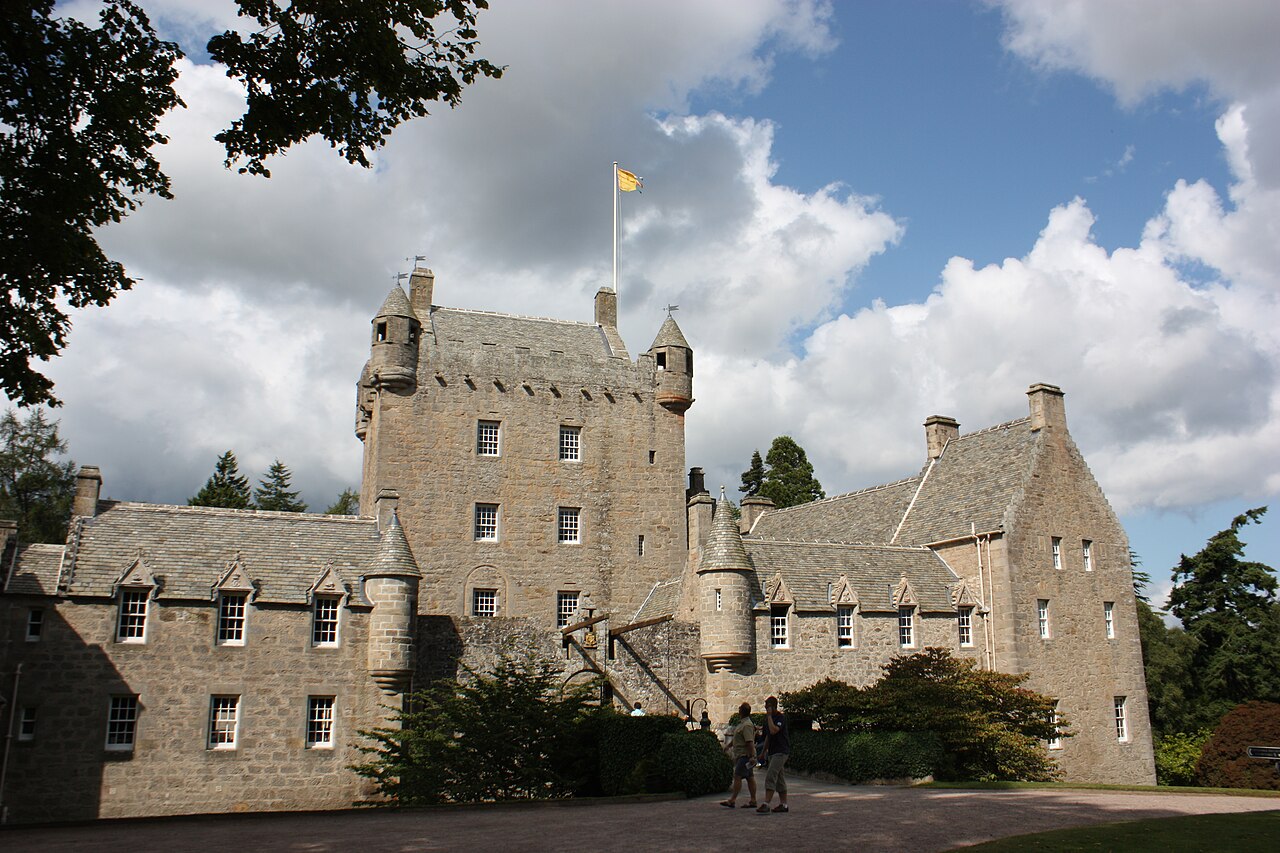
Kilravock Castle
Kilravock Castle, located in the Highland region of Scotland, is a significant example of a late medieval Scottish tower house that has served as the ancestral seat of the Clan Rose for over seven centuries. Constructed around 1460, the castle combines the defensive features of a traditional 15th-century keep with later architectural expansions reflecting evolving residential needs and styles.
Origins and early history of kilravock castle
The lands on which Kilravock Castle stands were originally owned by the Boscoe family in the 12th century. Through marriage alliances, the estate passed from the Boscoes to the Bissett family and subsequently to the Rose family in the 13th century. Specifically, after the death of Andrew Boscoe, his widow Elizabeth Bissett arranged the transfer of the lands via the marriage of their daughter Mary Boscoe to Hugh II de Ros, establishing the Rose family's long-term connection to Kilravock. This lineage is notable for its unbroken direct descent, a rarity in Scottish noble history.
Architectural development and features
The core of Kilravock Castle is its 15th-century tower house, built under a license granted by the Lord of the Isles to the baron of Kilravock. This original keep is a fortified stone structure designed primarily for defense, featuring thick walls, narrow windows, and battlements typical of the period. In the 17th century, the castle underwent significant expansion with the addition of a square stair tower and a south range, enhancing both its defensive capabilities and residential comfort.
Subsequent additions include the north and west sides of the quadrangle, which were constructed later to create a more enclosed courtyard, typical of Scottish tower house complexes evolving into more comfortable dwellings while retaining defensive elements. The castle’s layout today reflects this layered history, combining medieval fortification with post-medieval domestic architecture.
Defensive and residential elements
The castle’s defensive features include its thick stone curtain walls, battlements, and a strategically placed entrance designed to repel attackers. The stair tower added in the 17th century provided improved access between floors and was a common feature in Scottish castles of the period, blending practicality with architectural style. Inside, the castle contains great halls and private chambers that were adapted over time to suit the needs of its noble occupants.
Historical significance and notable visitors
Kilravock Castle holds a rich historical legacy, having hosted several prominent figures in Scottish history. In 1562, Mary, Queen of Scots was received at the castle during her royal progresses, marking the site as a place of political and social importance. The castle also played a role in the Jacobite uprisings; Prince Charles Edward Stuart was entertained here just four days before the Battle of Culloden in 1746, a pivotal event in Scottish history.
Following the battle, the castle was visited by the opposing commander, the Duke of Cumberland, illustrating Kilravock’s significance as a strategic and symbolic location. In the late 18th century, the renowned Scottish poet Robert Burns visited Kilravock in September 1787, further cementing its cultural heritage.
The rose family and continuous ownership
The Rose family, of Norman origin, arrived in Britain with William the Conqueror and settled at Kilravock in 1293. Remarkably, the castle has remained in the direct line of descent within the Rose family without interruption, making it unique in Scottish history. This continuous ownership has preserved not only the physical structure but also the family archives and traditions associated with the estate.
Legacy and preservation
Today, Kilravock Castle stands as a well-preserved example of a late medieval Scottish tower house with later additions reflecting centuries of adaptation. The castle’s architecture and history provide valuable insights into Scottish noble life, feudal society, and the architectural evolution of fortified homes. It remains a symbol of the enduring legacy of Clan Rose and their role in Scottish history.
Visitor information and cultural impact
While Kilravock Castle is a private residence, its historical significance attracts interest from historians, architects, and visitors keen to explore Scotland’s medieval heritage. The castle’s association with key historical events and figures enhances its appeal as a cultural landmark in the Highlands. Its architecture exemplifies the transition from purely defensive structures to more comfortable noble residences, reflecting broader social changes in Scotland from the late medieval period onward.
Frequently asked questions (FAQ)
- What is the historical significance of Kilravock Castle?
- Kilravock Castle is a 15th-century fortress that has been the ancestral home of the Rose family for over 500 years. Its rich history includes ties to significant Scottish events and figures, making it an important site in the narrative of Scotland's past.
- When was Kilravock Castle built?
- Kilravock Castle was constructed in the late 1400s, with its oldest sections dating back to around 1460. The castle has undergone various renovations over the centuries, preserving its medieval character while adapting to the needs of its occupants.
- What are the opening hours for Kilravock Castle?
- Kilravock Castle typically opens to visitors from April to October, with specific hours varying by season. It's advisable to check the official website or contact the castle directly for the most up-to-date information regarding opening times.
- Can I visit Kilravock Castle year-round?
- While Kilravock Castle is primarily open to the public during the warmer months, special arrangements can sometimes be made for group visits in the off-season. Visitors should inquire ahead of time for any potential winter tours or events.
- Is it possible to access Kilravock Castle with a wheelchair?
- Kilravock Castle has some accessibility features, but due to its historical architecture, certain areas may be challenging to navigate for wheelchair users. It is recommended to contact the castle in advance to discuss specific accessibility options and available facilities.
- What is the best time to visit Kilravock Castle?
- The best time to visit Kilravock Castle is during the late spring and summer months when the grounds are in full bloom and the weather is generally more pleasant. Additionally, visiting during special events or guided tours can enhance your experience.
- Are there any nearby attractions to Kilravock Castle?
- Yes, there are several attractions near Kilravock Castle, including the picturesque town of Nairn and the stunning beaches along the Moray Firth. Visitors can also explore the beautiful Highland landscapes and other historical sites in the surrounding area.
- What are the ticket prices for Kilravock Castle?
- Ticket prices for Kilravock Castle can vary depending on the season and any special events being held. It's best to check the official website for current pricing, which typically includes concessions for children and groups.
Information
Website
Visit websiteSources & official resources
Verify the information above using these authoritative references.
Loading map...
Visitor reviews
No reviews yet. Been here? Write the first review and help other travelers!
Write the first reviewVisited this castle? Share your experience
Your review helps other travelers and adds first-hand knowledge to our encyclopedia.