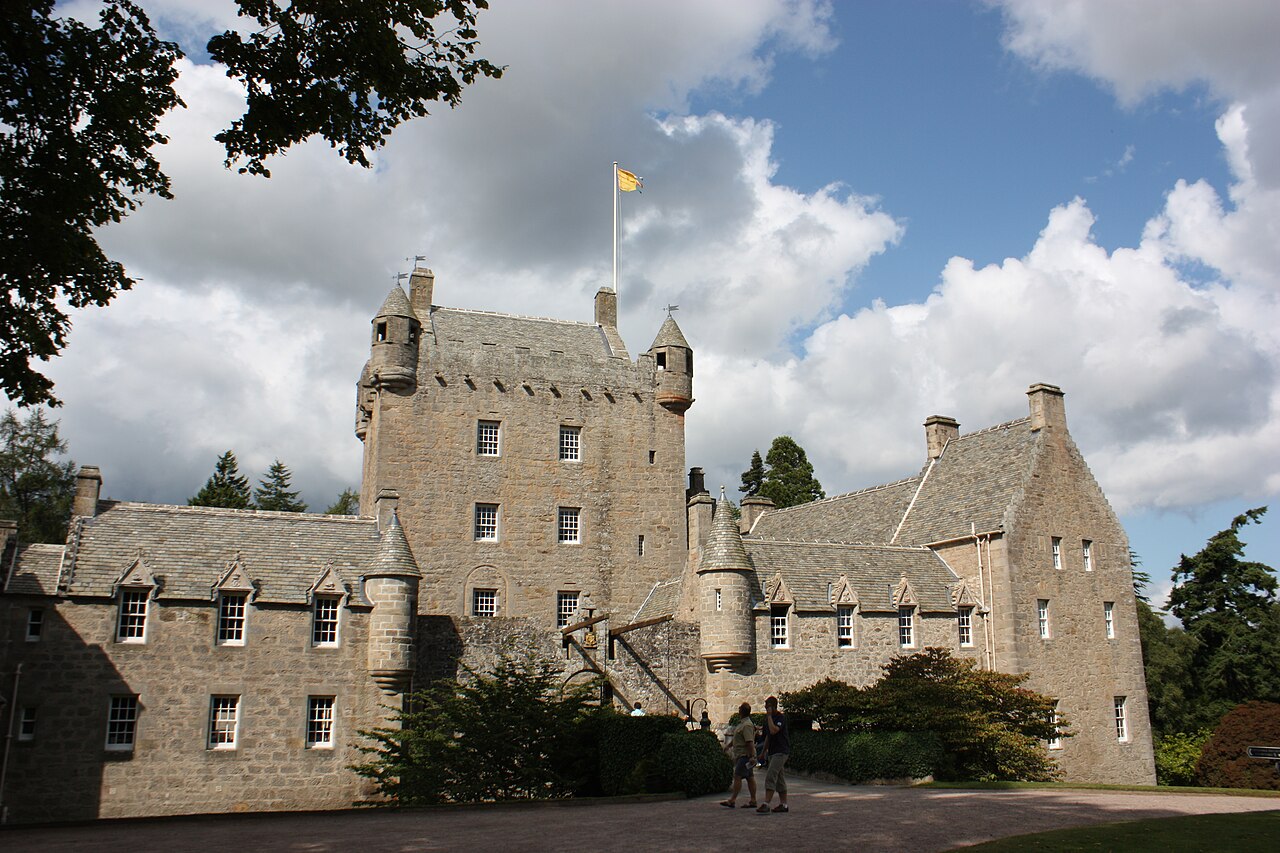
Dalcross Castle
Dalcross Castle is an exemplary Scottish tower house located in the Highland region of Scotland, dating back to the early 17th century. Constructed in 1620 by Simon Fraser, first Lord Lovat, the castle embodies the architectural and historical characteristics of the Renaissance period in Scotland. This fortified residence is notable for its defensive features, domestic comforts, and association with significant historical events, including the Jacobite uprising of 1745-1746.
Architectural features and design
Dalcross Castle is a classic example of a Scottish tower house, a type of fortified residence common in the Scottish Highlands during the late medieval and Renaissance periods. The castle's layout centers around a tall, rectangular tower with thick stone walls designed for defense and habitation. Key architectural elements include a beamed great hall featuring a large fireplace, which served as the main communal space for dining and socializing. The castle also contains a stone spiral main staircase providing access to the upper floors, alongside a secret staircase that would have allowed discreet movement within the building.
Additional defensive features include turret rooms positioned at the corners, shot holes and arrow slits embedded in the walls for protection against attackers, and leaded windows in the sitting room that combine security with light. The castle's design reflects the dual need for defense and domestic comfort typical of Scottish tower houses of this era.
Historical context and clan associations
The castle was originally built by Simon Fraser, first Lord Lovat, a prominent Highland nobleman and head of the Lovat Fraser clan. The Frasers held the castle until 1703, after which it became the residence of the Mackintosh clan, another influential Highland family. This transition reflects the shifting alliances and power dynamics among Scottish clans during the 17th and 18th centuries.
Dalcross Castle played a notable role during the Jacobite uprising. In 1746, it served as the rallying point for the government forces under the Duke of Cumberland, who used the castle as a base to suppress the Jacobite rebellion culminating in the Battle of Culloden. In contrast, the Laird's wife at Dalcross demonstrated her loyalty to the Jacobite cause by raising troops in support of Bonnie Prince Charlie, highlighting the divided loyalties within Highland society at the time.
Landscape and current use
The castle is surrounded by beautifully landscaped gardens that enhance its historic charm and provide a serene setting. These gardens are accessible to guests and visitors, offering a glimpse into the traditional estate landscaping typical of Scottish noble residences.
Today, Dalcross Castle has been adapted into a luxury hotel, preserving its historical architecture while providing modern comforts. This adaptive reuse allows visitors to experience the castle's rich history firsthand while enjoying contemporary hospitality services.
Preservation and cultural significance
Dalcross Castle remains a well-preserved example of a Renaissance Scottish tower house, retaining many original features that illustrate the lifestyle and defensive needs of Highland nobility in the 17th century. Its association with prominent clans and pivotal historical events adds to its cultural importance within Scotland's heritage.
Efforts to maintain the castle's structure and grounds ensure that it continues to serve as both a historical monument and a functional accommodation, bridging past and present in the Scottish Highlands.
Frequently asked questions (FAQ)
- What is the historical significance of Dalcross Castle?
- Dalcross Castle is historically significant as a 17th-century Scottish tower house built by Simon Fraser, first Lord Lovat, and as a site linked to the 1746 Jacobite uprising where it served as a rallying point for government troops and saw local support for Bonnie Prince Charlie.
- Can visitors explore the interior and gardens of Dalcross Castle?
- Yes, visitors can enjoy the beautifully landscaped gardens surrounding Dalcross Castle. The castle itself operates as a luxury hotel, so access to interior spaces may be available to guests or by special arrangement.
- What architectural features make Dalcross Castle unique?
- Dalcross Castle features classic Scottish tower house elements such as a beamed great hall with a large fireplace, stone spiral and secret staircases, turret rooms, shot holes, arrow slits, and leaded windows, combining defensive and domestic functions.
- When was Dalcross Castle built and by whom?
- Dalcross Castle was built in 1620 by Simon Fraser, the first Lord Lovat, a prominent Highland nobleman and clan leader.
- Is Dalcross Castle open for public tours?
- Dalcross Castle operates primarily as a luxury hotel, so public tours may be limited. Visitors interested in touring the castle should check with the hotel for availability or special events.
Information
Sources & official resources
Verify the information above using these authoritative references.
Loading map...
Visitor reviews
No reviews yet. Been here? Write the first review and help other travelers!
Write the first reviewVisited this castle? Share your experience
Your review helps other travelers and adds first-hand knowledge to our encyclopedia.