Castro Laboreiro Castle
Castro Laboreiro Castle is a remarkable example of an early medieval hill castle located in the civil parish of Castro Laboreiro, within the municipality of Melgaço, northern Portugal. Perched at an elevation of 1,033 meters, this fortress commands strategic views over the valleys of the Minho and Lima rivers, nestled within the scenic Peneda-Gerês National Park. The castle’s origins date back to the 9th century, making it a significant monument reflecting the complex history of territorial control and military architecture in the region.
The site of Castro Laboreiro has been occupied since prehistoric times, as evidenced by nearby megalithic monuments, indicating the area's long-standing human presence. During the Roman period, its strategic location near important roads and river crossings elevated its military and administrative importance. The transformation from a fortified settlement known as a castro into a castle occurred in the early medieval period, notably under the auspices of King Alfonso III of Asturias in the 9th century. Alfonso III granted the territory to Count Hermenegildo as a reward for military service, marking the beginning of the castle’s documented history.
The medieval history and evolution of Castro Laboreiro Castle
Throughout the early medieval period, the castle played a pivotal role in the defense and administration of the northern Portuguese frontier. After falling briefly under Muslim control during the region’s turbulent Reconquista era, it was reconquered by Afonso Henriques, the first king of Portugal, between 1141 and 1145. This marked the start of significant restoration and fortification efforts to integrate the castle into the emerging Portuguese border defenses.
King Sancho I of Portugal continued these efforts in the late 12th century, completing the castle’s defensive structures. Despite these improvements, the fortress suffered damage in 1212 during a Leonese invasion. Subsequently, under the reign of King Denis of Portugal around 1290, the castle underwent extensive reconstruction that shaped much of its later medieval form. This period emphasized strengthening the castle’s defenses against neighboring kingdoms and internal conflicts.
From the late 13th century until the mid-19th century, the castle served as the seat of local municipal government. It was administratively part of the county of Barcelos until 1834 and affiliated with the influential Order of Christ from 1319 onward. The castle’s military importance persisted into the 14th century, particularly during the reign of King John I, who used it as a bulwark against Castilian incursions from Galicia.
Notable historical events and military engagements
In May 1666, the castle was briefly captured by Baltazar Pantoja after a swift and intense four-hour skirmish. The fortress was soon retaken by forces under the command of the 3rd Count of Prado, Francisco de Sousa. Despite its strategic value, the castle was officially decommissioned after 1715 following the restoration of peace in the region.
However, the fortress saw renewed military use during the early 19th century, particularly around 1801 during the Peninsular War, when it was garrisoned and equipped with four artillery pieces. Additionally, in the late 18th century, the castle was used to detain individuals resisting military conscription, reflecting its continued role in regional governance and control.
Architectural features and layout of the castle
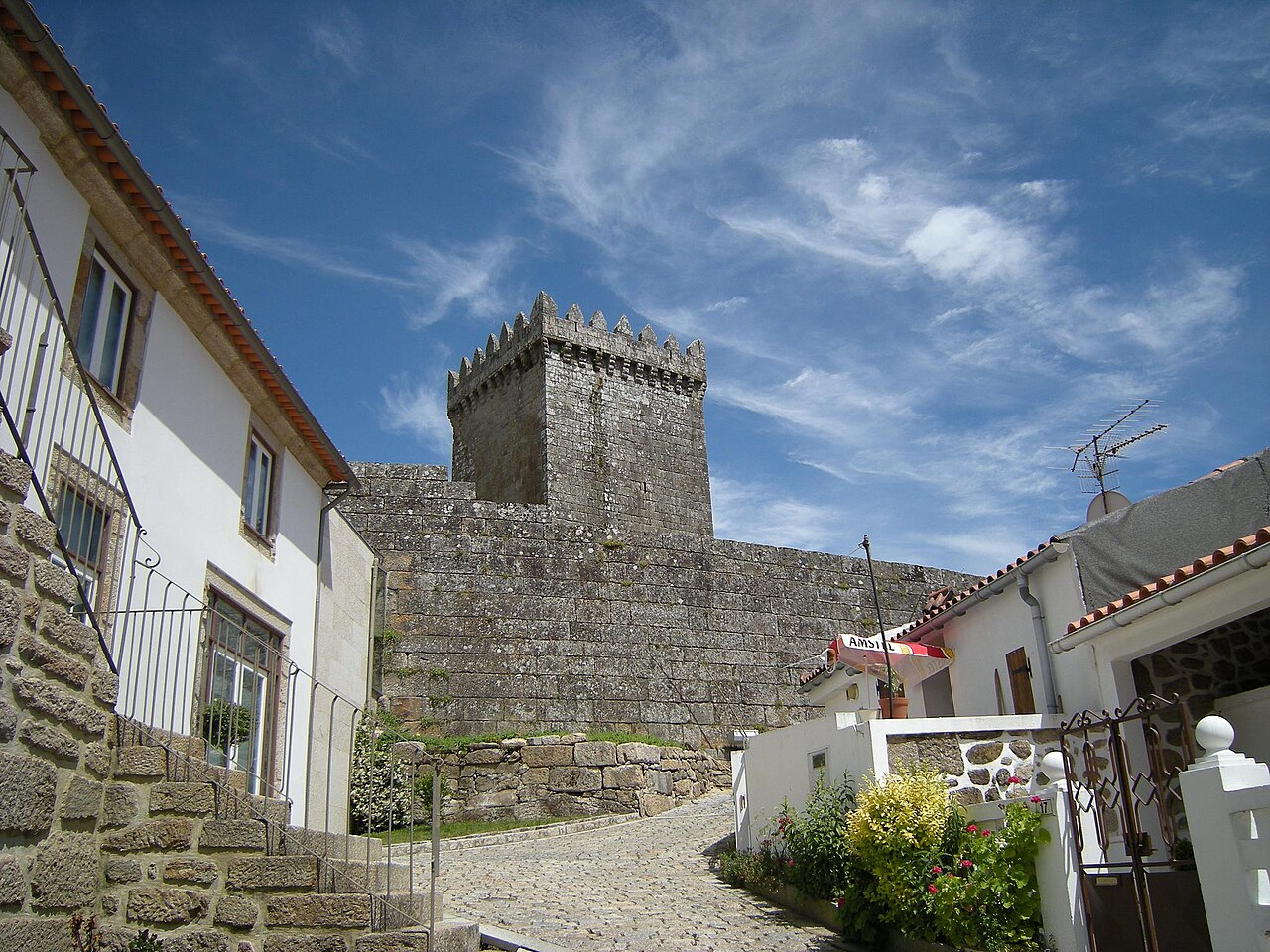
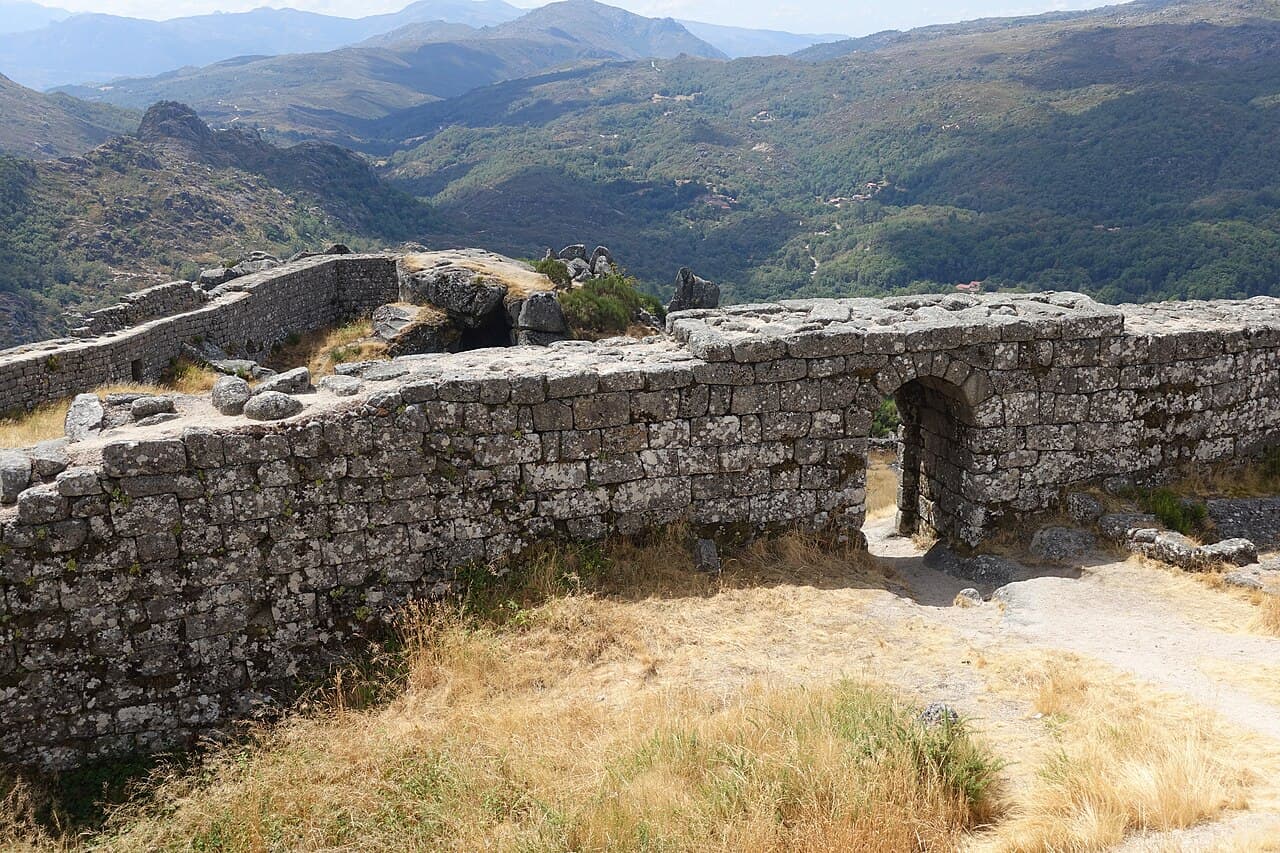
Castro Laboreiro Castle exhibits an oval plan that follows the natural contours of the rocky hilltop. Its walls are constructed directly atop cliffs and crags, forming a zig-zag pattern in places that align with the foundations of former towers. The castle’s fortifications combine Romanesque and later Gothic architectural elements, including small turrets and cylindrical cubelos integrated into the walls of the alcáçova (the castle's inner citadel).
Defensive structures and gates
The fortress is divided into two main sectors. The northern sector contains the military core, featuring a quadrangular central keep known as the tower of menagem, which is surrounded by the main courtyard. Adjacent to this keep is an ancient cistern used historically to collect and store water, an essential feature for sustaining the garrison during sieges.
The castle has two main gates: the principal eastern entrance called Porta do Sol (Gate of the Sun) and a secondary northern gate known as Porta da Traição (Gate of the Traitor) or Porta do Sapo (Gate of the Frog). These gates provided controlled access points and were integral to the castle’s defensive strategy.
The southern enclosure and its unique function
The southern part of the castle forms a lower, secondary enclosure accessible via a full-arch stone bridge. This area was specifically designed to shelter livestock and valuable property during times of attack, a distinctive feature that highlights the importance of pastoral activities in the local economy. This defensive enclosure for animals and goods is unique among Portuguese castles and underscores the castle’s role beyond purely military functions.
Preservation, archaeological research, and current status
Today, Castro Laboreiro Castle remains in a state of ruin, though it benefits from ongoing preservation efforts. The ruins include the remains of the walls, towers, gates, and the ancient cistern, which have been stabilized to prevent further deterioration. The castle was classified as a National Monument in 1944, recognizing its cultural and historical significance.
Archaeological excavations conducted in the 1970s uncovered evidence of early medieval occupation and helped clarify the castle’s historical development. Restoration and consolidation work carried out between 1979 and 1981, as well as improvements made in 2005 to enhance visitor access, have contributed to safeguarding the site for future generations.
The castle is an important tourist attraction within the Peneda-Gerês National Park, drawing visitors interested in medieval history, military architecture, and the natural beauty of northern Portugal. Its commanding location and evocative ruins offer a vivid glimpse into the region’s turbulent past and the evolution of fortification techniques over centuries.
Visitor information and cultural significance
While the castle is primarily a ruin, its accessibility and well-preserved defensive layout make it a compelling destination for history enthusiasts and hikers alike. The site provides panoramic views that showcase the dramatic landscape of the Minho and Lima river valleys, enhancing its appeal as both a cultural and natural landmark.
Castro Laboreiro Castle stands as a testament to the layered history of northern Portugal, embodying the architectural ingenuity and strategic importance of medieval fortifications in the Iberian Peninsula. Its unique features, such as the livestock enclosure, and its association with notable historical figures and events, contribute to its enduring legacy.
Frequently asked questions (FAQ)
- How do I get to Castro Laboreiro Castle?
- Castro Laboreiro Castle is accessible by car from the town of Melgaço in northern Portugal. The castle is located within the Peneda-Gerês National Park, and visitors can follow local signage to reach the hilltop site. Parking is available nearby, but be prepared for a short uphill walk to the castle ruins.
- What is the best time to visit Castro Laboreiro Castle?
- The best time to visit Castro Laboreiro Castle is during the spring and early autumn months when the weather is mild and the surrounding landscape is particularly scenic. Summer can be warm, and winter months may be colder and less accessible due to weather conditions.
- Is there an entrance fee to visit the castle?
- Visiting Castro Laboreiro Castle is free of charge. There is no entrance fee, making it an accessible destination for all visitors interested in history and nature.
- Can I explore the castle ruins freely?
- Yes, visitors can explore the ruins of Castro Laboreiro Castle freely. While the site is in a state of ruin, paths and signage guide visitors safely around the main features such as the walls, towers, gates, and cistern. Caution is advised due to uneven terrain.
- What historical periods does the castle represent?
- Castro Laboreiro Castle primarily represents the early medieval period, with significant construction phases spanning the 9th to 13th centuries. Its architecture reflects Romanesque and Gothic influences, showcasing the evolution of medieval fortifications in northern Portugal.
Photo gallery

Information
Current owner
State
Loading map...
Visitor reviews
No reviews yet. Been here? Write the first review and help other travelers!
Write the first reviewVisited this castle? Share your experience
Your review helps other travelers and adds first-hand knowledge to our encyclopedia.