Aquis Querquennis is an important archaeological site located in the province of Ourense, Galicia, Spain. This site preserves the remains of a Roman military fort constructed during the late 1st century AD, around 69-79 AD. The fort was established to house soldiers of the Legio VII Gemina who were engaged in building the Via XVIII, a Roman road crucial for connecting the northwestern part of the Iberian Peninsula.
Historical context and military significance
The fort was strategically placed to support the Roman military infrastructure during the consolidation of Roman control over the region of Galicia. It served as a base for legionaries involved in road construction and regional security. The Legio VII Gemina occupied the fort until approximately 120 AD, when the legion was redeployed to Dacia. Following their departure, the fort was abandoned, marking the end of its primary military function.
Architectural features and layout
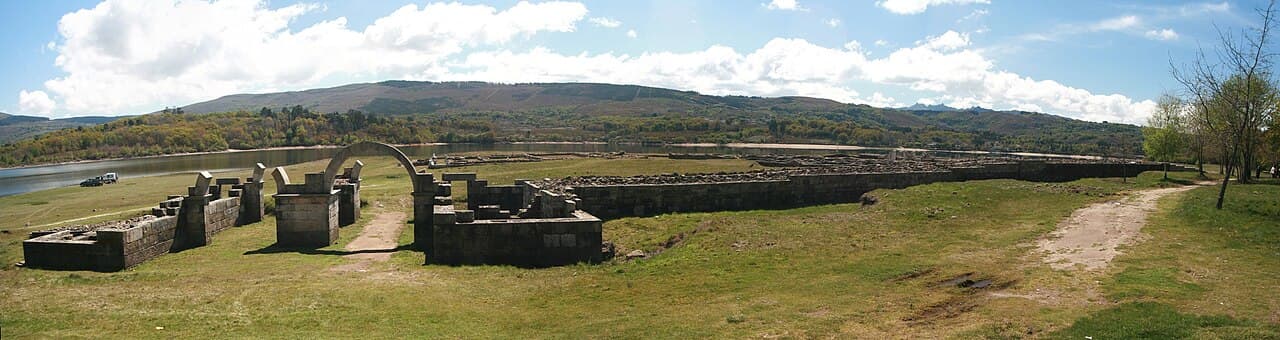
Although now in ruins, excavations have revealed the typical layout of a Roman fort of this period. The fort featured defensive walls with corner towers, gates controlling access, and an internal arrangement of barracks, command buildings, and storage facilities. The design reflects the standard Roman military architecture aimed at both defense and efficient accommodation of troops.
Defensive structures
The fort's walls were constructed using local stone and included bastions at strategic points for defense. The gates were fortified and likely equipped with wooden doors reinforced by iron fittings. The overall perimeter was designed to provide a secure enclosure for the legionaries and their equipment.
Internal buildings
Inside the fort, remains of the principia (headquarters), praetorium (commander's residence), and horrea (granaries) have been identified. The barracks were arranged in rows to house the soldiers, with evidence of heating systems in some rooms, indicating a degree of comfort and permanence.
Archaeological discovery and preservation challenges
The site was rediscovered in the 1920s by local archaeologist Florentino López Cuevillas, who conducted initial excavations. However, the fort's preservation faced a major challenge in 1949 when the construction of the As Conchas reservoir led to the flooding of the site. This submerged much of the fort under water, limiting continuous archaeological work.
Since 1975, excavations have been carried out during periods when the water level of the reservoir drops, allowing archaeologists to study the remains. These efforts have provided valuable insights into the Roman military presence in Galicia and the architectural characteristics of the fort.
Cultural and heritage importance
Aquis Querquennis stands as a significant example of Roman military architecture in northwestern Spain. It offers a glimpse into the Roman Empire's expansion and infrastructure development during the early Imperial period. The site contributes to understanding the logistics of Roman road-building and the military organization required to maintain control over distant provinces.
Despite its partial submersion, the fort remains a key archaeological site attracting researchers and visitors interested in Roman history and archaeology. Its ruins illustrate the enduring legacy of Roman military engineering and the historical depth of the Galicia region.
Visiting and research opportunities
Access to the site is dependent on reservoir water levels, which fluctuate seasonally. When exposed, visitors can observe the remains of the fort's walls and internal structures. Archaeological tours and informational displays provide context for the site's historical significance.
Ongoing research continues to uncover new details about the fort's construction techniques, the daily lives of its occupants, and its role within the broader network of Roman military installations in Hispania.
Frequently asked questions (FAQ)
- What is Aquis Querquennis?
- Aquis Querquennis is a fascinating archaeological site located in the province of Ourense, Spain. It was a Roman fort and spa complex built in the 1st century AD, known for its thermal baths and strategic military significance during the Roman Empire.
- When was Aquis Querquennis built?
- Aquis Querquennis was constructed around the 1st century AD, during the Roman Empire's expansion into the Iberian Peninsula. It served both as a military fortification and a leisure retreat with its therapeutic hot springs.
- What are the opening hours for Aquis Querquennis?
- Aquis Querquennis is typically open to visitors from 10 AM to 6 PM, although hours may vary depending on the season. It's best to check the official website or local tourism information for any updates before your visit.
- Can I visit Aquis Querquennis year-round?
- Yes, Aquis Querquennis is accessible to visitors throughout the year. However, certain facilities may have limited availability during the winter months, so it's advisable to plan your trip accordingly.
- How do I get to Aquis Querquennis?
- Aquis Querquennis is located near the town of Bande in Ourense, Spain, and can be reached by car or public transportation. The nearest major city is Ourense, from where you can take a bus or drive to the site.
- Is Aquis Querquennis accessible for people with disabilities?
- Aquis Querquennis strives to be accessible to all visitors, with pathways designed for ease of movement. However, it's recommended to contact the site in advance to confirm specific accessibility options available during your visit.
- What are the ticket prices for Aquis Querquennis?
- Admission to Aquis Querquennis is generally free, which makes it an excellent option for budget-conscious travelers. However, guided tours or special events may incur a fee, so check ahead for any applicable costs.
- What is the best time to visit Aquis Querquennis?
- The best time to visit Aquis Querquennis is during the spring and early autumn months when the weather is mild and pleasant. This allows visitors to explore the site comfortably and enjoy the surrounding natural beauty.
- Are there any nearby attractions to Aquis Querquennis?
- Yes, nearby attractions include the picturesque town of Bande, the beautiful River Miño, and other Roman sites in the region. Exploring these sites can enhance your visit to Aquis Querquennis and provide a deeper understanding of the area's rich history.
Photo gallery

Information
Loading map...
Visitor reviews
No reviews yet. Been here? Write the first review and help other travelers!
Write the first reviewVisited this castle? Share your experience
Your review helps other travelers and adds first-hand knowledge to our encyclopedia.