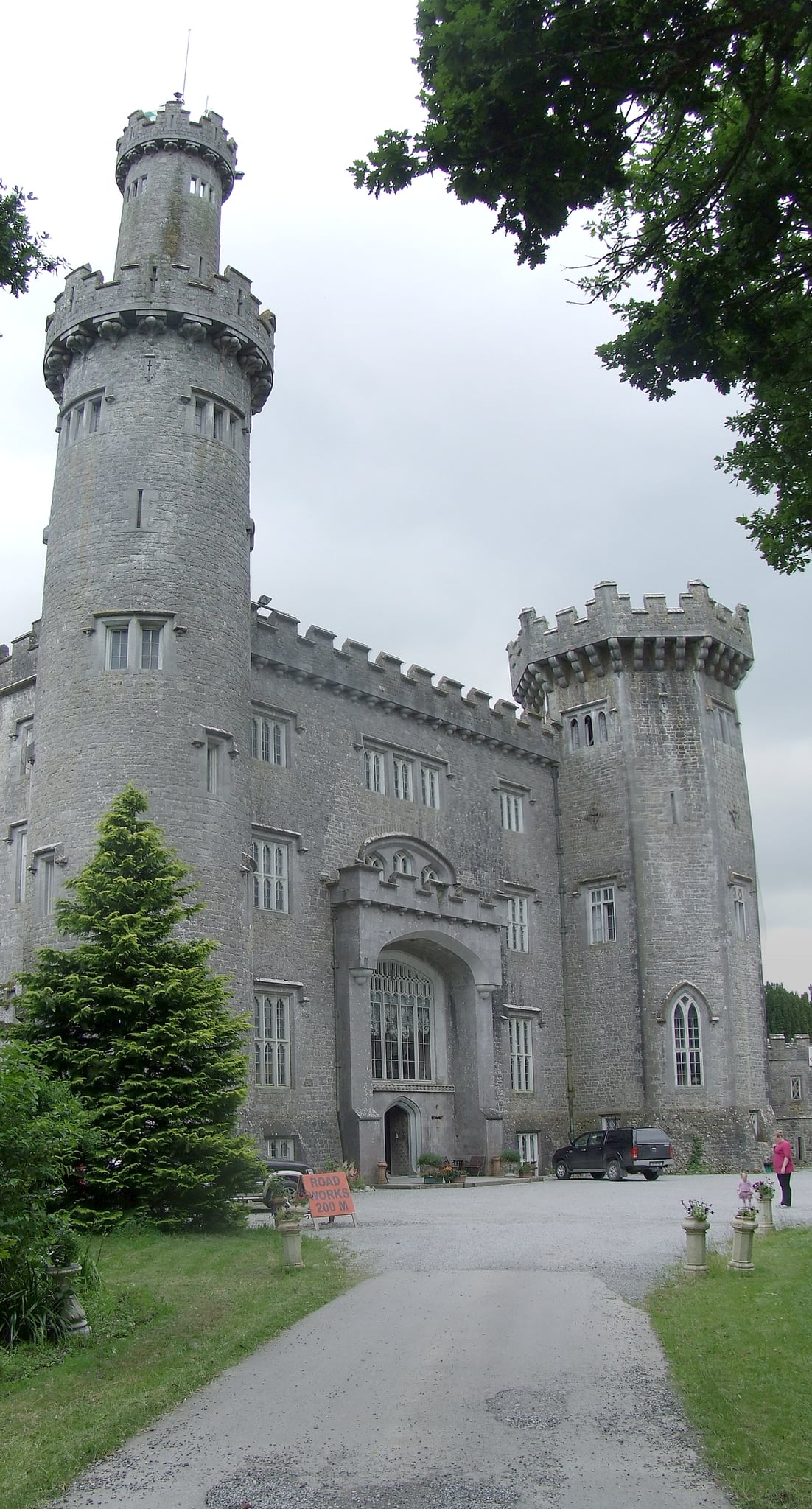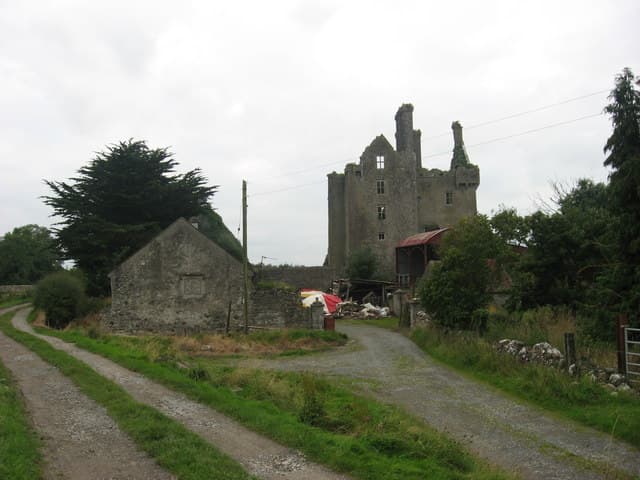
Ballycowan Castle
Ballycowan Castle is a notable example of a 16th-century fortified house located approximately 4 km west of Tullamore in County Offaly, Ireland. Constructed in 1589 by Thomas Morres, the castle was built on the site of an earlier O’Molloy castle or tower house known as Baile-mhic-Abhainn, which was destroyed by fire in 1557. This strategic location reflects the turbulent history of the region during the late Renaissance period, where fortified houses served as both residences and defensive structures amid ongoing conflicts.
Historical background and origins
The original O’Molloy castle was a traditional Irish tower house, a common form of fortified dwelling in medieval Ireland. Its destruction by fire in the mid-16th century marked a significant turning point, leading to the construction of Ballycowan Castle as a more modern fortified house. Thomas Morres, a prominent figure of the time, commissioned the building in 1589, reflecting the architectural transition from medieval tower houses to Renaissance-style fortified residences.
Architectural features and additions
Ballycowan Castle was designed as a fortified house rather than a classic medieval castle, combining residential comfort with defensive capabilities. The structure likely featured thick stone walls, narrow windows for defense, and battlements suitable for protection against attacks. The adjacent tower, built in 1626 by Sir Jasper Herbert and his wife Lady Jane Finglas, was constructed on land granted to them during the plantations, a period of English colonization and land redistribution in Ireland.
This tower addition reflects the evolving needs of the estate's owners, incorporating elements of both defense and status. The castle's architecture thus represents a blend of Renaissance influences and practical fortification techniques characteristic of Irish fortified houses of the late 16th and early 17th centuries.
Impact of the Cromwellian conquest
During the Cromwellian period in the mid-17th century, Ballycowan Castle suffered significant damage when the southern end was deliberately destroyed. This demolition was carried out from a hill approximately 100 yards away, demonstrating the military tactics used during the conquest of Ireland by Oliver Cromwell's forces.
Following the Cromwellian confiscations, the lands on which Ballycowan Castle stood were seized and subsequently granted to the Earl of Mountrath in 1666. This transfer of ownership was part of a broader pattern of land redistribution that reshaped Irish landholding patterns in the aftermath of the rebellion and conquest.
Preservation and current status
Today, Ballycowan Castle remains a significant historical site, though its condition reflects the damage sustained during the Cromwellian period and the passage of time. The castle stands as a partially preserved example of a Renaissance fortified house in Ireland, offering insights into the architectural and social history of the region during a period of considerable upheaval.
Visitors to the site can observe the remnants of the original structure and the adjacent tower, which together illustrate the layered history of ownership, conflict, and architectural evolution. Ballycowan Castle thus serves as an important cultural landmark within County Offaly, connecting modern audiences with Ireland's complex past.
Architectural significance within Ireland
Ballycowan Castle exemplifies the transition from medieval tower houses to Renaissance fortified residences in Ireland. Its construction in 1589 places it within a critical period when defensive architecture began integrating more comfortable living spaces while maintaining protective features. The castle's stone construction, battlements, and adjacent tower highlight typical elements of fortified houses built during the late Renaissance period in Ireland.
The involvement of figures such as Thomas Morres and Sir Jasper Herbert ties the castle to the broader historical narrative of English influence and plantation policies in Ireland. These elements contribute to Ballycowan Castle's architectural and historical importance as a site reflecting the dynamics of power, colonization, and cultural change in early modern Ireland.
Notable architectural elements
- Fortified house design combining residential and defensive functions
- Thick stone walls typical of late 16th-century Irish castles
- Battlements and narrow defensive windows
- Adjacent tower added in 1626 during the plantation era
- Remnants of original O’Molloy tower house site
Visiting Ballycowan Castle
While the castle is not extensively developed as a tourist site, its historical significance and architectural remains make it a point of interest for visitors to County Offaly. The proximity to Tullamore allows for easy access, and the site offers a tangible connection to Ireland's Renaissance and Cromwellian periods.
Visitors should note that the castle is in a partially preserved state, with some areas potentially inaccessible for safety reasons. Exploring the exterior and surrounding landscape provides an opportunity to appreciate the castle's strategic location and historical context.
Frequently asked questions (FAQ)
- What is the historical significance of Ballycowan Castle?
- Ballycowan Castle is a 16th-century fortress located in County Offaly, Ireland. It played a crucial role in the regional power dynamics during its time, serving as a stronghold for the O'Carroll clan, who were significant figures in Irish history.
- When was Ballycowan Castle built?
- Ballycowan Castle was constructed in the late 1500s, specifically around 1580. The castle's architecture reflects the defensive needs of its era, showcasing the strategic importance of the site.
- Can I visit Ballycowan Castle?
- Yes, visitors can explore Ballycowan Castle, though it is advisable to check ahead for any specific visiting hours or guided tours. The castle grounds offer a glimpse into the rich history and stunning architecture of the site.
- What are the opening hours for Ballycowan Castle?
- Ballycowan Castle typically opens to visitors from 10 AM to 5 PM, but hours may vary seasonally or based on special events. It's best to confirm current visiting hours on the official website or by contacting local tourism offices.
- Is Ballycowan Castle accessible for visitors with disabilities?
- Ballycowan Castle may present challenges for visitors with mobility impairments due to its historic structure and terrain. It is recommended to inquire about accessibility options when planning your visit.
- When is the best time to visit Ballycowan Castle?
- The best time to visit Ballycowan Castle is during the late spring and summer months, from May to September. During this period, the weather is generally mild, and the surrounding gardens are in full bloom.
- What are some nearby attractions to Ballycowan Castle?
- Nearby attractions include the picturesque village of Clara, the scenic Lough Boora Parklands, and the historic sites in Athlone. These locations offer additional opportunities for exploration and enjoyment of the beautiful Irish countryside.
- How much do tickets cost to visit Ballycowan Castle?
- Ticket prices for Ballycowan Castle are generally affordable, with discounts available for children and seniors. It is advisable to check the official website for the most current pricing information and any special offers.
Photo gallery

Information
Loading map...
Visitor reviews
No reviews yet. Been here? Write the first review and help other travelers!
Write the first reviewVisited this castle? Share your experience
Your review helps other travelers and adds first-hand knowledge to our encyclopedia.