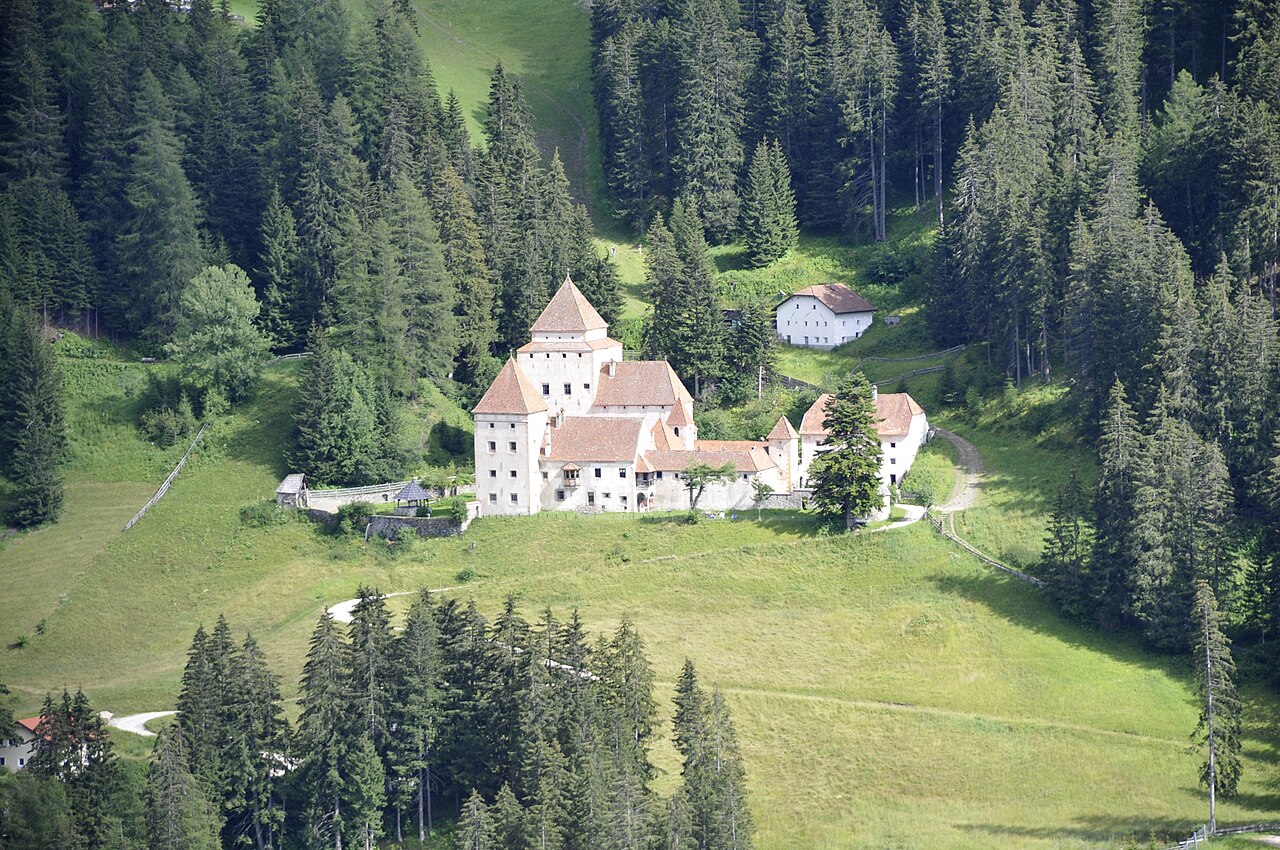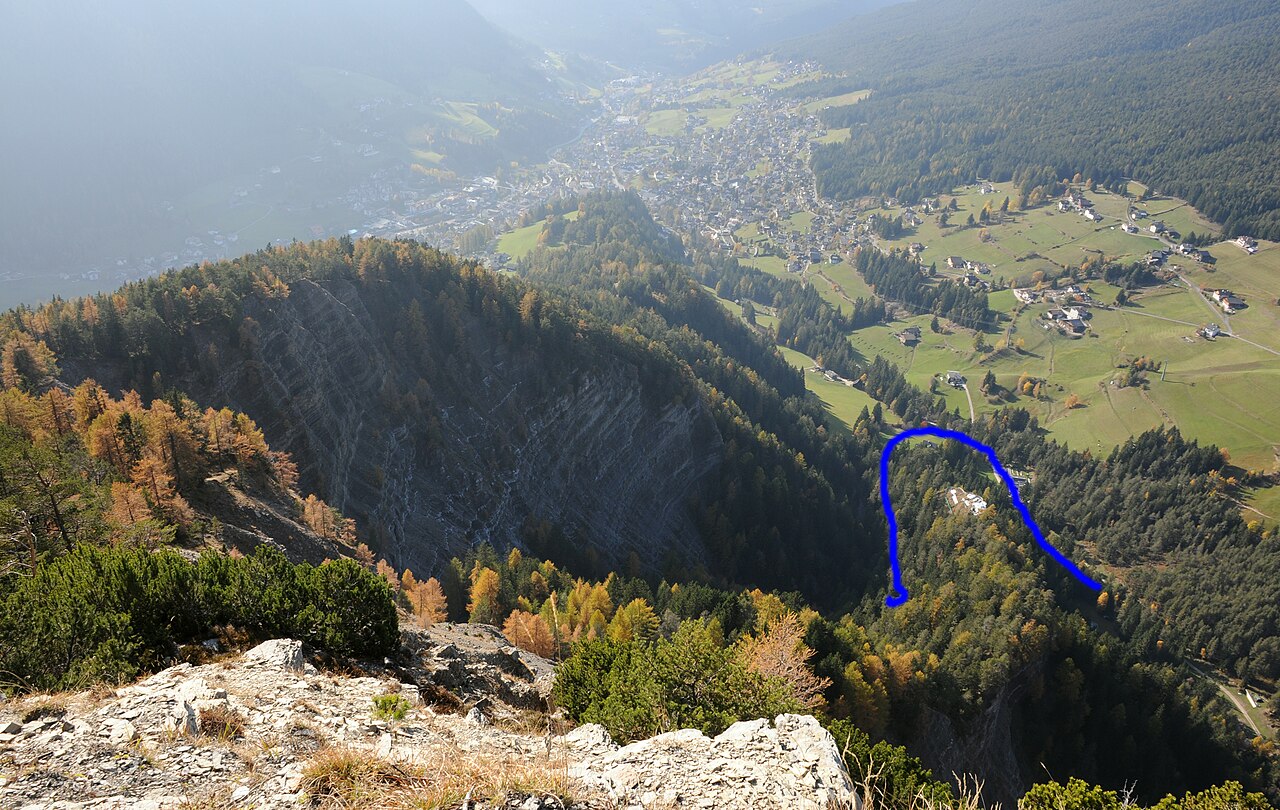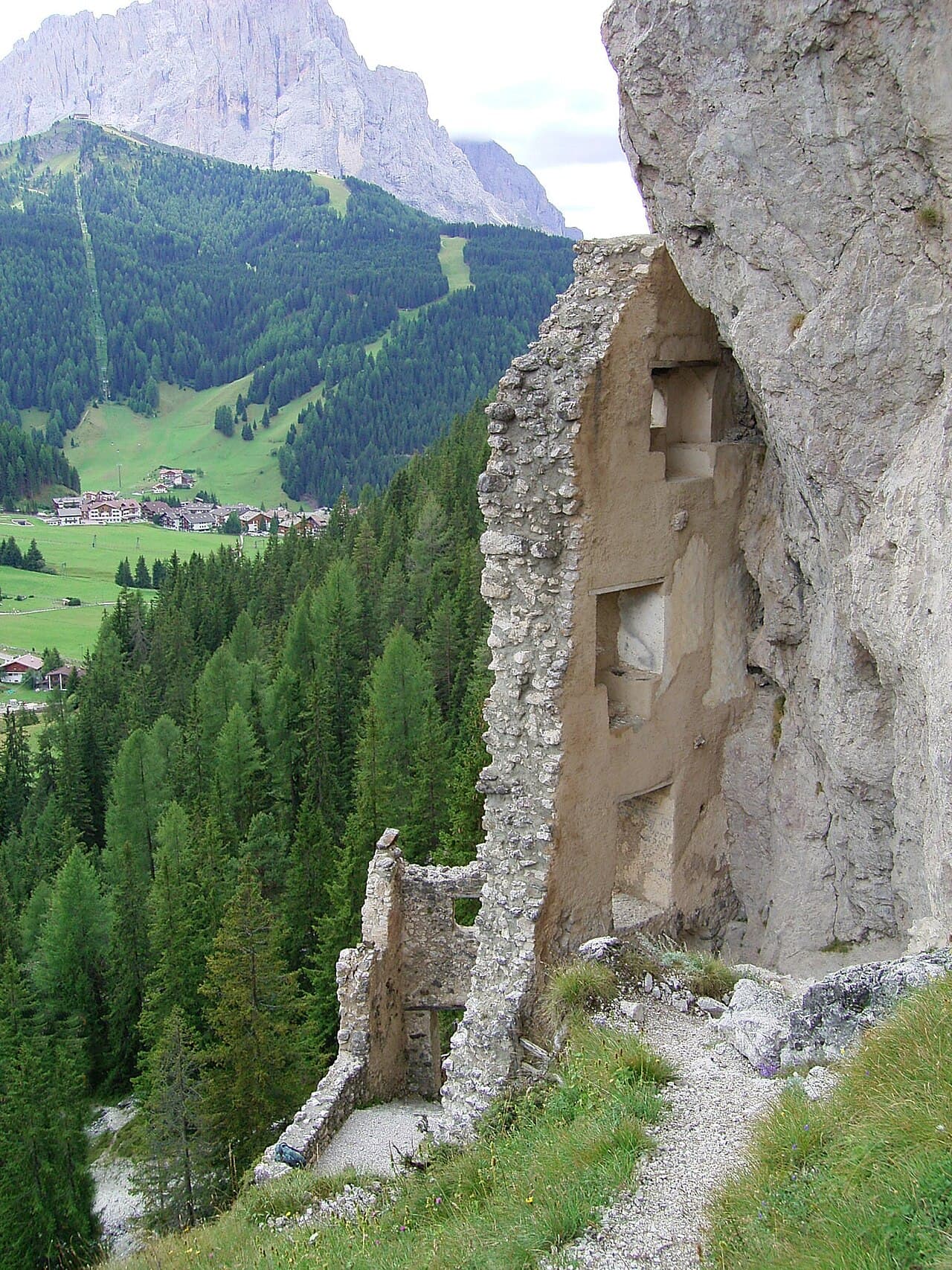
Castle Wolkenstein is a notable hill castle located in northern Italy, distinguished by its commanding position on a rocky outcrop. This strategic location allowed it to oversee and control important mountain passes, serving both defensive and administrative functions during the medieval period. The castle's origins trace back to the High Medieval era, with construction likely beginning in the 13th century, a time when fortifications were essential for regional power and protection.
Historical context and significance
The castle played a crucial role in the control of trade routes and local territories in the mountainous regions of northern Italy. It was part of a network of fortifications that secured the area against invasions and rival noble families. Throughout its history, Castle Wolkenstein was owned and managed by various noble families who contributed to its expansion and fortification, adapting its structure to the evolving military technologies and political needs of the time.
Architectural features and layout
The castle exemplifies typical hill castle architecture with its integration into the natural rocky landscape, enhancing its defensive capabilities. Its main features include a central keep or donjon, surrounded by thick stone walls and a series of defensive towers strategically placed to cover all approaches. The walls are punctuated by battlements and arrow slits, which allowed defenders to repel attackers while remaining protected.
The entrance is fortified with a gatehouse and possibly a drawbridge, common in medieval fortifications to control access. Inside the castle grounds, there would have been living quarters, a great hall for gatherings and administration, storage rooms, and possibly a chapel, reflecting the self-sufficient nature of such fortresses.
Defensive elements
Castle Wolkenstein features multiple layers of defense including a curtain wall and a fortified gate complex. The castle's elevated position provided natural protection, while the man-made defenses ensured that it could withstand sieges. The use of narrow staircases and confined spaces inside the castle was a deliberate design to slow down invading forces.
Preservation and current status
Today, Castle Wolkenstein remains a significant historical monument, although it is partially preserved with some sections in ruins. Efforts have been made to stabilize and restore parts of the structure to prevent further decay and to make it accessible to visitors interested in medieval architecture and history. Its setting offers spectacular views of the surrounding landscape, attracting tourists and scholars alike.
Cultural and touristic importance
The castle is a valued cultural heritage site, representing the medieval history of northern Italy and the architectural ingenuity of the era. It is often included in regional tours and hiking routes due to its location and historical significance. Visitors can explore the remains, learn about the castle's role in local history, and appreciate the rugged beauty of its mountainous environment.
Visitor information
Access to Castle Wolkenstein typically involves a hike up the hill on which it stands, so visitors should be prepared for uneven terrain. The site may have limited facilities, emphasizing the importance of planning ahead. Guided tours or informational signage may be available to enrich the visitor experience.
Frequently asked questions (FAQ)
- How do I get to Castle Wolkenstein?
- Castle Wolkenstein is located in the picturesque region of Italy, easily accessible by car or public transport. If traveling by train, the nearest station is approximately 15 kilometers away, with local buses or taxis available for the final leg of your journey.
- What is the historical significance of Castle Wolkenstein?
- Castle Wolkenstein dates back to the 13th century and played a crucial role in the region's defense against invasions. It is known for its well-preserved medieval architecture and rich history, reflecting the political and cultural shifts of the time.
- When was Castle Wolkenstein built?
- Construction of Castle Wolkenstein began in the early 1200s, and it was strategically built on a hill to oversee the surrounding area. Over the centuries, it underwent several renovations and expansions, showcasing various architectural styles.
- Can I take guided tours of Castle Wolkenstein?
- Yes, guided tours are available and are highly recommended to fully appreciate the castle's history and architecture. Tours typically run several times a day and are led by knowledgeable guides who share fascinating stories and insights about the castle.
- Why is Castle Wolkenstein a popular tourist destination?
- Castle Wolkenstein is a popular destination due to its stunning views, rich history, and unique architecture. Visitors are drawn to its scenic surroundings and the opportunity to explore a well-preserved piece of medieval heritage.
- Is it possible to host events at Castle Wolkenstein?
- Yes, Castle Wolkenstein offers facilities for hosting events such as weddings, corporate retreats, and cultural gatherings. The castle's enchanting atmosphere and breathtaking views make it a memorable venue for any occasion.
- What are the opening hours for Castle Wolkenstein?
- Castle Wolkenstein is open to visitors from 9 AM to 6 PM during the peak season, with slightly reduced hours in the off-peak months. It is advisable to check the official website for any seasonal changes or special events that may affect opening times.
- What are the ticket prices for visiting Castle Wolkenstein?
- Ticket prices for Castle Wolkenstein vary depending on the season and age group, with discounts available for children and seniors. Family packages are also offered, making it an affordable option for visitors of all ages.
- What is the best time to visit Castle Wolkenstein?
- The best time to visit Castle Wolkenstein is during the spring and early autumn when the weather is pleasant, and the surrounding landscapes are in full bloom. Visiting during these months also allows you to avoid the summer tourist crowds and enjoy a more intimate experience.
- Are there nearby attractions to explore after visiting Castle Wolkenstein?
- Yes, there are several nearby attractions, including charming villages, hiking trails, and other historical sites. Visitors can explore the scenic beauty of the region, making it a great destination for a day trip or a longer stay.
Photo gallery

Information
Loading map...
Visitor reviews
No reviews yet. Been here? Write the first review and help other travelers!
Write the first reviewVisited this castle? Share your experience
Your review helps other travelers and adds first-hand knowledge to our encyclopedia.