Castle of Zorita de los Canes
The Castle of Zorita de los Canes, also known as Alcazaba de Zorita, stands as a significant hill castle in the municipality of Zorita de los Canes, Spain. Its origins trace back to the 9th century, when it was initially constructed in 852 by the Umayyad Emir Muhammad I of Córdoba as a strategic defensive fortress overseeing the Tagus River passage through the Santaver cora, a key administrative district of al-Andalus. This early establishment highlights the castle's longstanding military importance in controlling vital routes and regional power dynamics during the High Medieval period.
Built primarily on a sandstone rocky hill, the fortress's foundation required early repairs due to the rock's instability, with documented renovations occurring as soon as 853. Throughout the late 9th and early 10th centuries, the castle was a focal point in regional conflicts, notably serving as a base for the rebel leader Umar ibn Hafsun in 886 during his campaigns against the city of Toledo. The fortress later played a crucial role in the consolidation efforts of Abd al-Rahman III in 924, underscoring its strategic value in the contest for control over Santaver.
Medieval military significance and changing control
In the mid-11th century, the castle's political allegiance shifted dramatically when Al-Mamun of Toledo ceded Zorita and its surrounding lands to Alfonso VI of León and Castile to support Alfonso's claim to the Castilian throne. This transfer marked the castle's transition from Muslim to Christian hands, officially becoming part of the Castilian realm in 1072. The appointment of Álvar Fáñez as mayor in 1097 by Alfonso VI was a key moment in establishing Castilian authority, though it was contested soon after when the Almoravids seized the castle in 1110. The castle was reclaimed in 1124 by the Knights Templar, illustrating the ongoing military and religious conflicts that characterized the Reconquista period.
From 1174, the castle was granted to the Order of Calatrava by Alfonso VIII of Castile. The Order fortified the castle further, transforming it into a defensive bulwark against Andalusian incursions. The nearby town of Zorita was granted a formal charter in 1180, including pontazgo rights that allowed toll collection for river crossings, emphasizing the castle's role in regional control and economic regulation.
Fortifications and architectural features
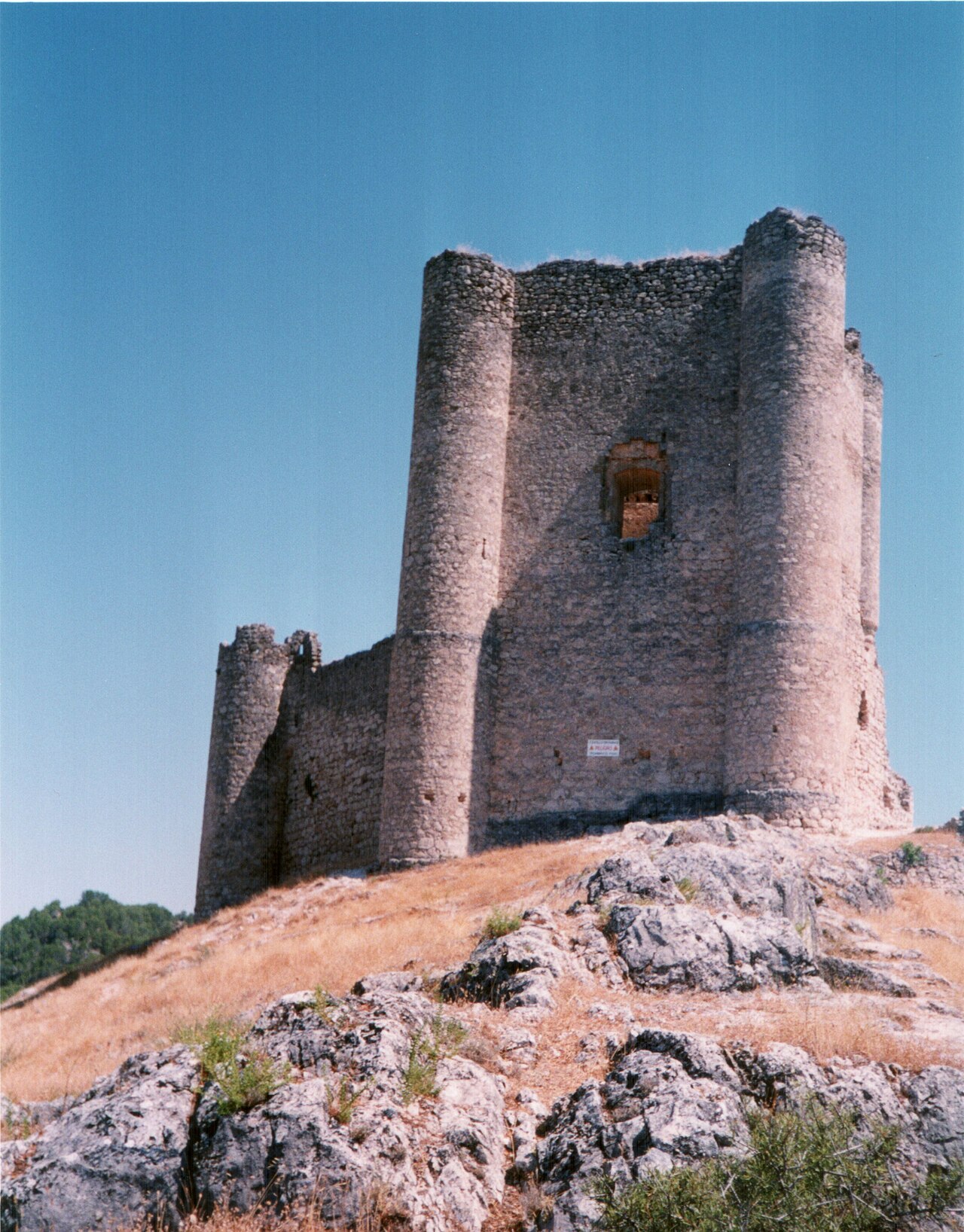
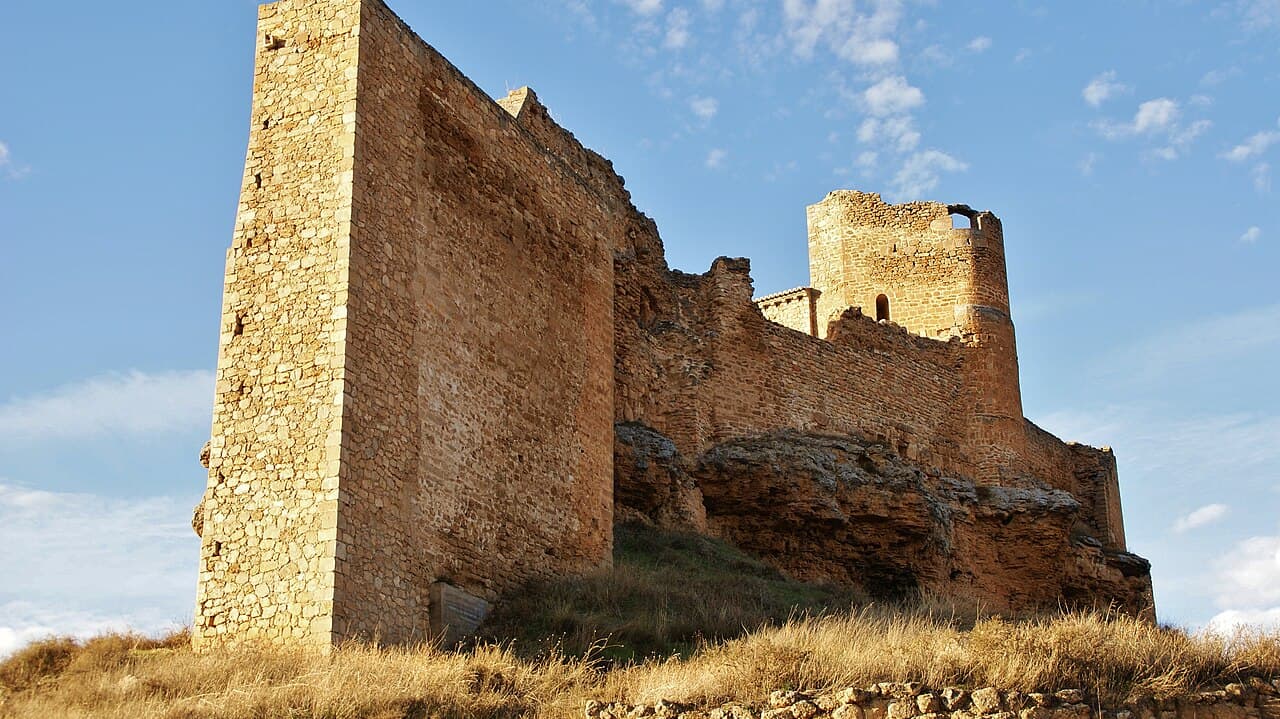
Perched atop an elongated rocky hill, the castle's design takes full advantage of natural topography for defense. The southern face, being the most vulnerable, was heavily reinforced, while the northern side was naturally protected by steep terrain. The fortress is divided into three main zones: an outer ward known as the albacara, a fortified military enclosure, and an inner religious precinct featuring a 13th-century Romanesque church with an accompanying crypt.
The oldest surviving structures include the southern defensive wall and the northern entrance gate, both dating from the 9th century. These early constructions used small ashlar blocks combined with larger, carefully shaped stones quarried locally. The majority of the remaining fortifications and buildings date from the 12th and 13th centuries, reflecting the influence of the Knights Templar and the Order of Calatrava during their respective tenures.
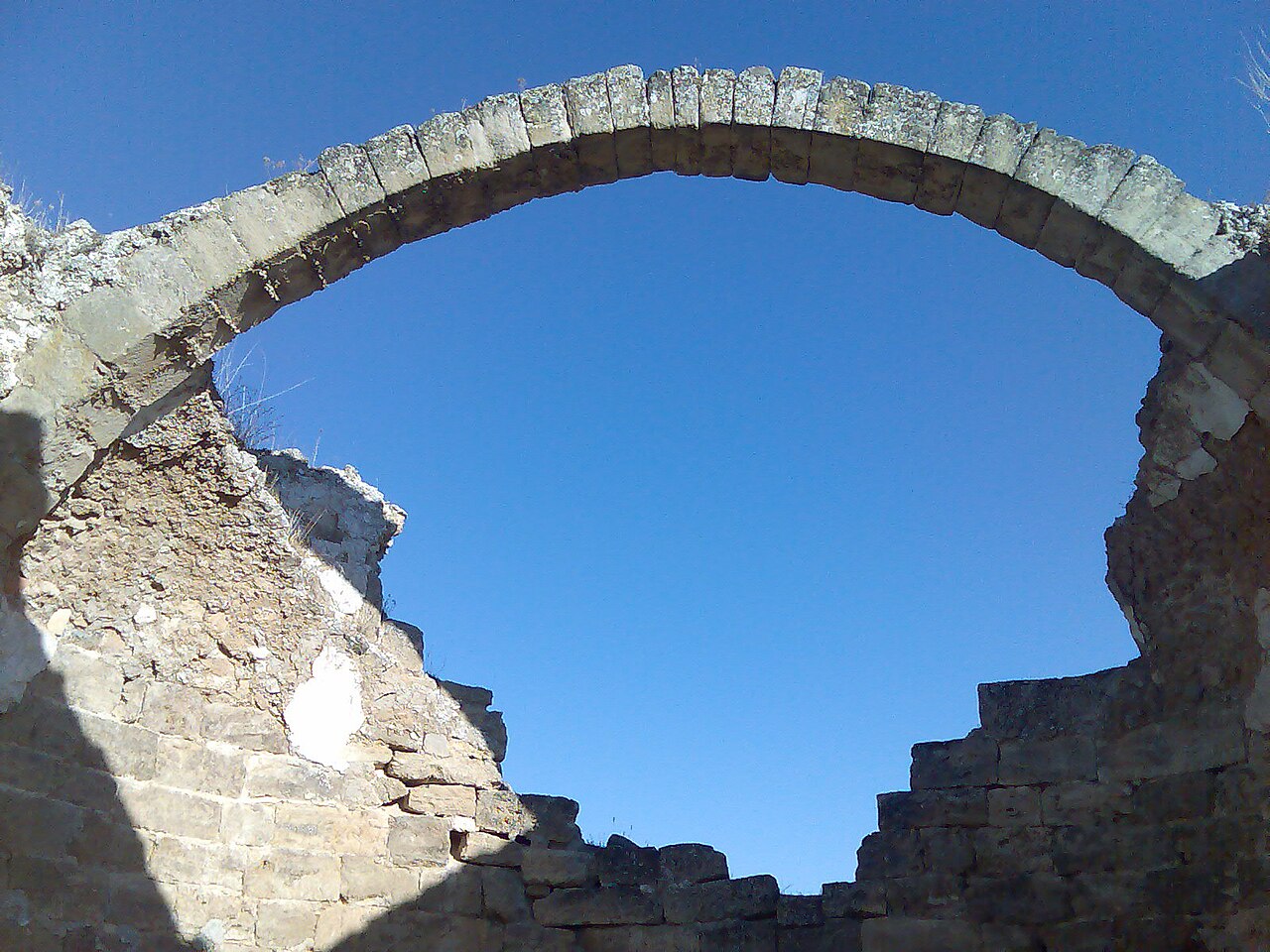
Access to the castle is available via two main routes. The southern approach features a detached albarrana tower built in 1328, designed as a forward defensive outpost to protect the more exposed southern flank. The western route ascends from the town, passing through the main gate, which uniquely combines a Gothic arch with an earlier Caliphal horseshoe arch, illustrating the layering of architectural styles over centuries.
Notable interior structures
Within the southern enclosure lie the remains of a cemetery for the knights of the Order of Calatrava, emphasizing the castle's dual military and religious functions. To the north, a large cistern (aljibe) provided a vital water supply essential for sustaining the fortress during sieges. The Torre del Espolón, a prominent tower within the military enclosure, further strengthened the castle's defenses.
Near the church is the Sala del Moro, a circular chamber with a semi-spherical vaulted ceiling dating from the 13th century. Its finely cut ashlar masonry and a keystone carved with an anthropomorphic head demonstrate the architectural refinement achieved during this period. Renovations in the 16th century indicate continued use and adaptation of the space well into the post-medieval era.
Role during the order of calatrava and later history
The castle served as a principal refuge and reorganization center for the Order of Calatrava following their defeat at the Battle of Alarcos in 1195. During this time, the fortress saw the construction of new defensive walls and a church, solidifying its role as a military and religious stronghold.
After the Battle of Las Navas de Tolosa in 1212, the Order moved their headquarters to Calatrava la Nueva, but the castle remained important in regional administration. Internal conflicts within the Order in the 14th and 15th centuries involved the castle in sieges and power struggles, including a royal siege after the death of Garci López de Padilla in 1334 and a takeover by Juan Ramírez de Guzmán during a schism in 1443.
By the late 15th century, the castle's importance waned as the Order favored other towns such as Almonacid de Zorita and Pastrana. Ownership passed to Ruy Gómez de Silva, 1st Prince of Éboli, in 1565, who did not reside there, leading to gradual abandonment and ruin.
Preservation and cultural significance
Recognizing its historical and architectural value, the castle was declared a Monumento Histórico-Artístico and designated as a Bien de Interés Cultural on June 3, 1931. Today, the castle remains a partially preserved ruin, offering insight into the complex layers of Spanish medieval history, from Islamic fortifications to Christian military orders.
The castle's location atop a rocky hill provides commanding views of the surrounding landscape, including the town of Zorita and the road to Almonacid de Zorita. Visitors can explore the remains of the defensive walls, towers, the Romanesque church, and other structures that narrate the castle's evolution over centuries.
The Castle of Zorita de los Canes stands as a testament to the turbulent history of the Iberian Peninsula during the Middle Ages, reflecting the shifting control between Muslim and Christian powers, the role of military orders, and the architectural adaptations made to meet the demands of warfare and religious life.
Frequently asked questions (FAQ)
- When was the Castle of Zorita de los Canes originally built?
- The Castle of Zorita de los Canes was originally constructed in 852 by the Umayyad Emir Muhammad I of Córdoba as a defensive fortress.
- What architectural styles are visible at the castle?
- The castle features a mix of architectural styles, including early Islamic Caliphal horseshoe arches and later Gothic elements, reflecting its long history of occupation and modification.
- Who controlled the castle during the Middle Ages?
- Control of the castle shifted between Muslim rulers, the Knights Templar, and the Order of Calatrava, with significant roles during the Reconquista.
- Is the castle open to visitors?
- While the castle is a protected historic site, information on visiting hours and ticket prices is not widely published, so checking locally before planning a visit is recommended.
- What are some notable features of the castle's defenses?
- Notable defensive features include the southern albarrana tower built in 1328, thick fortified walls, and strategic use of the rocky hill's natural defenses.
Photo gallery

Information
Website
Visit websiteSources & official resources
Verify the information above using these authoritative references.
Loading map...
Visitor reviews
No reviews yet. Been here? Write the first review and help other travelers!
Write the first reviewVisited this castle? Share your experience
Your review helps other travelers and adds first-hand knowledge to our encyclopedia.