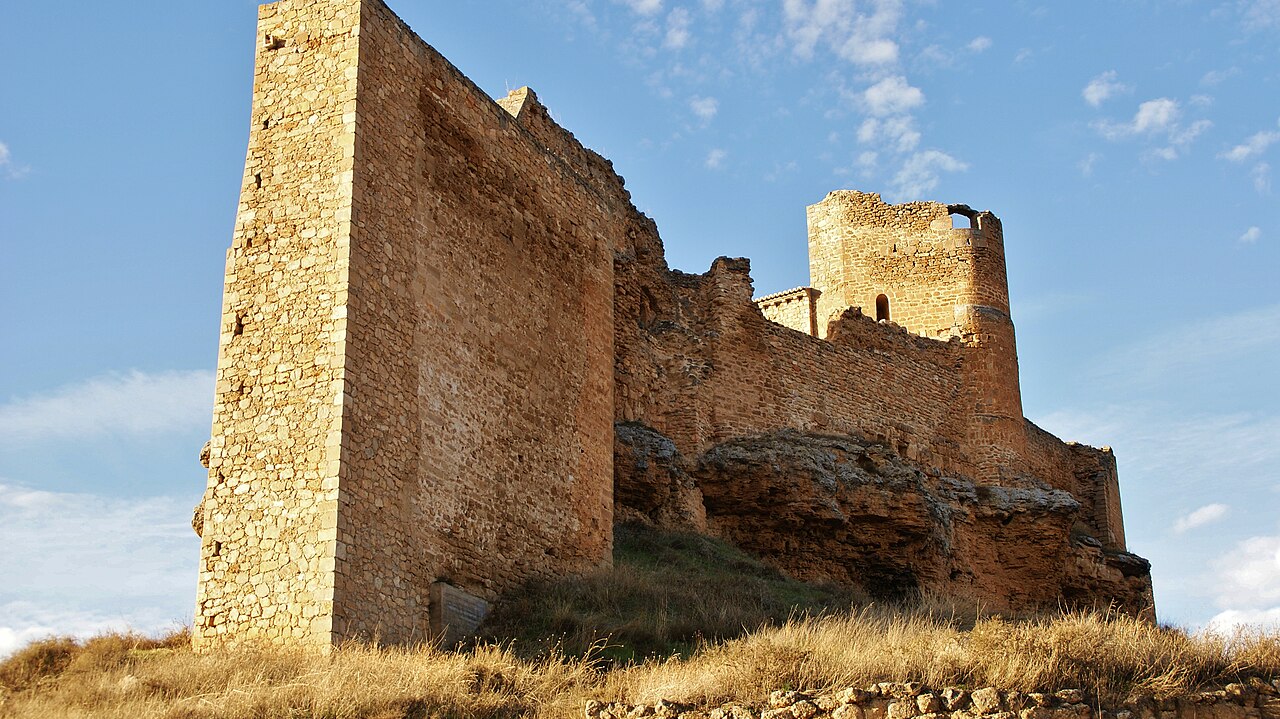
The Castle of Vállaga is a historic hill castle located in the municipality of Illana, within the region of Castilian Extremadura, Spain. This fortress, perched strategically on a hillside overlooking the fertile lands along the Tagus River, was originally constructed during the Andalusian period as a military stronghold. Its primary function was to guard the vital river crossing and control the route connecting Madrid with the inland towns of Huete and Cuenca.
Early history and military significance
The castle's origins trace back to the era when the Andalusian civilization dominated the Iberian Peninsula. Built as a fortress, it was designed to secure the river valley and serve as a defensive outpost against Christian advances. Following the Christian conquest of Castilian Extremadura, the castle became part of the domain of the noble family Anguix. In 1136, King Alfonso VII granted the territory, including Vállaga, to his vassal Martín Ordóñez, marking a shift in control from Muslim to Christian hands.
Subsequently, the castle was entrusted to the Order of Calatrava, a prominent military religious order during the Reconquista. The Order established a commandery at Vállaga, which functioned as both an administrative center and a military base. The fortress served as the residence of the military commander and as a watchtower overseeing the strategic bridge over the Tagus River. This position was crucial for controlling movement and trade along the route between Madrid and the interior provinces.
Architectural features and layout
The Castle of Vállaga is characterized by its elongated rectangular plan, adapted to the natural contours of the hillside. The fortress is constructed entirely of roughly cut stone blocks known locally as sillarejo, indicative of the practical and robust building techniques typical of military architecture in the region.
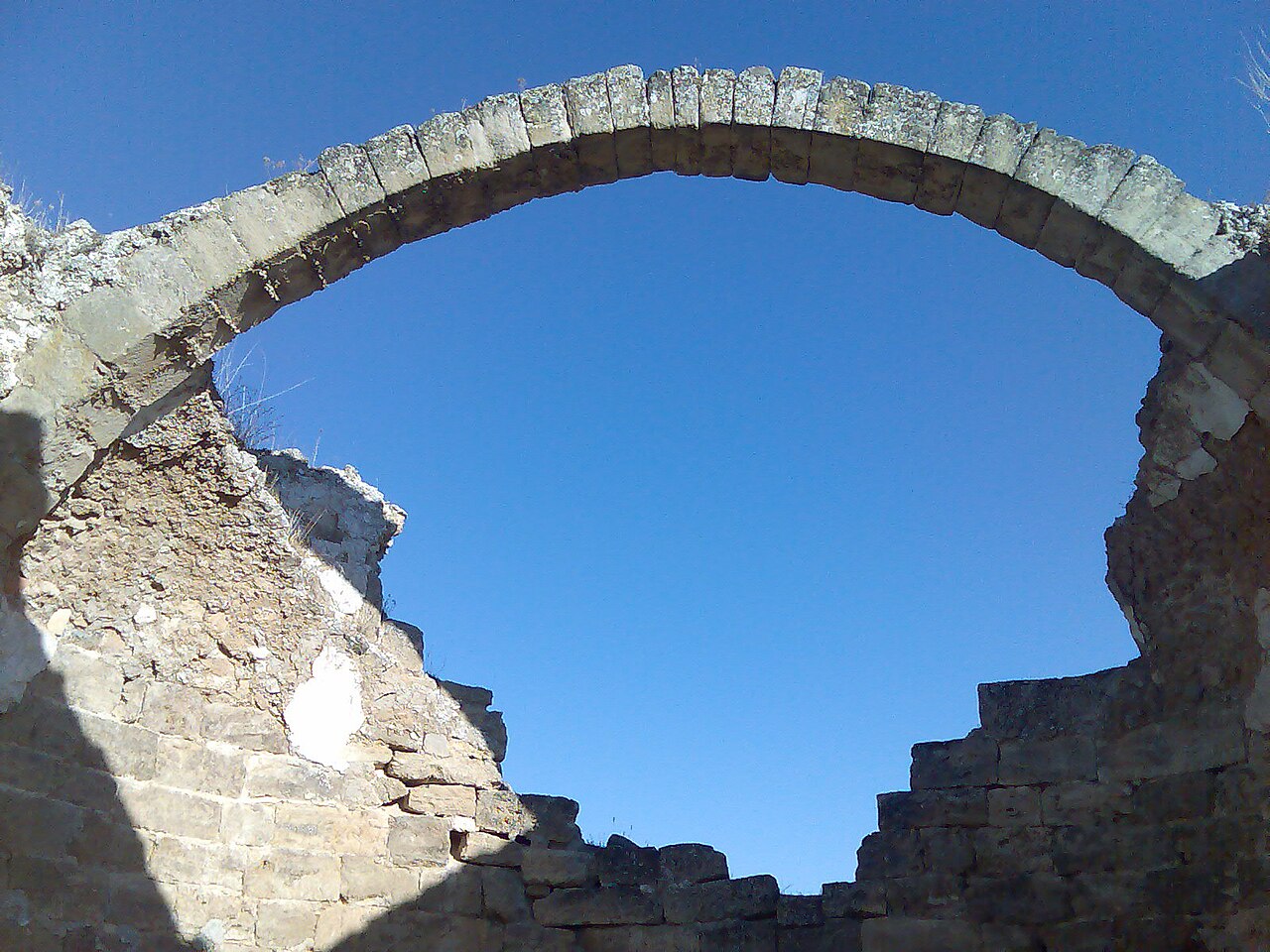
The castle’s orientation places its longer northern wall facing the Tagus River, maximizing surveillance and defense capabilities. The southern wall rises steeply against the hillside, providing natural protection. The interior is divided into eight compartments, separated by semicircular arches that once supported the roof structure. Today, only the westernmost chamber retains both its original arch and roof intact, while the rest of the interior has been significantly altered.
Adaptive reuse as wine cellars
In the early 17th century, the castle's military role diminished. In 1605, King Philip III sold Vállaga and the nearby town of Illana to the Marquis of Almonacid. Over a century later, in 1718, Juan de Goyeneche acquired the property from the Marquis's descendants. Under Goyeneche’s ownership, the castle underwent extensive modifications to serve as wine cellars.
This transformation led to the castle becoming known as the Caves of the Marquis, named after later descendants of the Goyeneche family who held the title Marquis of Belzunce. The conversion involved altering the interior spaces, removing many original military features to accommodate wine storage. These changes illustrate the common practice of repurposing historic fortifications for economic uses in post-medieval Spain.
Preservation and current condition
Today, the Castle of Vállaga stands as a partially preserved fortress, with much of its original military architecture still visible despite the extensive interior modifications. The exterior walls retain their imposing presence, constructed of the characteristic sillarejo stone blocks. The castle’s location and layout continue to reflect its original defensive purpose, emphasizing control over the Tagus River crossing.
No decorative elements or inscriptions have been documented, underscoring the fortress's purely functional military design. The surviving semicircular arches inside the castle provide valuable insight into the construction techniques employed during its initial phase. The adaptive reuse as wine cellars adds an additional layer to the site's historical narrative, demonstrating the evolution of castle functions over time.
Historical context and regional importance
The Castle of Vállaga played a significant role during the turbulent period of the Reconquista, serving as a frontier fortress between Muslim and Christian territories. Its control by the Order of Calatrava highlights its strategic and military importance in securing newly conquered lands and maintaining communication and supply routes.
Its position overseeing the Tagus River crossing was vital for controlling trade and military movements between central Spain and the eastern provinces. The castle's later transformation into wine cellars reflects broader economic and social changes in the region during the early modern period, shifting from military defense to agricultural production.
Visiting the castle of vállaga
While the castle is partially preserved, it remains an important cultural and historical landmark in Illana. Visitors can explore the exterior walls and the surviving interior chamber with its original roof and arch. The site offers insight into medieval military architecture and the adaptive reuse of historical structures.
The castle's hillside location provides scenic views of the surrounding landscape and the Tagus River valley. It stands as a testament to the layered history of the region, from Andalusian military origins through Christian conquest to economic transformation.
Frequently asked questions (FAQ)
- How do I get to the Castle of Vállaga?
- The Castle of Vállaga is conveniently located in the heart of Spain, easily accessible by car and public transport. If you're traveling by train, the nearest station is just a short taxi ride away. There are also local buses that connect the castle with nearby towns.
- What is the historical significance of the Castle of Vállaga?
- The Castle of Vállaga dates back to the 12th century and played a crucial role during the Reconquista. It served as a strategic military outpost and residence for noble families throughout its history. Today, it stands as a testament to Spain's rich medieval heritage.
- When was the Castle of Vállaga last renovated?
- The Castle of Vállaga underwent significant renovations in the early 2000s to restore its original architecture and enhance visitor experience. These updates have included structural repairs, modern amenities, and the establishment of informative exhibits. The castle is now well-preserved and showcases its historical grandeur.
- Can I take guided tours of the Castle of Vállaga?
- Yes, guided tours are available at the Castle of Vállaga, offering visitors an in-depth look at its history and architecture. Tours are conducted by knowledgeable guides who share fascinating stories about the castle's past. It's recommended to book in advance, especially during peak tourist seasons.
- Why is the Castle of Vállaga considered an architectural gem?
- The Castle of Vállaga is renowned for its unique blend of Gothic and Moorish architectural styles, reflecting the diverse cultural influences of its era. Its towering walls, intricate carvings, and stunning views of the surrounding landscape make it a must-see for architecture enthusiasts. The castle's design also incorporates defensive features that illustrate its historical significance.
- Is it possible to host events at the Castle of Vállaga?
- Yes, the Castle of Vállaga offers facilities for hosting various events, including weddings, corporate gatherings, and cultural events. The picturesque setting and historical ambiance make it a popular choice for memorable occasions. Interested parties should contact the castle's administration for more details on booking and services.
- What are the opening hours for the Castle of Vállaga?
- The Castle of Vállaga is open to visitors daily from 9 AM to 6 PM, with extended hours during the summer months. It's advisable to check the official website for any seasonal changes or special closures. Arriving early can help you avoid crowds and enjoy a more tranquil experience.
- What are the ticket prices for visiting the Castle of Vállaga?
- Ticket prices for the Castle of Vállaga are quite reasonable, with discounts available for students, seniors, and children. As of now, general admission is approximately €10, while discounted tickets are around €5. Family packages and group rates are also offered, making it accessible for all visitors.
- What nearby attractions should I visit while at the Castle of Vállaga?
- While visiting the Castle of Vállaga, consider exploring the charming village nearby, which offers quaint shops and local eateries. Additionally, the scenic hiking trails in the surrounding hills provide breathtaking views of the castle and the landscape. Don’t miss the local museum that highlights the region's history and culture.
Information
Loading map...
Visitor reviews
No reviews yet. Been here? Write the first review and help other travelers!
Write the first reviewVisited this castle? Share your experience
Your review helps other travelers and adds first-hand knowledge to our encyclopedia.