Anguix Castle
Anguix Castle, locally known as Castillo de Anguix, is a remarkable medieval fortress located near the village of Anguix in the southern part of the province of Guadalajara, Spain. Perched on a 100-meter-high rocky outcrop overlooking the Tagus River (Río Tajo), the castle commands sweeping views of the surrounding countryside and the river's winding course. Its strategic position has ensured its historical importance from early medieval times through the late medieval period and beyond.
The site's military significance is documented as early as the 10th century, when the Caliph Abd-al-Rahman III mentioned a fortress at Anguix, indicating its role in the frontier conflicts between Muslim and Christian forces during the Reconquista. The current castle's origins trace back to the 12th century, when King Alfonso VIII of Castile granted the territory to the nobleman Martín Ordóñez in 1136. Ordóñez constructed a primitive keep around 1160 atop the ruins of the earlier fortress to defend the frontier near the Tagus River and to promote repopulation efforts in the region.
Early history and military significance
Following Martín Ordóñez's death, his widow, Doña Sancha Martínez, donated the castle in 1174 to the influential Military Order of Calatrava. This order played a crucial role in the defense and Christian colonization of Castilian lands during the medieval period. The castle thus became a key stronghold for the military-religious order, securing the frontier and supporting the expansion of Christian territories.
In the 14th century, ownership of Anguix Castle shifted to the Castilian crown. King Alfonso XI granted the fortress to his huntsman, Alfón Martínez, in 1328. Through marriage, the castle passed into the hands of the powerful and sometimes rebellious Carrillo family of Huete, who were influential nobles in the region. During the 15th century, the castle was primarily inhabited by members of the Carrillo family and briefly served King Enrique IV of Castile after 1464.
Architectural evolution and layout
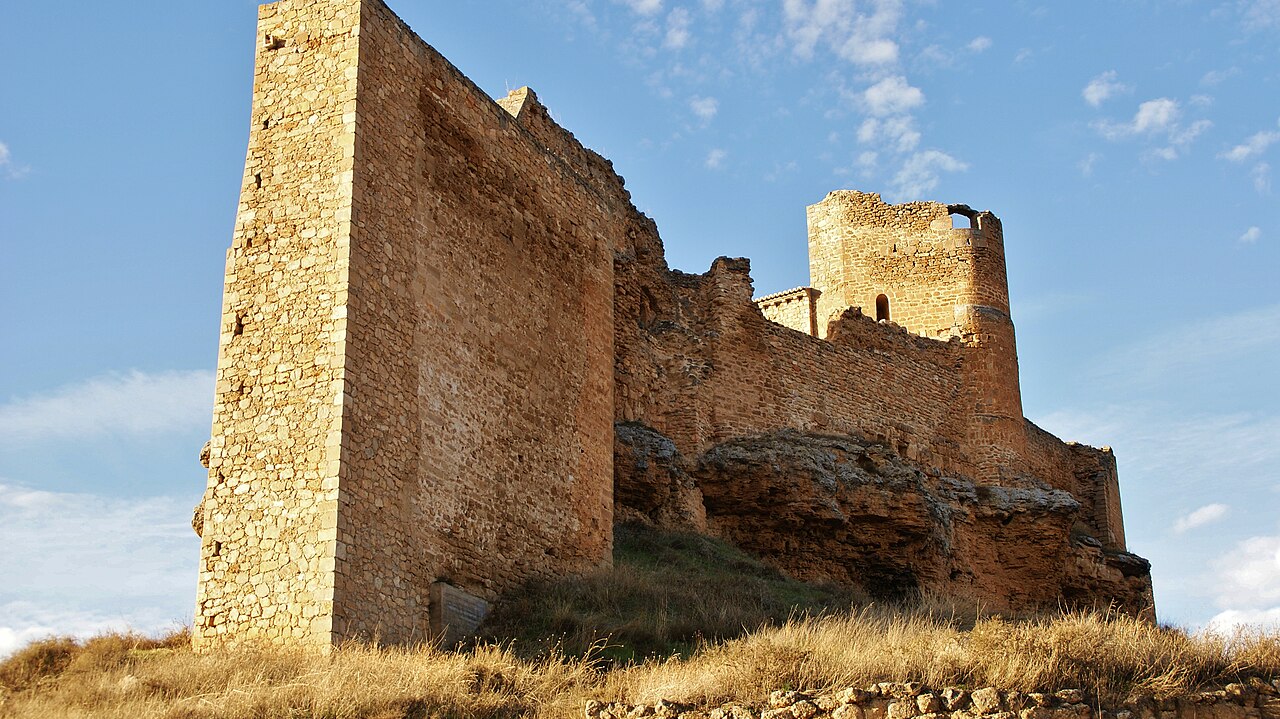
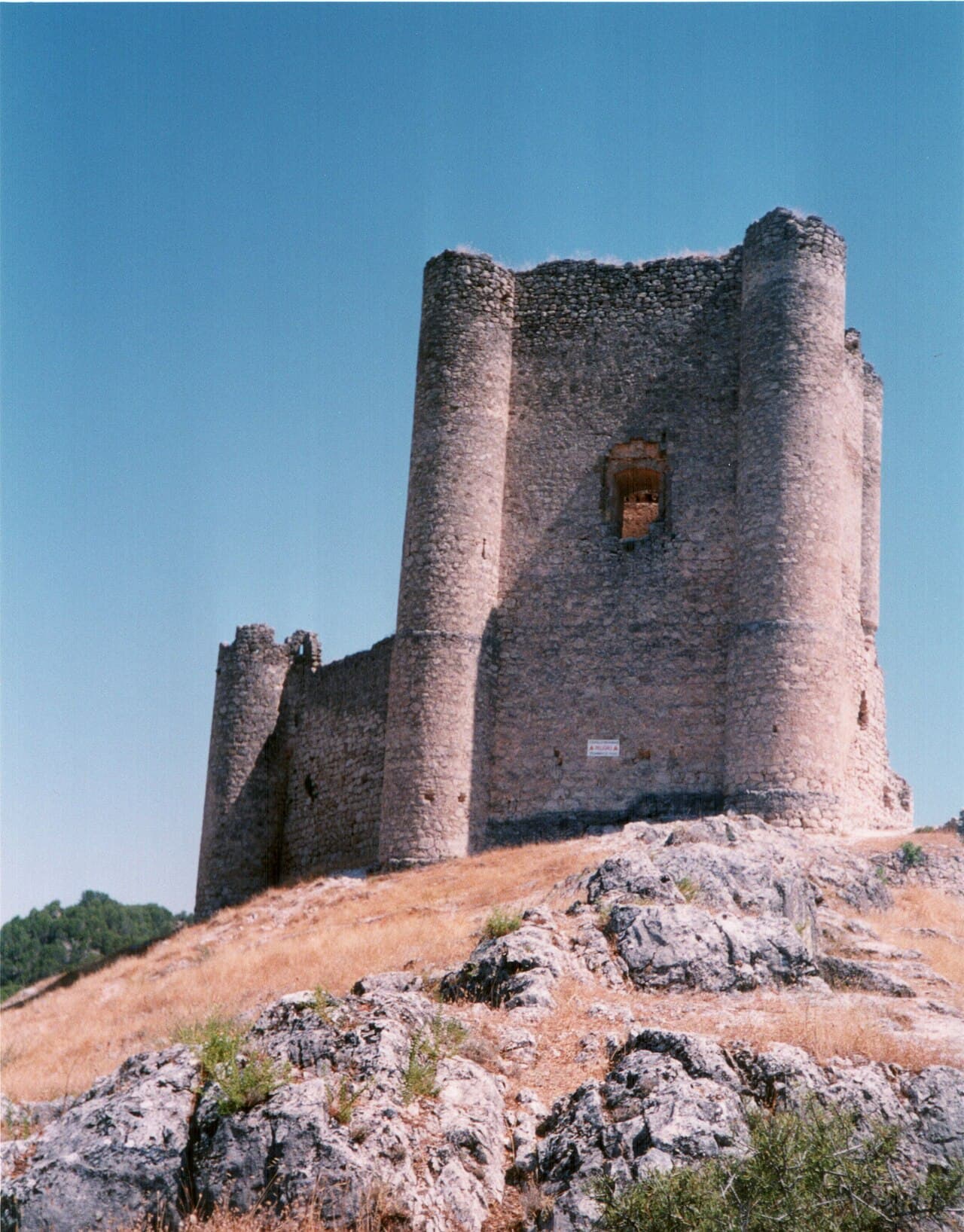
The castle acquired its present form mainly during the 14th and 15th centuries, evolving from a simple rectangular keep into a more complex pentagonal fortress adapted to the irregular terrain of the rocky promontory. The fortress features thick exterior walls, approximately 6 meters high and up to two meters thick, constructed of finely cut ashlar stone blocks. Remnants of round towers at the pentagon's corners enhance the defensive capabilities, particularly on the western side where the approach was most vulnerable. The eastern side is naturally protected by a steep cliff, reducing the need for extensive fortifications on that face.
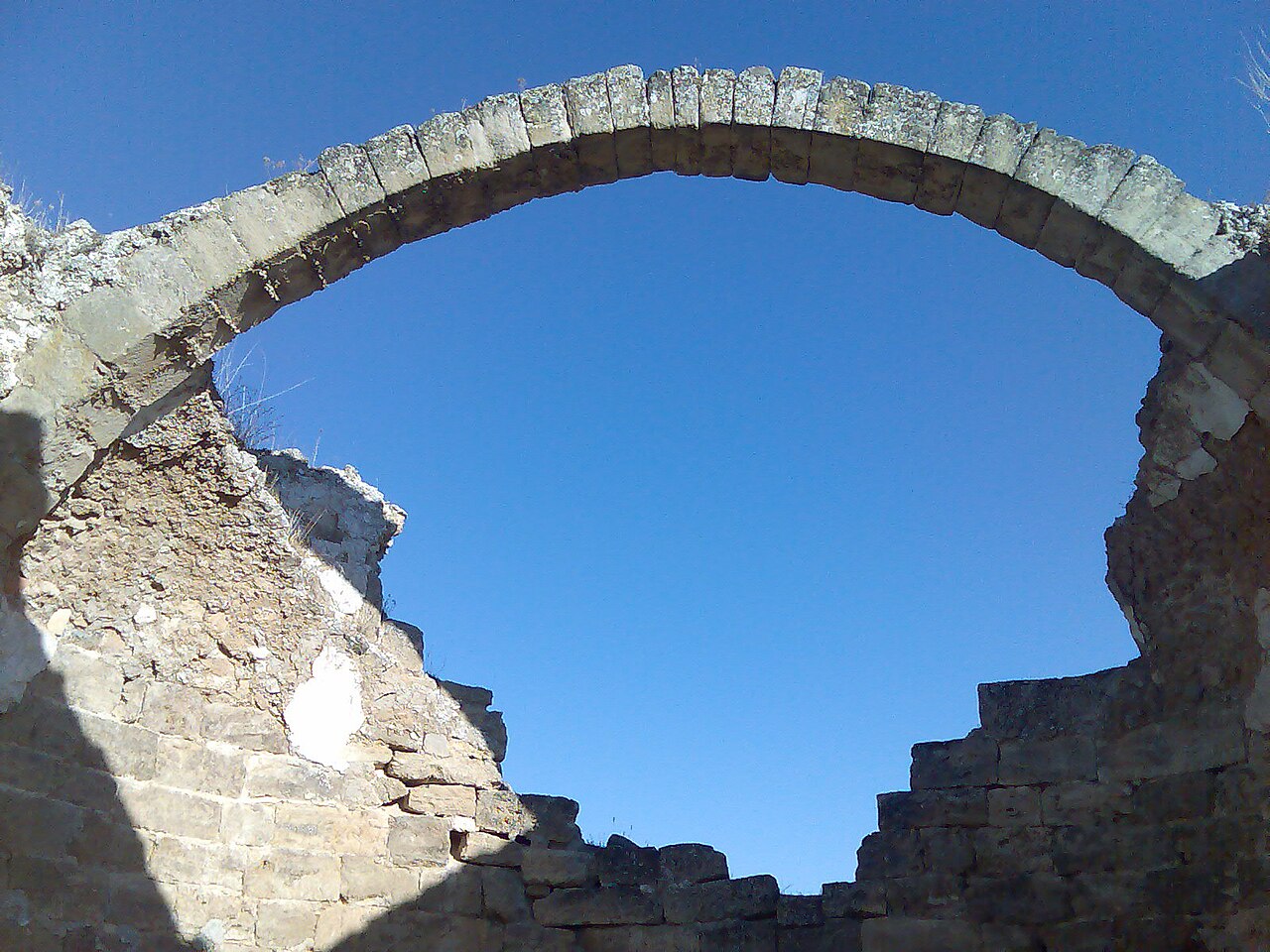
Within the walls lies a small courtyard, now partially covered by rocky debris due to historic landslides. The keep tower, rising about 12 meters, retains traces of a spiral staircase and a cellar that likely served as a cistern or pit prison. The keep's southern face features a lowered arch window on the main floor, typical of medieval military architecture, and fragments of a carved inscription referencing the name Anguix remain visible on one of the upper ashlar blocks.
Conflicts and later history
Anguix Castle's strategic importance led to its involvement in several conflicts. It sustained damage during the Castilian Civil War in the 15th century, a conflict over the succession between Juana and Isabel of Trastámara. Following this war, the Count of Tendilla, who acquired the castle in 1484, undertook restoration efforts to repair the fortress.
In the 18th century, the castle again suffered during the War of the Spanish Succession, when Austrian forces inflicted further damage in 1710. By the 19th century, the castle had passed through multiple private owners, beginning with a purchase by Don Justo Hernández in 1847, a member of a prominent local family.
Current condition and cultural significance
Today, Anguix Castle stands mostly in ruins but retains substantial walls and distinctive towers that clearly illustrate its medieval defensive design. The eastern wall is the most deteriorated and is close to collapse, while the other walls and towers remain partially preserved, offering valuable insight into the castle's architectural evolution and historical phases of reconstruction.
In recognition of its historical and cultural importance, Anguix Castle was declared a Bien de Interés Cultural in 1992, a status that protects it as a significant heritage site in Spain. Visitors can freely access the castle, although reaching it requires a walk of about 2 kilometers over unpaved roads and a steep final ascent. The journey is rewarded by the castle's impressive setting and panoramic views of the Tagus River valley.
Visitor experience and accessibility
Visiting Anguix Castle offers a unique opportunity to explore a fortress that encapsulates centuries of Spanish medieval history. The castle's remote location, atop a rocky hill, provides a tangible sense of the strategic considerations that shaped its construction. The rugged terrain and ruins invite exploration of its pentagonal layout, round towers, and the remains of its keep.
The site is freely accessible to the public, with no entrance fee. However, visitors should be prepared for a moderately challenging approach, including a walk through farmland and a steep climb. The castle's elevated position rewards visitors with breathtaking views, making the effort worthwhile for history enthusiasts and nature lovers alike.
Frequently asked questions (FAQ)
- How do I get to Anguix Castle?
- Anguix Castle is accessible via a 2-kilometer walk over unpaved roads from the nearest village of Sayatón. The final approach involves a steep climb, so comfortable footwear and moderate fitness are recommended.
- What is the historical significance of Anguix Castle?
- Anguix Castle played a strategic role during the Reconquista, serving as a frontier fortress for Christian kingdoms. It was associated with notable figures such as Martín Ordóñez, the Military Order of Calatrava, and the Counts of Tendilla.
- Can I visit Anguix Castle for free?
- Yes, the castle is freely accessible to the public with no entrance fee. Visitors can explore the ruins and enjoy panoramic views of the Tagus River valley.
- When was Anguix Castle built?
- The current form of Anguix Castle mainly dates to the 14th and 15th centuries, although its origins trace back to a 12th-century keep constructed by Martín Ordóñez around 1160.
- What architectural features does Anguix Castle have?
- The castle features a pentagonal layout with thick ashlar stone walls, round towers at the corners, a keep with a spiral staircase, a cellar that served as a cistern or prison, and remnants of battlements.
- Is Anguix Castle accessible for visitors with mobility issues?
- Due to its location on a rocky hill and the steep, uneven paths leading to it, Anguix Castle may not be suitable for visitors with significant mobility challenges.
Photo gallery

Information
Sources & official resources
Verify the information above using these authoritative references.
Loading map...
Visitor reviews
No reviews yet. Been here? Write the first review and help other travelers!
Write the first reviewVisited this castle? Share your experience
Your review helps other travelers and adds first-hand knowledge to our encyclopedia.