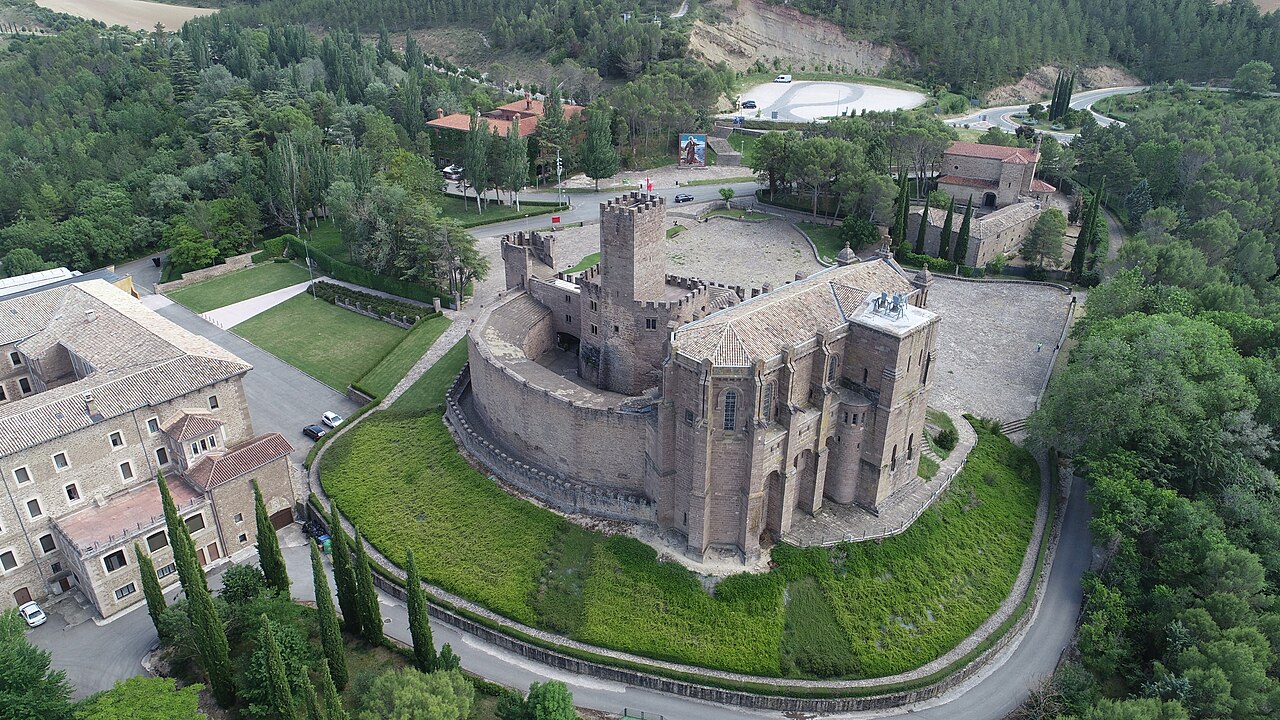
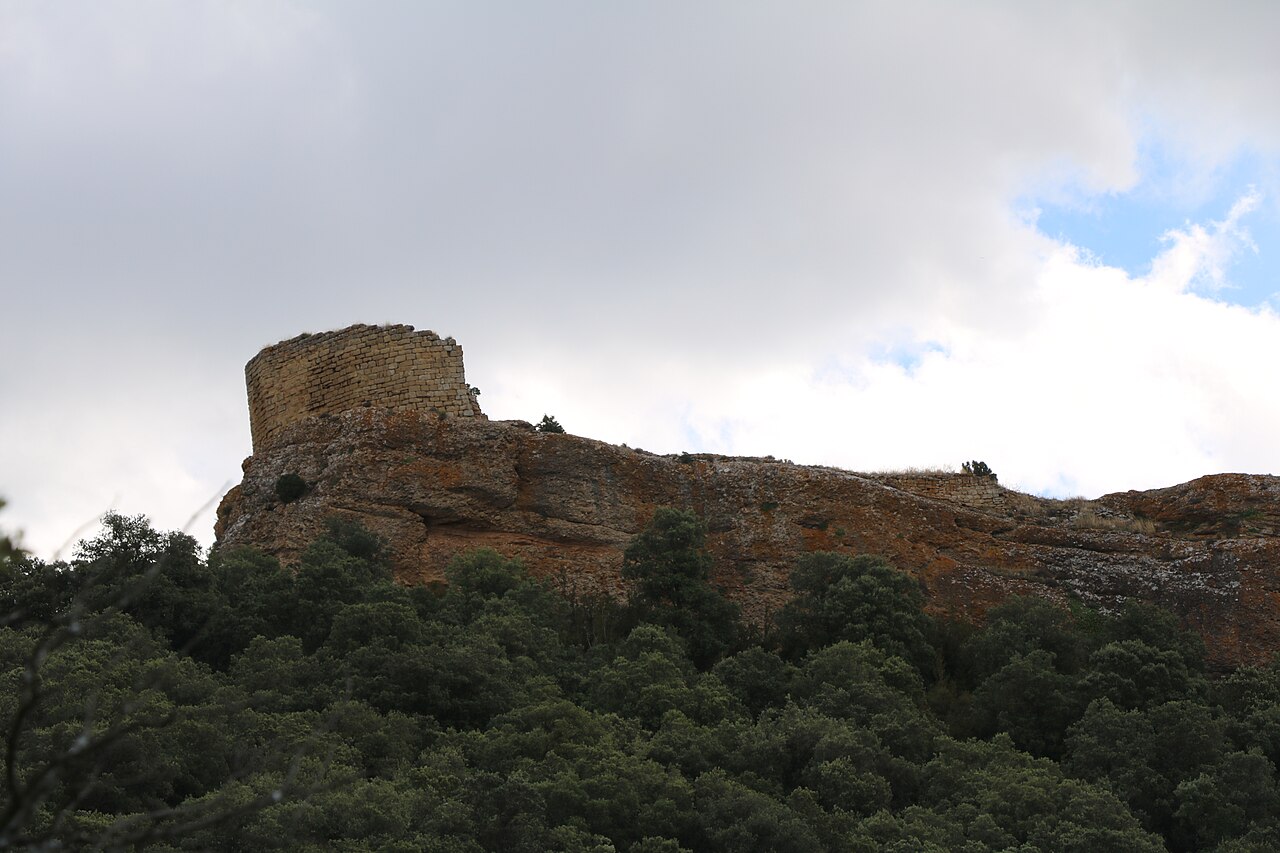
The Castle of Xavier stands prominently on a rocky hill in the town of Javier, located about 52 kilometers east of Pamplona in the autonomous community of Navarre, northern Spain. This hill castle dates back to the 10th century, originally constructed as a watchtower during the early medieval period to defend Christian territories against Muslim incursions. Over the centuries, it evolved into a fortified noble residence and became renowned as the birthplace of Saint Francis Xavier, one of the most influential Catholic missionaries and the patron saint of Navarre.
The castle's strategic location overlooking the Aragon River valley allowed it to serve both military and administrative functions throughout its history. It has undergone numerous modifications, partial demolitions, and restorations, reflecting the turbulent history of the region and the shifting political landscape. Today, the castle remains a significant cultural and religious landmark, attracting thousands of pilgrims annually, especially during the Javierada pilgrimage held each March in honor of Saint Francis Xavier.
Historical background and significance
The origins of the Castle of Xavier trace back to the late 10th century when it was initially built as a defensive watchtower by Christian forces. This was a period marked by frequent conflicts between Christian kingdoms and Muslim territories in the Iberian Peninsula. The castle’s name derives from the Basque term "etxeberri," meaning "new house," which reflects the settlement’s origins.
By the 13th century, the original watchtower had expanded into a robust fortress. Around 1223, it was acquired by Sancho VII of Navarre as part of efforts to strengthen Navarre’s border defenses against the neighboring Kingdom of Aragon. The castle changed hands several times, passing to Theobald I of Navarre and later to noble families such as the Azpilcueta and Jassu, who used it as a noble residence and administrative center.
The castle’s most famous historical figure, Saint Francis Xavier, was born here on April 7, 1506. He spent his childhood within its walls before embarking on his missionary work, which would eventually make him one of the founding members of the Jesuit order and a key figure in spreading Christianity in Asia. His legacy greatly enhanced the castle’s religious and cultural importance.
Following the Castilian conquest of Navarre in 1512, the castle’s owners resisted the new rulers. In response, Cardinal Cisneros ordered a partial demolition in 1516 to reduce its military threat. This involved dismantling the defensive walls, towers, moats, gates, and lowering the main tower’s height. Subsequently, the castle was transformed from a fortress into a noble residence.
Architectural features and layout
The Castle of Xavier is characterized by a complex layout that reflects its long history and various phases of construction and destruction. The castle consists of three main structures arranged by age and function:
- The central keep, known as the Tower of San Miguel or Tower of Homage, is the oldest part, originally a 10th-century watchtower. This tower was significantly reduced in height during the 1516 demolition.
- To the west lies the Tower of the Holy Christ, which contains a small private chapel housing the famous 13th-century walnut wood crucifix called the "Smiling Christ." This crucifix is unique for depicting Christ with a smile and is associated with local religious traditions.
- The polygonal fortified building to the north represents later expansions and adaptations of the castle’s defensive structures.
The castle’s foundations incorporate stonework with visible Muslim-era bases, confirming its early defensive origins. The original defensive features such as battlements, embrasures, two large round towers, a drawbridge, moats, and gates were mostly dismantled or filled in during the 16th century.
The chapel and religious art
The chapel inside the Tower of the Holy Christ is notable for its religious art and symbolism. Besides the "Smiling Christ" crucifix, the chapel walls feature 15th-century frescoes depicting the "Dance of Death," a rare theme in Navarre that emphasizes the universality of death. According to local tradition, the crucifix miraculously bled on the day Saint Francis Xavier died in 1552, adding to the castle’s spiritual significance.
Restoration and modern use
By the 19th century, the castle had fallen into disrepair. Restoration efforts began in the 1890s under the patronage of María del Carmen de Aragón-Azlor, Duchess of Villahermosa, and her husband José Manuel de Goyeneche, Count of Guaqui. The restoration aimed to recreate the castle’s 15th-century appearance while respecting its historical significance.
In 1901, a basilica dedicated to Saint Francis Xavier was constructed adjacent to the castle, replacing a former palace. The basilica features a bell tower and a façade inscribed with the names of places visited by the saint, such as Yamaguchi in Japan. The duchess donated both the castle and the basilica to the Jesuit order, who continue to maintain the site and provide pastoral care.
Today, the castle is well preserved but retains visible evidence of its historical modifications and partial demolitions. The central tower has been converted into a museum dedicated to Saint Francis Xavier’s life and missionary work. Exhibits include 17th-century Flemish paintings by Godfried Maes, 19th-century Japanese kakemonos (hanging scrolls), and a 1967 diorama by López Furio, all illustrating the saint’s extensive travels and impact.
Pilgrimage and cultural importance
The Castle of Xavier is a focal point for religious pilgrimage, particularly during the annual Javierada held in early March. This pilgrimage honors the canonization of Saint Francis Xavier on March 12, 1622, and celebrates his role as the patron saint of Navarre. Thousands of pilgrims travel to the castle and basilica each year, reinforcing its status as a vital cultural and spiritual landmark.
Declared a Spanish cultural heritage site in 1949 and officially listed as a Bien de Interés Cultural in 1994, the castle and its surroundings represent a rich blend of medieval military architecture and religious history. The adjacent Jesuit residences and spiritual retreat facilities further enhance its role as a center for faith and cultural preservation.
Visitor experience and amenities
Visitors to the Castle of Xavier can explore its historic towers, chapel, and museum exhibits that provide deep insights into the castle’s past and Saint Francis Xavier’s legacy. The site’s elevated position offers impressive views of the Aragon valley and surrounding countryside. The basilica and Jesuit facilities host religious services and spiritual exercises, enriching the visitor experience.
The castle’s accessibility, rich history, and cultural significance make it a compelling destination for those interested in medieval architecture, religious heritage, and Spanish history.
Frequently asked questions (FAQ)
- How do I get to Castle of Xavier?
- The Castle of Xavier is located in Javier, Spain, about 30 kilometers from Pamplona. Visitors can reach the castle by car, taking the A-21 motorway, or by public transport, with buses running frequently from Pamplona to Javier.
- What is the historical significance of Castle of Xavier?
- Castle of Xavier is a 10th-century fortress known for its architectural beauty and historical importance. It is famously associated with Saint Francis Xavier, a co-founder of the Jesuit order, who was born nearby and is celebrated for his missionary work around the globe.
- When was the Castle of Xavier built?
- The Castle of Xavier was originally constructed in the 10th century, during the period of the Reconquista. It has undergone various renovations over the centuries, enhancing its significance and preserving its historical features.
- Can I enter the Castle of Xavier?
- Yes, visitors can enter the Castle of Xavier. The castle is open to the public, allowing guests to explore its historical rooms, chapels, and towers, while also enjoying panoramic views of the surrounding landscape.
- Why is the Castle of Xavier a popular tourist destination?
- The Castle of Xavier attracts tourists due to its rich history, stunning architecture, and beautiful surroundings. Additionally, its connection to Saint Francis Xavier adds to its cultural significance, making it a must-see for visitors interested in history and spirituality.
- Is it possible to visit the Castle of Xavier year-round?
- Yes, the Castle of Xavier is open year-round; however, it's advisable to check specific opening hours and any seasonal events. The castle can provide visitors with a unique experience regardless of the season.
- What are the opening hours for the Castle of Xavier?
- The opening hours for the Castle of Xavier may vary depending on the season. Typically, the castle opens at 10:00 AM and closes at 7:00 PM during the summer months, while winter hours may be shortened, so it's best to check the official website for the latest information.
- Are there any ticket prices for visiting the Castle of Xavier?
- Yes, there is a small admission fee to enter the Castle of Xavier, which helps maintain the site. Ticket prices are generally affordable, making it accessible for most visitors, with discounts available for students and seniors.
- What is the best time to visit the Castle of Xavier?
- The best time to visit the Castle of Xavier is during the spring or early autumn when the weather is pleasant, and the surrounding landscapes are particularly beautiful. This timing allows for enjoyable exploration without the summer crowds.
- What nearby attractions are there to explore while visiting the Castle of Xavier?
- While visiting the Castle of Xavier, you can also explore the charming village of Javier and its beautiful church. Additionally, the nearby Natural Park of Bardenas Reales offers stunning landscapes and hiking opportunities, making it an excellent complement to your castle visit.
Information
Website
Visit websiteSources & official resources
Verify the information above using these authoritative references.
Loading map...
Visitor reviews
No reviews yet. Been here? Write the first review and help other travelers!
Write the first reviewVisited this castle? Share your experience
Your review helps other travelers and adds first-hand knowledge to our encyclopedia.