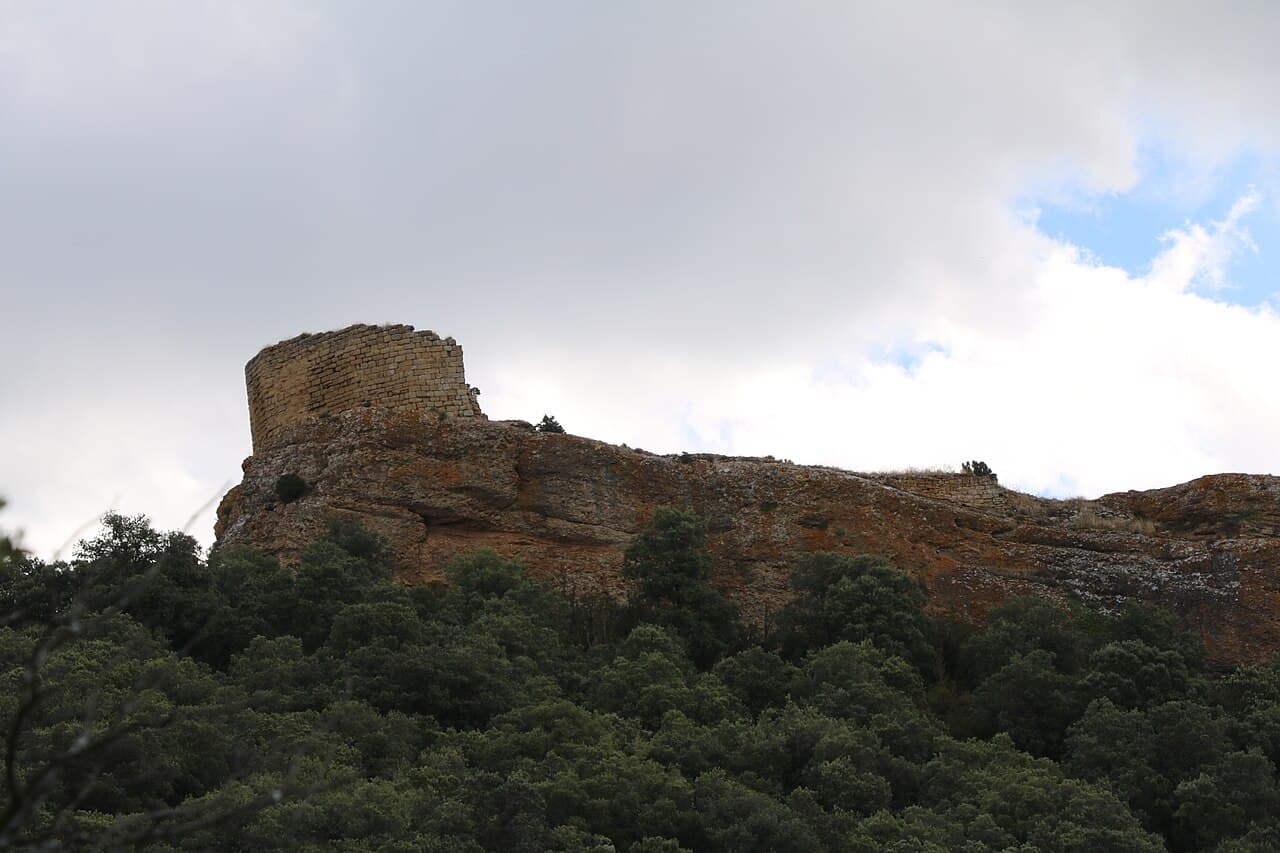
Castillo de Peña — Spain castle

Castillo de Peña

Castillo de Peña: archaeological ruins in Spain
Ruins

The Castillo de Peña stands as a significant example of medieval fortifications in Spain, now preserved as archaeological ruins. This hill castle once played a strategic role in controlling the surrounding territory, offering commanding views over the landscape. Although its exact construction date remains uncertain, the castle likely dates back to the High Medieval period, reflecting the architectural and military developments of that era.

Historical context and strategic importance

Located in a region of Spain where numerous medieval fortresses were established, Castillo de Peña was part of a network of defensive structures designed to secure borders and trade routes. Its elevated position on a hill provided natural defensive advantages, allowing its occupants to monitor movements across the surrounding valleys and plains. The castle's location suggests it was a key point of control during times of territorial disputes and conflicts in medieval Spain.

Architectural features and layout

As an archaeological site, the remains of Castillo de Peña reveal the typical features of a medieval hill castle. The ruins include fragments of thick defensive walls constructed from local stone, remnants of towers that would have served as lookout points and defensive strongholds, and the foundations of internal buildings such as the keep or donjon. The castle's design reflects the military architecture of its time, emphasizing strong fortifications adapted to the terrain.

Defensive structures

The castle's defensive system would have included battlements, arrow slits, and possibly a gatehouse, although much of these features survive only in fragmentary form. The hilltop location itself acted as a natural barrier, supplemented by man-made fortifications to resist sieges and attacks.

Living quarters and internal spaces

Within the castle walls, the layout likely included residential quarters, storage areas, and possibly a chapel. The remains suggest a compact arrangement typical of hill castles, where space was limited by the topography but optimized for both defense and habitation.

Archaeological significance and preservation

Today, Castillo de Peña is classified as ruins and an archaeological site, attracting interest from historians and archaeologists studying medieval military architecture in Spain. Excavations have helped to uncover the castle's original footprint and construction techniques, contributing valuable insights into the region's medieval past.

Preservation efforts focus on stabilizing the remaining structures to prevent further deterioration while allowing visitors to experience the historical atmosphere of the site. Interpretive signage and guided tours often accompany visits, providing context about the castle's role and significance.

Visiting Castillo de Peña

While the castle is in ruins, it offers a compelling destination for visitors interested in medieval history and archaeology. The site provides panoramic views of the surrounding landscape, enhancing the experience of exploring the remnants of a once formidable fortress.

Visitors should prepare for uneven terrain and limited facilities, as the site retains its rugged and natural character. Information about opening hours and access may vary depending on local management, so checking in advance is recommended.

Frequently asked questions (FAQ)

What is the historical significance of Castillo de Peña?
Castillo de Peña is a remarkable example of medieval military architecture, built in the 10th century to defend the region from invasions. Its strategic location offers stunning views of the surrounding landscape, making it a vital fortress in its time. The castle has a rich history that reflects the cultural and political changes in Spain over the centuries.
When was Castillo de Peña built?
Construction of Castillo de Peña began in the late 10th century, during the time of the Moorish occupation of Spain. The castle underwent several modifications and expansions throughout the years, particularly during the Reconquista, when it played a crucial role in the efforts to reclaim Spain from Moorish control. Today, it stands as a testament to the architectural ingenuity of the era.
Can I visit Castillo de Peña?
Yes, Castillo de Peña is open to visitors year-round, allowing you to explore its impressive towers and walls. Guided tours are available, providing insights into its fascinating history and architecture. Be sure to check for any special events or exhibitions that may enhance your visit.
What are the opening hours for Castillo de Peña?
The castle is typically open from 9 AM to 6 PM during the weekdays and extends its hours on weekends. However, it's advisable to check the official website or contact the visitor center for the most current information, especially during holiday seasons. This will ensure you have the best experience during your visit.
Is it possible to access Castillo de Peña with limited mobility?
While Castillo de Peña offers breathtaking views, the terrain can be challenging for visitors with limited mobility due to steep paths and uneven surfaces. There are some accessible areas, but it is recommended to contact the castle management in advance to inquire about specific accommodations and accessibility options. Your comfort and safety are a priority during your visit.
What is the best time to visit Castillo de Peña?
The best time to visit Castillo de Peña is during the spring and fall when the weather is mild, and the surrounding scenery is particularly beautiful. These seasons offer pleasant temperatures and fewer crowds, allowing for a more enjoyable experience. Summer can be quite hot, and winter may bring colder weather, so plan accordingly.
What are the nearby attractions to Castillo de Peña?
Nearby attractions include the charming village of Peña, with its traditional Spanish architecture and local eateries. Additionally, the stunning natural parks and hiking trails in the area provide opportunities for outdoor activities. Visitors can also explore other historical sites within a short drive, enriching their cultural experience.
How much do tickets cost for Castillo de Peña?
Ticket prices for Castillo de Peña are generally very affordable, with discounts available for students and seniors. Children often enter for free or at a reduced rate, making it a great family-friendly destination. Be sure to check the official website for current pricing and any special promotions.

Photo gallery

Castillo de Peña
Click to view

Photo by Jialxv•CC BY-SA 4.0

1 photo • Click any image to view in full screen

Information

Archaeological Site / Ruins

Loading map...

Visitor reviews

No reviews yet. Been here? Write the first review and help other travelers!

Write the first review

Visited this castle? Share your experience

Your review helps other travelers and adds first-hand knowledge to our encyclopedia.
Write a review

(5/5)

0/2000 characters

Your review will be visible after admin approval

Nearby castles

13 km
Xavier Castle — Spain castle

Xavier Castle

Javier, Spain

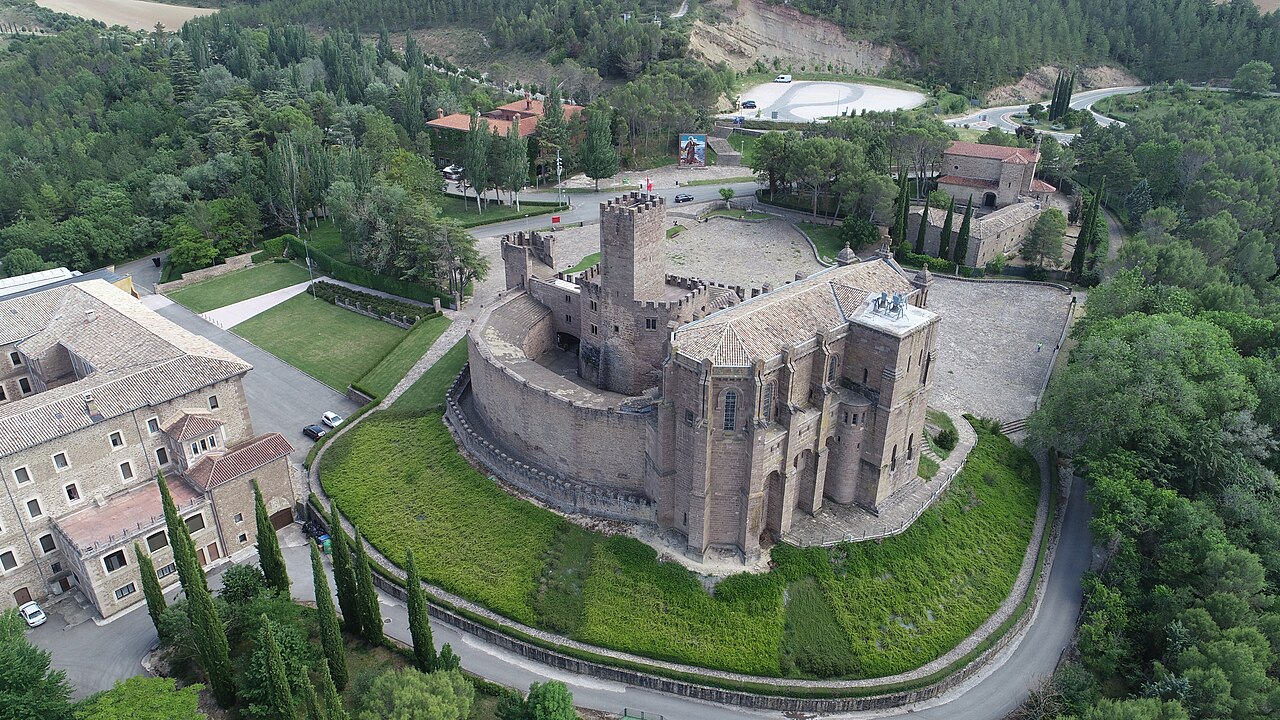
Xavier Castle (Spanish: Castillo de Javier, Basque: Xabierko gaztelua) is a historic hill castle located on a prominent hill in the town of Javier, in the region of Navarre, Spain. This castle dates back to the 10th century and is renowned as the birthplace and childhood home of Saint Francis Xavier, one of the founders of the Jesuit Order and a significant figure in Catholic missionary history. The castle's name is the origin of the saint's surname, linking the noble family of the Lords of Xavier to this fortress. Architectural evolution and structure The castle complex consists of three main buildings of varying antiquity, reflecting its long history and multiple phases of construction and renovation. The oldest structure is the Tower of Homage, also known as the San Miguel Tower, which serves as the castle's keep. This tower houses a museum dedicated to the life and legacy of Saint Francis Xavier, providing visitors with insights into his early life and the historical context of the castle. The foundations of the castle reveal Muslim vestiges, likely dating from the 10th century, indicating the strategic and cultural significance of the site during the early medieval period. The 11th century saw the addition of the first defensive enclosure, which protected the surrounding rooms and courtyard areas. In the 13th century, the castle underwent significant expansion with the construction of two polygonal bodies and two flanking towers positioned at the four cardinal points, enhancing its defensive capabilities. This medieval fortification design reflects the military architecture typical of the Kingdom of Navarre during this era. The Tower of the Kristo Santua is the main fortified building and chapel within the castle complex. It contains a notable Late Gothic crucifix and a unique series of murals depicting the dance of death, a rare artistic theme in Spain, illustrating the medieval preoccupation with mortality and the afterlife. Historical significance and ownership The castle and the village of Xavier were integrated into the Kingdom of Navarre and were notably won by Sancho VII of Navarre around 1223. The castle's ownership shifted as a result of political and financial transactions involving the Crown of Navarre and the Crown of Aragon. Sancho VII acquired Xavier as a warranty for a loan to an Aragonese noble who defaulted, consolidating Navarrese control over the border region. In 1236, the castle was granted by King Theobald I of Navarre to Adán de Sada, reflecting the feudal distribution of lands and titles typical of the medieval period. Prior to the Spanish conquest of Iberian Navarre, the castle belonged to the family of Saint Francis Xavier, specifically to Maria Azpilikueta and her husband Joanes Jatsukoa, who defended the kingdom's independence. Following the conquest, the Spanish regent Cardinal Cisneros ordered the castle's demolition in 1516 to suppress Navarrese resistance. However, the demolition was only partial, focusing on the upper parts of the fortress. The castle later passed through inheritance to the House of Villahermosa, who maintained ownership for several centuries. Modern developments and cultural heritage In the late 19th century, the castle was donated by the Duquesa de Villahermosa to the Jesuit Order, who intended to establish a missionary center at the site. This led to the construction of an adjacent basilica, designed by local architect Angel Goicoechea and completed by Navarrese contractor Blas Morte. The basilica complements the medieval fortress and honors Saint Francis Xavier's missionary legacy. Today, Xavier Castle is a well-preserved example of early medieval military architecture in Navarre and serves as a cultural and religious landmark. The castle's museum, chapel, and unique artworks attract visitors interested in medieval history, architecture, and the life of one of Christianity's most influential missionaries. Architectural features and artistic elements The castle's defensive features include polygonal towers at cardinal points, thick stone walls, and a strategic hilltop location that provided natural defense advantages. The chapel within the Tower of Kristo Santua is notable for its Late Gothic crucifix and the rare murals illustrating the dance of death, a medieval allegory on mortality that is exceptional in Spanish castle art. The castle's layout reflects the evolution of fortification techniques from the early medieval period through the high medieval period, showcasing adaptations to changing military needs and architectural styles. Visiting Xavier Castle Visitors to Xavier Castle can explore the museum dedicated to Saint Francis Xavier, view the unique medieval murals, and appreciate the castle's imposing defensive architecture. The adjacent basilica offers additional historical and religious context. The castle's hilltop setting provides panoramic views of the surrounding Navarrese landscape. The castle is accessible from nearby towns such as Pamplona and Sangüesa, making it a significant cultural destination in the region. Its preservation allows for an immersive experience of Navarre's medieval heritage and the legacy of one of its most famous sons.

Early Medieval (5th–10th c.)
Details
13.1 km

Castle of Xavier

Javier, Spain

The Castle of Xavier stands prominently on a rocky hill in the town of Javier, located about 52 kilometers east of Pamplona in the autonomous community of Navarre, northern Spain. This hill castle dates back to the 10th century, originally constructed as a watchtower during the early medieval period to defend Christian territories against Muslim incursions. Over the centuries, it evolved into a fortified noble residence and became renowned as the birthplace of Saint Francis Xavier, one of the most influential Catholic missionaries and the patron saint of Navarre. The castle's strategic location overlooking the Aragon River valley allowed it to serve both military and administrative functions throughout its history. It has undergone numerous modifications, partial demolitions, and restorations, reflecting the turbulent history of the region and the shifting political landscape. Today, the castle remains a significant cultural and religious landmark, attracting thousands of pilgrims annually, especially during the Javierada pilgrimage held each March in honor of Saint Francis Xavier. Historical background and significance The origins of the Castle of Xavier trace back to the late 10th century when it was initially built as a defensive watchtower by Christian forces. This was a period marked by frequent conflicts between Christian kingdoms and Muslim territories in the Iberian Peninsula. The castle’s name derives from the Basque term "etxeberri," meaning "new house," which reflects the settlement’s origins. By the 13th century, the original watchtower had expanded into a robust fortress. Around 1223, it was acquired by Sancho VII of Navarre as part of efforts to strengthen Navarre’s border defenses against the neighboring Kingdom of Aragon. The castle changed hands several times, passing to Theobald I of Navarre and later to noble families such as the Azpilcueta and Jassu, who used it as a noble residence and administrative center. The castle’s most famous historical figure, Saint Francis Xavier, was born here on April 7, 1506. He spent his childhood within its walls before embarking on his missionary work, which would eventually make him one of the founding members of the Jesuit order and a key figure in spreading Christianity in Asia. His legacy greatly enhanced the castle’s religious and cultural importance. Following the Castilian conquest of Navarre in 1512, the castle’s owners resisted the new rulers. In response, Cardinal Cisneros ordered a partial demolition in 1516 to reduce its military threat. This involved dismantling the defensive walls, towers, moats, gates, and lowering the main tower’s height. Subsequently, the castle was transformed from a fortress into a noble residence. Architectural features and layout The Castle of Xavier is characterized by a complex layout that reflects its long history and various phases of construction and destruction. The castle consists of three main structures arranged by age and function: The central keep, known as the Tower of San Miguel or Tower of Homage, is the oldest part, originally a 10th-century watchtower. This tower was significantly reduced in height during the 1516 demolition. To the west lies the Tower of the Holy Christ, which contains a small private chapel housing the famous 13th-century walnut wood crucifix called the "Smiling Christ." This crucifix is unique for depicting Christ with a smile and is associated with local religious traditions. The polygonal fortified building to the north represents later expansions and adaptations of the castle’s defensive structures. The castle’s foundations incorporate stonework with visible Muslim-era bases, confirming its early defensive origins. The original defensive features such as battlements, embrasures, two large round towers, a drawbridge, moats, and gates were mostly dismantled or filled in during the 16th century. The chapel and religious art The chapel inside the Tower of the Holy Christ is notable for its religious art and symbolism. Besides the "Smiling Christ" crucifix, the chapel walls feature 15th-century frescoes depicting the "Dance of Death," a rare theme in Navarre that emphasizes the universality of death. According to local tradition, the crucifix miraculously bled on the day Saint Francis Xavier died in 1552, adding to the castle’s spiritual significance. Restoration and modern use By the 19th century, the castle had fallen into disrepair. Restoration efforts began in the 1890s under the patronage of María del Carmen de Aragón-Azlor, Duchess of Villahermosa, and her husband José Manuel de Goyeneche, Count of Guaqui. The restoration aimed to recreate the castle’s 15th-century appearance while respecting its historical significance. In 1901, a basilica dedicated to Saint Francis Xavier was constructed adjacent to the castle, replacing a former palace. The basilica features a bell tower and a façade inscribed with the names of places visited by the saint, such as Yamaguchi in Japan. The duchess donated both the castle and the basilica to the Jesuit order, who continue to maintain the site and provide pastoral care. Today, the castle is well preserved but retains visible evidence of its historical modifications and partial demolitions. The central tower has been converted into a museum dedicated to Saint Francis Xavier’s life and missionary work. Exhibits include 17th-century Flemish paintings by Godfried Maes, 19th-century Japanese kakemonos (hanging scrolls), and a 1967 diorama by López Furio, all illustrating the saint’s extensive travels and impact. Pilgrimage and cultural importance The Castle of Xavier is a focal point for religious pilgrimage, particularly during the annual Javierada held in early March. This pilgrimage honors the canonization of Saint Francis Xavier on March 12, 1622, and celebrates his role as the patron saint of Navarre. Thousands of pilgrims travel to the castle and basilica each year, reinforcing its status as a vital cultural and spiritual landmark. Declared a Spanish cultural heritage site in 1949 and officially listed as a Bien de Interés Cultural in 1994, the castle and its surroundings represent a rich blend of medieval military architecture and religious history. The adjacent Jesuit residences and spiritual retreat facilities further enhance its role as a center for faith and cultural preservation. Visitor experience and amenities Visitors to the Castle of Xavier can explore its historic towers, chapel, and museum exhibits that provide deep insights into the castle’s past and Saint Francis Xavier’s legacy. The site’s elevated position offers impressive views of the Aragon valley and surrounding countryside. The basilica and Jesuit facilities host religious services and spiritual exercises, enriching the visitor experience. The castle’s accessibility, rich history, and cultural significance make it a compelling destination for those interested in medieval architecture, religious heritage, and Spanish history.

Early Medieval (5th–10th c.)
Details
13.3 km

Castillo de Castiliscar

Castiliscar, Spain

The Castillo de Castiliscar is a significant medieval hill castle located in the municipality of Castiliscar, Spain. This fortress holds a prominent place in the region’s history due to its strategic military role during the turbulent period of the Christian Reconquista. Its origins date back to the medieval period, when it was constructed by Christian forces to fortify and secure territorial gains against Muslim-held lands. The earliest documented reference to the castle appears in the year 1088, when King Sancho Ramírez granted the area, then known as “castiello Liscare,” to Galindo Sánchez, the tenant of Sos. This royal grant was intended to empower Galindo Sánchez to reinforce and fortify the existing defensive structure, which itself was built atop earlier ruins, indicating a long-standing strategic importance of the site. The castle's location on a hill provided a natural defensive advantage, enabling surveillance and control over the surrounding territory. Historical significance and ownership transitions In 1171, the settlement around the castle was formally recognized with the issuance of a carta puebla, a charter that established legal and administrative frameworks for the local population. This development marked the growth of the community under the castle’s protection and its integration into the Christian kingdom’s governance structures. By 1201, ownership of the castle transferred to the Order of Saint John of Jerusalem, a religious and military order dedicated to defending Christian territories and supporting pilgrims. This transfer underscored the castle’s continued strategic and religious importance during the high medieval period. The Order’s stewardship likely involved maintaining the castle’s fortifications and possibly adapting it for their dual military and hospitaller functions. The castle’s role in the frontier defense network The Castillo de Castiliscar was part of a broader defensive network that protected the shifting frontier between Christian and Muslim territories. This network included key fortresses such as those at Loarre and Sos, as well as supporting castles at Royta, Petilla, Uncastillo, and Sibirana, plus the tower at Layana. On the Muslim side, the fortress of Sádaba was a significant stronghold, supported by defenses at Biota and Malpica de Arba. As the Christian Reconquista advanced southward, the frontier moved away from Castiliscar, reducing the castle’s military significance. This transition reflects the dynamic nature of medieval territorial conflicts and the evolving strategic priorities of the time. Architectural features and layout The castle’s remains reveal a structure that was carefully adapted to the natural contours of the hill on which it stands. The oval-shaped enclosure follows the irregular topography, a common medieval defensive strategy to maximize natural protection and minimize construction challenges. A prominent feature is the castle’s tower, built using ashlar masonry—finely cut stone blocks that indicate skilled craftsmanship. Originally, this tower would have been taller to serve as a lookout and defensive strongpoint. Over time, it was reduced in height and modified with openings that now function as a bell tower, reflecting the castle’s later use as a hermitage. Despite these changes, some original defensive elements survive, such as arrow slits. These narrow vertical openings allowed defenders to shoot arrows while remaining protected, highlighting the castle’s military design and the tactical considerations of its builders. Transformation and current status Today, the Castillo de Castiliscar exists as an archaeological site, preserving the remnants of its medieval past. Its transformation from a military fortress to a religious hermitage illustrates the layered history of the site and its adaptive reuse over centuries. The site offers valuable insights into medieval fortification techniques, the strategic importance of hill castles, and the historical context of the Christian-Muslim frontier in Spain. Visitors to the site can explore the remains of the enclosure and tower, appreciating the castle’s integration with the natural landscape and its historical significance. The castle stands as a testament to the complex history of territorial conflict, religious orders, and architectural adaptation in medieval Spain. Castillo de Castiliscar in the context of Spanish medieval fortifications The castle exemplifies the typical characteristics of hill castles built during the high medieval period in Spain. Its strategic placement on elevated terrain, use of local materials, and incorporation into a network of fortifications reflect broader military and political trends of the Reconquista era. Its association with the Order of Saint John of Jerusalem places it within the context of religious military orders that played crucial roles in the defense and administration of frontier territories. These orders combined martial prowess with religious missions, influencing castle architecture and regional governance. While the castle’s military role diminished over time, its enduring presence and adaptation for religious use demonstrate the multifaceted functions such sites held in medieval and post-medieval Spain.

High Medieval (11th–13th c.)
Details

