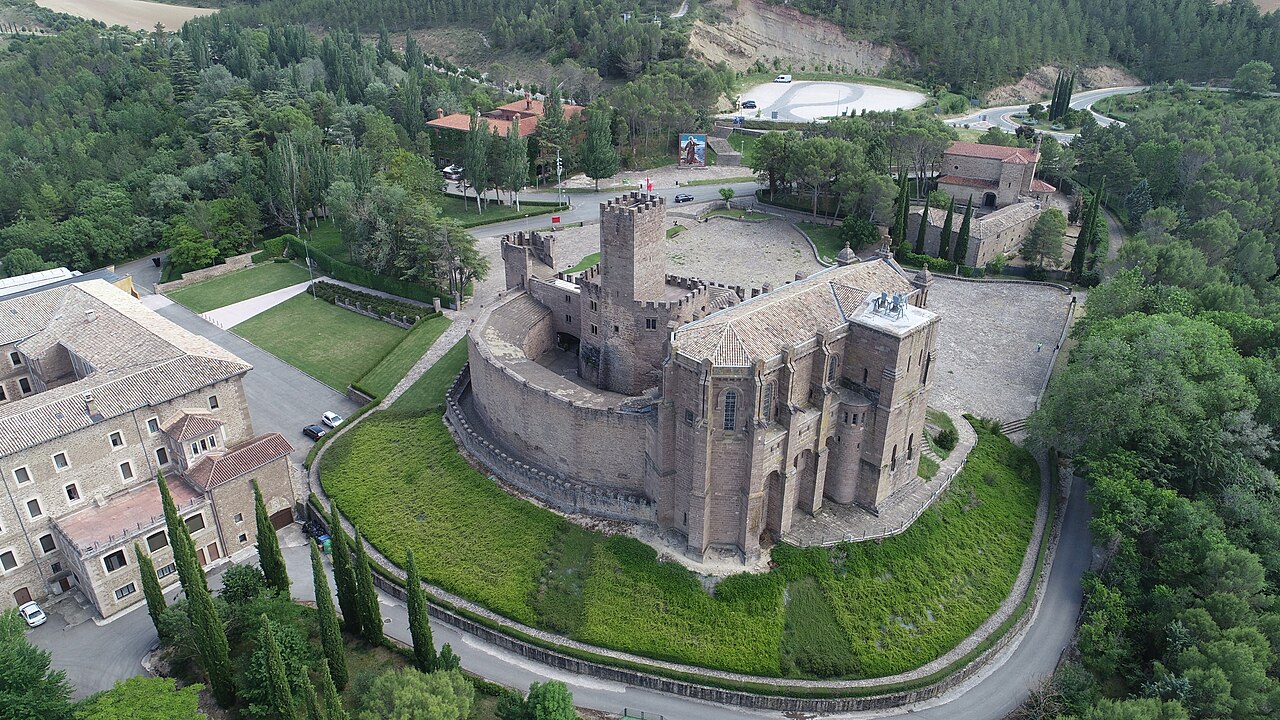
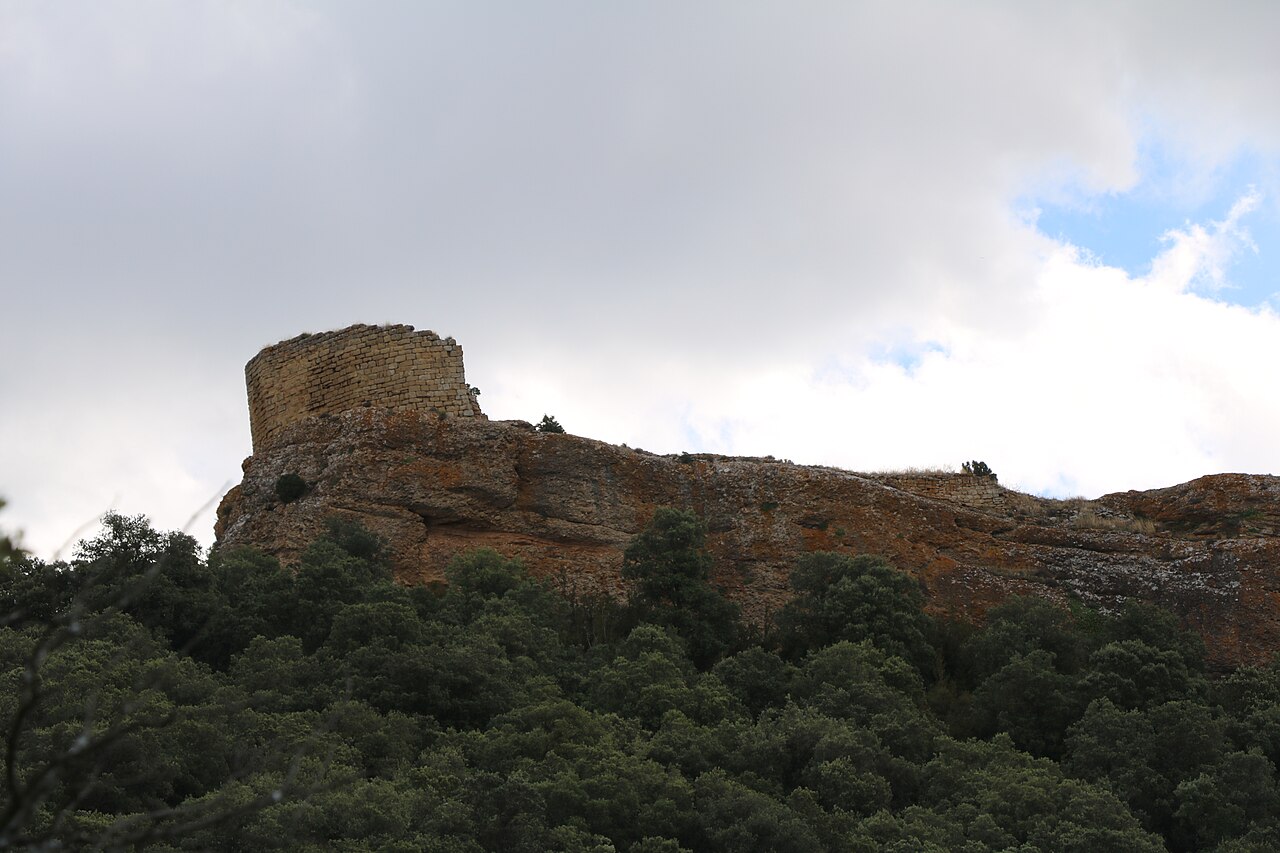
Castle of Ruesta
The Castle of Ruesta stands as a significant medieval fortress located in the municipality of Sigüés, within the autonomous community of Aragon, Spain. Constructed originally in the 11th century by the Kingdom of Aragon, this hill castle was strategically positioned to defend the eastern frontier of the Christian kingdoms during the Reconquista period. Its origins and evolution reflect the turbulent military and political landscape of the Iberian Peninsula between the 9th and 14th centuries.
Early strategic importance and foundation
The site of Ruesta held strategic value well before the castle's formal construction. During the 9th and 10th centuries, the Navarrese kings expanded their territories around 850 AD, establishing Ruesta as a royal tenure between 905 and 925. This tenure functioned as an administrative and defensive center, securing the surrounding lands near Yesa and Arrés. The castle's location on a hill provided commanding views over the region, making it a critical stronghold for controlling movement and defending against incursions.
Destruction and reconstruction in the 10th and 11th centuries
Between 996 and 999, the castle suffered significant destruction during military campaigns led by Almanzor, a prominent Muslim military leader known for his efforts to reclaim territories lost to Christian forces. His coordinated attacks devastated Ruesta as well as neighboring areas such as Manresa and Pallars, marking a period of intense conflict on the frontier.
Following this destruction, the castle was rebuilt in the early 11th century under the reign of Sancho Garcés III of Pamplona, between 1016 and 1018. This reconstruction reestablished Ruesta's defensive and administrative functions. Subsequently, the castle was entrusted to Sancho's heir, underscoring its continued political and military importance. In 1056, control of the castle was formally transferred to Ramiro I of Aragon, Sancho Garcés IV's uncle, solidifying Ruesta's integration into the Aragonese domain.
Medieval social and political developments
By the late 13th century, Ruesta had evolved beyond a purely military installation. In 1294, records document the presence of a Hebrew community within the castle's town, entrusted with guarding the fortress and managing communal facilities such as the oven. This indicates a cooperative social structure where various groups contributed to the castle's maintenance and defense.
During the 14th century, the castle's ownership reflected the complex feudal dynamics of the region. In 1381, King Pedro IV of Aragon sold Ruesta along with neighboring fortifications to Pedro Jordán de Urriés, lord of Ayerbe and Sigüés. However, this transaction was annulled in 1385, highlighting the castle's contested status amid shifting political alliances.
Architectural features and surviving remains
The Castle of Ruesta exhibits a rectangular fortress layout, approximately 45 meters long by 20 meters wide. Its design reflects the practical military architecture of the 11th century, aimed at securing frontier territories. The fortress was constructed primarily from local stone, assembled into thick walls capable of withstanding sieges and raids.
Two towers remain at the site, each serving distinct defensive functions. The larger tower, the main keep, originally rose to about 25 meters with four floors. Today, only the lower and middle sections survive, but notably, the original entrance door remains intact, offering valuable insight into the castle's access control and defensive strategies.
The smaller tower, also rectangular, connects to the keep via a fortified wall, enhancing the overall defensive perimeter and facilitating movement between key points within the castle complex. Both towers feature remnants of crenellated battlements, the characteristic notched parapets that allowed defenders to shield themselves while observing or firing upon attackers. These battlements are emblematic of the castle's military purpose and the active defense measures employed by its occupants.
Construction techniques and materials
The masonry of Ruesta reveals typical medieval construction methods, with thick stone blocks laid to form robust walls. The use of local materials not only provided strength but also integrated the fortress visually into its natural surroundings. The surviving structural elements demonstrate skilled craftsmanship in creating a durable stronghold suited for prolonged defense.
Cultural heritage and modern recognition
In recognition of its historical and architectural significance, the Castle of Ruesta was declared a Bien de Interés Cultural in 2006, Spain's official designation for culturally important monuments. This status helps protect the ruins and promotes awareness of Ruesta's role in the medieval history of Aragon and the broader Reconquista era.
Today, the castle's ruins attract historians, archaeologists, and visitors interested in medieval military architecture and the complex history of frontier fortifications in Spain. The site offers a tangible connection to the region's past, illustrating the evolution of defensive strategies and social structures over several centuries.
The castle's role in the kingdom of aragon
Throughout its history, the Castle of Ruesta served as a vital military and administrative center within the Kingdom of Aragon. Its position on a hill allowed control over important routes and acted as a deterrent against invasions from neighboring Muslim territories during the Reconquista. The castle's transfer between rulers and lords reflects its strategic value and the shifting political landscape of medieval Spain.
Feudal ownership and military function
The castle's sale and subsequent annulment in the late 14th century exemplify the feudal complexities of Aragonese nobility. Lords such as Pedro Jordán de Urriés held the fortress as part of their territorial control, balancing military responsibilities with political allegiance to the crown. The presence of a Hebrew community guarding the castle further illustrates the diverse social fabric supporting its defense.
Visiting the castle ruins today
Visitors to the Castle of Ruesta can explore the remains of the fortress, including the surviving towers, walls, and battlements. The site offers insight into medieval fortification design and the historical conflicts that shaped the region. While the castle is in a ruined state, its preserved elements provide a vivid glimpse into its past grandeur and strategic importance.
The surrounding landscape of Aragon enhances the experience, with scenic views from the hilltop and proximity to other historical sites in the region. Visitors interested in medieval history, architecture, and Spanish heritage will find Ruesta a compelling destination.
Frequently asked questions (FAQ)
- When was the Castle of Ruesta originally built?
- The Castle of Ruesta was originally constructed during the 11th century by the Kingdom of Aragon to secure its eastern frontier.
- What remains can be seen at the Castle of Ruesta today?
- Visitors can see the rectangular fortress layout, two surviving towers including the main keep, walls, and crenellated battlements.
- What historical events led to the castle's destruction and rebuilding?
- The castle was destroyed between 996 and 999 during Almanzor's military campaigns and rebuilt in the early 11th century under Sancho Garcés III of Pamplona.
- Is the Castle of Ruesta recognized for its cultural significance?
- Yes, it was declared a Bien de Interés Cultural in 2006, highlighting its importance in Spain's cultural heritage.
- Can visitors access the interior of the castle?
- The castle is in ruins, so access may be limited for safety, but visitors can explore the external remains and towers.
Information
Website
Visit websiteSources & official resources
Verify the information above using these authoritative references.
Loading map...
Visitor reviews
No reviews yet. Been here? Write the first review and help other travelers!
Write the first reviewVisited this castle? Share your experience
Your review helps other travelers and adds first-hand knowledge to our encyclopedia.