Castle of Vilella
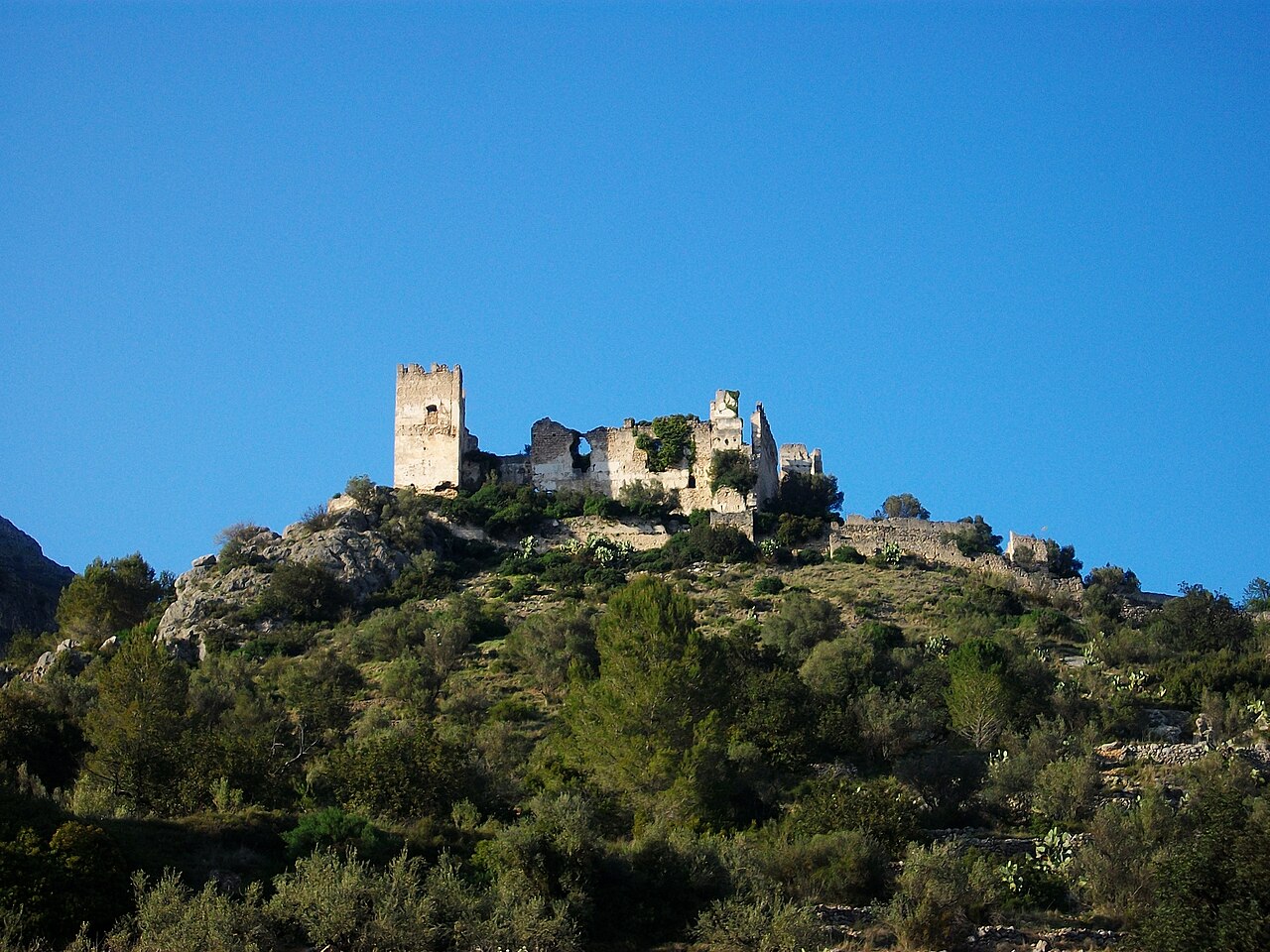
The Castle of Vilella stands as a remarkable example of late medieval military architecture in the region of Almiserà, Spain. Constructed by the Almohad civilization in the late 12th or early 13th century, this hill castle occupies a commanding position overlooking the Llautó pass, a crucial route linking the Safor region with the Valley of Albaida. Its strategic location and robust fortifications made it a vital stronghold during the turbulent periods of the Reconquista and subsequent conflicts in the Iberian Peninsula.
The castle's name likely derives from a now-abandoned settlement called Vilella, which depended on the fortress for protection. Throughout its history, the castle played a significant role in regional defense, particularly during the Mudéjar revolt led by Al-Azraq in the mid-13th century. It served as a refuge for local inhabitants and soldiers and is notably mentioned in the Llibre dels Feits (Book of Deeds) by King James I of Aragon in 1243, highlighting its importance among the strong rock fortresses of the area.
Historical context and military significance
The Castle of Vilella was originally part of a network of fortifications designed to control access through the mountainous terrain between Safor and Albaida. By the mid-13th century, it functioned as a garrison under the authority of the Castle of Bairén. Its military importance was underscored during the Mudéjar revolt, when it provided shelter and defense during the uprisings against Christian rule.
Following the pacification of the region, the castle came under the joint lordship of Luchente and Palma, integrating into a defensive system associated with the Benicadell mountain range. Although its strategic value waned over time, it saw renewed military activity during the Wars of the Union in the mid-14th century, conflicts that pitted the Crown of Aragon against the Kingdom of Castile. Eventually, the fortress was abandoned as military technology and political boundaries evolved.
Architectural features and construction techniques
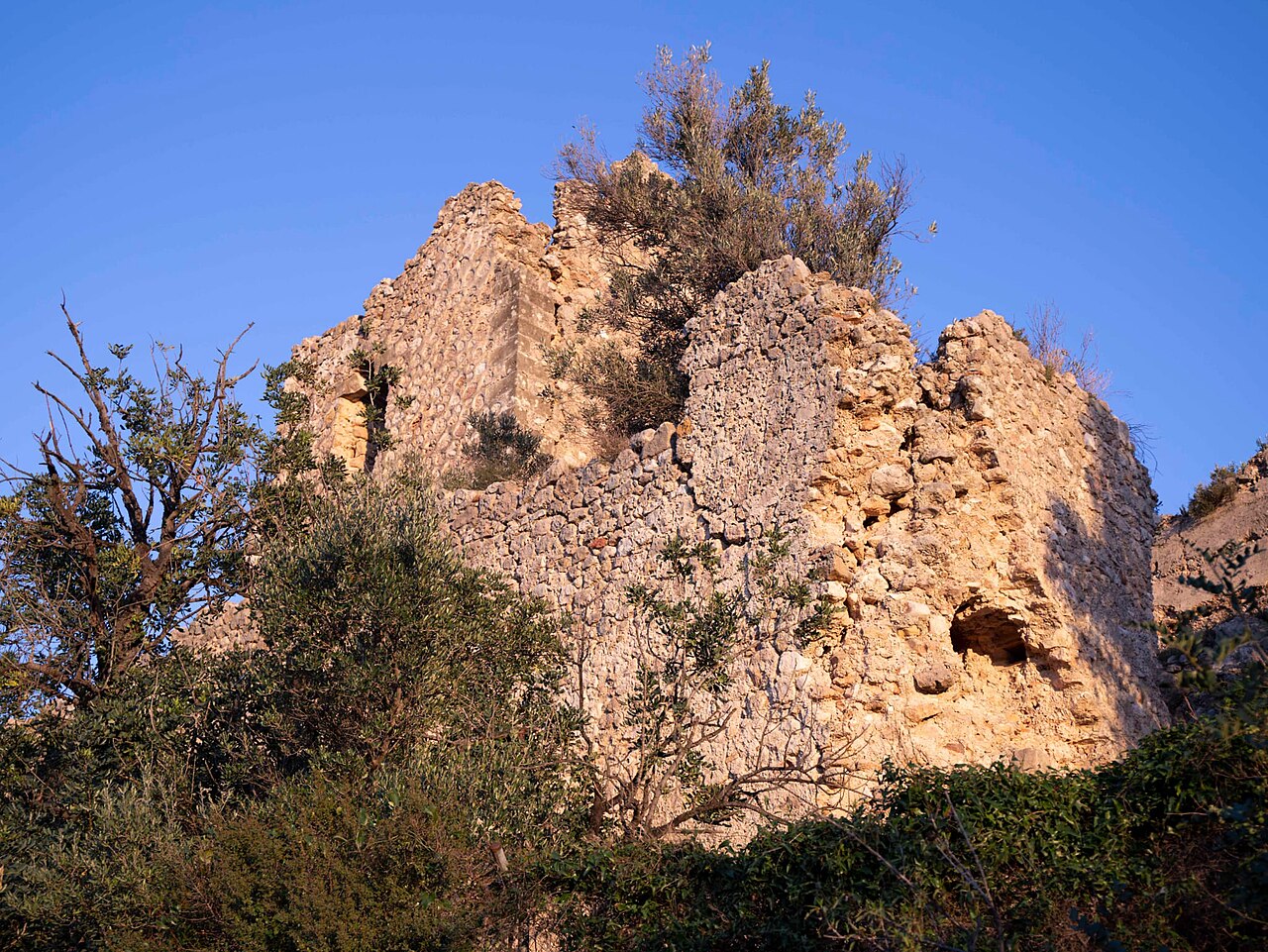
The castle occupies an elongated enclosure of approximately 2,000 square meters atop a large, rounded rock at an elevation near 142 meters. Its perimeter is defined by a thick rammed earth wall, locally known as "tapia", which is composed of compacted layers of earth bound with lime mortar. This construction technique was common in the region and provided substantial defensive strength.
The walls reach heights of up to seven meters in some sections, emphasizing the castle's defensive capabilities. On the northern slope, the main entrance is marked by a rectangular gatehouse tower about four meters tall. This tower features a unique double-door system facing opposite directions, designed to complicate enemy access and enhance security. The tower's robust base supports a wooden platform above, while the thinner upper section forms a walkway for defenders to patrol and repel attackers.
To the northwest, thick rammed earth walls approximately 1.20 meters thick extend from the main enclosure toward the entrance tower, reinforcing this vulnerable approach. At the western end of the castle, a rectangular structure adjoins the perimeter wall and likely served as an additional defensive tower. This building includes two doors opening south and east, as well as two arrow slits facing west, allowing defenders to cover the entrance approach effectively.
Some sections of the eastern and southeastern walls have disappeared, particularly around the highest and most rugged parts of the rock formation. Inside the enclosure, remnants of masonry foundations and brick fragments indicate the former presence of modest habitations. However, no large or elaborate buildings survive, suggesting the castle primarily served defensive and military functions rather than as a residential palace.
Access and preservation status
Today, the Castle of Vilella is recognized as a cultural heritage site and forms part of the Route of the Monasteries of Valencia, established in 2008. Visitors can access the site via a trail starting near the Monte Vernissa urbanization along the Barranco del Castillo ravine, or a longer path from Luchente. The latter can be partially traversed by vehicle up to about 500 meters from the castle, with the remaining distance accessible only on foot.
The castle remains in a partially preserved state, with significant portions of its rammed earth walls and defensive towers still standing. Its ruins offer valuable insight into Almohad military architecture and the medieval fortifications that shaped the region's history. The site’s rugged terrain and imposing position continue to evoke the strategic importance it held during the late medieval period.
Cultural significance and legacy
The Castle of Vilella exemplifies the complex history of medieval Spain, where Islamic and Christian powers contested control over key territories. Its mention in the chronicles of King James I of Aragon underscores its role in the Reconquista and the consolidation of Christian rule in the region.
As part of the Route of the Monasteries of Valencia, the castle contributes to a broader cultural and historical itinerary that highlights the region's religious, military, and architectural heritage. Its preservation allows scholars and visitors alike to explore the layered history of the Valencian Community and appreciate the enduring legacy of medieval fortifications in shaping Spain's landscape.
Frequently asked questions (FAQ)
- How do I get to the Castle of Vilella?
- Visitors can reach the Castle of Vilella via a trail from Almiserà near the Monte Vernissa urbanization or a longer path from Luchente, which is partially accessible by vehicle up to 500 meters from the site before continuing on foot.
- What is the historical significance of the Castle of Vilella?
- The Castle of Vilella played a key military role during the late medieval period, particularly during the Mudéjar revolt and the Wars of the Union, serving as a defensive fortress and refuge.
- What are the main architectural features of the Castle of Vilella?
- The castle features thick rammed earth walls known as 'tapia,' a rectangular gatehouse tower with a double-door system, arrow slits, and remnants of modest habitations within the enclosure.
- Is the Castle of Vilella open to visitors year-round?
- While specific visiting hours are not established, the Castle of Vilella is accessible year-round via hiking trails, though visitors should prepare for uneven terrain and limited facilities.
- Why is the Castle of Vilella part of the Route of the Monasteries of Valencia?
- The castle forms part of this cultural route due to its historical and architectural significance, contributing to the broader heritage of the Valencian Community and its medieval past.
Information
Loading map...
Visitor reviews
No reviews yet. Been here? Write the first review and help other travelers!
Write the first reviewVisited this castle? Share your experience
Your review helps other travelers and adds first-hand knowledge to our encyclopedia.