Castell de Perputxent
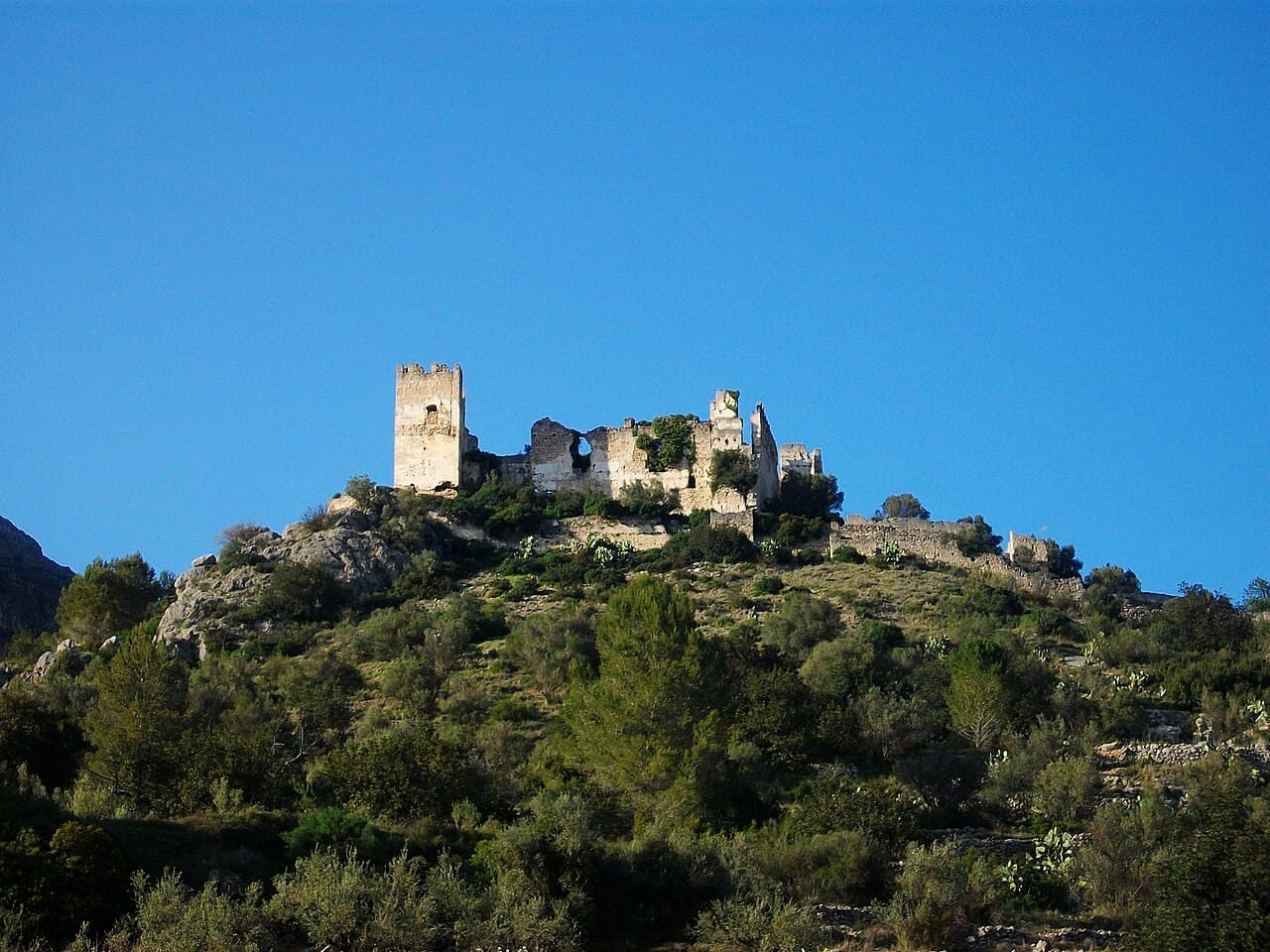
Castell de Perputxent is a significant historic fortress located in the municipality of l’Orxa, Spain. Perched strategically on a commanding hilltop overlooking the Serpis River and the fertile Perputxent valley, the castle's origins trace back to the 12th or 13th century during the Muslim rule of the Iberian Peninsula. It was initially established as a fortress designed to control the surrounding landscape and serve as a military stronghold.
The castle played an active role in the turbulent history of the region, notably during the uprisings led by the Muslim leader Al-Azraq. A key historical event was the signing of the Treaty of Pouet on April 4, 1244, which granted Al-Azraq and his followers control over Castell de Perputxent and other nearby castles for a limited three-year period. This treaty underscores the castle's importance as a military and political asset during a time of rebellion and shifting power dynamics.
Muslim origins and early fortifications
The original fortress was constructed by Muslim inhabitants using defensive techniques typical of the period. The castle's position on a hilltop provided natural defense advantages, enhanced by multiple layers of fortifications. The outermost wall, or avantmuralla, located on the eastern and southern slopes, was built with a combination of rammed earth and stone masonry. This method utilized compacted soil layers to create robust defensive barriers, a technique common in Islamic military architecture.
Within the main enclosure, the eastern section preserves the remains of rectangular foundations and a large cistern (aljibe), which served as a critical water reservoir for the fortress inhabitants. These features reflect the residential and functional aspects of the original Muslim fortress, emphasizing its role as both a military and domestic site.
Christian conquest and architectural transformation
Following the Christian reconquest of the region, Castell de Perputxent underwent significant architectural modifications to align with feudal military standards of the 13th century. The castle was remodeled with new defensive structures, including the addition of towers designed to improve surveillance and defense capabilities.
The castle's ownership changed hands multiple times during this period. In 1260, King James I transferred the fortress to Gil Garcés II de Azagra. It was later sold to Ramón de Riusec in 1273, and then exchanged with Arnau de Romaní in 1276. These transactions highlight the castle's continued strategic and noble significance.
Contrary to earlier beliefs linking the castle to the Knights Templar, later research clarified that in 1288, Berenger Arnau Llansol de Romaní sold the fortress to the Order of the Hospital. This military and religious order implemented legal reforms in 1316, known as the charter, to govern the surrounding territory. After a brief period under royal control, the castle's administration was transferred in 1319 to the Order of Montesa, another religious-military order responsible for regional defense and governance.
Architectural features and layout
The castle's defensive system is notable for its multi-layered walls and towers arranged to maximize protection. The summit is enclosed by a polygonal wall encompassing approximately 3,000 square meters, forming the main fortress area. A northern wall section, though lacking towers, features battlements—parapets with gaps for archers—indicating a design focused on active defense.
The western sector of the castle, developed after the Christian conquest, displays a more complex arrangement of walls and towers. Three towers are positioned in an L-shaped configuration, with the westernmost serving as the keep (torre del homenaje). This imposing structure rises about 20 meters, comprises three habitable floors, and is built directly on bedrock combining rammed earth and stone masonry. The keep was central to the castle's defense and lordly residence.
Between the keep and the southern tower once stood a large residence for the castle lord, designed with three floors. Although only the side walls remain, they reveal the scale and importance of this dwelling within the fortress complex.
Archaeological significance and earlier settlements
Excavations at Castell de Perputxent have uncovered layers predating the medieval fortress, including remains from the Bronze Age and the Iberian culture. These findings indicate that the site served as a human settlement for many centuries before the castle's construction, adding to its historical depth.
Current condition and preservation efforts
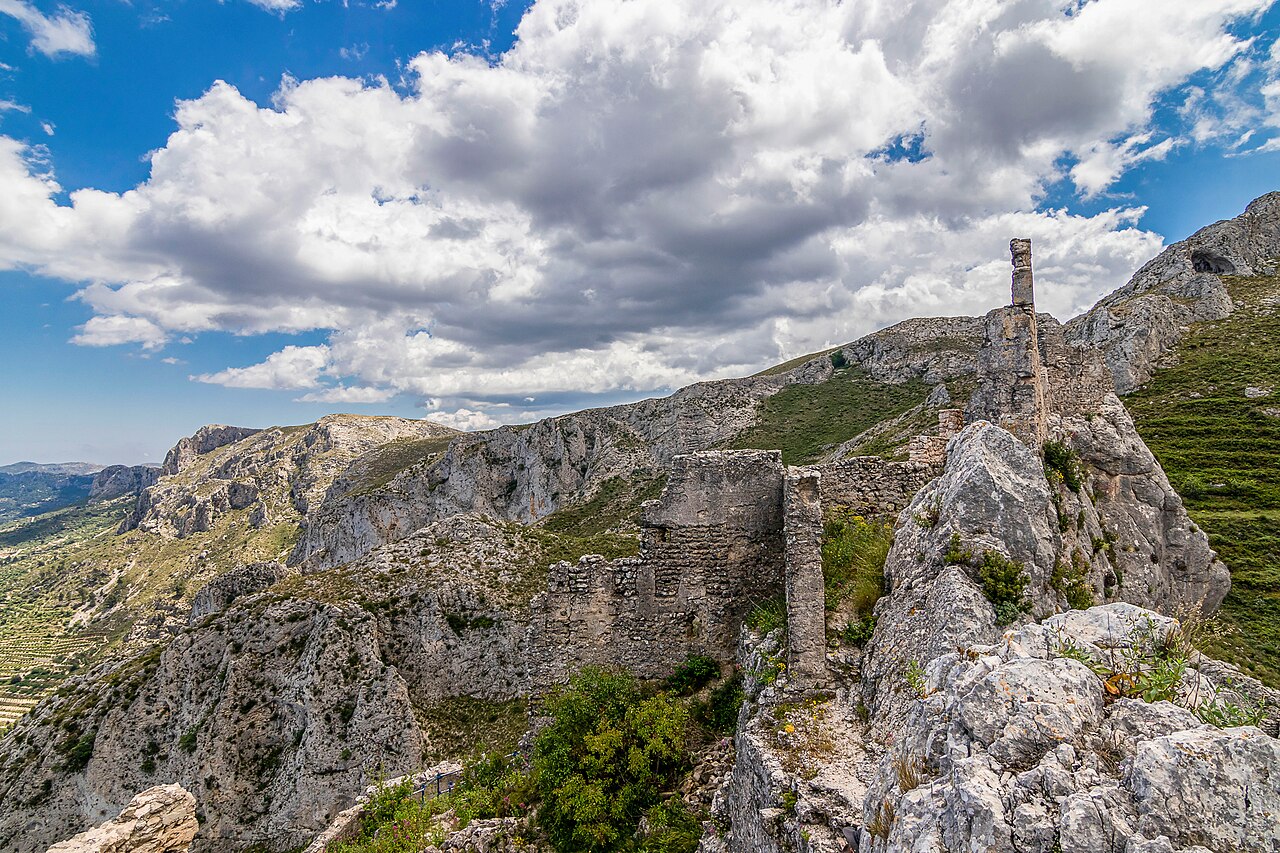
Today, Castell de Perputxent stands in a ruined condition, yet it remains a prominent historical landmark. The visible remains provide valuable insight into the castle's architectural evolution from Muslim fortification to Christian medieval stronghold.
Since its acquisition by the Diputación de Alicante in 2009, efforts have been made to preserve the site as part of the region's cultural heritage. The Generalitat Valenciana has also supported initiatives aimed at safeguarding the castle, emphasizing its importance for historical study and tourism.
Visitors to the site can explore the extensive defensive walls, the remains of the cistern, and the foundational structures of the residential and military buildings. The castle’s commanding position offers panoramic views of the surrounding valley and river, highlighting its strategic placement.
Frequently asked questions (FAQ)
- How do I get to Castell de Perputxent?
- Castell de Perputxent is located near the town of l’Orxa in the Valencian Community of Spain. Visitors can reach it by car via local roads connecting to the Serpis River valley. Parking is available near the site, followed by a short hike up the hill to the fortress.
- What is the historical significance of Castell de Perputxent?
- The castle was originally built by Muslim inhabitants in the 12th or 13th century and played a key role during the uprisings led by Al-Azraq. It later became a Christian fortress governed by military orders such as the Order of the Hospital and the Order of Montesa.
- Can I visit the castle ruins?
- Yes, Castell de Perputxent is accessible to visitors. While the castle is in ruins, the site is open for exploration, allowing visitors to see the defensive walls, towers, and remains of the cistern and residential buildings.
- When is the best time to visit Castell de Perputxent?
- The best time to visit is during spring and autumn when the weather is mild and the landscape around the castle is particularly scenic. Summers can be hot, so early morning visits are recommended during that season.
- Are there any guided tours available?
- Guided tours may be available through local tourist offices or cultural heritage organizations in the Valencian Community. It is advisable to check in advance for tour availability and schedules.
Photo gallery

Information
Sources & official resources
Verify the information above using these authoritative references.
Loading map...
Visitor reviews
No reviews yet. Been here? Write the first review and help other travelers!
Write the first reviewVisited this castle? Share your experience
Your review helps other travelers and adds first-hand knowledge to our encyclopedia.