Castell de Rebollet
The Castell de Rebollet stands as a significant hill castle near the town of La Font d’en Carròs in the Valencian Community of Spain. Originally established during the Islamic period on the Iberian Peninsula, this fortress served as a critical defensive and administrative center for the surrounding agricultural villages, known as alquerias. Its strategic position atop an elongated hill about 150 meters above sea level allowed it to oversee the landscape and nearby coast, providing both protection and control over local resources.
Constructed initially by Muslim settlers, the castle functioned not only as a refuge but also as a hub for collecting taxes from the local population. The early 13th century marked a turning point when the castle was captured in 1239 during the Christian Reconquista. The knight Pere Eiximen d’En Carròs took the fortress shortly after King Jaume I of Aragon conquered the city of Valencia. In recognition of his service, the king granted him lordship over the castle and its territory, which subsequently evolved into a barony. This lordship passed through noble families such as the Centelles and the influential Borja family, eventually becoming part of the duchies of Gandia and Osuna.
Medieval history and feudal significance
Despite the Christian conquest, a Muslim presence persisted in the area around Rebollet well into the 16th century, ending only with the expulsion of the Moriscos in 1609. Early efforts at Christian repopulation began by 1368, indicating the site's continued strategic and economic importance. The castle was involved in the Castilian-Aragonese wars of the mid-14th century, suffering occupation and destruction in 1364. It was soon rebuilt by Berenguer de Vilaragut, who also granted a formal charter to the local inhabitants, fostering the development of a settlement within the castle walls.
This medieval village was distinct from the nearby town of La Font d’en Carròs and included a church dedicated to Saint Nicholas. The church featured chapels devoted to the Virgin of Rebollet and Our Lady of Remedy, as well as a family pantheon for the lords of Carròs, emphasizing the castle's role as both a military and religious center.
Architectural features and construction phases
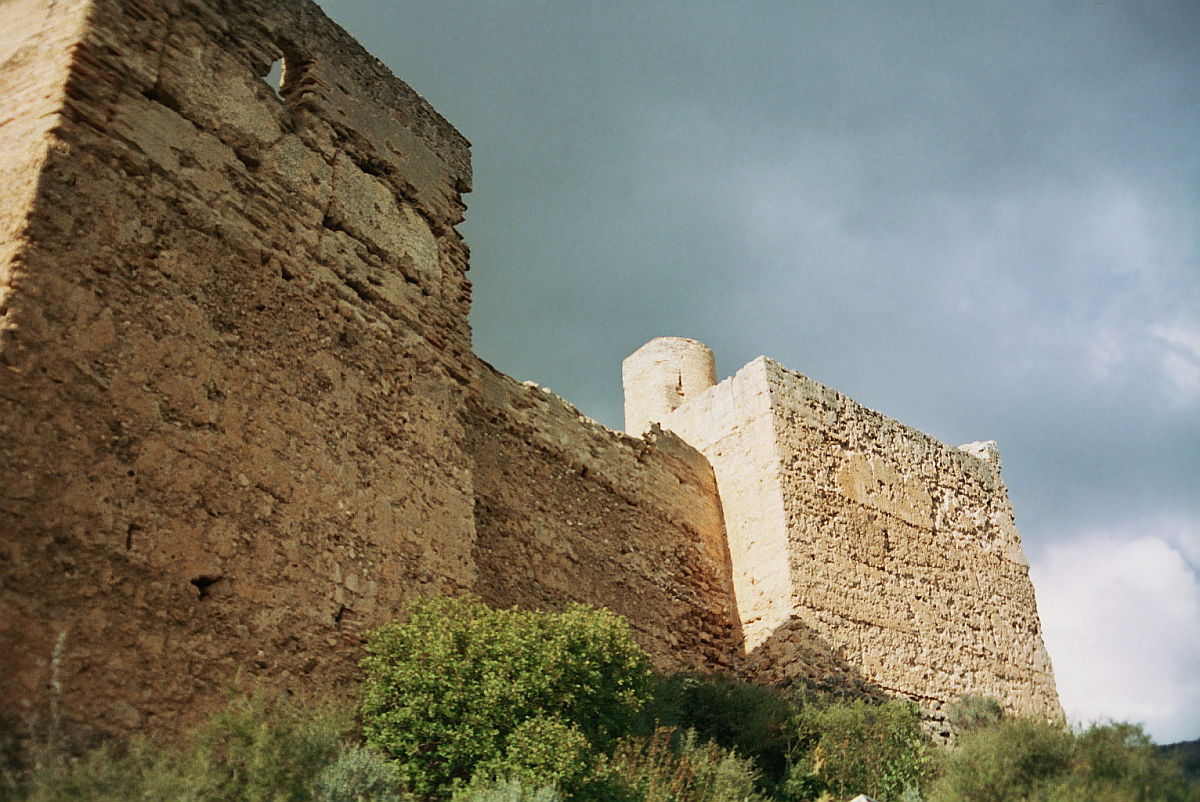
The castle's layout reflects its complex history, combining two main defensive enclosures that correspond to different periods. The upper enclosure retains limited remains of the original Islamic fortifications, primarily constructed with tapial (rammed earth) techniques. The more extensive and better-preserved structures date from the Christian period after the Reconquista, when the castle was expanded and reinforced.
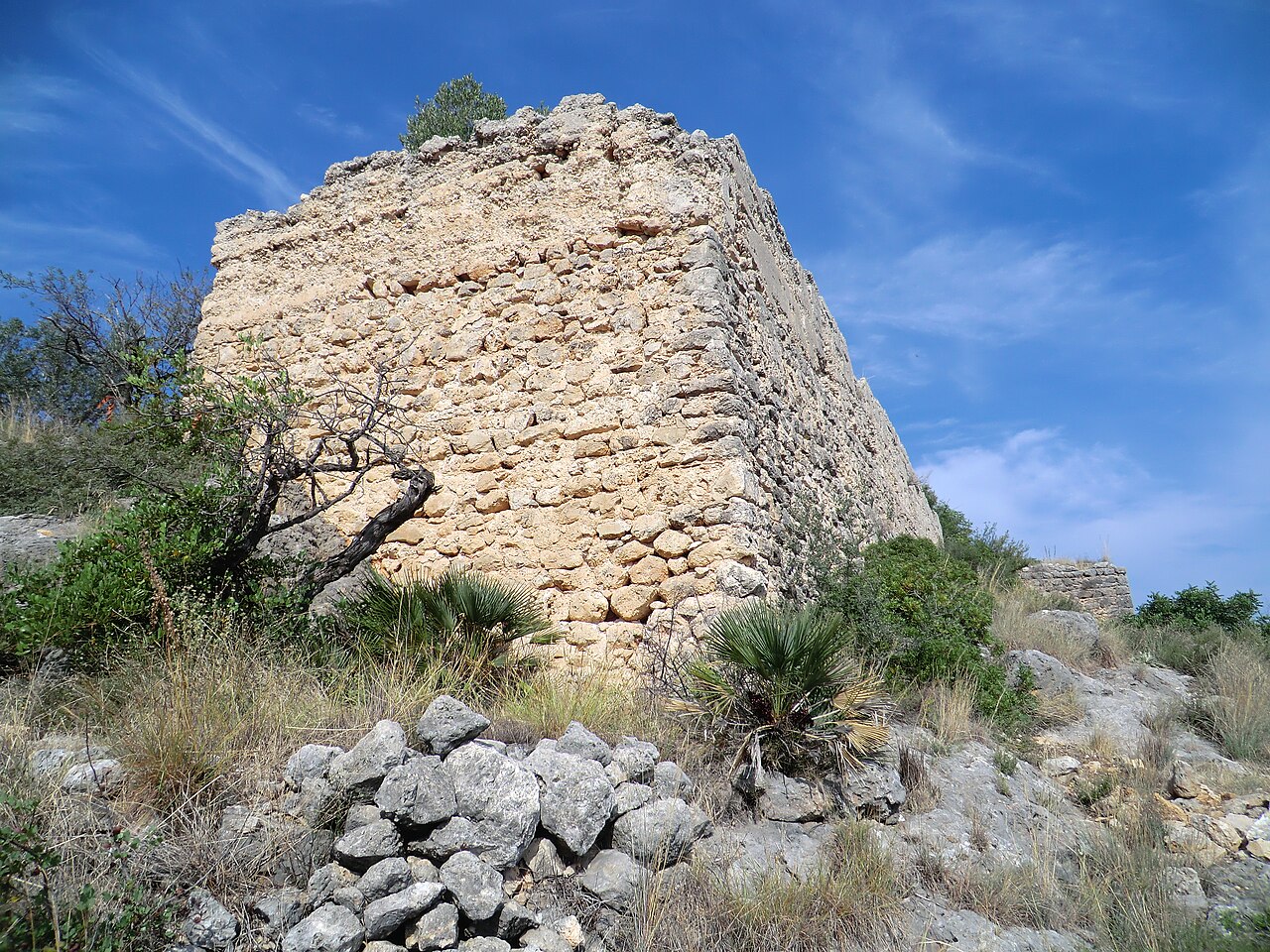
The fortress extends approximately 67 meters in length and covers an area of about 3,358 square meters. Its walls are mainly built of tapial, reinforced with masonry and brickwork, especially at corners and around gates. The main entrance is located on the western side, leading into the complex.
The keep and defensive towers
A prominent feature is the quadrangular keep, or tower of homage, dating from the 15th century. Constructed from masonry and brick, the keep is stabilized at its corners with roughly squared stones known as ashlar. It likely rose to three floors and was topped by a vaulted roof made of brick and lime mortar. The roof supported a battlement walkway approximately 80 centimeters wide, coated with a protective mixture of lime and sand.
Within the northern interior wall lies a cistern or aljibe, originally covered by a vaulted roof that has since collapsed. Built from tapial and finished with two layers of protective plaster, this cistern was essential for water storage. Adjacent to it stands a secondary defensive tower equipped with a vertical drainage system to manage rainwater runoff, an important feature for maintaining the fortress's structural integrity.
Additional large defensive towers and structures of later Christian origin are attached to the curtain walls, strengthening the castle's fortifications. These enhancements reflect the evolving military architecture of the late medieval period in the region.
Archaeological context and later history
Archaeological investigations have revealed that the site of Castell de Rebollet was inhabited long before the castle's construction, with evidence of Bronze Age and Roman-era activity nearby. This long history underscores the strategic importance of the location over millennia.
In 1598, a powerful earthquake caused significant damage to the fortress, accelerating its decline. Over time, the population diminished, and the castle fell into ruin. Despite this, the castle's historical significance was recognized in 2002 when it was declared a protected Cultural Heritage Site by the Valencian regional government.
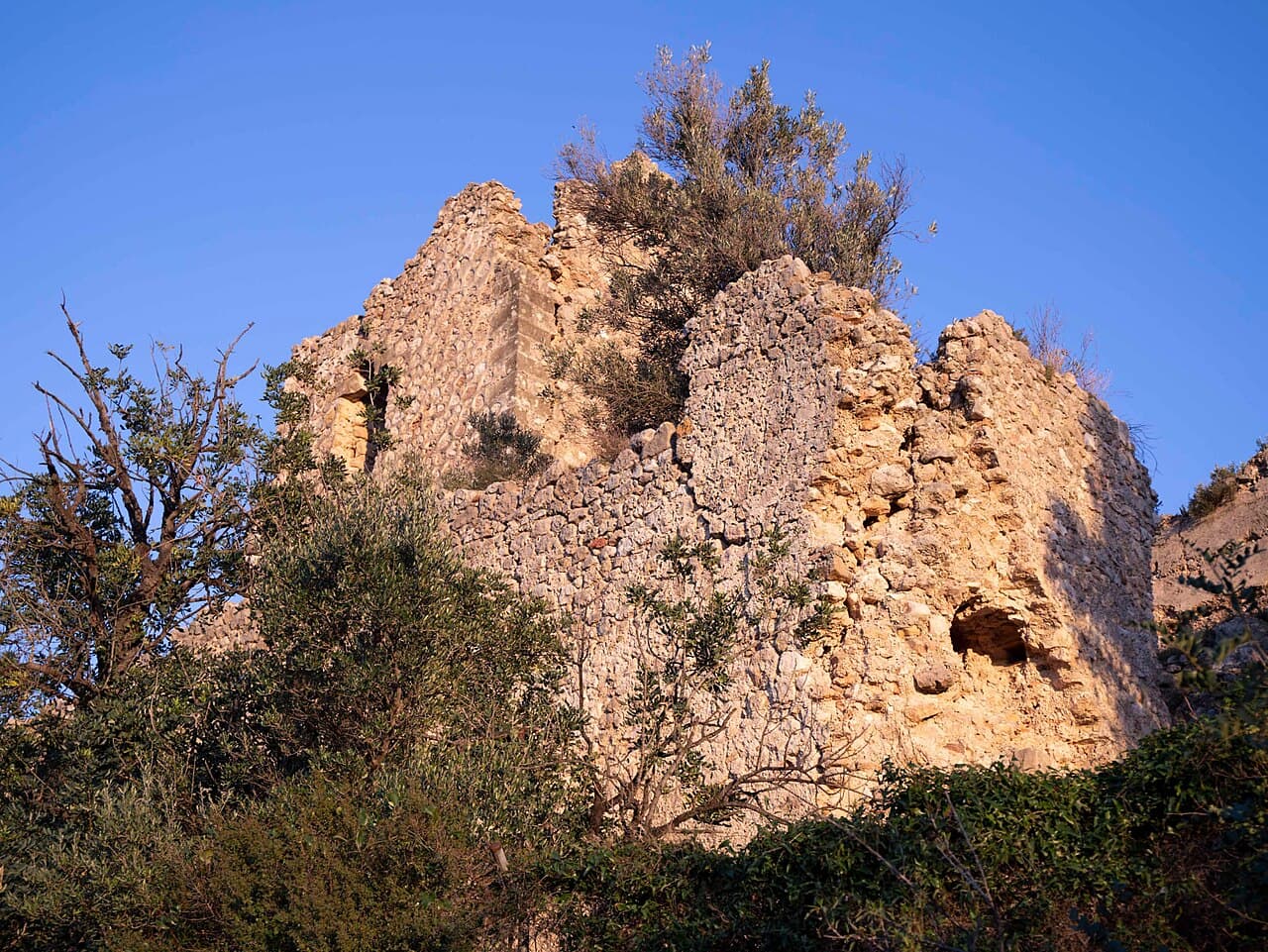
Today, the castle remains in a ruined state but retains enough structural elements to trace its original layout and defensive features. Nearby, the town of La Font d’en Carròs preserves traces of a medieval protective wall system extending about 800 meters in perimeter. One notable gate, the Portal Roig on the eastern side, served as an access point facing the castle. Portions of these walls, especially in the southern area, show evidence of 14th-century Christian modifications built over earlier Muslim fortifications, linking the castle's military past with the surrounding settlement.
Frequently asked questions (FAQ)
- When was Castell de Rebollet originally built and by whom?
- Castell de Rebollet was originally established during the Islamic period by Muslim settlers on the Iberian Peninsula.
- What role did Castell de Rebollet play during the Christian Reconquista?
- The castle was captured in 1239 by knight Pere Eiximen d’En Carròs after King Jaume I of Aragon took Valencia, becoming a feudal lordship and later a barony.
- What are the main architectural features of Castell de Rebollet?
- Key features include two defensive enclosures, a 15th-century quadrangular keep with ashlar corners, tapial walls, and a vaulted cistern.
- Is Castell de Rebollet accessible to visitors today?
- The castle remains in a ruined state with visible structural remains, but specific visitor access details are not widely published.
- What historical events affected Castell de Rebollet in the 14th and 16th centuries?
- The castle was destroyed during the Castilian-Aragonese wars in 1364, rebuilt shortly after, and damaged by an earthquake in 1598.
Photo gallery

Information
Loading map...
Visitor reviews
No reviews yet. Been here? Write the first review and help other travelers!
Write the first reviewVisited this castle? Share your experience
Your review helps other travelers and adds first-hand knowledge to our encyclopedia.