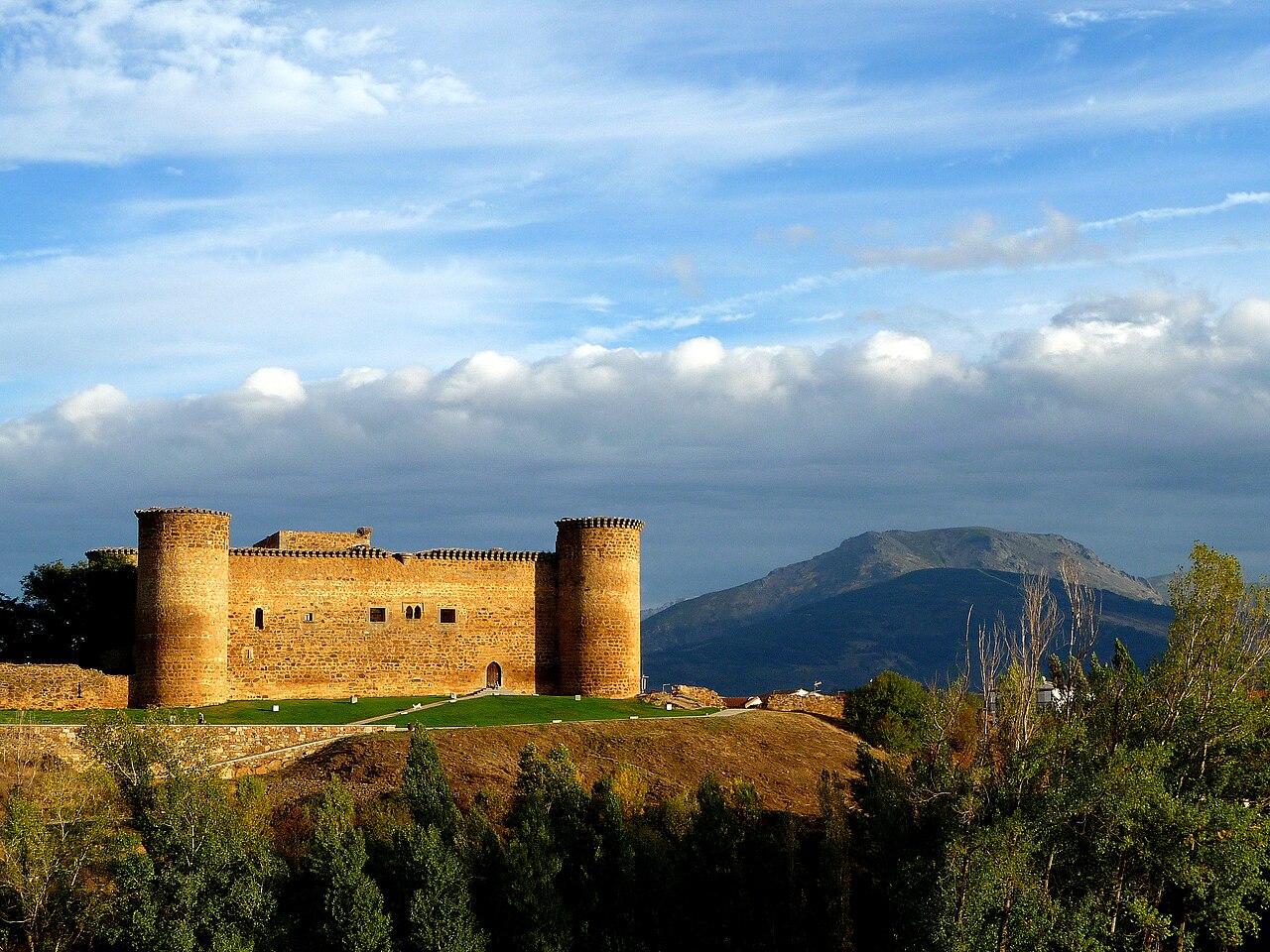
Castle of Valverde de la Vera
The Castle of Valverde de la Vera stands as a distinctive example of medieval fortification in Spain, located in the village of Valverde de la Vera. Constructed during the 13th century, this hill castle emerged during the period of the Christian reconquest and repopulation efforts following the founding of nearby Plasencia by King Alfonso VIII in the late 1100s. Its strategic position and architectural evolution reflect the complex historical layers of military, religious, and noble influences that shaped the region.
Historical context and ownership
The castle initially belonged to the Knights Templar, a powerful military and religious order instrumental in the Reconquista. Their control lasted until their dissolution in 1312, after which the castle passed to the Order of Santiago around the mid-14th century, continuing the tradition of religious-military stewardship. Between 1284 and 1295, the village and its fortifications were granted as a lordship to Nuño Pérez de Monroy, a prominent Castilian official. This grant was reaffirmed by King Fernando IV in 1309, cementing the Monroy family's influence for generations.
One of the Monroy family’s notable figures, Fernán Pérez de Monroy “El Viejo”, expanded the defensive complex by constructing a larger fortress nearby, indicating the family's growing power in the region. In the early 15th century, King Enrique III transferred the lordship to his son, Fernando, Duke of Peñafiel. Subsequently, ownership passed to Beatriz de Portugal, Duchess of Buelna, and later to her daughter Leonor, linking the castle to prominent Iberian nobility.
The 16th century saw a significant Jewish community residing in Valverde de la Vera, with about sixty families recorded in 1574. They contributed taxes to the crown, illustrating the village’s economic and cultural diversity. Despite the official expulsion of Jews from Spain, some remained clandestinely. Among them was Enrique Núñez, who was executed locally for espionage on behalf of the Portuguese crown, highlighting the turbulent political and religious tensions of the time.
Architectural evolution and features
Medieval fortress and religious integration
The castle complex is unusual for its fusion of military and religious architecture. The most prominent feature is the church of Nuestra Señora de Fuentes Claras, which incorporates the former castle’s hexagonal keep tower as its presbytery, the area housing the main altar. This tower was vaulted with a ribbed ceiling characteristic of late 15th-century Gothic design, reflecting renovations during the period when the territory came under the County of Nieva.
Inside the church, the altarpiece dates from the early 1700s, indicating ongoing religious use and artistic patronage. Adjacent to the hexagonal tower stands a bell tower repurposed from castle fortifications. Despite its ecclesiastical function, it retains defensive features such as narrow loopholes and arrow slits, which once allowed defenders to observe and repel attackers.
The church’s southern wall preserves two Arab-origin windows, vestiges of the site's earlier Islamic architectural heritage. This suggests the location originally hosted a ribat, a fortified religious retreat common in Islamic lands, and a mosque before Christian conversion. The Christian complex is named after a statue of the Virgin of Fuentes Claras, symbolizing the site's religious transformation.
Later castle and defensive structures
To the west of the original fortress lies a newer castle with a rectangular layout featuring corner turrets known locally as "garitas ladroneras", or overhanging round bartizans. These small projections, built on square bases, allowed defenders to monitor and defend the walls below. This architectural style is typical of late 15th-century military design.
The later castle was embellished with the heraldic shields of the Zúñiga family, who were responsible for this phase of construction. Today, this castle is heavily damaged, with only parts of the central keep tower’s two sides still standing, reflecting centuries of wear and historical upheaval.
Heraldry and noble patronage
Heraldic emblems are prominently displayed within the hexagonal tower, commemorating the Monroy and Zúñiga families. These coats of arms were commissioned by Leonor Niño de Portugal and her husband Diego López de Zúñiga, who are interred in the chapel beneath alabaster sculptures combining late Gothic and early Renaissance artistic styles.
These sculptural works illustrate the blending of noble lineage, religious devotion, and military history embodied in the castle-church complex. The alabaster figures and heraldic decorations provide insight into the cultural and artistic currents influencing the region during the transition from the medieval to the early modern period.
Cultural significance and current state
The Castle of Valverde de la Vera represents a rare example of a medieval fortress evolving into a religious complex, embodying the layered history of Christian reconquest, noble patronage, and cultural transformation in Spain. Its integration of military architecture with a functioning church highlights the adaptive reuse of fortifications in response to changing political and religious needs.
Although parts of the castle are in ruins, the site remains an important cultural landmark. The preservation of Islamic architectural elements alongside Gothic and Renaissance features reflects the region’s diverse historical influences. The castle’s heritage is further enriched by its associations with the Knights Templar, the Order of Santiago, and prominent noble families, making it a significant site for understanding medieval and early modern Spain.
Visitors today can explore the complex to appreciate its architectural uniqueness and historical depth, witnessing the fusion of defensive and religious functions within a single site. The castle’s story offers valuable insights into the social, religious, and political dynamics that shaped the Iberian Peninsula over several centuries.
Frequently asked questions (FAQ)
- How do I get to the Castle of Valverde de la Vera?
- The castle is located in the village of Valverde de la Vera in the Extremadura region of Spain. Visitors can reach it by car or local transport from nearby towns such as Plasencia.
- What is the historical significance of the Castle of Valverde de la Vera?
- The castle played a key role during the Christian reconquest and was associated with the Knights Templar and the Order of Santiago. It also reflects the region's noble and religious history through its architectural evolution.
- Can I visit the church within the castle complex?
- Yes, the church of Nuestra Señora de Fuentes Claras, which incorporates the castle's hexagonal keep tower, is accessible to visitors and showcases Gothic architectural features and historic altarpieces.
- What architectural styles are present at the castle?
- The castle features Gothic military architecture with later Renaissance artistic elements visible in the alabaster sculptures and altarpieces within the church.
- Is the castle suitable for visitors with mobility issues?
- Due to its historical structure and partial preservation, some areas may be difficult to access for visitors with mobility challenges. It is advisable to check with local authorities for specific accessibility information.
Information
Current owner
Municipality
Loading map...
Visitor reviews
No reviews yet. Been here? Write the first review and help other travelers!
Write the first reviewVisited this castle? Share your experience
Your review helps other travelers and adds first-hand knowledge to our encyclopedia.