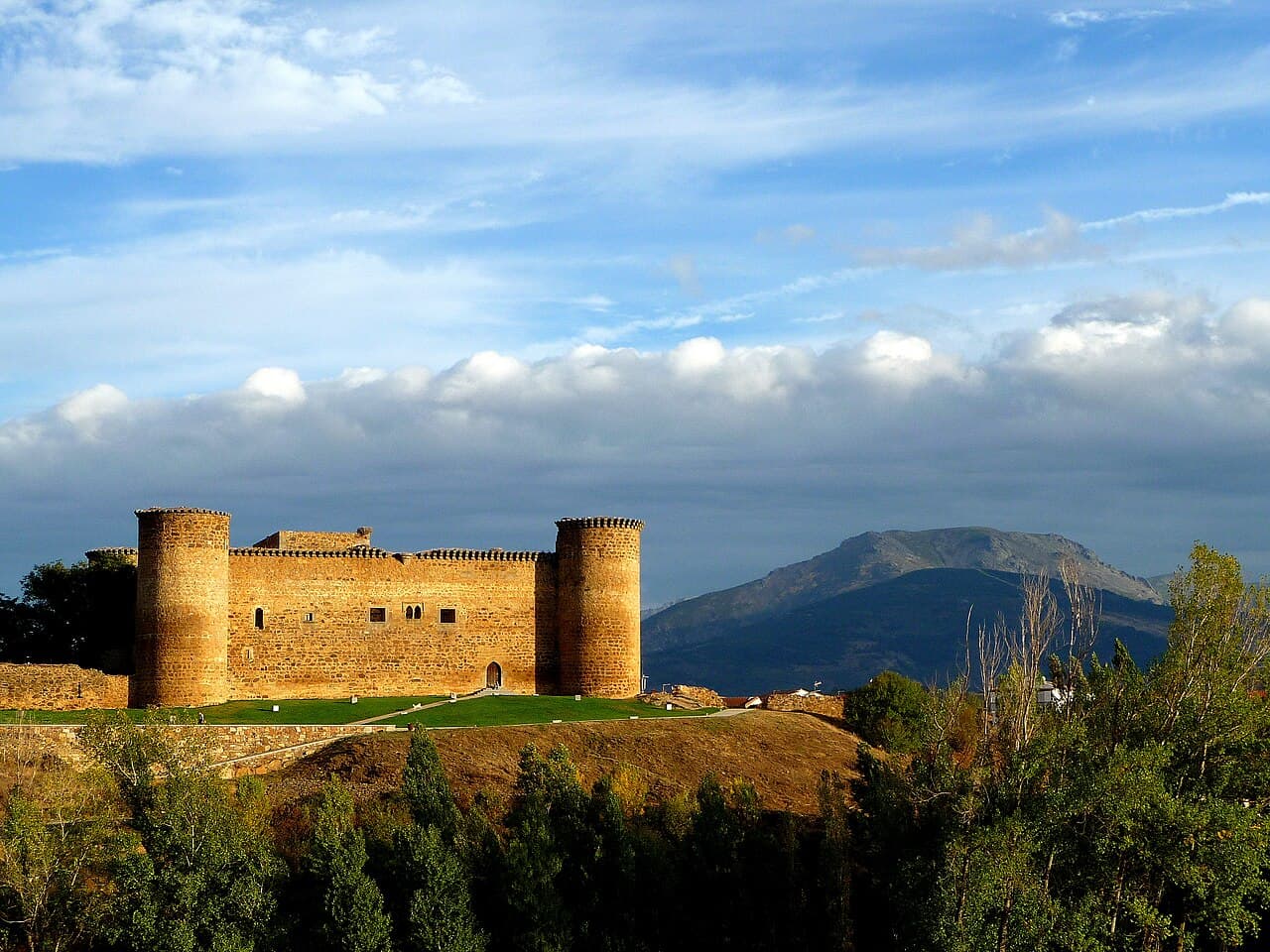
Valdecorneja Castle
Valdecorneja Castle is a significant late medieval fortress located in the village of El Barco de Avila, within the province of Avila, Spain. This castle occupies a strategic position on a small hill overlooking the east bank of the Tormes river, near the foothills of the Sierra de Gredos mountain range. Its location at the entrance to the valley of the Corneja river highlights its historical role in controlling and protecting the surrounding territory.
The origins of the castle are closely linked to the political and military developments in medieval Castile. Following the conquest of Toledo and the retreat of Muslim forces to the south bank of the river Tajo, King Alfonso VI granted this valley to his daughter and commanded his son-in-law, Ramon de Borgoña, to construct a fortification and repopulate the area. Although documentary evidence concerning the initial construction of Valdecorneja Castle is scarce, architectural analysis dates the current structure to the late 15th century.
Architectural design and features
The castle is built primarily from granite rubblework, a common material in the Castilian plateau, which provides durability and a robust defensive character. Its ground plan follows a typical square layout with circular towers at each corner, a design that enhanced defensive capabilities by allowing crossfire coverage along the curtain walls. Three of these curtain walls are equipped with sentry boxes, small protruding structures used by guards to surveil the surroundings and defend the castle from attackers.
The fourth curtain wall is distinguished by the presence of a rectangular keep, the castle's main stronghold and last line of defense. The entrance to the keep is elevated, accessed from the courtyard rather than from ground level, which was a defensive measure to prevent easy access by invaders. Although much of the internal structure has been dismantled over time, traces remain of a two-floor layout with columns surrounding a central patio, indicating a well-planned internal space for both residential and military functions.
Below the courtyard, there are underground rooms and rainwater tanks, which were essential for sustaining the castle's inhabitants during sieges. These subterranean features highlight the castle's design for prolonged defense and self-sufficiency.
Historical context and ownership
The territory of Valdecorneja has been associated with the Alba family since the 14th century. It was King Enrique II de Trastámara who granted the lands to Don Garci Alvarez de Toledo, the first Lord of Valdecorneja. It is believed that one of his descendants commissioned the construction of the current castle structure in the 15th century, reflecting the family's rising prominence and the need for fortified residences during a period of frequent regional conflicts.
Over the centuries, Valdecorneja Castle has witnessed the shifting tides of Castilian history, serving as a military stronghold, a noble residence, and a symbol of feudal power. Its position near important waterways and mountain passes made it a key defensive site in the borderlands of medieval Castile.
Current condition and use
Today, Valdecorneja Castle stands as a partially dismantled but still imposing ruin. The castle is not generally open to tourists for regular visits, reflecting its limited adaptation for mass tourism. Instead, it serves local cultural purposes, including seasonal events such as open-air cinema screenings. This contemporary use helps maintain the castle's presence in the community and preserves its cultural heritage.
Despite its partial ruinous state, the castle's architectural elements remain visible and provide valuable insights into late medieval military architecture on the Castilian plateau. Its granite walls, circular towers, and elevated keep entrance continue to attract attention from historians, architects, and visitors interested in Spain's medieval fortifications.
Geographical significance and surrounding landscape
El Barco de Avila's location at the foothills of the Sierra de Gredos provides a dramatic natural setting for Valdecorneja Castle. The castle's vantage point offers commanding views over the valley of the Corneja river and the surrounding countryside. This strategic position allowed control over important routes and served as a deterrent to potential invaders.
The proximity to the Tormes river also provided natural defensive advantages and access to water resources. The combination of natural landscape features and man-made fortifications exemplifies the medieval approach to castle siting, balancing defense, control, and habitation.
Frequently asked questions (FAQ)
- How do I get to Valdecorneja Castle?
- Valdecorneja Castle is located at Paseo del Castillo in Spain, easily accessible by car and public transport. If you're traveling by train, the nearest station is just a short bus ride away. Local signage will guide you to the castle from the main roads.
- What is the historical significance of Valdecorneja Castle?
- Valdecorneja Castle dates back to the 12th century and played a crucial role in the region's defense during the Reconquista. It is an important example of medieval military architecture and reflects the historical struggles and cultural developments of the area. Visiting the castle offers insight into Spain's rich history and heritage.
- When was Valdecorneja Castle built?
- Valdecorneja Castle was constructed in the late 12th century, making it one of the oldest castles in the region. It was built as a fortress to protect against invasions and has stood the test of time, witnessing numerous historical events over the centuries. The castle's architecture showcases the defensive styles of its time.
- Can I take guided tours of Valdecorneja Castle?
- Yes, guided tours are available at Valdecorneja Castle to enhance your visit. Knowledgeable guides provide insights into the castle's history, architecture, and legends. It's recommended to check in advance for tour schedules and availability, especially during peak tourist seasons.
- Why is Valdecorneja Castle a popular tourist attraction?
- Valdecorneja Castle is popular due to its stunning architecture, rich history, and breathtaking views of the surrounding landscape. Visitors are drawn to its well-preserved ruins and the opportunity to explore a piece of Spain's medieval past. The castle also hosts cultural events and festivals, adding to its appeal.
- Is it possible to visit Valdecorneja Castle year-round?
- Yes, Valdecorneja Castle is open to visitors year-round, but hours may vary by season. It's advisable to check the official website or local tourist information for the most current opening hours. Visiting in the spring and fall offers pleasant weather and fewer crowds.
- What are the ticket prices for Valdecorneja Castle?
- Ticket prices for Valdecorneja Castle are quite reasonable, with discounts available for children, students, and seniors. General admission typically includes access to the castle grounds and guided tours. Be sure to check for any special events that may have different pricing.
- What is the best time to visit Valdecorneja Castle?
- The best time to visit Valdecorneja Castle is during the spring and fall when the weather is mild and the scenery is at its most beautiful. Summer can be quite hot, and winter may see fewer visitors due to colder temperatures. Early mornings or late afternoons are ideal for avoiding crowds.
- Are there any nearby attractions to Valdecorneja Castle?
- Yes, there are several nearby attractions, including picturesque villages and stunning natural parks. The surrounding area offers hiking trails and opportunities for outdoor activities. Visitors can also explore local museums and experience traditional Spanish culture in the nearby towns.
Photo gallery

Information
Loading map...
Visitor reviews
No reviews yet. Been here? Write the first review and help other travelers!
Write the first reviewVisited this castle? Share your experience
Your review helps other travelers and adds first-hand knowledge to our encyclopedia.



