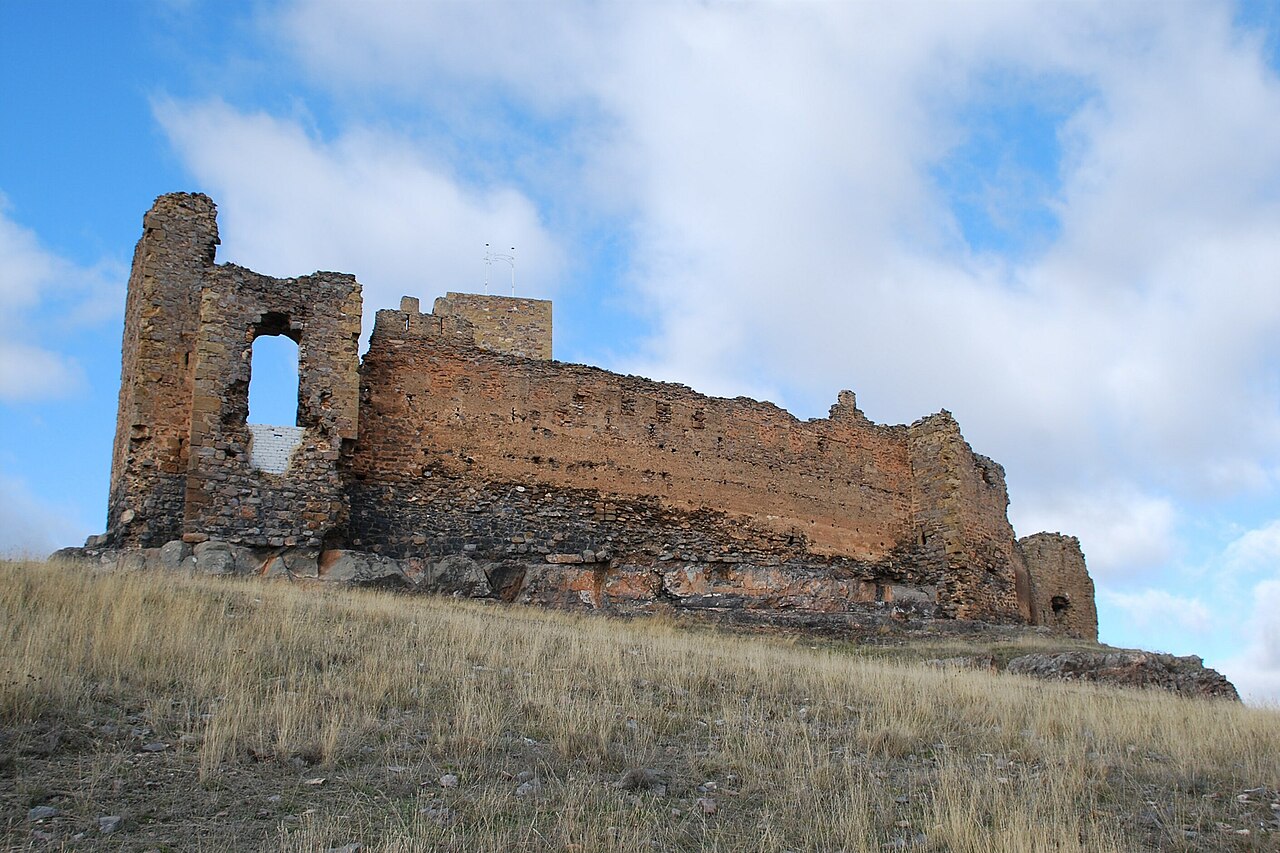
The Castle of Talamantes is a medieval fortress located in the municipality of Talamantes in the region of Aragon, Spain. Constructed in 1175 during the 12th century, this hill castle was strategically positioned atop the Silla mountain ridge to oversee a crucial mountain pass between the historic kingdoms of Castile and Aragon. Its primary function was to secure the border area in a contested frontier zone, making it a significant military stronghold during the Reconquista period.
Historical context and ownership
The castle emerged as part of a network of fortifications including nearby Ferrera and Ferrellón castles, which collectively guarded the convergence of two ravines, Valdeherrera and Valdetreviño. This location was vital for controlling movement through the rugged terrain and for defense against incursions.
By 1210, the castle came under the control of the Knights Templar, a prominent religious-military order active in the Iberian Peninsula during the Reconquista. The Templars maintained the fortress until their suppression in the early 14th century. Following their dissolution, ownership passed to the Order of Saint John of the Hospital, also known as the Knights Hospitaller. This order administered the castle until approximately 1780, during which time the castle shared its fate and administration with the nearby castle of Añón.
In recognition of its cultural and historical importance, the Castle of Talamantes was declared a Bien de Interés Cultural (Cultural Heritage Site) in 2006 under the heritage laws of Aragon.
Architectural features and layout
The castle is a small rock fortress primarily built from masonry, with an elongated defensive layout that conforms to the natural contours of the rocky Silla mountain ridge. The terrain’s steepness and irregularity contributed to the fortress's natural defensibility and made access difficult for attackers.
The northern wall remains the best preserved part of the castle. It features battlements—low stone walls with crenellations that provided cover for defenders while allowing them to observe and fire upon enemies. Along this wall runs the camino de ronda, a narrow walkway that enabled defenders to patrol and move quickly along the fortification’s length. The wall also includes saeteras, narrow vertical arrow slits designed as firing points for archers, enhancing the castle’s defensive capabilities.
A prominent projecting tower extends from the northern wall, serving as a forward defensive position to repel attackers and provide a vantage point. On the western side stands the keep, or torre del homenaje, a central square tower approximately six meters on each side. This tower was the stronghold’s last line of defense and symbolized lordly authority. Over time, the keep has suffered significant deterioration, with its height reduced and the original entrance no longer visible.
The southern wall has partially collapsed due to the instability of the underlying terrain, which has altered the shape of the internal courtyard, known as the patio de armas. This courtyard once served as an open space for assembling troops and storing equipment within the fortress walls.
Strategic importance and military role
The Castle of Talamantes was constructed primarily for military purposes, guarding a key mountain pass that linked Castile and Aragon. Its position allowed control over the movement of troops and trade through the rugged landscape. The castle’s design maximized natural defenses by adapting to the rocky ridge and incorporating architectural features such as battlements, arrow slits, and a projecting tower to enhance its defensive strength.
During the 12th and 13th centuries, the castle played an active role in the conflicts of the Reconquista, the centuries-long campaign by Christian kingdoms to reclaim territory from Muslim rule in the Iberian Peninsula. The presence of the Knights Templar and later the Knights Hospitaller underscores the castle’s significance as a military-religious outpost in this turbulent period.
Current condition and preservation
Today, the Castle of Talamantes stands as a partially preserved ruin that offers valuable insights into medieval military architecture in Aragon. While some sections, such as the northern wall and its battlements, remain well preserved, other parts like the southern wall and the keep have suffered from collapse and decay over the centuries.
The castle’s integration with the natural rocky terrain and its modest scale distinguish it from larger, more elaborate fortresses. Its preservation as a Cultural Heritage Site ensures ongoing protection and recognition of its historical and architectural value.
Visiting the castle and surrounding area
Visitors to the Castle of Talamantes can explore the remains of this 12th-century hill castle and appreciate its strategic location and defensive features. The site offers a glimpse into the military history of the region and the role of religious military orders in medieval Spain.
The castle’s setting atop the Silla ridge provides panoramic views of the surrounding landscape, including the ravines of Valdeherrera and Valdetreviño. Nearby historical sites such as the castles of Ferrera and Ferrellón complement a visit to Talamantes, offering a broader understanding of the frontier defenses between Castile and Aragon.
Frequently asked questions (FAQ)
- What is the historical significance of the Castle of Talamantes?
- The Castle of Talamantes, dating back to the 12th century, is a remarkable example of medieval architecture in Spain. It served as a strategic military fortification during the Reconquista, illustrating the power struggles in the region. Today, it stands as a testament to the rich history and cultural heritage of Spain.
- When was the Castle of Talamantes built?
- Construction of the Castle of Talamantes began in the early 12th century and was completed in the late 13th century. It was built under the rule of the Almohad Caliphate and later modified by subsequent monarchs. The castle has undergone various restorations, helping to preserve its historical integrity.
- Can I visit the Castle of Talamantes?
- Yes, the Castle of Talamantes is open to visitors throughout the year. Guided tours are available to enhance your experience and provide insight into its history and architecture. It's advisable to check the official website for any special events or closures before planning your visit.
- What are the opening hours for the Castle of Talamantes?
- The Castle of Talamantes typically opens from 10 AM to 6 PM during the weekdays and from 10 AM to 8 PM on weekends. However, these hours can vary seasonally, so it's best to confirm through their official website. Visitors are encouraged to arrive early to fully explore the grounds and enjoy the views.
- Is it possible to access the castle with mobility challenges?
- The Castle of Talamantes has some accessibility options, but visitors with mobility challenges may find certain areas difficult to navigate due to uneven terrain and steep paths. It's recommended to contact the castle administration in advance to inquire about specific accommodations. They aim to assist all visitors in enjoying their experience as much as possible.
- What are the ticket prices for the Castle of Talamantes?
- Ticket prices for the Castle of Talamantes are generally around €8 for adults, with discounted rates for students and seniors. Children under 12 often enjoy free admission. Special family packages may also be available, so be sure to check the website for any current promotions or changes in pricing.
- When is the best time to visit the Castle of Talamantes?
- The best time to visit the Castle of Talamantes is during the spring (April to June) and fall (September to October) when the weather is mild and crowds are smaller. Summer months can be quite hot, while winter can bring chilly temperatures. Planning your visit during off-peak times allows for a more enjoyable experience.
- What nearby attractions can I visit while at the Castle of Talamantes?
- While visiting the Castle of Talamantes, you can explore nearby attractions such as the charming village of Talamantes, known for its picturesque streets and local cuisine. Additionally, the surrounding countryside offers beautiful hiking trails and scenic views. Don't miss the opportunity to visit local markets and shops that showcase traditional Spanish crafts.
Information
Loading map...
Visitor reviews
No reviews yet. Been here? Write the first review and help other travelers!
Write the first reviewVisited this castle? Share your experience
Your review helps other travelers and adds first-hand knowledge to our encyclopedia.