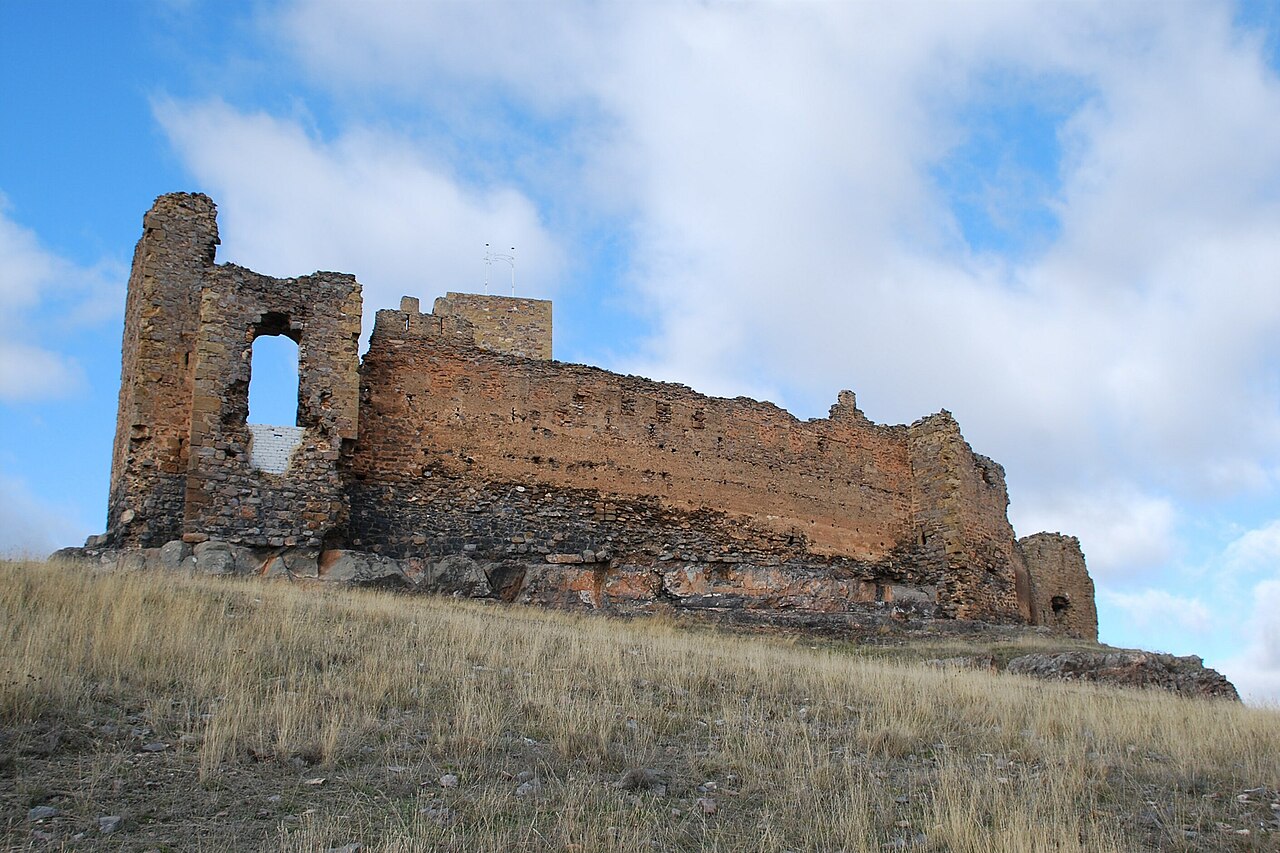
Castillo de Añón
The Castillo de Añón stands prominently in the municipality of Añón de Moncayo, nestled within the region of Aragon, Spain. This medieval fortress represents a significant example of military architecture from the High to Late Medieval period, constructed primarily between the 12th and 14th centuries. Its strategic location atop a hill overlooking the Huecha valley underscores its historical role as a defensive stronghold and territorial marker along the volatile border between the Kingdoms of Aragon and Castile.
Originally established by Christian forces, the castle was part of a broader network of fortifications designed to secure the frontier and control key natural passages. The fortress was the first Aragonese stronghold encountered when traveling from Castile, highlighting its importance in the military and political struggles that shaped the region during the medieval era.
Historical context and military significance
The Castillo de Añón was initially under the auspices of the Order of Saint John of Jerusalem, also known as the Order of San Juan, a religious-military order combining spiritual and martial roles. This affiliation influenced the castle’s dual function as both a fortress and a religious site, a characteristic common among castles managed by military orders during the Middle Ages.
The castle's most significant development phase occurred in the 14th century, particularly following the War of the Two Peters (1356–1375), a protracted conflict between Aragon and Castile that devastated many border fortifications. It is likely that the castle underwent extensive rebuilding or remodeling during this period to restore and enhance its defensive capabilities.
Throughout its active military use, the fortress played a crucial role in securing the Huecha valley, a vital corridor linking the two kingdoms. Its position allowed control over movement and military operations, making it a key asset in regional power dynamics and border defense strategies.
Architectural features and layout
The castle is constructed on a rectangular plan centered around an open courtyard, a common design in medieval fortifications that facilitated both defense and internal organization. The primary material used is masonry, chosen for its durability and resistance to siege warfare.
One of the castle’s defining features is its five square towers, predominantly positioned at the corners of the enclosure. These towers are truncated, with their upper sections either removed or collapsed over time, reflecting both the passage of centuries and modifications made during various phases of the castle’s history.
Connected to the fortress is a church whose architectural style complements the military character of the site. This ecclesiastical building underscores the religious function imposed by the Order of Saint John, serving the spiritual needs of the garrison and inhabitants. The church’s design integrates defensive elements, blending sacred and martial architecture.
Adaptive reuse and residential transformation
As the military importance of the castle waned in later centuries, it underwent a transformation from a purely defensive structure to a residential complex. Houses were constructed within the castle walls, adapting the fortress for civil habitation. This adaptive reuse led to alterations such as new door and window openings, which modified the original medieval fabric but allowed the castle to remain a living space.
Conservation and cultural heritage status
In modern times, the Castillo de Añón has been recognized as a significant cultural heritage site within Spain. It was once listed among endangered monuments but has since benefited from targeted restoration and conservation efforts. These interventions focused on stabilizing vulnerable masonry, repairing structural damage, and enhancing the surrounding environment through landscaping and paving works.
The castle’s designation as a Bien de Interés Cultural since 2006 affirms its protected status under Spanish heritage laws. This recognition ensures ongoing preservation and highlights the castle’s importance as a monument of medieval military architecture and regional history.
Today, the Castillo de Añón stands as one of the best-preserved castles in its comarca, retaining its essential rectangular plan and many original features despite centuries of change. Its combination of military, religious, and residential elements offers valuable insights into the evolving functions of medieval fortresses in Spain.
Visiting and educational value
While the castle remains privately owned, its historical and architectural significance makes it a point of interest for scholars, historians, and visitors interested in medieval fortifications and the history of Aragon. Conservation efforts have improved access and the preservation of key features, allowing for educational opportunities and cultural appreciation.
The castle’s location in the scenic Huecha valley also provides a picturesque setting that enhances its appeal. Visitors can appreciate the strategic vantage point the fortress commands and explore the surrounding landscape that once shaped its military role.
Frequently asked questions (FAQ)
- What is the historical significance of Castillo de Añón?
- Castillo de Añón was a key defensive fortress on the border between the Kingdoms of Aragon and Castile, playing a crucial role during medieval conflicts such as the War of the Two Peters.
- Can I visit Castillo de Añón?
- The castle is privately owned and not regularly open to the public, but occasional tours or events may be available. Visitors should check local resources for access information.
- What are the main architectural features of Castillo de Añón?
- The castle features a rectangular plan with an open courtyard, five truncated square towers, masonry construction, and an attached church reflecting its religious-military heritage.
- Why was the castle associated with the Order of Saint John?
- The Order of Saint John of Jerusalem owned the castle, reflecting its dual role as a military fortress and religious site, typical of medieval military orders combining martial and spiritual duties.
- When was the castle primarily rebuilt or remodeled?
- Most of the current structure dates from the 14th century, likely rebuilt or extensively remodeled after the War of the Two Peters (1356–1375) to restore its defensive capabilities.
Information
Sources & official resources
Verify the information above using these authoritative references.
Loading map...
Visitor reviews
No reviews yet. Been here? Write the first review and help other travelers!
Write the first reviewVisited this castle? Share your experience
Your review helps other travelers and adds first-hand knowledge to our encyclopedia.