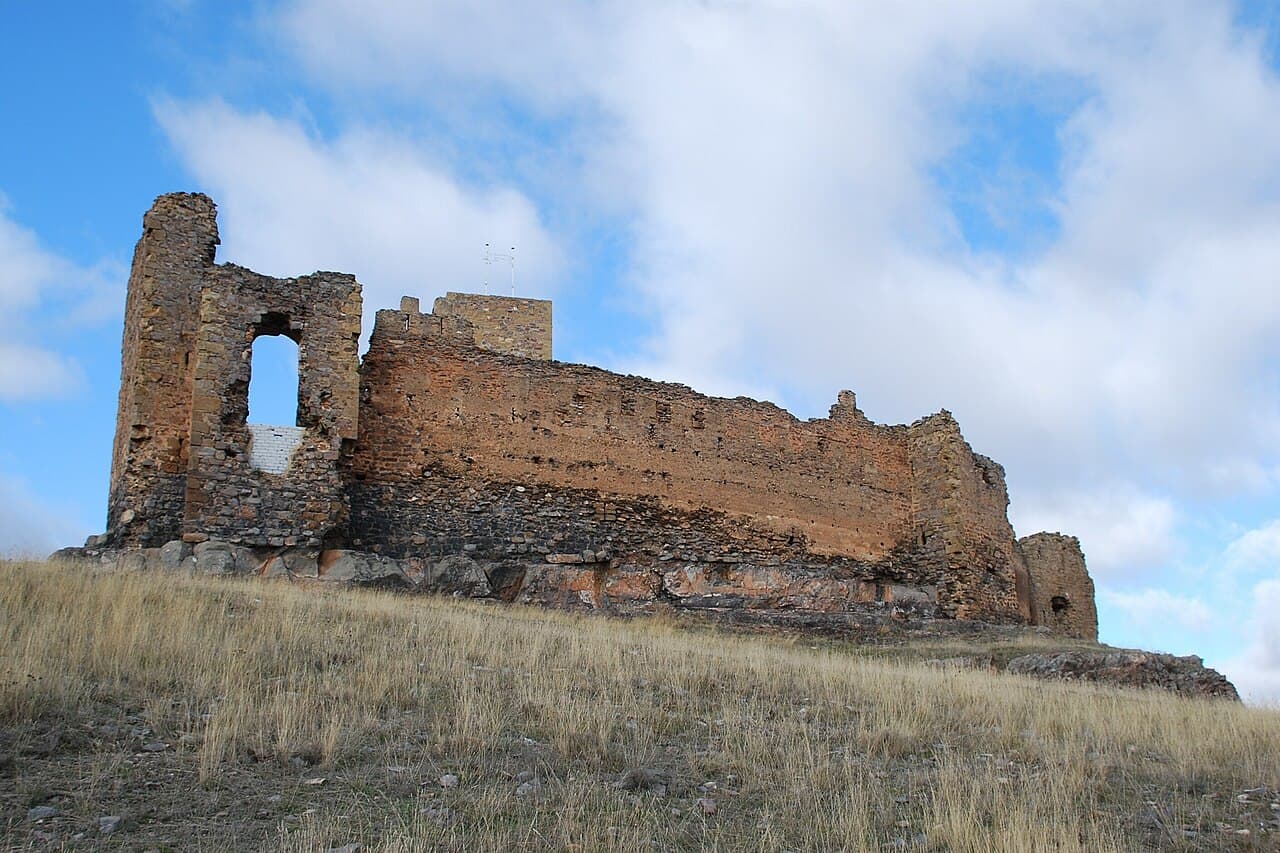
Castle of Trasmoz
The Castle of Trasmoz is a medieval fortress located in the municipality of Trasmoz, in the autonomous community of Aragon, Spain. This hill castle was strategically positioned to oversee and control the borderlands between the Kingdoms of Aragón and Navarra during the turbulent Middle Ages. Its location on elevated terrain provided natural defenses and a commanding view of the surrounding landscape, which was crucial for military and territorial control.
Historical documents confirm the castle's existence by 1185, during a period when the region was a contested frontier between the Navarrese and Aragonese crowns. The castle was an important military asset for Navarra before it was integrated into the Crown of Aragón under King Alfonso II. He granted the castle and its lands to the nobleman Sancho Pérez de Monteagudo, marking the fortress's transition into Aragonese hands and the beginning of its role within Aragonese nobility.
Architectural design and fortifications
The Castle of Trasmoz is notable for its hexagonal layout, a distinctive feature uncommon among medieval fortresses in the region. Each of the six corners is reinforced with a defensive tower, providing overlapping fields of fire and enhanced protection against siege tactics. These towers, constructed between the 13th and 15th centuries, reflect the evolution of military architecture over several centuries.
At the core of the castle complex stands the keep tower, the oldest surviving structure within the fortress. This tower has a square base and was originally topped with merlons, the upright sections of crenellated battlements used for archers and defenders to shield themselves while firing. The keep served as the final defensive refuge and the residence of the lord or commander. Unfortunately, a catastrophic fire in 1530 severely damaged this tower, causing part of it to collapse and leaving it in a ruined state.
Construction materials and preservation
While specific details about the castle's construction materials are scarce, typical medieval fortifications in the region used locally quarried stone, likely sandstone or limestone, bonded with lime mortar. The castle's walls and towers were built to withstand attacks and the elements, though centuries of exposure and neglect have led to partial ruin.
Restoration efforts initiated in the late 20th century by the Fundación Castillo de Trasmoz, founded by Manuel Jalón Corominas, have focused on stabilizing the remaining structures and preserving the castle's medieval character. Archaeological research has also been conducted to better understand the site's historical phases and architectural development.
Historical significance and decline
During its active use, the castle was a key military stronghold controlling the border between Aragón and Navarra. The fortress witnessed the shifting political landscape of the Iberian Peninsula, especially during the Reconquista and the eventual unification of the Spanish crowns.
After the union of the Crowns of Castile and Aragón and the subsequent conquest of Navarra by Ferdinand II of Aragón, the castle's strategic importance diminished. With the reduction of noble rivalries and border conflicts, the fortress was gradually abandoned. The 1530 fire that destroyed the central keep accelerated its decline, leaving the castle in ruins.
Cultural legacy and legends
The Castle of Trasmoz is entwined with local folklore, particularly its reputation as a site of witchcraft and necromancy. These legends portray the castle as a gathering place for witches’ sabbaths and other occult activities. The 19th-century writer Gustavo Adolfo Bécquer immortalized these tales in his work Cartas desde mi celda, written during his stay at the nearby Monastery of Veruela.
These stories have contributed to the castle's unique identity within Spanish cultural heritage, attracting visitors interested in both history and the supernatural. The folklore has also influenced modern interpretations and celebrations, including festivals and exhibitions related to witchcraft and medieval history.
Modern restoration and public engagement
In 1988, the castle was purchased by Manuel Jalón Corominas, known for inventing the mop. He established the Fundación Castillo de Trasmoz to oversee restoration and archaeological work aimed at preserving the site. By 2002, partial restoration had been completed, focusing on structural stabilization and making the castle accessible to visitors.
Today, the castle serves as a cultural landmark and tourist attraction, offering insight into medieval military architecture and the complex history of the Aragón-Navarra border region. The foundation also promotes research and public education, ensuring the castle's legacy endures.
Visiting the castle
Visitors to the Castle of Trasmoz can explore the ruins and appreciate the castle's strategic hilltop setting. While the keep remains partially ruined, the hexagonal towers and defensive walls provide a clear sense of the fortress's original scale and design. The site often hosts cultural events and exhibitions that highlight its historical and folkloric significance.
Access to the castle involves a hike up the hillside, reflecting its original defensive purpose. Visitors are advised to wear suitable footwear and check opening times with the managing foundation. The castle's evocative atmosphere, combined with its architectural remnants and legendary associations, makes it a compelling destination for history enthusiasts and tourists alike.
Frequently asked questions (FAQ)
- When was the castle of Trasmoz built?
- The castle was constructed between the 12th and 15th centuries, with the earliest records dating back to 1185.
- What is the architectural layout of the castle?
- The castle features a unique hexagonal layout with defensive towers at each corner, reflecting medieval military design.
- Why is the castle associated with witchcraft legends?
- Local folklore links the castle to witchcraft and necromancy, popularized by 19th-century writer Gustavo Adolfo Bécquer in his writings.
- Is the castle open to visitors?
- Yes, the castle is accessible to the public, managed by the Fundación Castillo de Trasmoz, with partial restorations completed to ensure safety.
- What caused the decline of the castle?
- The castle's decline followed the unification of the Spanish crowns and a destructive fire in 1530 that damaged the keep tower.
Photo gallery

Information
Sources & official resources
Verify the information above using these authoritative references.
Loading map...
Visitor reviews
No reviews yet. Been here? Write the first review and help other travelers!
Write the first reviewVisited this castle? Share your experience
Your review helps other travelers and adds first-hand knowledge to our encyclopedia.



